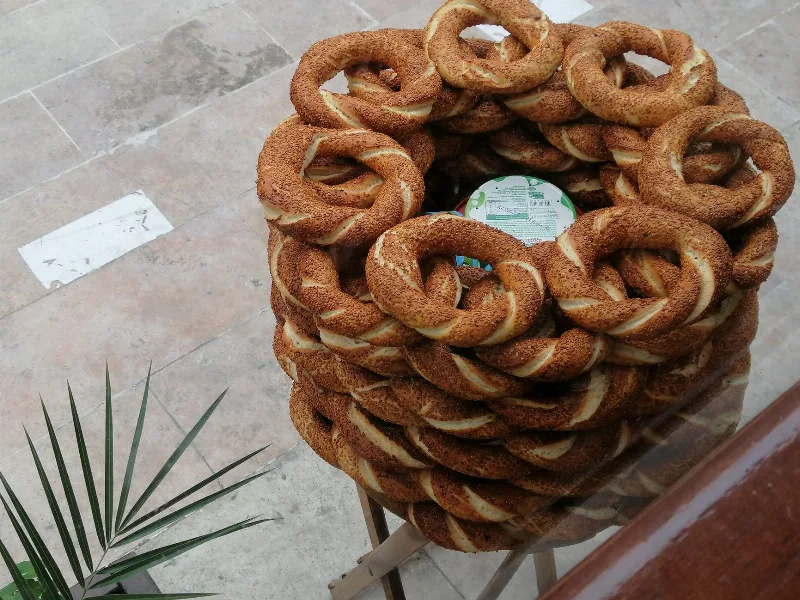
Simit
Simit is a ring-shaped Turkish bread covered in sesame seeds, strongly associated with Istanbul and sold as everyday street food. It is eaten fresh, most often with tea, and has a crisp crust around a chewy crumb.

Simit is a ring-shaped Turkish bread covered in sesame seeds, strongly associated with Istanbul and sold as everyday street food. It is eaten fresh, most often with tea, and has a crisp crust around a chewy crumb.
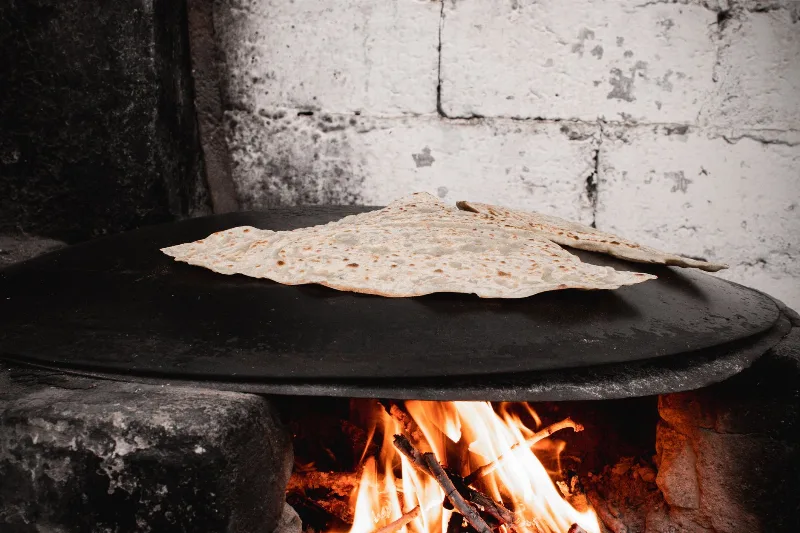
Bazlama is a soft, thick Turkish flatbread made from a leavened dough and cooked on a hot griddle. It is a staple of village baking across Anatolia, eaten warm with butter or used to wrap other foods.
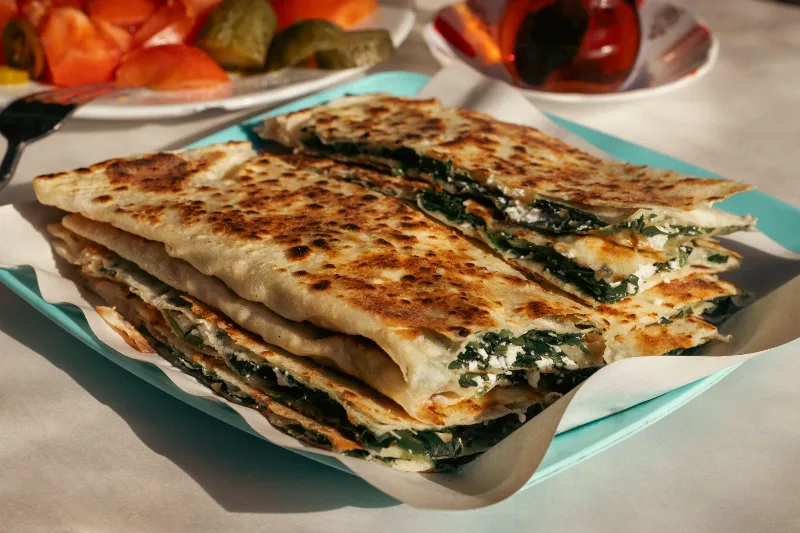
Gözleme is a thin, hand-rolled Anatolian flatbread folded around savory fillings such as cheese, spinach, or minced meat and cooked on a sac griddle. The article covers its regional variations, cooking method, texture, and traditional serving style.
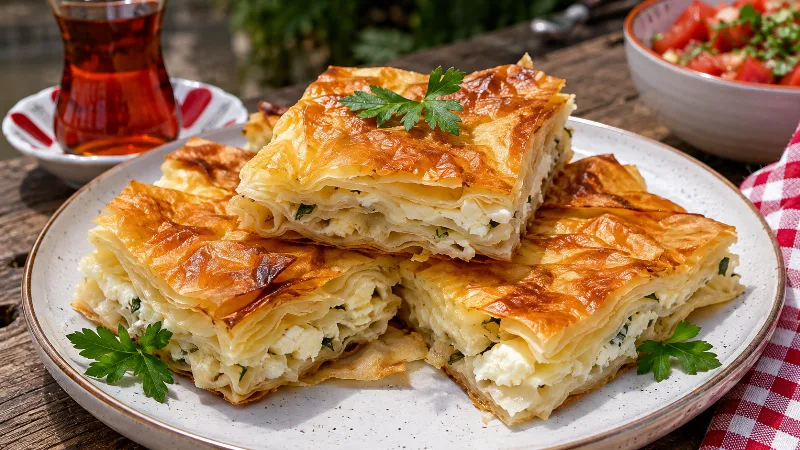
Su Böreği is a layered Turkish savory pastry made by briefly boiling thin yufka sheets, then baking them with cheese and parsley. Its soft interior and golden top distinguish it within the wider börek family.
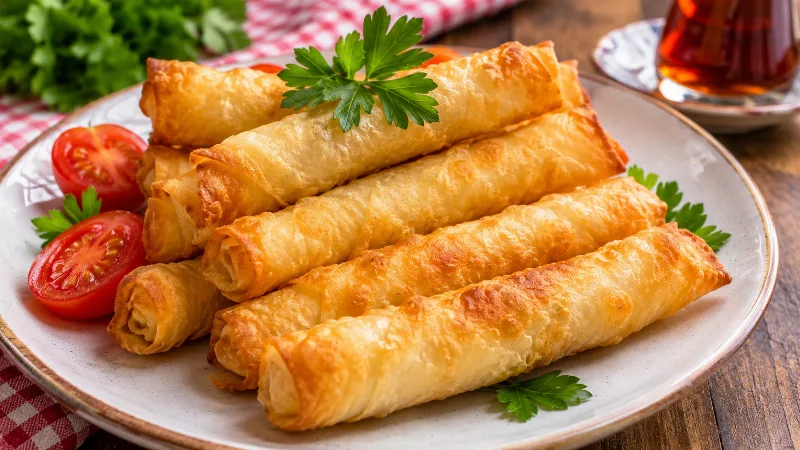
Sigara böreği is a thin Turkish pastry rolled into slim cylinders around a cheese, meat or potato filling and fried until golden. Its name comes from its cigarette-like shape, and it is a familiar sight on breakfast tables, tea-time plates and meze spreads across the country.
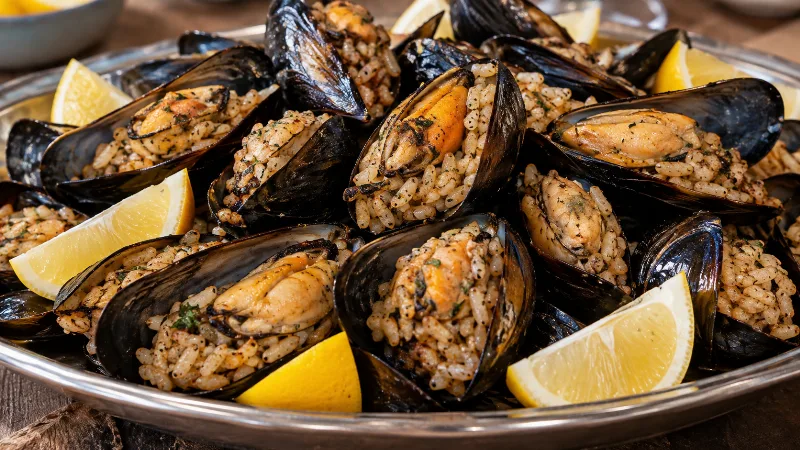
Midye dolma are mussels filled with a spiced rice mixture of pine nuts, currants and herbs, sold from trays on street corners and prepared at home along Türkiye's Aegean and Marmara coasts.
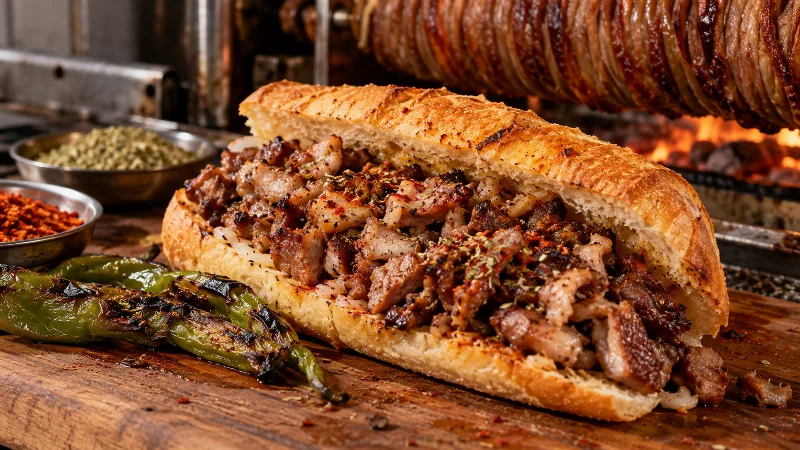
Kokoreç is a Turkish street food of lamb intestines wound around a skewer, grilled over charcoal and chopped with hot pepper and oregano. It is most often eaten stuffed into half a loaf of bread, and its two best-known styles come from Istanbul and İzmir.
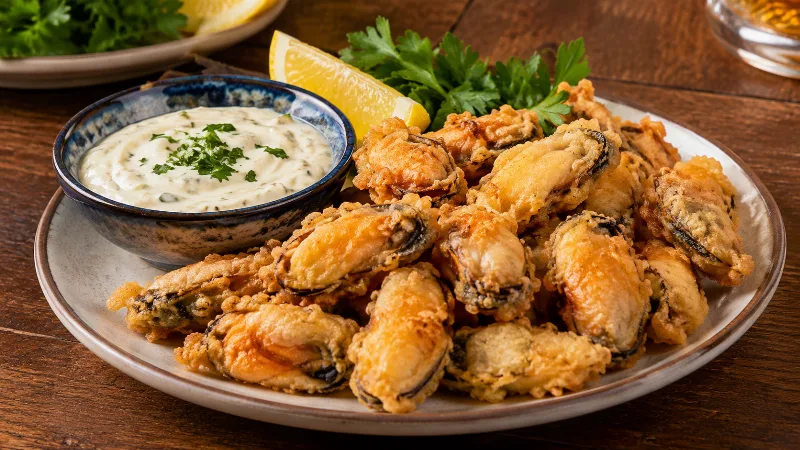
Midye tava is a Turkish street food of battered, deep-fried mussels on skewers, eaten hot with tarator sauce and lemon. It is closely tied to Istanbul and the mussel-rich Marmara and Aegean coasts.
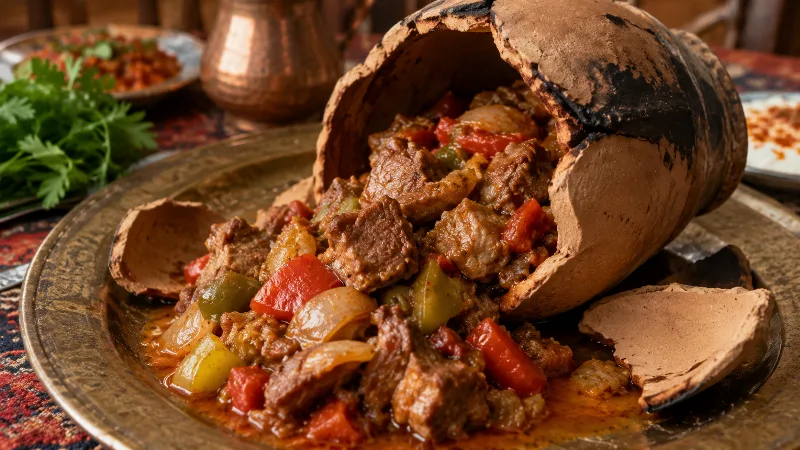
Testi Kebabı is a traditional Turkish dish from Cappadocia where meat and vegetables are slow-cooked in a sealed clay pot that is broken open at the table. The result is tender meat and rich, aromatic vegetables.
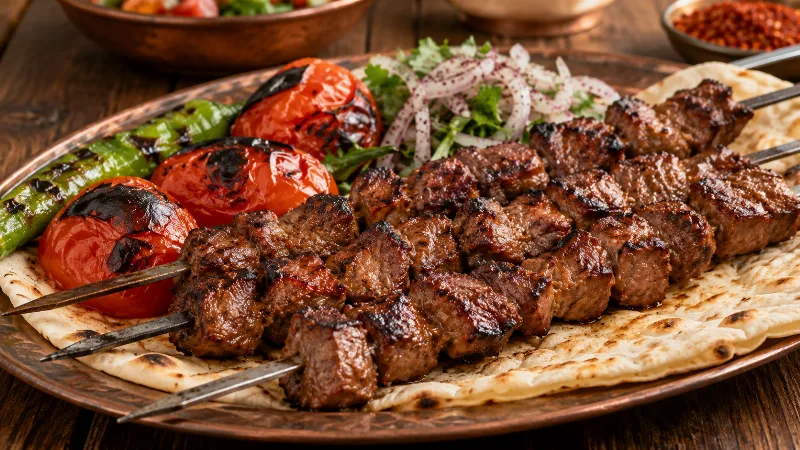
Şiş kebap is built from cubes of marinated meat threaded onto a skewer and grilled over charcoal. It is one of the simplest forms of Turkish kebab, defined by the cut of meat, the marinade and the skewer itself.
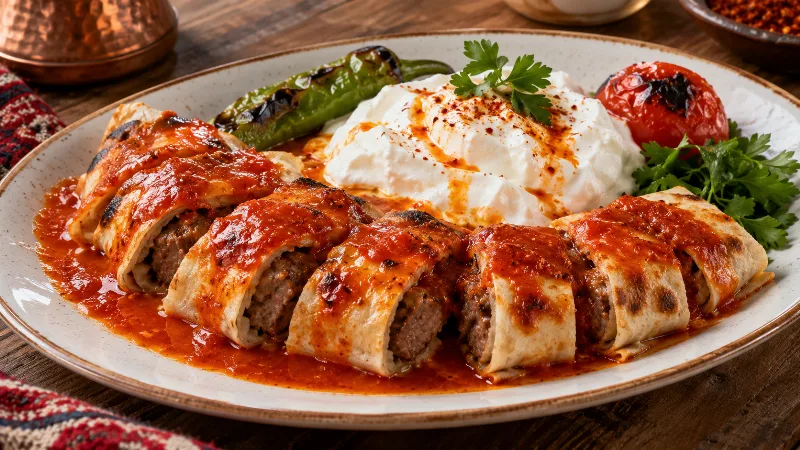
Beyti Kebabı is a Turkish kebab of grilled minced meat rolled inside thin lavash bread, dressed with warm tomato sauce and yogurt. It is a modern Istanbul dish rather than an old regional specialty, and it differs from İskender or Adana kebab in both its meat and its serving style.
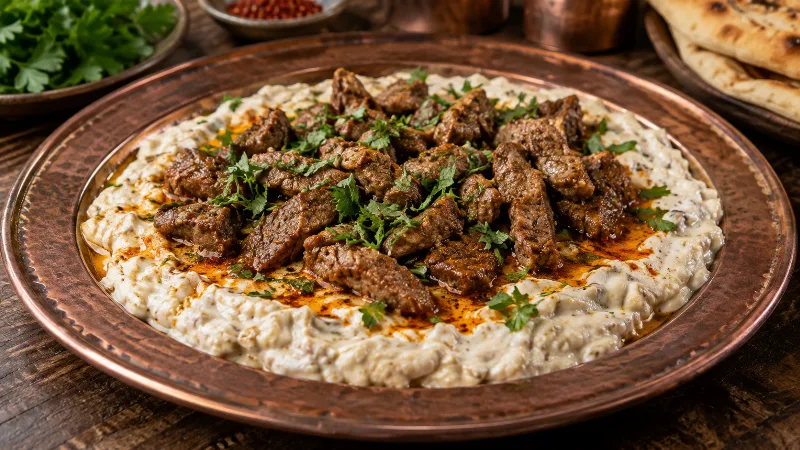
Ali Nazik is a Gaziantep specialty in which grilled lamb is served over a smoky roasted eggplant puree mixed with garlicky yogurt and finished with melted butter and red pepper flakes.
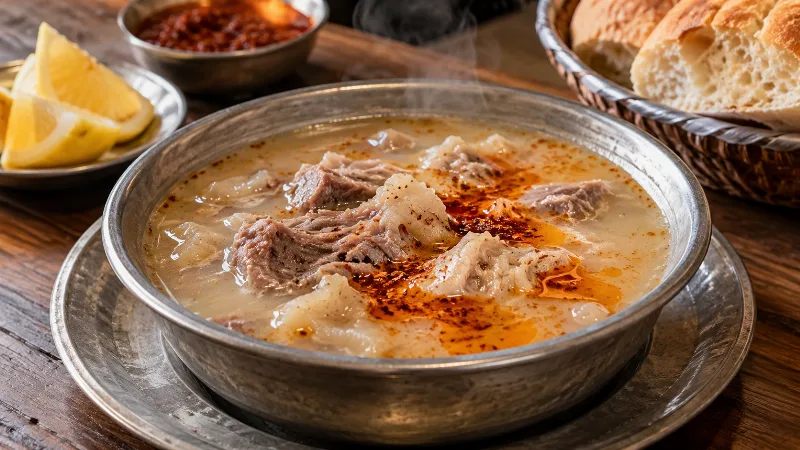
Kelle Paça Çorbası is a traditional Turkish soup made from sheep's head and feet, known for its thick, gelatinous texture and restorative qualities. It is especially popular in Eastern and Southeastern Anatolia and is commonly eaten for breakfast or as a late-night meal.
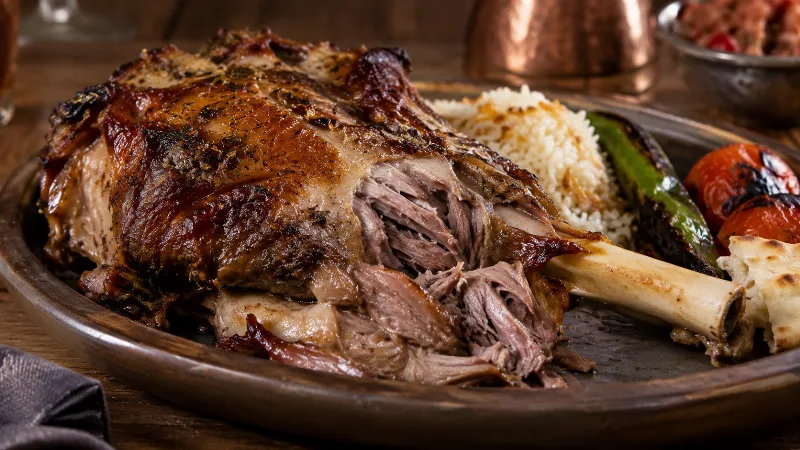
Kuzu tandır is slow-roasted lamb cooked in a sealed clay tandır oven, a method strongly associated with eastern Anatolia, especially Erzurum, that yields crisp, browned skin and very tender, juicy meat.
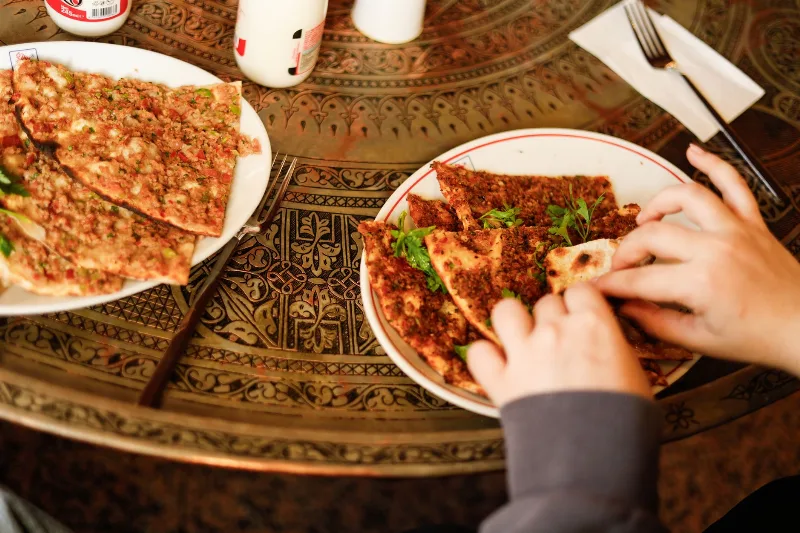
Lahmacun is a paper-thin flatbread spread with a finely chopped, spiced meat topping and baked quickly at high heat. It is most closely associated with Şanlıurfa and Gaziantep, and is traditionally eaten rolled with lemon and parsley.
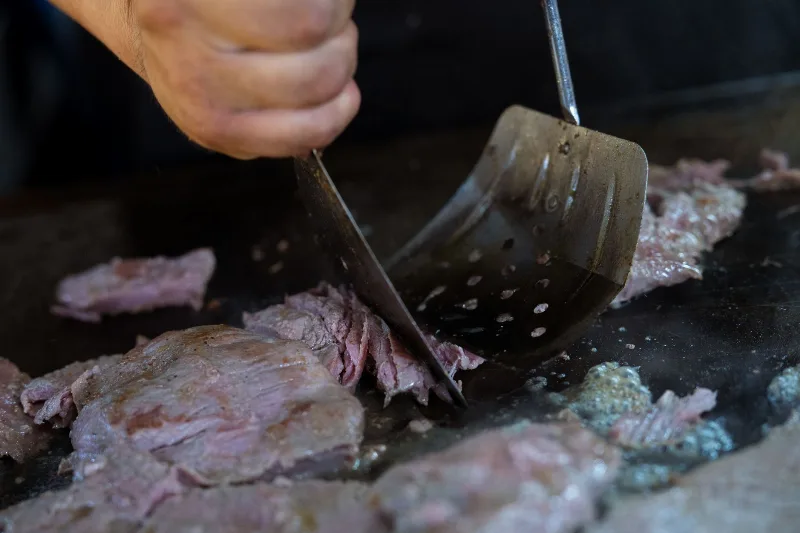
A Mersin street wrap built around finely chopped beef cooked with onion, tomato and pepper on a flat griddle, then rolled in thin lavash and finished with lemon and sumac onion.
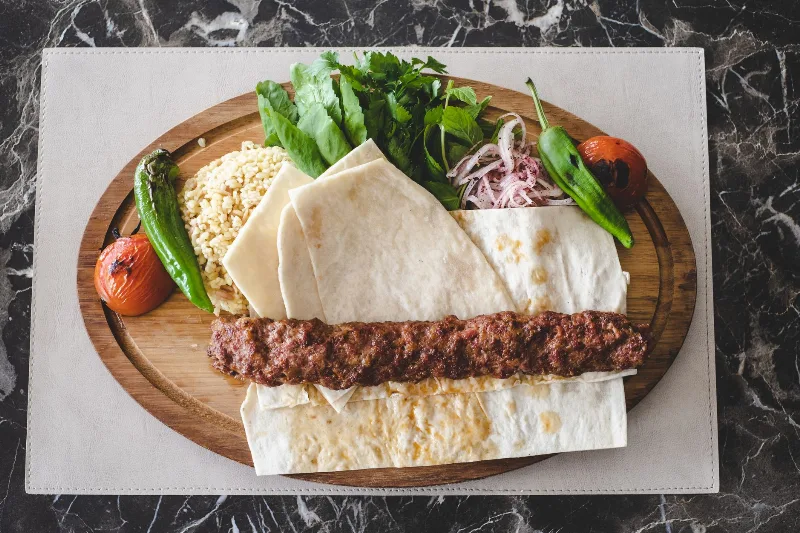
Adana kebap is a charcoal-grilled minced lamb kebab from the Çukurova plain, defined by hand-chopped meat, tail fat and generous chilli heat. This article explains its ingredients, preparation, flavour and how it differs from Urfa kebap.
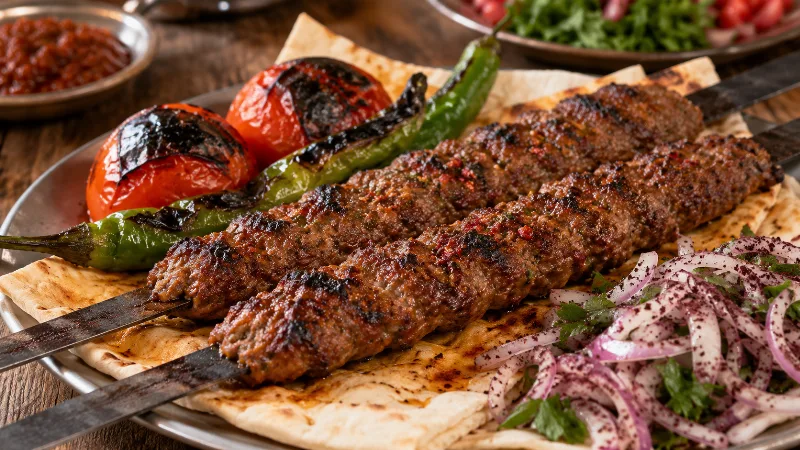
Urfa Kebap is a charcoal-grilled minced lamb kebab from Şanlıurfa, seasoned without hot chilli and shaped around flat skewers. Its mildness is what sets it apart from the region's other minced kebabs.
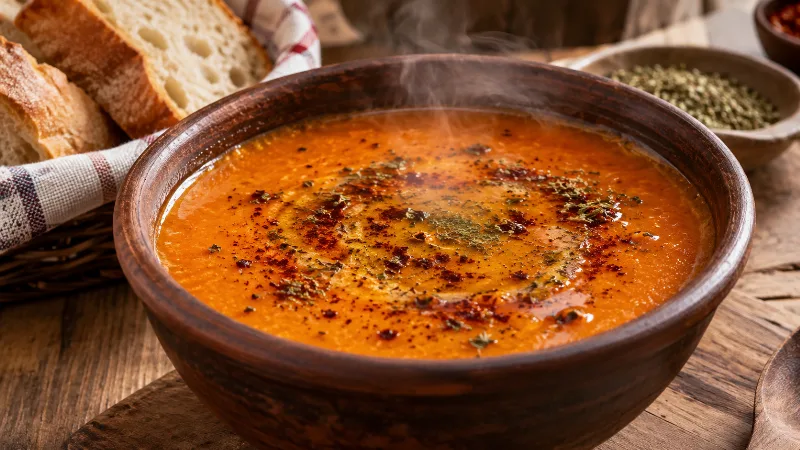
Tarhana Çorbası is a traditional Anatolian soup made from a sun-dried, fermented mixture of wheat, yogurt and vegetables, cooked into a warm, tangy broth.
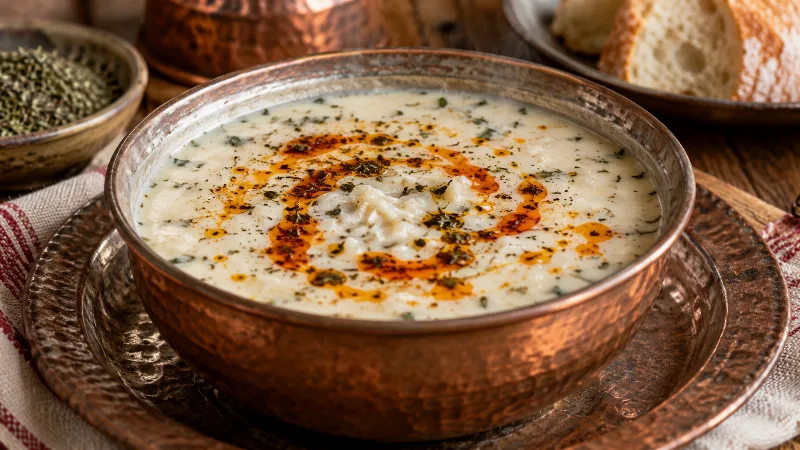
Yayla Çorbası is a Turkish soup built on yogurt and rice, thickened gently with egg and flour and finished with a sizzle of butter poured over dried mint. It is eaten warm or at room temperature and appears on tables from home kitchens to everyday restaurants across the country.
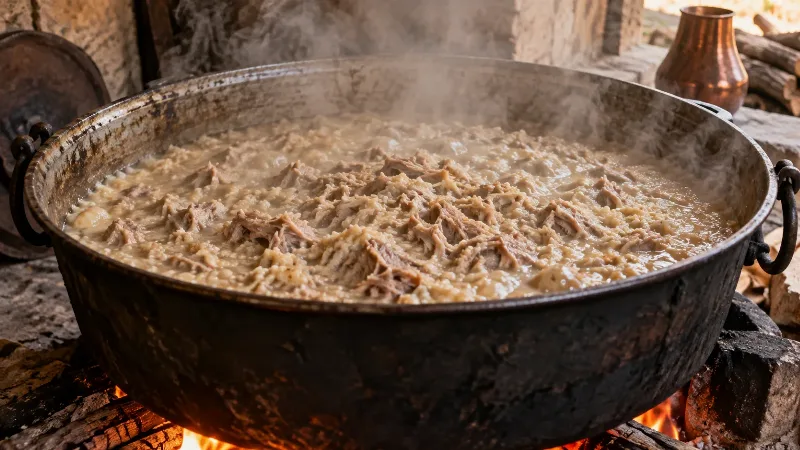
Keşkek is a traditional Anatolian dish made by cooking hulled whole wheat together with meat and pounding the softened mixture into a thick, dense mass. It is best known as a communal celebration food, especially at weddings.
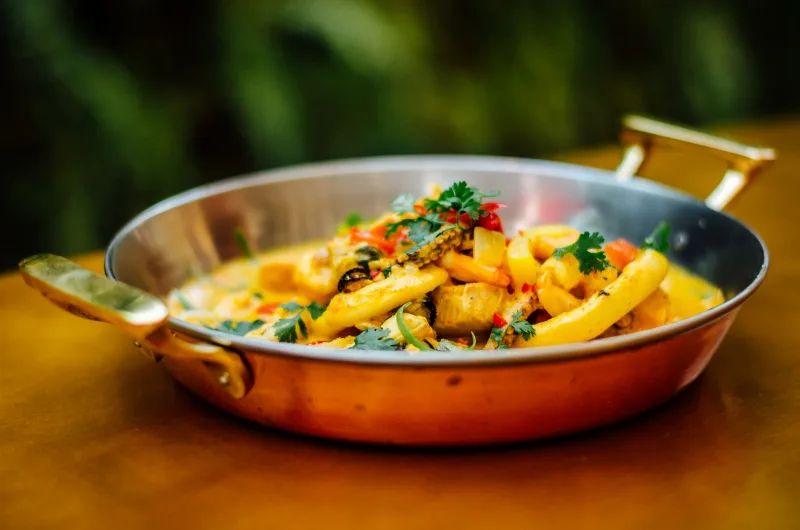
Kuymak is a hot Black Sea dish of cornmeal cooked in butter and blended with a melting local cheese. It is eaten mainly as a breakfast food across Trabzon, Rize, Giresun and the surrounding provinces.
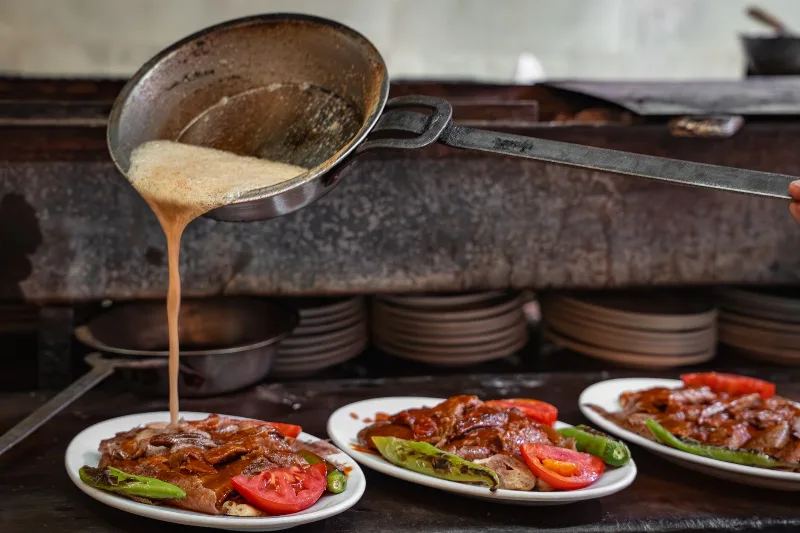
İskender Kebabı is a Bursa dish made of sliced döner kebab laid over pieces of pita bread, dressed with warm tomato sauce and melted butter, and served with yogurt on the side.
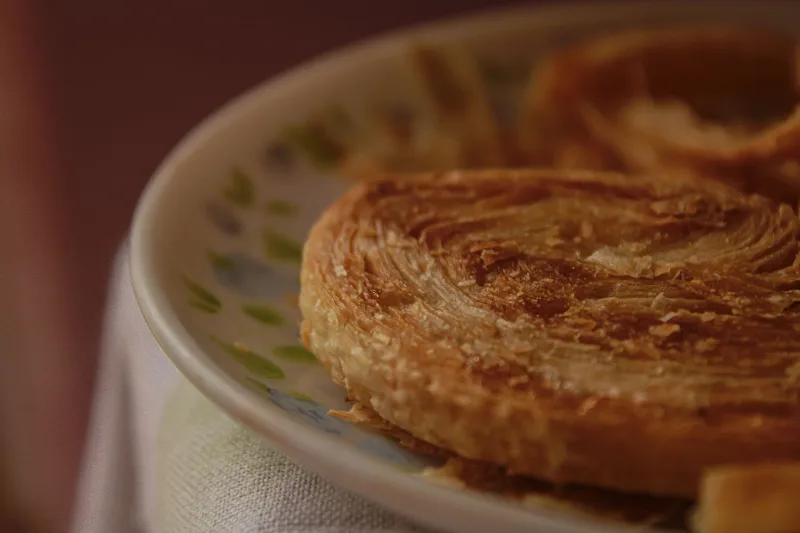
Boyoz is a round, flaky pastry from İzmir, made from a coiled flour-and-oil dough and traditionally eaten at breakfast with a boiled egg and tea.
Simit is a twisted ring bread coated in sesame seeds, sold across Türkiye as an everyday street food and breakfast staple. This article explains its ingredients, how it is baked, its textures and flavours, and the regional divide between Istanbul simit and İzmir gevrek.
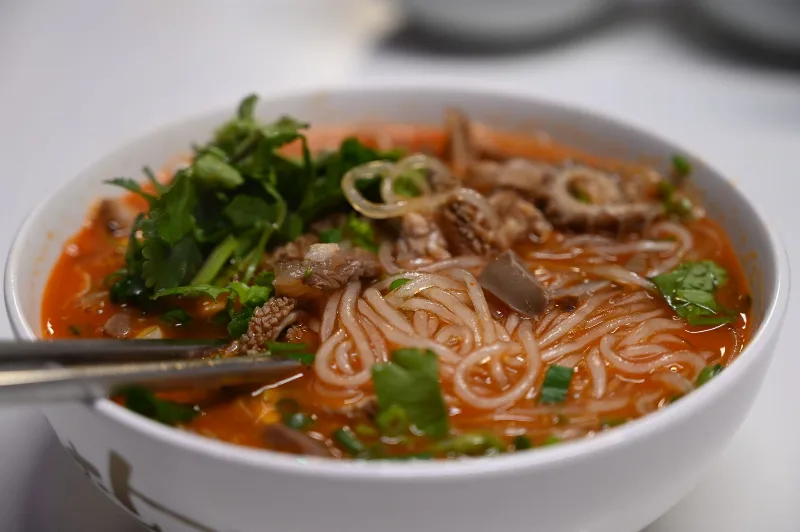
İşkembe Çorbası is a traditional Turkish tripe soup flavored with garlic, vinegar, and red pepper. Often consumed late at night as a hangover cure, it is a staple of Turkish street food culture.
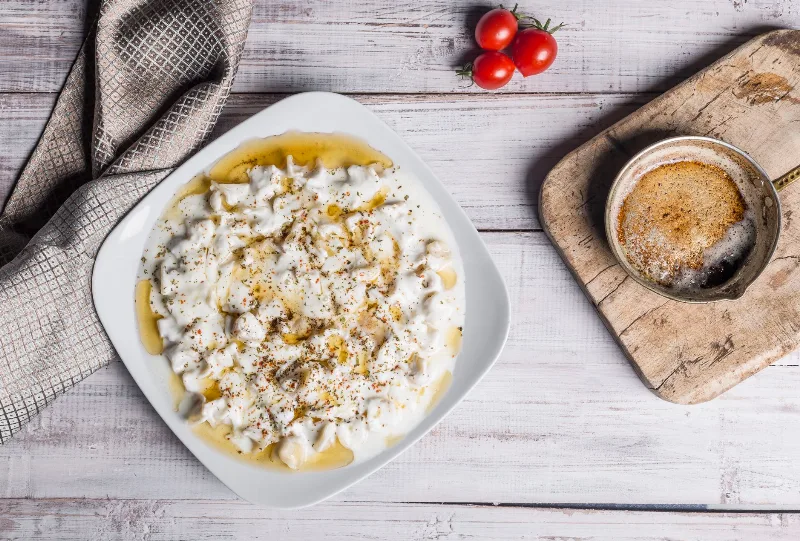
Mantı are tiny boiled dumplings of thin dough filled with minced meat and onion, dressed with garlic yogurt and melted butter, and most closely associated with the central Anatolian city of Kayseri.
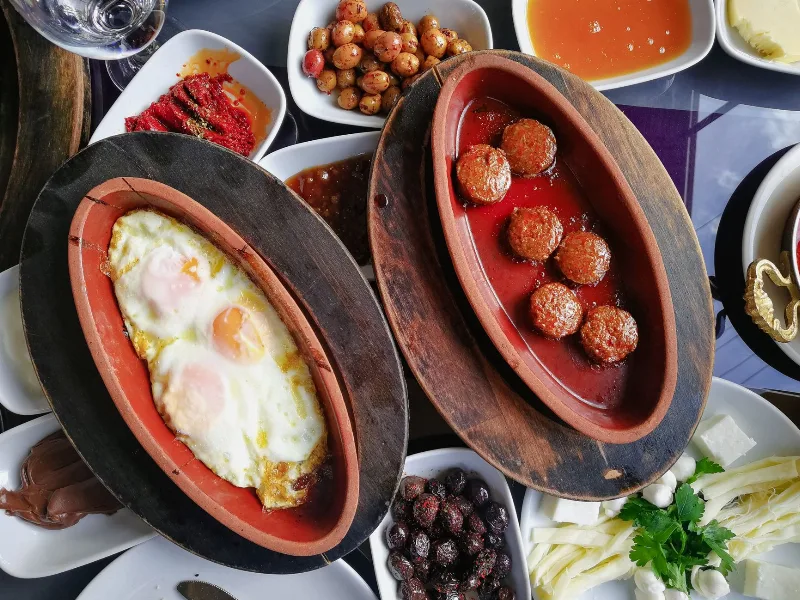
Menemen is a Turkish breakfast dish of eggs cooked with tomatoes and green peppers in olive oil or butter, traditionally eaten with bread. It takes its name from a district of İzmir Province and is prepared in households across Türkiye.
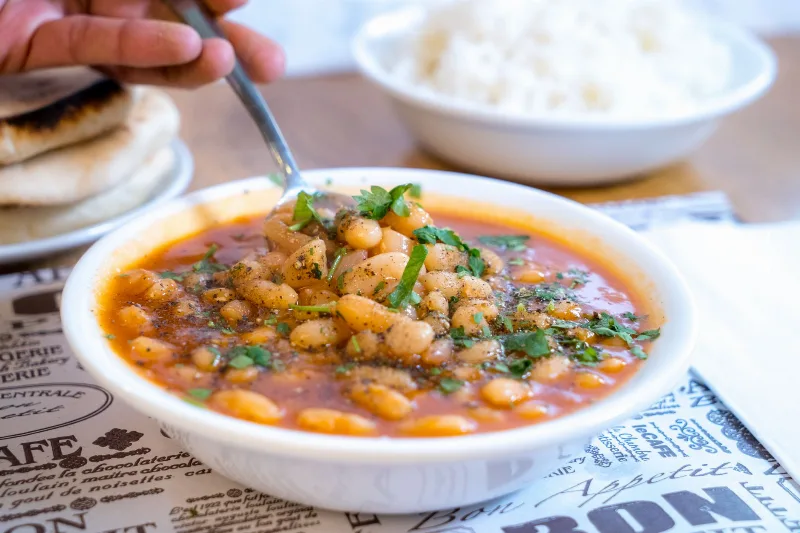
Kuru fasulye is a traditional Turkish stew of dried white beans slow-cooked with onion, tomato and pepper paste, eaten across the country with rice pilaf and pickles.
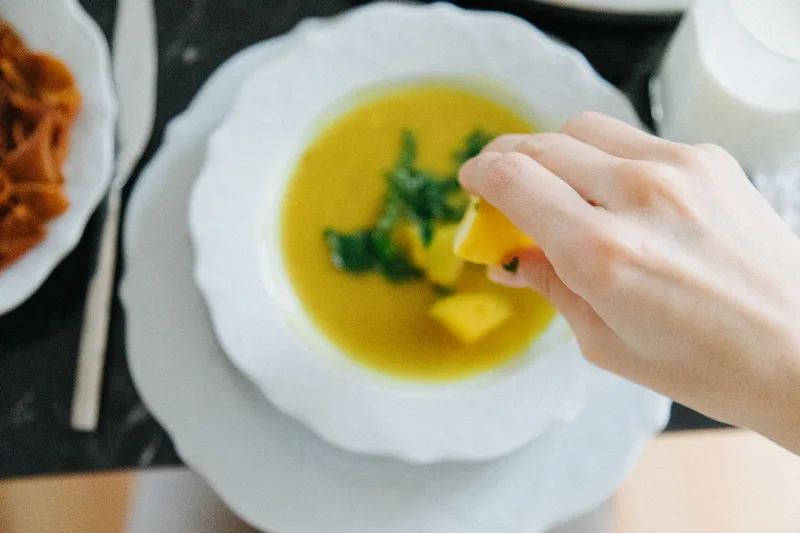
A thick Turkish lentil soup of red lentils, bulgur and rice, flavoured with dried mint and tomato paste and named after the folk figure Ezo Gelin.
Lahmacun is a thin, round flatbread spread with finely minced meat, tomato, pepper and spices, baked quickly at high heat and served with lemon and fresh parsley. It is one of Türkiye's most recognisable street and oven foods, with strong regional traditions across the southeast and beyond.
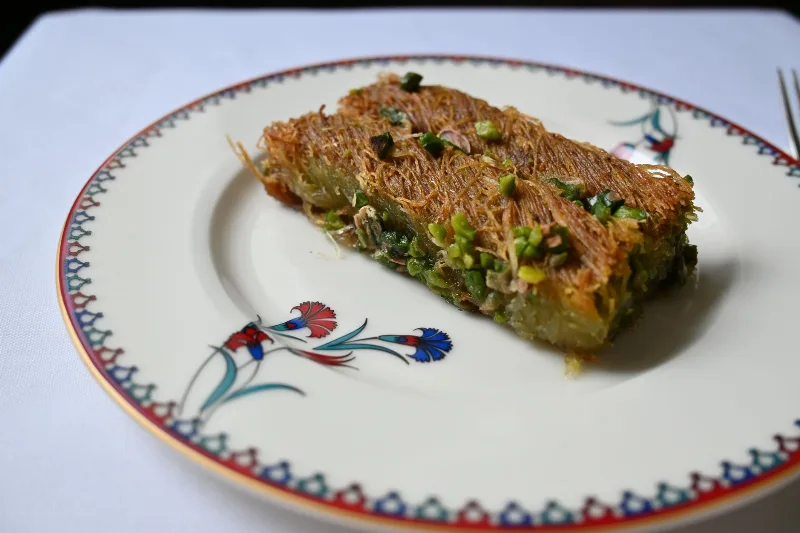
Künefe is a hot, syrup-soaked dessert made from finely shredded kadayıf pastry wrapped around a mild, stretchy cheese, most closely associated with Hatay and the city of Antakya in southern Türkiye.
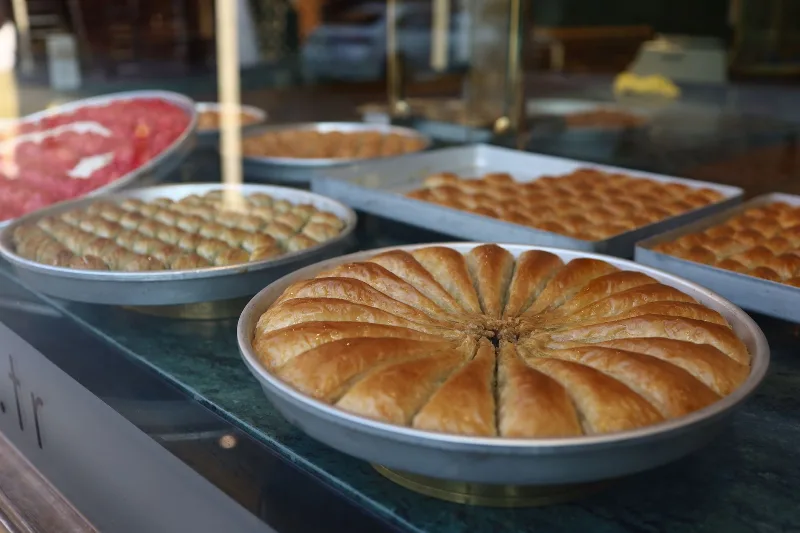
Baklava is a traditional Turkish dessert made of layered phyllo dough, filled with nuts and sweetened with syrup. Strongly associated with Gaziantep, it is a staple of celebrations and a symbol of Turkish hospitality.
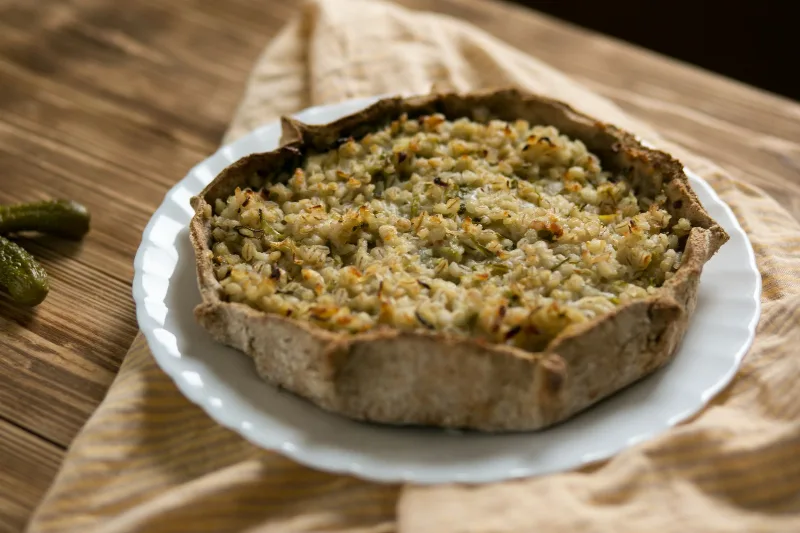
Hamsili Pilav is a baked rice pilaf from Türkiye's Black Sea coast, in which fresh anchovies are layered with seasoned rice and cooked together in a pan. It is one of the region's most distinctive ways of using hamsi, the small anchovies that define Black Sea cooking.
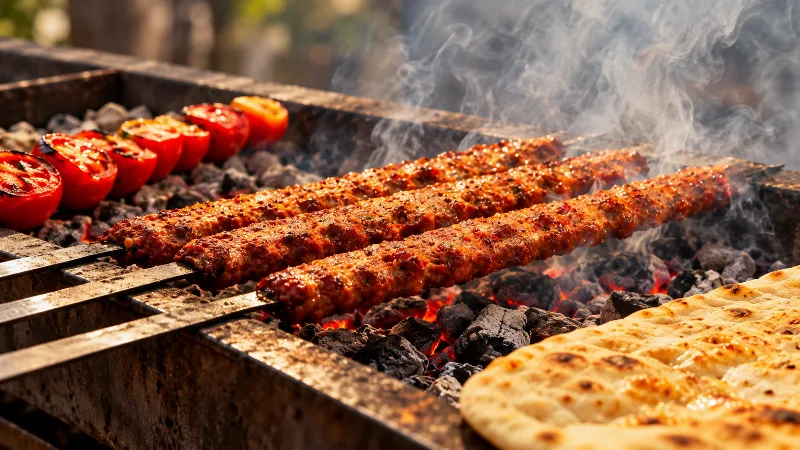
Adana kebabı is a spicy minced-lamb kebab from the southern Turkish city of Adana, moulded onto wide flat skewers and grilled over charcoal. Its heat, its hand-chopped meat and its distinctive flat skewer set it apart from other Turkish kebabs.
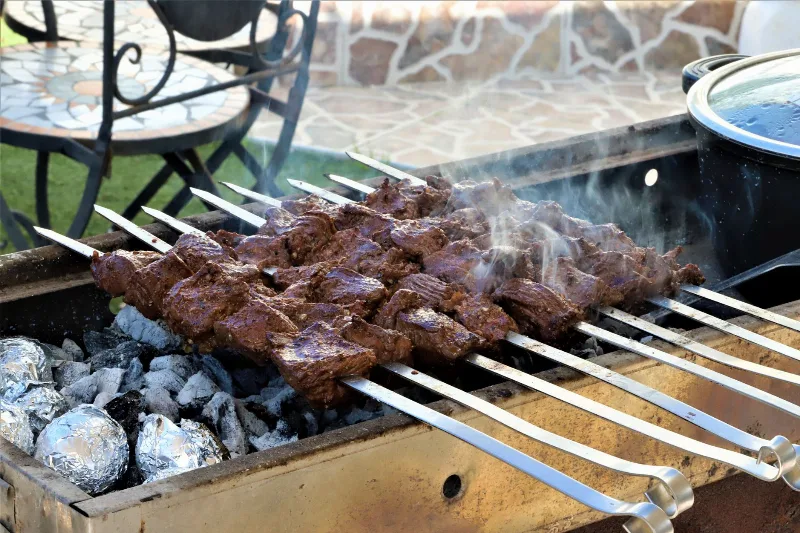
Urfa Kebabı is a charcoal-grilled minced lamb kebab from Şanlıurfa, seasoned without hot pepper and pressed onto long flat skewers. Its mild, juicy character places it alongside — and directly against — the spicier Adana kebabı.
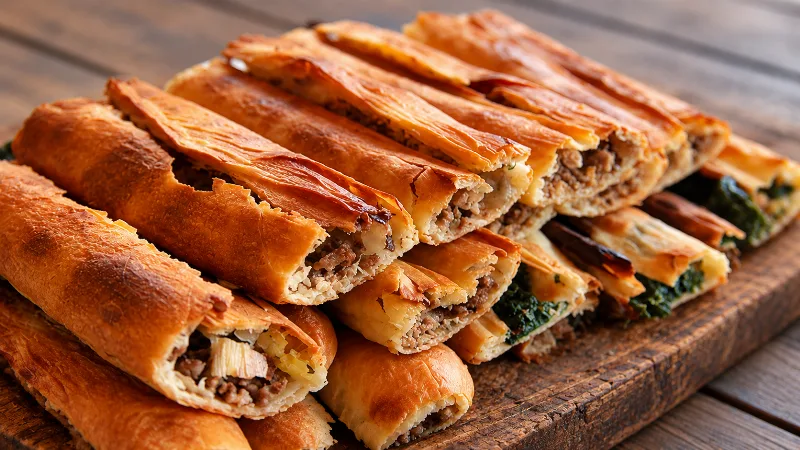
Bafra Pidesi is a soft, boat-shaped Turkish pide from the Bafra district of Samsun on the Black Sea coast, filled with ground meat, cheese or vegetables and baked quickly in a very hot oven.
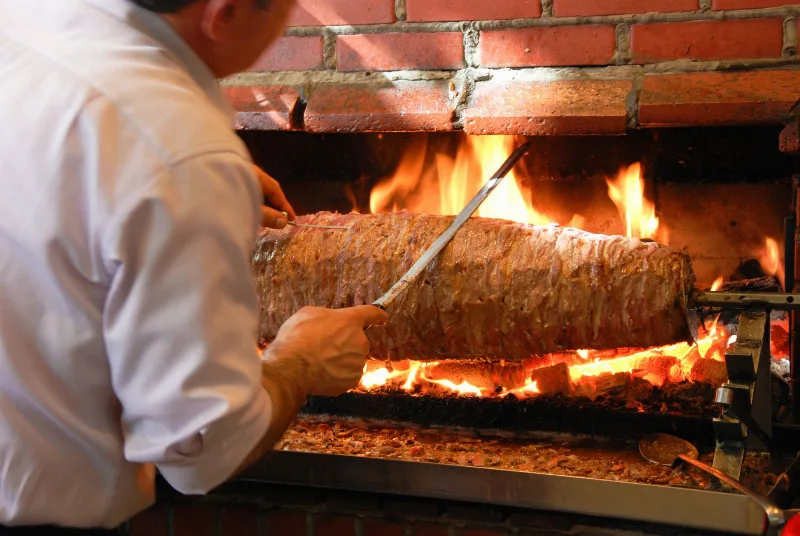
A regional lamb kebab from Erzurum, Cağ Kebabı is cooked on a horizontal rotisserie and served on skewers. Its tender, juicy meat and simple accompaniments make it a celebrated dish in eastern Turkey.
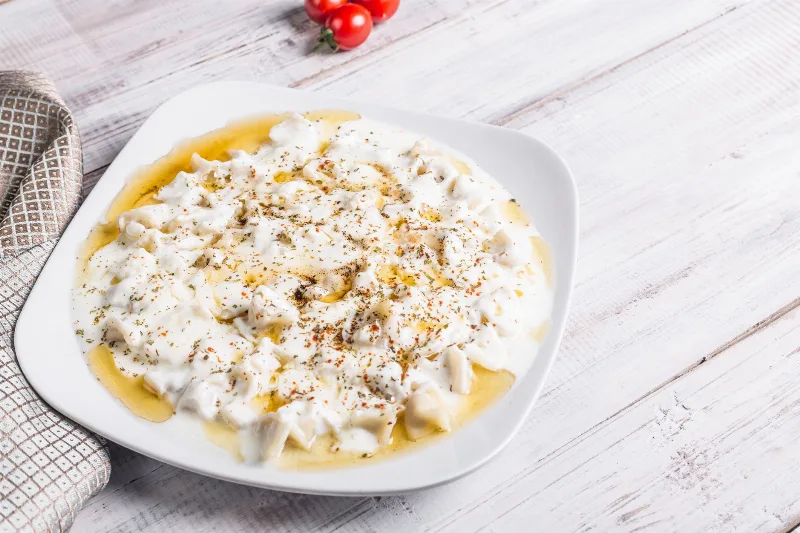
Mantı are small boiled Turkish dumplings filled with minced meat and onion, traditionally served with garlic yogurt and melted butter. The dish is most closely associated with Kayseri, where the dumplings are folded exceptionally small.
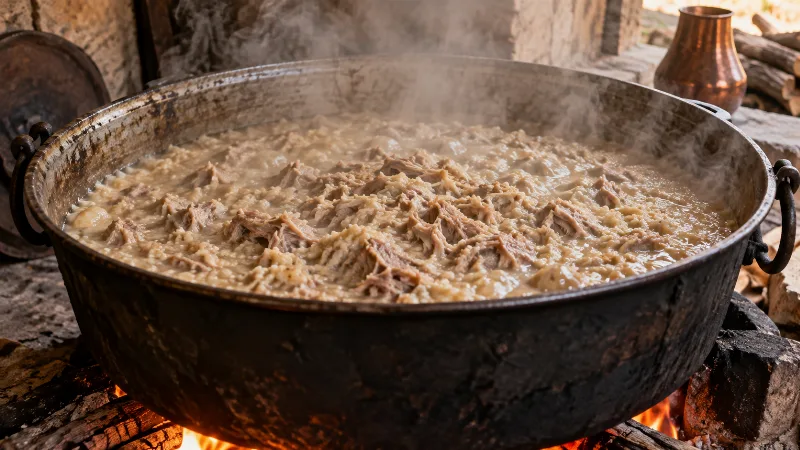
Keşkek is a ceremonial Anatolian dish of whole wheat berries and meat, slow-cooked and then pounded until the two merge into a thick, smooth mass. It belongs to Central Anatolia and the Aegean region, where it is still prepared in large cauldrons for weddings and religious holidays.
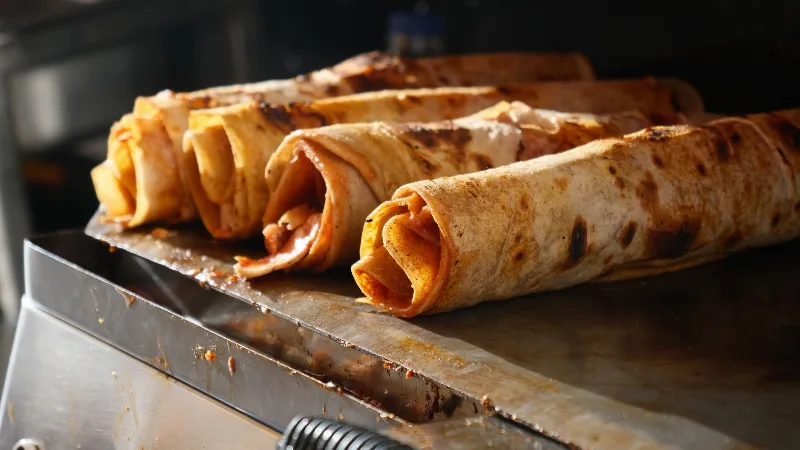
Tantuni is a traditional Turkish street food from Mersin, made with finely chopped beef sautéed with onions, tomatoes, and spices, then wrapped in lavash. It is known for its juicy, flavorful filling and is a staple of Mersin's culinary culture.
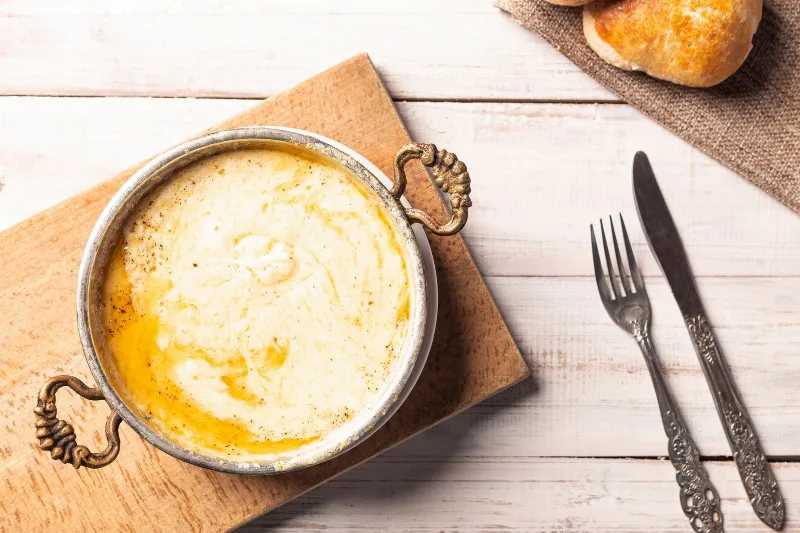
A soft, stretchy cornmeal dish cooked with butter and cheese, kuymak — also known as mıhlama — is a Black Sea breakfast staple served hot from the pan and eaten with bread.
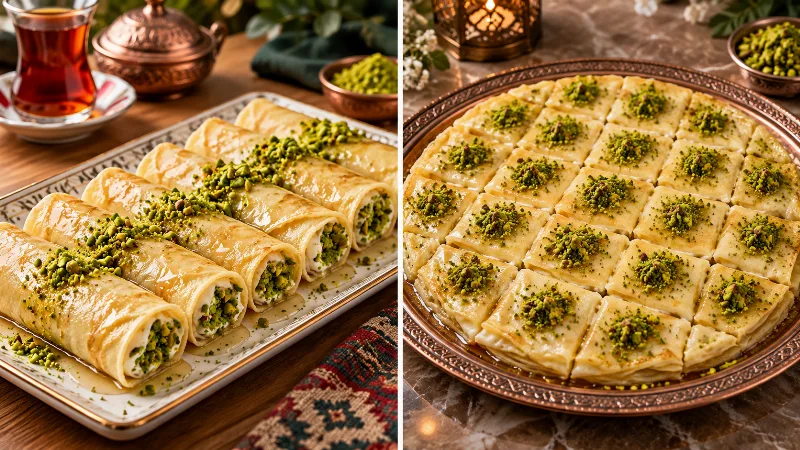
A traditional Şanlıurfa dessert made with thin pancakes, walnuts and sweet syrup.
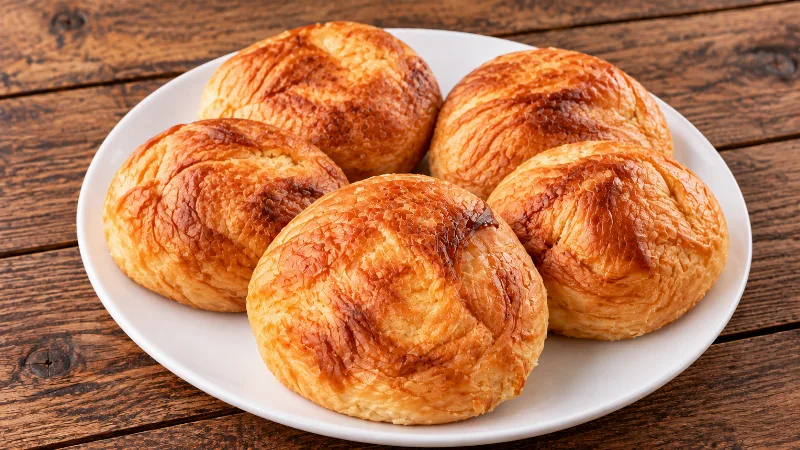
A flaky baked pastry closely associated with İzmir and commonly eaten as part of breakfast.
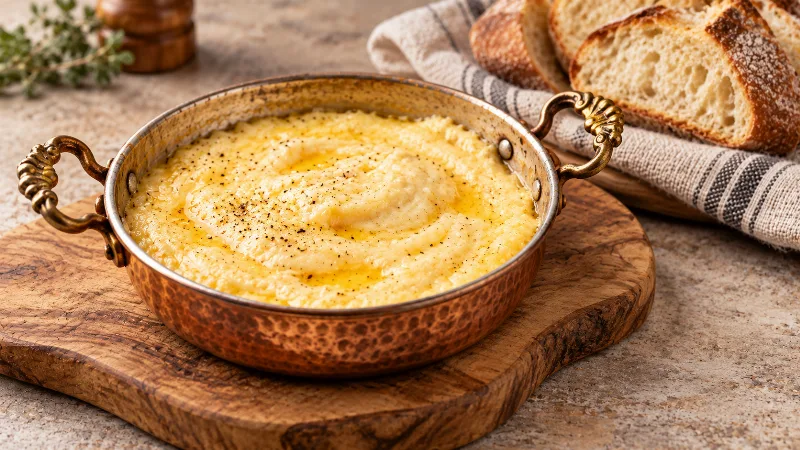
A warm Black Sea dish made with cornmeal, butter and melting local cheese.
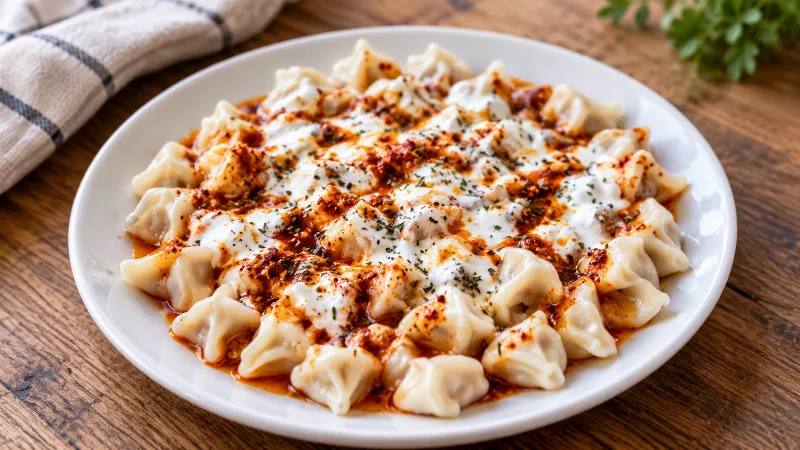
Small Turkish dumplings traditionally associated with Kayseri, served with garlic yogurt and seasoned butter.
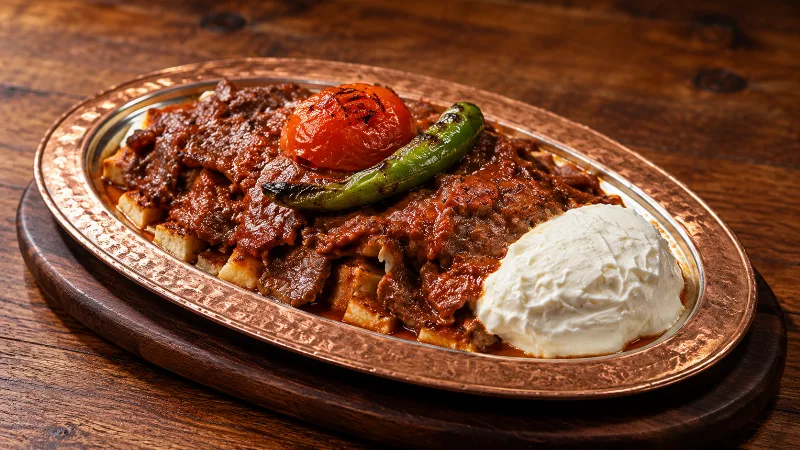
A Bursa specialty made with thin slices of döner served over pide bread with tomato sauce, butter and yogurt.