
Beyti Kebabı
Beyti Kebabı is a Turkish kebab of grilled minced meat rolled inside thin lavash bread, dressed with warm tomato sauce and yogurt. It is a modern Istanbul dish rather than an old regional specialty, and it differs from İskender or Adana kebab in both its meat and its serving style.
Beyti Kebabı is a Turkish kebab made from seasoned minced meat that is grilled on flat skewers and then wrapped in thin lavash flatbread, with warm tomato sauce and yogurt served over or alongside it. Its defining components are the grilled minced-meat kebab, the soft flatbread rolled around it, a tomato-based sauce and a generous layer of yogurt; melted cheese is added in some versions. Unlike kebabs that carry the name of a southeastern city, Beyti Kebabı belongs to Istanbul and to the modern kebab-house cooking of that city.
Where Beyti Kebabı Comes From
Beyti Kebabı is a comparatively recent dish. It is generally credited to a kebab cook working in the Florya district of Istanbul in the mid-twentieth century, and the dish takes its name from him. It therefore belongs to a period in which Istanbul kebab houses began refining and plating grilled meats for an urban clientele, presenting them with sauces and dairy rather than simply laying them on a piece of bread. Because the dish developed in commercial kitchens rather than in village homes, it spread through kebab restaurants across the country instead of through regional home cooking, and it has no long folk history attached to it. This is worth keeping in mind: the dish should not be confused with the older, regionally rooted kebab traditions of southeastern Türkiye, even though it borrows techniques from them.
The Minced Meat and Its Seasoning
The kebab itself is made from minced meat, most often lamb, although beef and mixtures of the two are also common. The meat is usually minced fairly finely, and it is kneaded with grated or very finely chopped onion, salt and black pepper until the mixture becomes sticky and holds together. Parsley, garlic and red pepper flakes appear in many versions, with the heat level varying from mild to noticeably spicy depending on the kitchen. The kneading is not incidental: it is what allows the mince to be moulded around a skewer in a long strip without breaking apart over the fire. Some cooks work in a little softened bread or additional fat to keep the finished kebab moist, a technique shared with several other minced-meat kebabs.
Grilling and the Lavash Wrap
The seasoned mince is pressed onto wide, flat metal skewers in an even strip, in the manner of Adana kebab, and grilled over charcoal. This flat shape, rather than a rounded one, gives the meat a broad surface that cooks quickly and takes on a charred exterior while remaining juicy within. When the kebab is done, it is slid off the skewer directly onto thin lavash. The bread may be brushed with butter, with the juices that have collected from the meat, or with a little of the tomato sauce before the kebab is laid on top. The lavash is then rolled around the meat into a long cylinder, which is either cut crosswise into shorter pieces or served whole. The bread softens as it absorbs the juices and the sauce, so the wrap and the filling effectively become one dish rather than meat served with bread on the side.
Tomato Sauce, Yogurt and Cheese
What separates Beyti Kebabı most clearly from other minced-meat kebabs is its dressing. A warm tomato sauce, frequently cooked with butter and sometimes with a little pepper paste, is spooned over the rolled kebab, and yogurt is served with it. In many versions the yogurt is placed inside the wrap as well, so that each slice contains both the grilled meat and a cool, tangy layer against it. A further common variation covers the dish with melted kashar cheese, briefly grilled or baked until it browns, which produces a richer and considerably heavier result. The balance of grilled meat, soft bread, warm tomato sauce and cool yogurt is the heart of the dish, and cooks adjust that balance according to preference.
Texture, Flavour and Appearance
A well-made Beyti Kebabı is juicy rather than dry. The meat keeps a slight springiness from the kneaded mince, and its surface carries the smoke and light char of the grill. The lavash, soaked with meat juices and tomato sauce, turns tender and slightly yielding, and the yogurt adds a fresh, acidic note that cuts through the richness of lamb. The tomato sauce contributes sweetness and a mild acidity, while butter, where it is used, rounds everything off. On the plate the dish reads clearly: pale rolls of bread, a red sauce, a spoonful of white yogurt, often a scattering of chopped parsley, and sometimes melted butter poured over at the moment of serving. Cheese-topped versions show a golden, bubbling surface instead.
How It Is Traditionally Served
Beyti Kebabı is a main course, eaten at lunch or dinner, and it is most at home in a kebab house setting. It is commonly accompanied by grilled tomato and long green peppers, a sumac-dusted onion salad with parsley, and sometimes bulgur pilaf or rice. Because the meat already comes wrapped in bread, additional bread is rarely needed. Ayran, the salted yogurt drink, is a natural companion, as it is for many grilled meat dishes. The dish is not a breakfast food and it is not traditional street food in the way that döner or tantuni are; although dürüm-style versions exist, the standard form is a plated dish eaten sitting down.
Variations
The dish is not fixed, and several versions are in circulation.
Where these versions differ, they differ mainly in richness and in how much sauce and dairy the diner wants, not in the underlying technique.
Beyti Kebabı and Similar Dishes
Beyti Kebabı is often confused with other grilled meat dishes, but the differences are specific.
Its Place in Turkish Kebab Culture
Beyti Kebabı shows how adaptable Turkish kebab cooking has been. It takes a technique familiar from southeastern minced-meat kebabs, combines it with lavash, tomato sauce and yogurt — all staples of Turkish cooking in their own right — and turns the result into a plated restaurant dish. Its association with Istanbul is strong precisely because it was shaped in the city's kitchens rather than in a single province. It is now prepared widely across Türkiye, and it is often chosen by diners who want the flavour of a grilled kebab in a softer, saucier form than a plain skewer of meat. For readers exploring Turkish food, it sits usefully between the older regional kebab traditions and the more recent, urban style of serving grilled meat with bread, sauce and dairy.
Related content

Istanbul
Istanbul is Türkiye's largest city and the country's only metropolis that spans two continents, divided by the Bosphorus strait into a European and an Asian half. Its long run as an imperial capital left a historic core of palaces, mosques and bazaars that still shapes the city's identity.

Adana
Adana is a major metropolitan city in southern Türkiye and the urban heart of the Çukurova plain, defined by the Seyhan River, a Roman-era stone bridge and a deeply rooted kebab and agricultural culture.
Urfa Kebabı
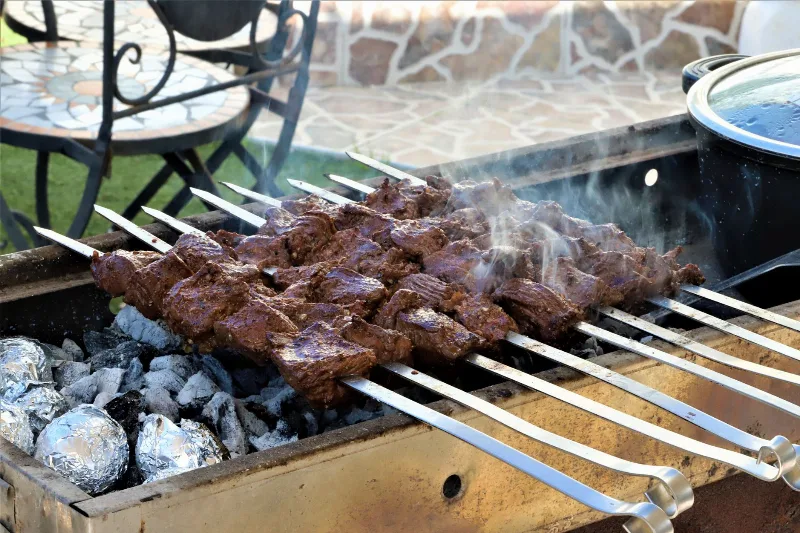
Urfa Kebabı is a charcoal-grilled minced lamb kebab from Şanlıurfa, seasoned without hot pepper and pressed onto long flat skewers. Its mild, juicy character places it alongside — and directly against — the spicier Adana kebabı.
Adana Kebabı
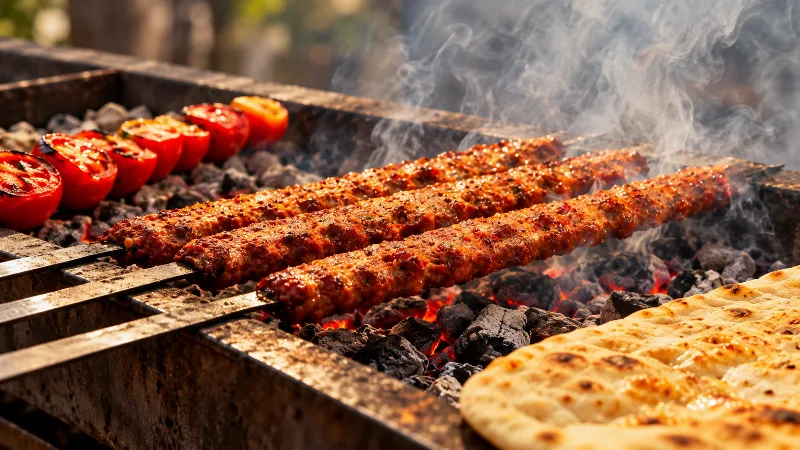
Adana kebabı is a spicy minced-lamb kebab from the southern Turkish city of Adana, moulded onto wide flat skewers and grilled over charcoal. Its heat, its hand-chopped meat and its distinctive flat skewer set it apart from other Turkish kebabs.
Why Turkish Food Changes from Region to Region
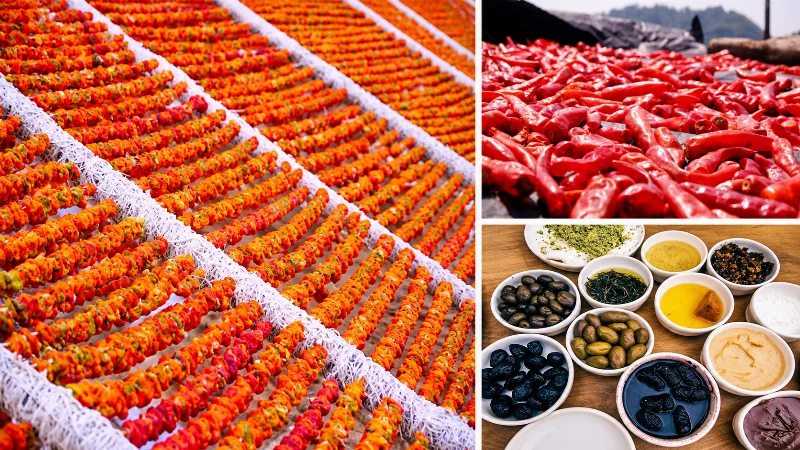
Climate, geography, agriculture and local history shape the ingredients, cooking methods and everyday dishes found across Türkiye. Türkiye’s cuisine is often described as a single national tradition, but food changes considerably from one region to another. Coastal climate, mountain geography, agricultural production, local history and available ingredients all influence what is cooked and how meals are prepared. A dish common on the Black Sea coast may be uncommon in southeastern Türkiye, while ingredients associated with the Aegean can play a much smaller role in the interior. These regional differences form one of the main characteristics of Turkish food culture.
Adana Kebap: Spicy Hand-Minced Lamb Kebab from Adana
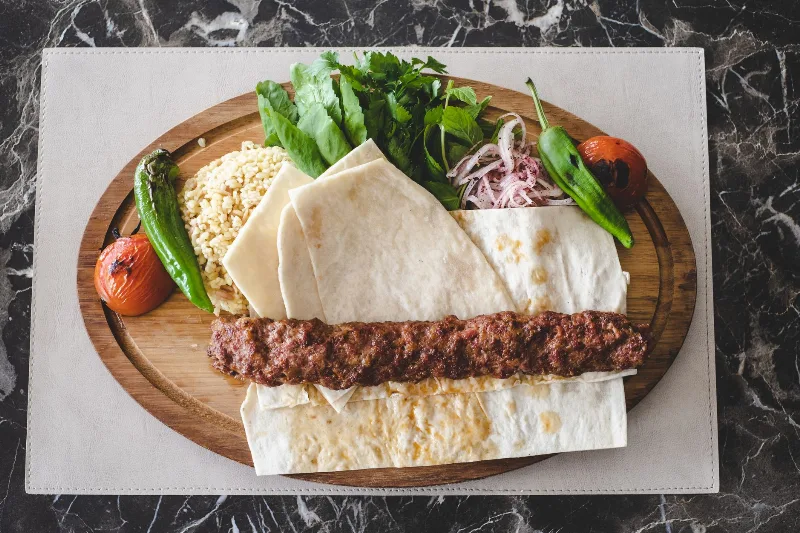
Adana kebap is a charcoal-grilled minced lamb kebab from the Çukurova plain, defined by hand-chopped meat, tail fat and generous chilli heat. This article explains its ingredients, preparation, flavour and how it differs from Urfa kebap.