
Urfa Kebabı
Urfa Kebabı is a charcoal-grilled minced lamb kebab from Şanlıurfa, seasoned without hot pepper and pressed onto long flat skewers. Its mild, juicy character places it alongside — and directly against — the spicier Adana kebabı.
Urfa Kebabı is a grilled kebab made from minced lamb and associated with the south-eastern Turkish city of Şanlıurfa. It follows the same basic technique as Adana kebabı: meat is minced by hand, kneaded until it binds, pressed onto a long flat skewer and cooked over charcoal. What separates the two is seasoning. Urfa Kebabı is prepared without the hot pepper that gives its better-known relative its heat, so the flavour rests mainly on lamb, lamb tail fat and salt, with sweet pepper flakes and black pepper playing a supporting role.
A Kebab Defined by What Is Left Out
Understanding Urfa Kebabı means understanding a single, deliberate choice. The dish is not a different cut of meat, a different cooking method or a different shape from Adana kebabı. It is the same family of minced-meat kebab cooked on flat skewers, made mild rather than hot. That mildness is not an accident of a particular kitchen but the defining trait of the name.
In kebab houses across Türkiye, the two are usually listed side by side, and ordering often comes down to a simple pair of words: one hot, one not. The flat, ribbon-like shape, the coarse hand-minced texture and the charcoal grill are shared. The red-brown colour of an Adana kebab comes largely from hot pepper flakes worked into the meat; an Urfa kebab keeps a paler, gentler tone for the same reason.
The Connection with Şanlıurfa
Şanlıurfa sits in south-eastern Türkiye, close to the Syrian border, in a region with a long and distinctive grill culture. Minced-meat kebabs pressed onto skewers are characteristic of this part of the country, and the two great versions carry the names of the two cities most strongly linked with them, Adana and Şanlıurfa.
The naming reflects regional styles of seasoning rather than a documented single inventor. No reliable source establishes that one person or one kitchen first made the kebab in a particular year, and it is more accurate to treat Urfa Kebabı as the Şanlıurfa expression of a shared south-eastern tradition than as a dish with a fixed birth date. Because cooks from both cities opened establishments elsewhere in Türkiye, both kebabs travelled far beyond their home regions and are now standard items in grill restaurants nationwide.
The city's culinary identity includes other well-known preparations as well, among them çiğ köfte, and Şanlıurfa is widely recognised for its isot pepper. That pepper is part of the region's food culture, but it is not what defines this kebab, which is deliberately built around restraint.
Main Ingredients
The core of the mixture is lamb, often taken from the shoulder or neck, combined with lamb tail fat. The fat is not incidental: it keeps the fine-grained minced meat moist over the fire and carries much of the flavour. Salt is the main seasoning. Sweet red pepper flakes and black pepper are typical additions, and some cooks include a little grated onion or its juice, occasionally a touch of garlic, worked into the meat rather than left in visible pieces.
This is where the dish differs sharply from Turkish köfte. Minced-meat köfte usually contains breadcrumbs, egg or other binders and is shaped by hand into patties. Kebab mixtures of this type are simpler, held together by the stickiness of well-kneaded meat and fat, without fillers.
How It Is Traditionally Prepared
Traditionally the meat is not put through a fine machine grinder. A curved, heavy-bladed knife called a zırh is used to chop the lamb and tail fat together until the mixture reaches a coarse but even texture. Chopping rather than grinding keeps the meat from turning into a paste and preserves a slight graininess.
The chopped meat is then kneaded with the seasonings until it becomes tacky enough to hold its shape. Some cooks rest the mixture briefly before shaping. Portions are pressed around long, wide, flat metal skewers, spread into a strip that is thick in the middle and tapers towards the ends, with ridges left by the fingers.
Cooking takes place over charcoal. The flat skewer is a practical choice: it grips the soft mixture and gives the kebab its characteristic flattened form, which puts more of the surface in contact with the heat. As the skewers turn, the tail fat renders and bastes the meat from within, producing a lightly charred outside and a juicy interior.
Flavour, Texture and Appearance
Eaten on its own, Urfa Kebabı tastes first of lamb. The seasoning is gentle: a faint sweetness from the pepper flakes, a mild warmth rather than heat, and the roundness that rendered fat gives to grilled meat. The char from the grill adds a light smokiness at the edges.
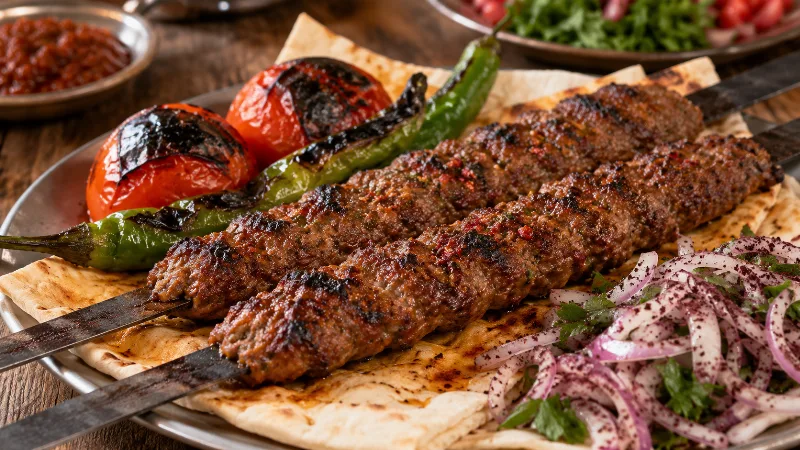
The texture is dense and fine. Because the meat is chopped and kneaded rather than loosely crumbled, a properly made kebab holds together when lifted from the skewer and gives a slight resistance before yielding. The flat profile means less of the interior is exposed directly to the fire, which helps keep it juicy. Visually, it is a long, flattened strip of reddish-brown meat with darker grill marks and paler lines where the skewer pressed into it.
How It Is Served
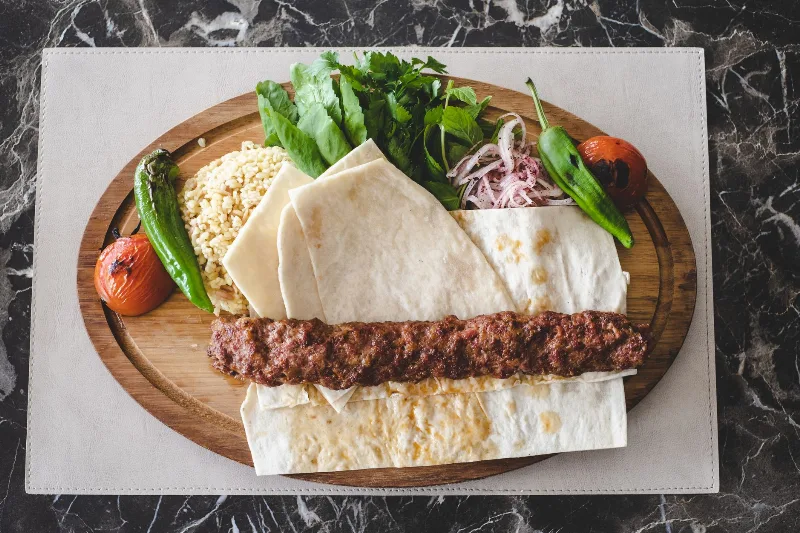
Urfa Kebabı is usually served on a piece of flatbread, either lavash or pide, laid under and sometimes over the meat so the bread soaks up the fat and juices. Alongside it come grilled tomato and green pepper, a parsley garnish and, almost always, a sumac onion salad — thinly sliced raw onion tossed with sumac and often a little parsley. Lemon may be squeezed over the meat, and ayran, the salted yogurt drink, is a common companion.
In kebab houses the dish may arrive still on the skewer or slid off onto the bread. Some places serve bulgur pilaf next to it, and in simpler street settings the kebab, the onions and the grilled vegetables are rolled up inside the lavash and eaten by hand. It is primarily a main meal, most often eaten in the evening, and belongs to the ocakbaşı style of eating, where diners sit around an open charcoal grill.
Urfa Kebabı and Adana Kebabı
The comparison is unavoidable, because the two are variations on one theme. Both use hand-minced lamb with tail fat, both are pressed onto flat skewers and both are grilled over charcoal. Adana kebabı is seasoned with hot pepper, giving it a distinctly spicier character and a deeper red colour. Urfa Kebabı is the mild counterpart.
In practice the distinction is maintained as much by menu convention as by strict recipe. Some kitchens prepare the mixture differently for each name, while others lean mostly on how much hot pepper goes in. This is why the same dish can arrive with a little warmth in one establishment and almost none in another. Describing Urfa Kebabı as mild is a useful general rule rather than an absolute guarantee in every kitchen.
Related Dishes and Variations
The minced-meat kebab on a flat skewer has close relatives. Beyti kebab takes a similar grilled minced meat, wraps it in lavash with a tomato-based sauce and yogurt, and slices it before serving. Döner is a different technique altogether, built from stacked marinated meat roasted on a vertical spit, and şiş kebab uses cubed rather than minced meat. Within the same broad family, some versions of the mild kebab are prepared with more or less fat, and a few cooks add small amounts of other seasonings, but the structure stays recognisable.
What a reader should take away is simple. Urfa Kebabı is a Şanlıurfa-style grilled lamb kebab, hand-minced with tail fat, shaped onto a flat skewer and cooked over charcoal, and it is defined above all by the heat it deliberately does not have. That restraint is what lets the lamb itself, rather than the pepper, lead the flavour.
Related content
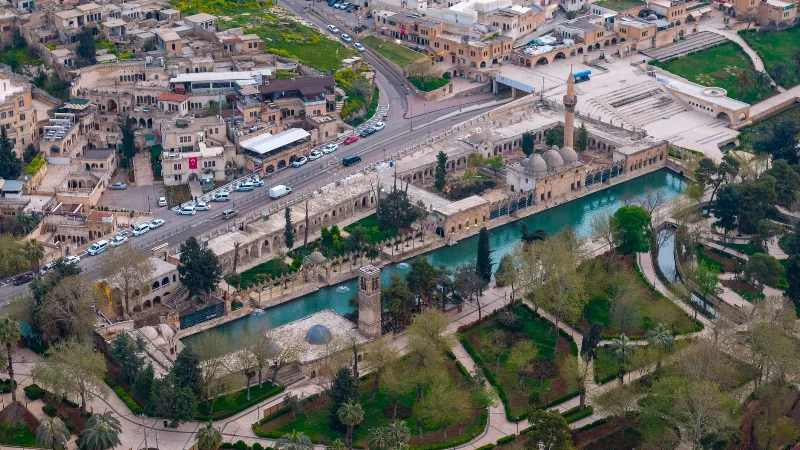
Şanlıurfa
Şanlıurfa, commonly called Urfa, is a large city in southeastern Türkiye and the capital of its province. It is known both as a place tied to the tradition of the Prophet Abraham and as the gateway to Göbekli Tepe, one of the oldest monumental sites ever found.
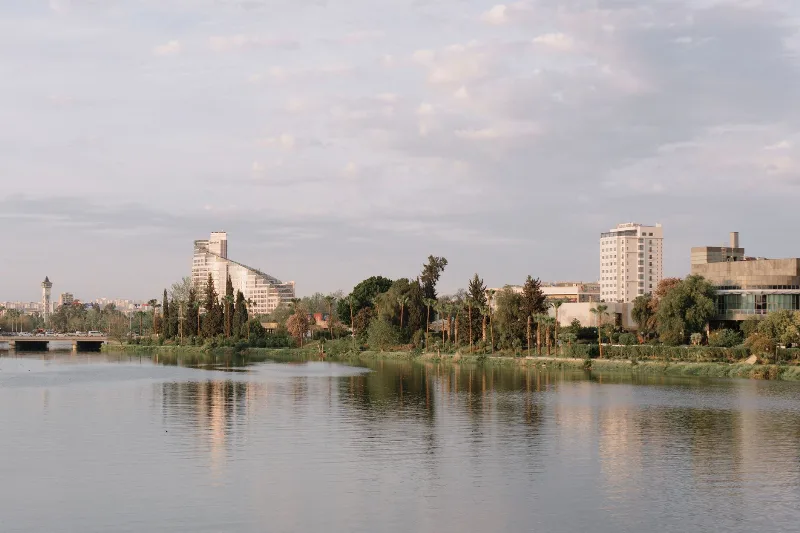
Adana
Adana is a major metropolitan city in southern Türkiye and the urban heart of the Çukurova plain, defined by the Seyhan River, a Roman-era stone bridge and a deeply rooted kebab and agricultural culture.
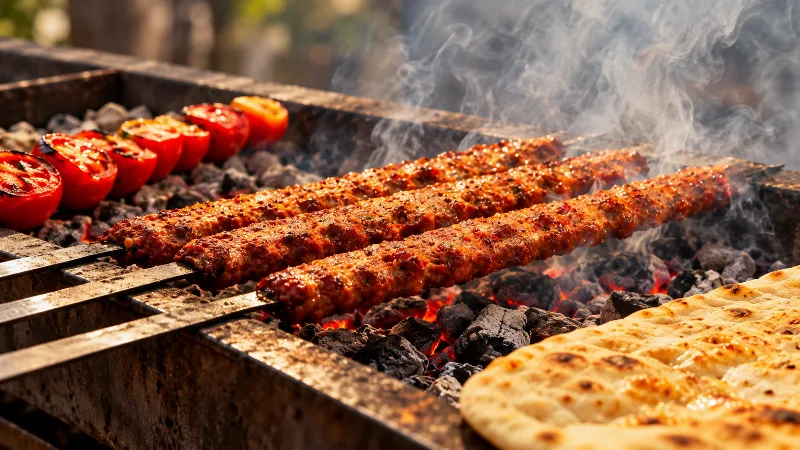
Adana Kebabı
Adana kebabı is a spicy minced-lamb kebab from the southern Turkish city of Adana, moulded onto wide flat skewers and grilled over charcoal. Its heat, its hand-chopped meat and its distinctive flat skewer set it apart from other Turkish kebabs.
Adana Kebap: Spicy Hand-Minced Lamb Kebab from Adana
Adana kebap is a charcoal-grilled minced lamb kebab from the Çukurova plain, defined by hand-chopped meat, tail fat and generous chilli heat. This article explains its ingredients, preparation, flavour and how it differs from Urfa kebap.
Urfa Kebap
Urfa Kebap is a charcoal-grilled minced lamb kebab from Şanlıurfa, seasoned without hot chilli and shaped around flat skewers. Its mildness is what sets it apart from the region's other minced kebabs.
Şiş Kebap
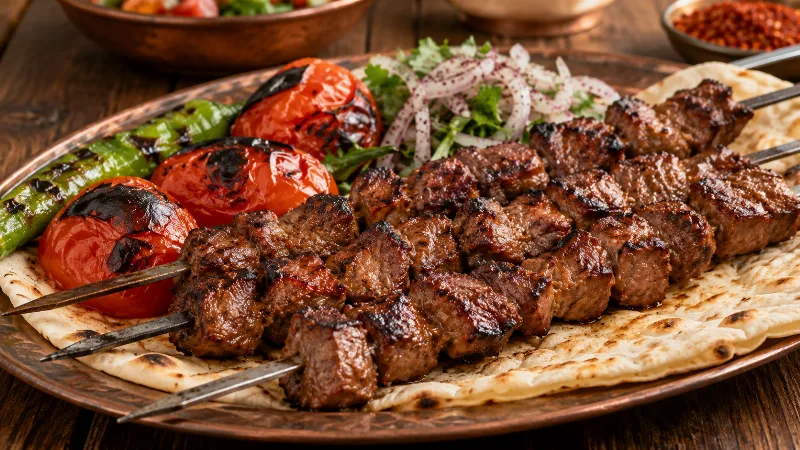
Şiş kebap is built from cubes of marinated meat threaded onto a skewer and grilled over charcoal. It is one of the simplest forms of Turkish kebab, defined by the cut of meat, the marinade and the skewer itself.