
Şanlıurfa
Şanlıurfa, commonly called Urfa, is a large city in southeastern Türkiye and the capital of its province. It is known both as a place tied to the tradition of the Prophet Abraham and as the gateway to Göbekli Tepe, one of the oldest monumental sites ever found.
Şanlıurfa, almost always called simply Urfa, is a city in the southeast of Türkiye and the administrative centre of Şanlıurfa Province. It lies on the broad plains of the Southeastern Anatolia Region, north of the Syrian border and east of the Euphrates, and ranks among the largest urban centres in this part of the country. What sets it apart is a rare combination: a long sacred tradition linked to the Prophet Abraham, and the presence of Göbekli Tepe, a Neolithic site of world importance, in the countryside just outside the city.
Where Urfa Sits in Southeastern Anatolia
The city occupies a gently rolling plateau that forms part of the northern edge of the Mesopotamian plain. To the west, the Euphrates and its great dams shape the landscape and the regional economy, while the land around Urfa itself is largely given over to fields, dry slopes and open horizons. For much of its history the area depended on wells and springs, but large-scale irrigation linked to the Southeastern Anatolia Project has transformed the surrounding farmland and pushed cultivation far beyond what the dry climate once allowed. Şanlıurfa therefore stands at the meeting point of an old caravan and pilgrimage town and a fast-growing modern regional centre.
Urfa and the Tradition of the Prophet Abraham
Urfa is widely regarded as a holy city, above all because of its association with Abraham, who is revered in Islam, Christianity and Judaism. Local tradition holds that Abraham was born here, and a cave beside the Mevlid-i Halil Mosque is venerated as his birthplace. That belief gives the city a quiet religious weight that visitors sense around the old core, where pilgrims and worshippers move between the mosque, the cave and the nearby pools throughout the year.
The Historic Core and Balıklıgöl
The heart of Urfa is the quarter around Balıklıgöl, the Pool of Abraham, a spring-fed basin of still water filled with carp that are considered sacred and are left undisturbed. The pool is framed by the Halil-ür Rahman Mosque and the Rızvaniye Mosque, and the surrounding gardens, arcades and tea gardens make this the most recognisable part of the city. According to tradition, the water here is connected to the story of Abraham being cast into a fire that was turned to water and flames into fish.
Beyond the pool, the historic core preserves the texture of an old southeastern Anatolian town. Narrow lanes lead through traditional stone houses with carved details and shaded courtyards, and the covered bazaars spread out as a working trading area rather than a display. The Gümrük Hanı, a historic caravanserai, is one of the most familiar of these commercial buildings, and the bazaar streets around it sell textiles, spices, copper and the region's peppers. Above the old town, Urfa Castle occupies a hilltop with two tall columns that have become a symbol of the city and a viewpoint over the plain below.
Göbekli Tepe and the Deep Past
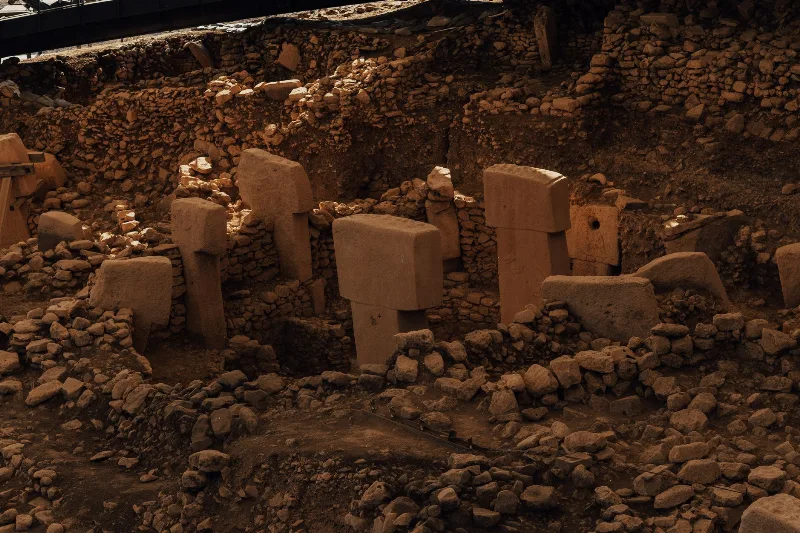
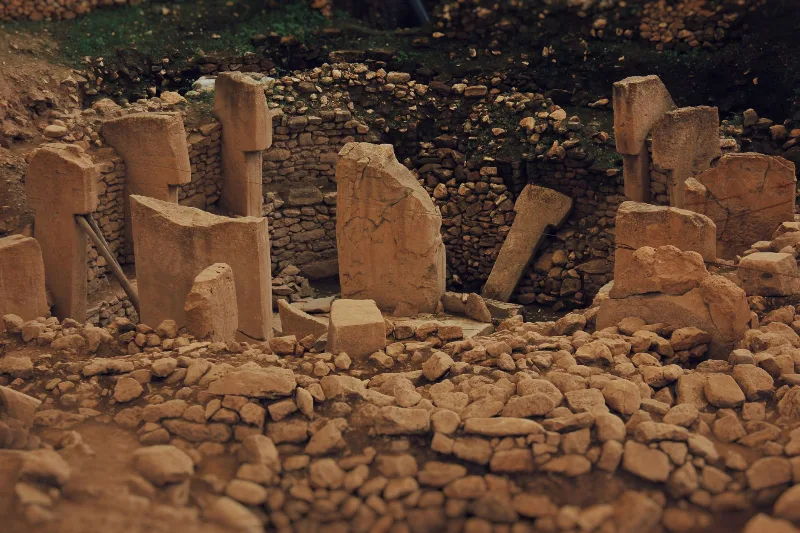
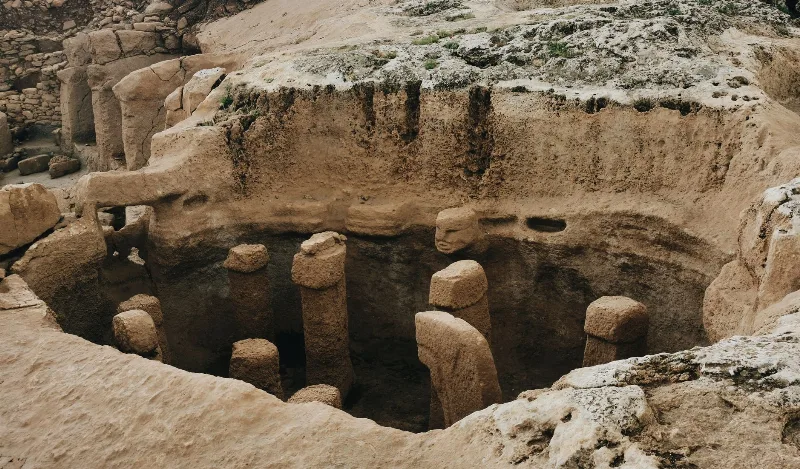
In the hills northeast of the city stands Göbekli Tepe, a Neolithic site dated to roughly twelve thousand years ago and recognised as a UNESCO World Heritage Site. Its carved stone pillars and enclosures reshaped how archaeologists understand early human settlement, and finds from the site are displayed in the Şanlıurfa Archaeology Museum in the city. The full story of the site belongs with detailed historical coverage; here it is enough to note how strongly this discovery has reframed Urfa's place in world prehistory and drawn scholarly and general interest to the whole province.
Harran and the Surrounding Plains
South of Urfa, close to the Syrian border, lies Harran, an ancient settlement whose name appears in very early records and which is known for its distinctive domed beehive houses. Harran is a separate historic place in its own right and is best treated through its own coverage, but its proximity makes it a natural part of any understanding of the district. The wider province stretches south into flatter, hotter farmland and north into higher ground, giving Şanlıurfa a varied rural character that extends well beyond the city limits.
Climate and the Character of the Year
Şanlıurfa has a continental, semi-arid climate. Summers are long, dry and very hot, with temperatures that can become severe in July and August, and shade and water matter greatly in the historic core during those months. Winters are comparatively mild, though nights can be cold and the plateau occasionally sees frost. Spring and autumn are generally the most comfortable periods for moving around the old town, the bazaars and the surrounding sites, when daytime heat is easier to manage and the plains are at their greenest.
Food and Local Identity
The city's kitchen is closely tied to the surrounding farmland and to the region's love of pepper and spice. Isot, a dark dried pepper typical of Urfa, gives many local dishes their smoky character, and çiğ köfte is strongly associated with the city as a traditional preparation. These foods are part of how the place identifies itself rather than a menu of attractions, and they reflect a broader southeastern Anatolian cooking tradition shared with neighbouring provinces.
Reaching Şanlıurfa and Its Place in the Region
Şanlıurfa is served by an airport that handles domestic and some international flights, and it is also connected by long-distance roads that link it to the wider region. It sits within reach of other major southeastern cities, including Gaziantep to the west, Mardin and Diyarbakır to the east and northeast, forming a natural stop on a route through the southeast. From the city, visitors can organise short trips to Göbekli Tepe and Harran, while the historic core itself is compact enough to explore on foot.
Taken together, Şanlıurfa is a large provincial capital with a devout and deeply historic character, an old bazaar town built around sacred springs, and a modern regional hub set on the dry plains of the southeast. Its identity rests on the meeting of the very recent and the very ancient, of Abraham's tradition and Göbekli Tepe's far older stones, in a landscape shaped by the Euphrates and the long agricultural history of southeastern Türkiye.
Discover Food in Türkiye
All food →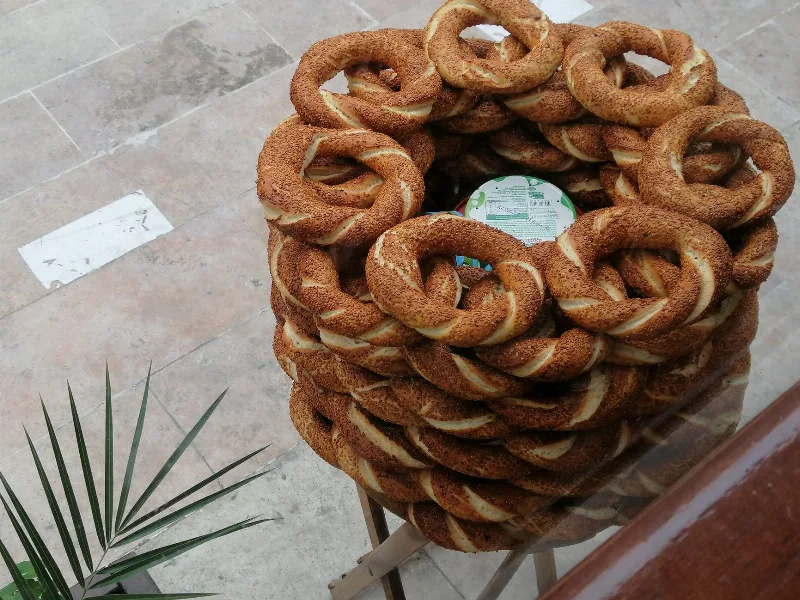
Simit
Simit is a ring-shaped Turkish bread covered in sesame seeds, strongly associated with Istanbul and sold as everyday street food. It is eaten fresh, most often with tea, and has a crisp crust around a chewy crumb.
Explore →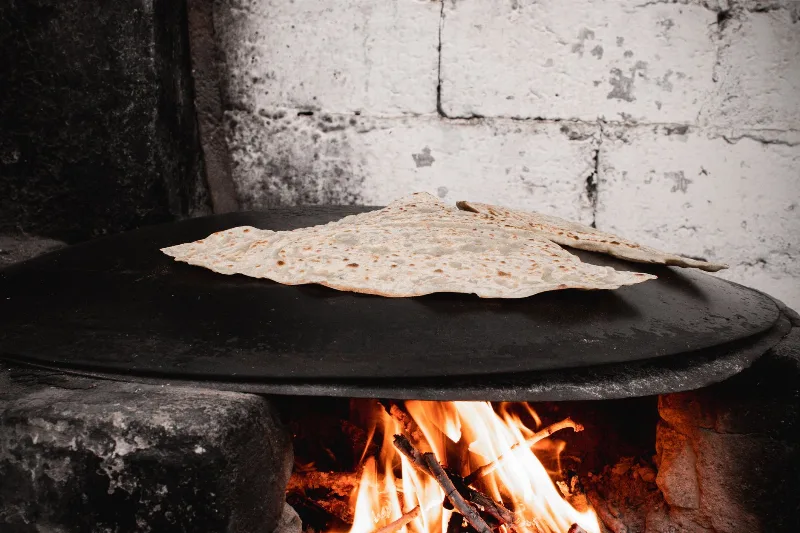
Bazlama
Bazlama is a soft, thick Turkish flatbread made from a leavened dough and cooked on a hot griddle. It is a staple of village baking across Anatolia, eaten warm with butter or used to wrap other foods.
Explore →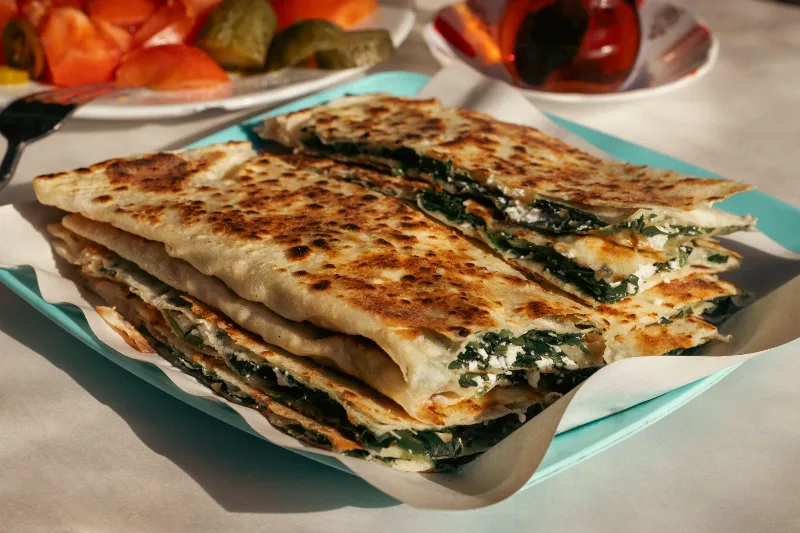
Gözleme
Gözleme is a thin, hand-rolled Anatolian flatbread folded around savory fillings such as cheese, spinach, or minced meat and cooked on a sac griddle. The article covers its regional variations, cooking method, texture, and traditional serving style.
Explore →Related content
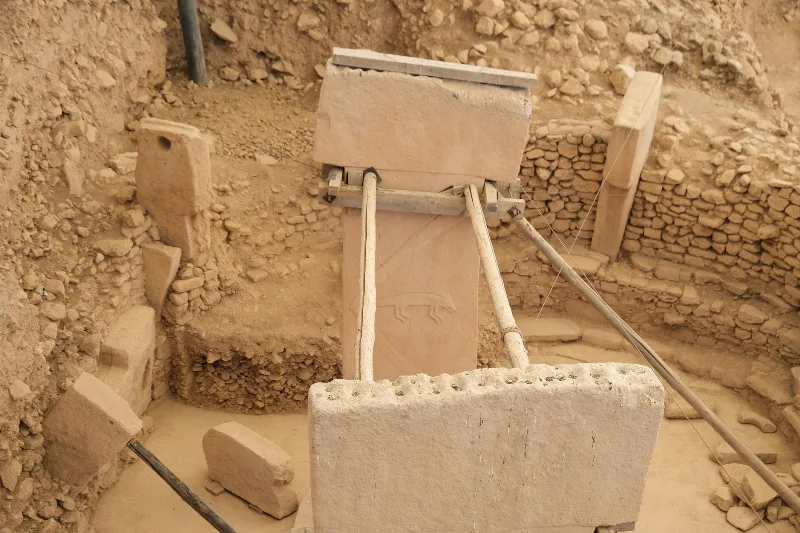
Göbekli Tepe
Göbekli Tepe is the oldest known monumental stone complex, raised by hunter-gatherers near Şanlıurfa in southeastern Türkiye around 9600 BCE. Its carved T-shaped pillars and deliberate burial have reshaped ideas about the Neolithic.
Southeastern Anatolia Region
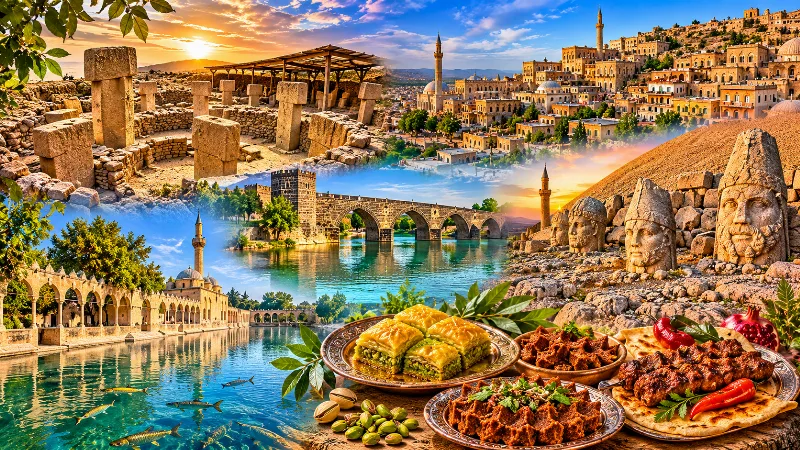
Southeastern Anatolia is known for its ancient cities, extraordinary archaeological heritage, traditional stone architecture and rich culinary culture. From the historic streets of Mardin to the monumental landscapes of Şanlıurfa and the Euphrates River, the region reflects thousands of years of civilization.
Gaziantep
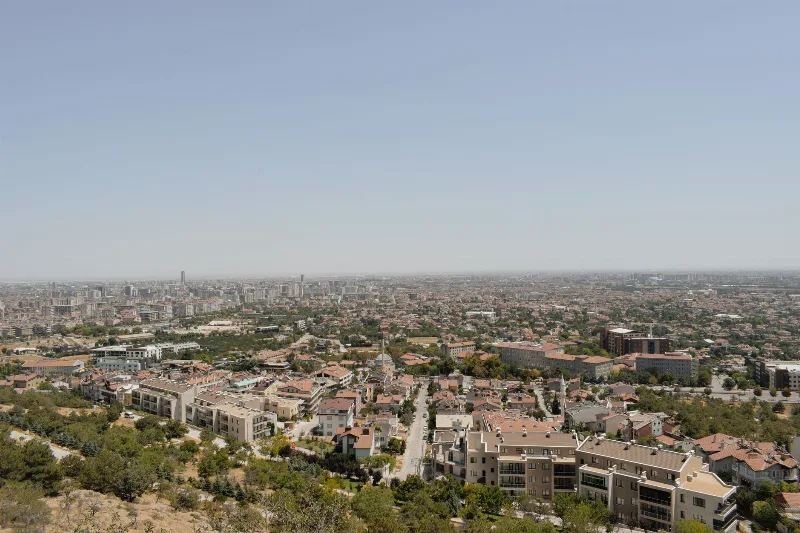
Gaziantep is a major city in southeastern Türkiye and the administrative centre of its province, widely recognised as the country's gastronomic capital and known for its citadel, bazaars and the Zeugma Mosaic Museum.
Uncovering the Mysteries of Göbekli Tepe
Explore Göbekli Tepe, an ancient archaeological site that reshapes our understanding of human history and civilization.
Göbekli Tepe Archaeological Site
Discover Göbekli Tepe, an extraordinary archaeological site in Türkiye revealing ancient civilizations through its monumental structures.
Karahan Tepe
Karahan Tepe is a Pre-Pottery Neolithic site in Şanlıurfa Province, Türkiye, known for T-shaped pillars and animal reliefs and dated to roughly 9500 BCE.