
Simit
Simit is a twisted ring bread coated in sesame seeds, sold across Türkiye as an everyday street food and breakfast staple. This article explains its ingredients, how it is baked, its textures and flavours, and the regional divide between Istanbul simit and İzmir gevrek.
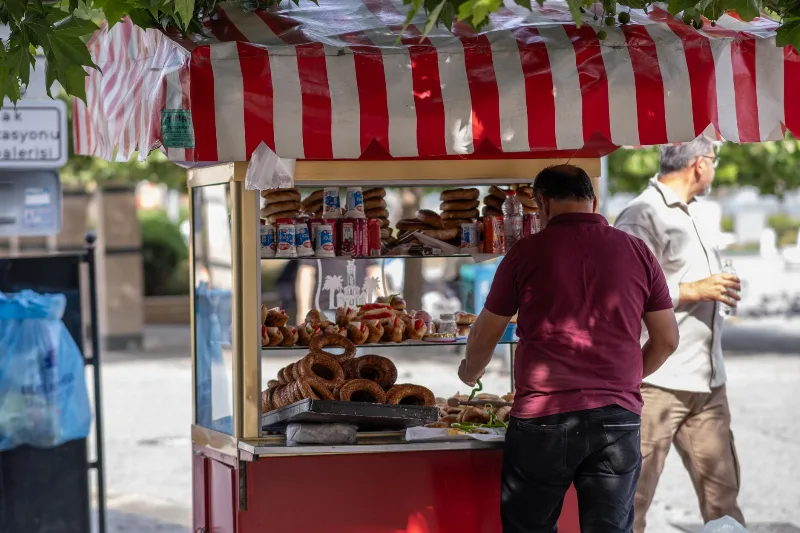
Simit is a ring-shaped bread covered in sesame seeds that is sold and eaten throughout Türkiye, most often as a street food and as a breakfast food. Its dough is made from wheat flour, water, yeast and salt, and before baking the rings are dipped in a diluted grape molasses wash and rolled in sesame seeds. Simit is most strongly associated with Istanbul and the Marmara region, although in İzmir and parts of the Aegean the same ring-shaped bread is known as gevrek. It is one of the most familiar everyday foods in the country, sold from small carts, hand-carried trays and neighbourhood bakeries rather than treated as a restaurant dish.
What Simit Is Made Of
The core ingredients are ordinary and few: wheat flour, water, salt and a leavening agent, usually commercial yeast, though some bakeries work with a pre-ferment or a sourdough-style starter for flavour and keeping quality. Some doughs include a small amount of oil or butter, but the character of the bread comes from its shape and its coating rather than from rich ingredients.
Sesame seeds are the defining feature. The formed rings are passed through a thin solution of grape molasses (pekmez) in water, which makes the seeds adhere and gives the crust its colour and a faint sweetness. This molasses wash is what separates simit from a plain bread ring; without it the sesame coating would not hold and the surface would bake to a pale, neutral crust.
How Simit Is Traditionally Prepared
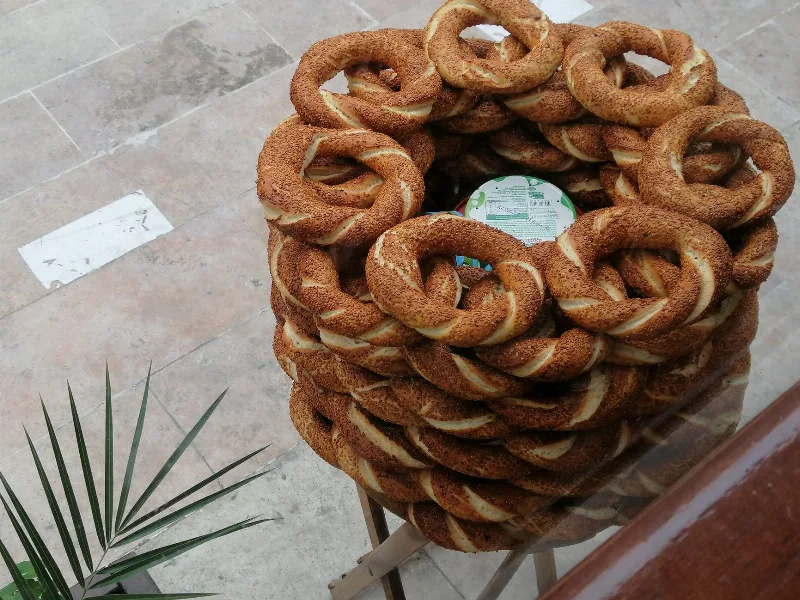
The dough is mixed, kneaded and left to rise. It is then divided into small portions, and each portion is rolled out into a long rope. The rope is folded, twisted or braided back on itself, then joined at the ends to close the ring. This twisting is what produces the layered strands visible on the surface of a finished simit and gives the bread its characteristic irregular outline.
Once shaped, the rings are dipped in the molasses solution and turned in a wide tray of sesame seeds so that the surface is thickly coated. They are then baked in a very hot oven, traditionally a stone or wood-fired oven, until the crust turns a deep golden brown and the sesame seeds toast. The baking stage is quick; simit is a bread meant to be made fresh and sold the same day.
Texture, Flavour and Appearance
A fresh simit has a crisp, slightly brittle outer crust and a dense, chewy interior. The toasted sesame is the dominant aroma, supported by the mild sweetness of the molasses wash and the savoury note of salt. The colour ranges from golden to dark brown, depending on how long the ring stays in the oven and how heavy the molasses wash is. The ring is firm enough to hold its shape when carried, which is one reason it became such a practical street food.
Simit does not keep well. Within a few hours the crust softens or turns leathery, and a stale simit is noticeably tough. This short life is part of why the bread is bought and eaten on the day it is baked rather than stored.
Origins and the Ottoman Background
The word simit comes from the Arabic samīd, meaning fine white flour or semolina, and it entered Turkish through Ottoman usage. Simit appears in Ottoman sources by at least the sixteenth century, and records from Istanbul mention organised simit makers and their guilds. Sesame-coated ring breads of various kinds are found across the eastern Mediterranean and the Middle East, so the dish belongs to a wider family of breads rather than being a single isolated invention. The precise path by which these related breads developed is not fully documented, and claims of one exact origin should be treated with caution.
Istanbul, İzmir and the Name Gevrek
The strongest regional identity attached to the bread is the naming divide between Istanbul and İzmir. In Istanbul and most of the country the ring is called simit. In İzmir and its surroundings the same bread is called gevrek, and the İzmir version is commonly described as thinner, crisper and more deeply coloured than the plumper Istanbul simit. Both are sesame-coated ring breads with the same basic ingredients, and the difference lies in proportion and baking rather than in kind.
Kandil Simidi and Related Baked Foods
Kandil simidi is a distinct ring bread made for kandil evenings, the nights of religious observance in the Islamic calendar. It is usually smaller and richer than everyday simit, made with butter and often flavoured with mahlep, and it is baked in large batches to be shared with neighbours and visitors. It is a home and neighbourhood bread rather than a street food.
Two other baked goods are often confused with simit. Açma is a soft, ring-shaped or twisted pastry, typically without a sesame coating, with a lighter and more tender crumb. Poğaça is a small soft bun, usually filled or topped with cheese, olives or herbs, and it is not ring-shaped at all. The sesame crust and the twisted ring are what mark out simit from both.
How Simit Is Eaten
Simit is most often eaten at breakfast with tea, accompanied by white cheese, olives, tomatoes, cucumber and jam. It is also eaten as a snack at any hour, and the pairing of simit with ayran is a familiar one. Because it is cheap and portable, it is bought on the way to work, on ferries, at bus and train stations and in busy streets. In more recent decades a split and toasted simit filled with cheese, known as simit tost, has become a common quick meal, though this is a modern use rather than a traditional serving.
Cultural Significance
Simit occupies a particular place in daily life as an affordable, widely available food eaten by almost everyone. It is tied to the rhythm of the morning and to the streets of Istanbul, where vendors sell it from carts and trays. Its importance is not ceremonial but everyday: it is the bread of the commute, the school break and the short pause for tea, rather than a dish reserved for special occasions.
Related content
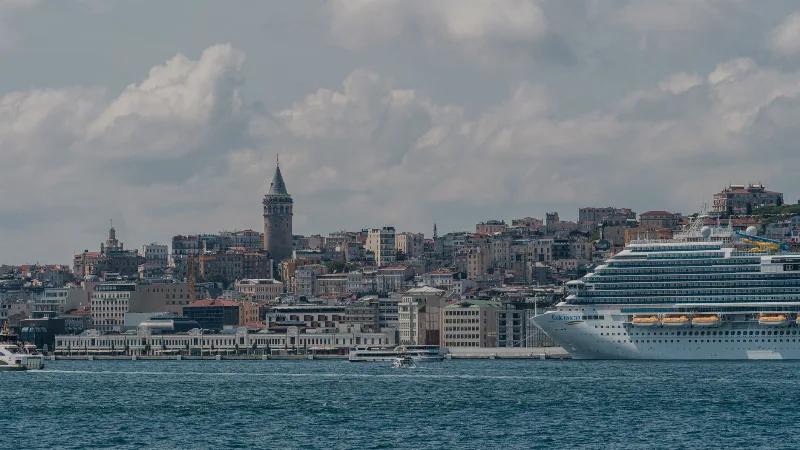
Istanbul
Istanbul is Türkiye's largest city and the country's only metropolis that spans two continents, divided by the Bosphorus strait into a European and an Asian half. Its long run as an imperial capital left a historic core of palaces, mosques and bazaars that still shapes the city's identity.
Simit
Simit is a ring-shaped Turkish bread covered in sesame seeds, strongly associated with Istanbul and sold as everyday street food. It is eaten fresh, most often with tea, and has a crisp crust around a chewy crumb.
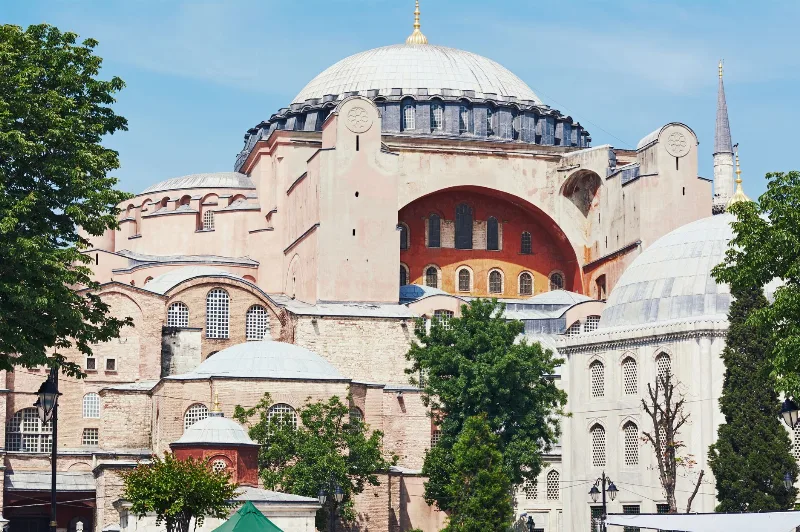
1-Day Istanbul Historic Peninsula Route
Explore Istanbul's Historic Peninsula in one day on foot, visiting Hagia Sophia, the Blue Mosque, Topkapı Palace, and the Grand Bazaar. This compact walking route covers the highlights of Sultanahmet with a logical, easy-to-follow order.

The Serene Beauty of the Princes' Islands
Just a short ferry ride from Istanbul, the Princes' Islands offer pine-covered hills, car-free streets and calm Marmara Sea views. This guide explores the archipelago's landscapes, history and island life.
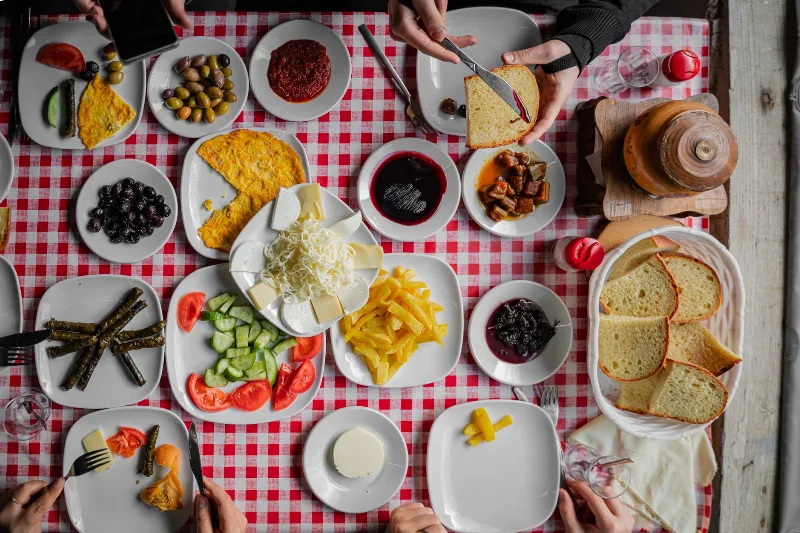
The Traditional Turkish Breakfast Spread Across Türkiye
Turkish breakfast, or kahvaltı, is a leisurely morning meal of cheeses, olives, breads, and teas that reflects Türkiye's regional diversity and communal spirit.
Sampling the Unique Flavors of İzmir's Street Food
İzmir's street food follows its own calendar, from sesame gevrek at sunrise to stuffed mussels and grilled kokoreç after dark. The city's Aegean setting shapes a cuisine built on olive oil, herbs and seafood.