
Gaziantep
Gaziantep is a major city in southeastern Türkiye and the administrative centre of its province, widely recognised as the country's gastronomic capital and known for its citadel, bazaars and the Zeugma Mosaic Museum.
Gaziantep is a large city in southeastern Türkiye and the administrative centre of Gaziantep Province. Lying close to the Syrian border, it is one of the most populous urban centres in the region and is best known internationally as Türkiye's gastronomic capital, with pistachios and baklava as its most recognisable products.
Where Gaziantep Sits in Southeastern Türkiye
The city occupies a raised plateau in the western part of the Southeastern Anatolia region, between the Mediterranean-influenced landscapes to the west and the drier plains that stretch toward the Euphrates to the east. This intermediate position has shaped the city's climate, agriculture and long history: it sits at a meeting point of Anatolian, Mesopotamian and Levantine influences rather than squarely inside any one of them. The wider province is a patchwork of farmland, olive and pistachio groves, vineyards and low hills, dotted with smaller towns and villages that share the city's cultural character.
A Settlement at an Ancient Crossroads
Gaziantep has been continuously inhabited for a very long time and appears in historical records under earlier names such as Antep and Aintab. Its strategic location on routes linking Anatolia with northern Syria and Mesopotamia brought merchants, armies and administrators through the area across many centuries. That layered past is visible less in grand monuments than in the density of old stone buildings, religious structures and commercial architecture that survive in the core of the modern city.
The Citadel and the Historic Core
The centre of Gaziantep is organised around a low hill crowned by the citadel, a stone fortress that gives the old city its focal point. The hill has been fortified in one form or another for many centuries, and the surviving structure reflects later rebuilding rather than a single period of construction. The February 2023 earthquakes that struck the region caused significant damage in the city, including to the castle, so parts of the historic centre have been affected by restoration and safety work.
Bazaars, Hans and Traditional Architecture
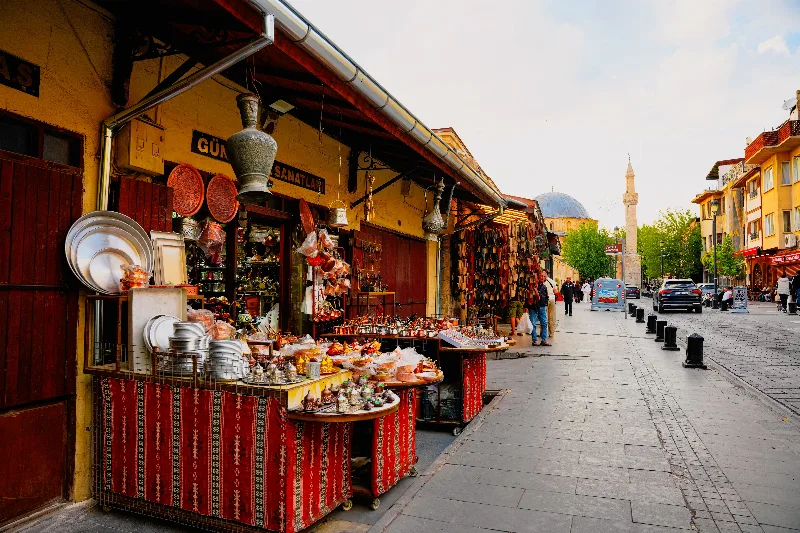
Below the citadel, the old commercial quarter preserves the texture of a trading city. Covered markets and bedestens, stone-built hans that once served travelling merchants, and the coppersmiths' bazaar reflect an economy built on craft and exchange. Narrow streets are lined with pale local stone, and several historic mosques stand within walking distance of one another. This dense, walkable core is where the city's architectural identity is clearest, and it contrasts sharply with the broad boulevards and modern apartment districts that have grown outward in recent decades.
Zeugma and the Mosaic Museum
Gaziantep's museum landscape is anchored by the Zeugma Mosaic Museum, which displays mosaics and finds associated with the ancient city of Zeugma, a settlement that once controlled a crossing of the Euphrates. The museum gives context to the region's deeper past and complements the historic sites found along the river to the east. Visitors interested in antiquity generally treat the museum and the surviving remains in the surrounding countryside as related stops rather than separate subjects.
A Culinary Identity Rooted in the Region
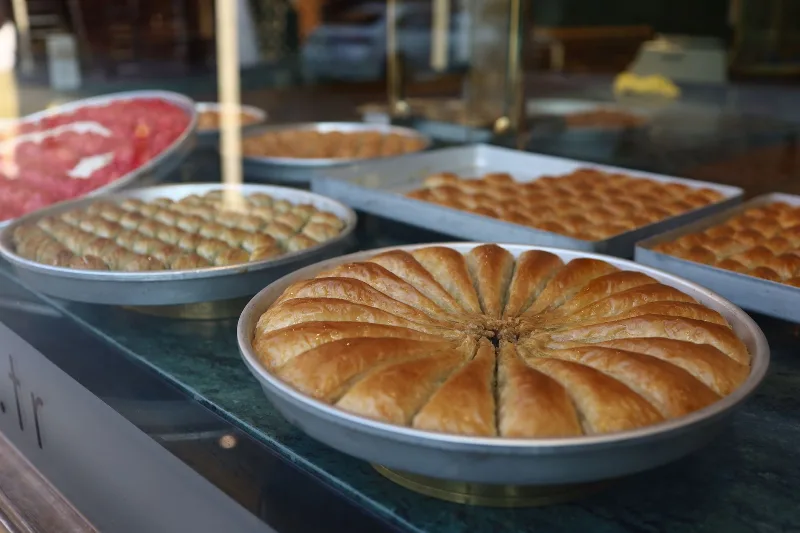
Food is central to how Gaziantep presents itself. The province is a major producer of pistachios, and the nut appears in pastries, sweets and savoury dishes alike. Baklava, katmer and similar pastries are part of the local identity, while lahmacun, kebabs, stuffed dishes and a strong coffee culture belong to everyday eating. In 2015 the city was recognised by UNESCO as a Creative City of Gastronomy, a reflection of how regional agriculture, family kitchens and long-standing craft traditions combine here. Regional produce such as pistachios, peppers, aubergines, olives and pulses shapes the local table and connects the city to the farmland around it.
Landscape and Surrounding Area
The countryside around Gaziantep is agricultural rather than dramatic: rolling fields, orchards and groves interspersed with small towns. Toward the east the land drops toward the Euphrates, where the river valley supports settlements with their own distinct character, including towns around Halfeti and the area linked to ancient Zeugma. These places are geographically tied to Gaziantep but have separate identities and histories, which makes them natural extensions of a visit rather than neighbourhoods of the city itself.
Climate and General Timing
Gaziantep has a transitional climate, combining hot, dry summers with colder winters that are noticeably harsher than on the Mediterranean coast. Snow is possible in winter, while summer afternoons can be very warm. Spring and autumn generally offer the most comfortable conditions for walking the old town, exploring markets and travelling through the surrounding countryside. Summer visits tend to be better suited to early mornings and shaded areas.
Reaching the City and Its Regional Role
Gaziantep is served by an airport and lies on major road connections linking it with Adana and the Mediterranean coast to the west, and with Şanlıurfa and the Euphrates corridor to the east. This position makes it a practical base for exploring southeastern Türkiye, a working commercial and industrial centre in its own right, and a place where the region's food, craft and history are concentrated. Understanding it as a crossroads city, rather than a coastal resort or a purely historic site, is the key to reading its layout, its economy and its character.
Discover Food in Türkiye
All food →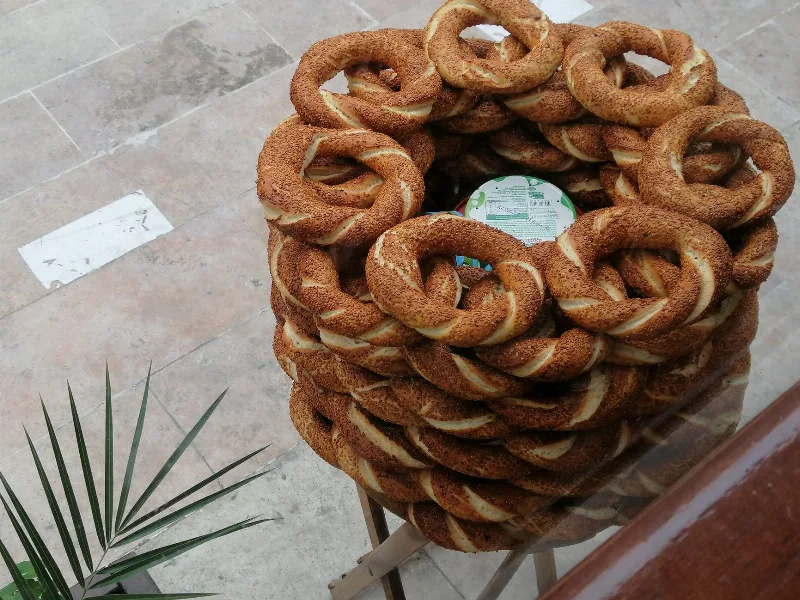
Simit
Simit is a ring-shaped Turkish bread covered in sesame seeds, strongly associated with Istanbul and sold as everyday street food. It is eaten fresh, most often with tea, and has a crisp crust around a chewy crumb.
Explore →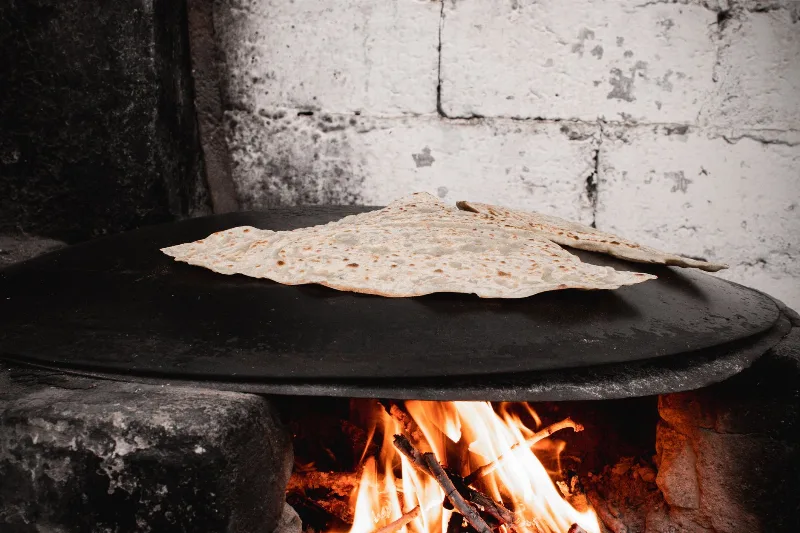
Bazlama
Bazlama is a soft, thick Turkish flatbread made from a leavened dough and cooked on a hot griddle. It is a staple of village baking across Anatolia, eaten warm with butter or used to wrap other foods.
Explore →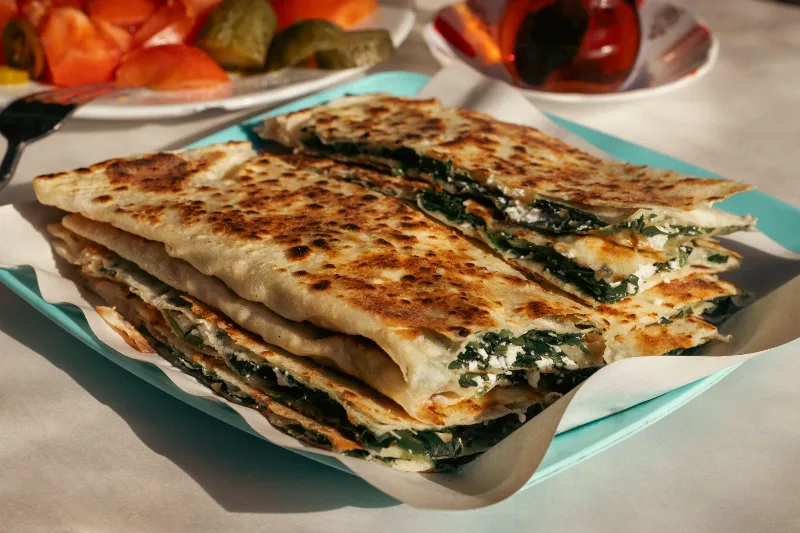
Gözleme
Gözleme is a thin, hand-rolled Anatolian flatbread folded around savory fillings such as cheese, spinach, or minced meat and cooked on a sac griddle. The article covers its regional variations, cooking method, texture, and traditional serving style.
Explore →Related content
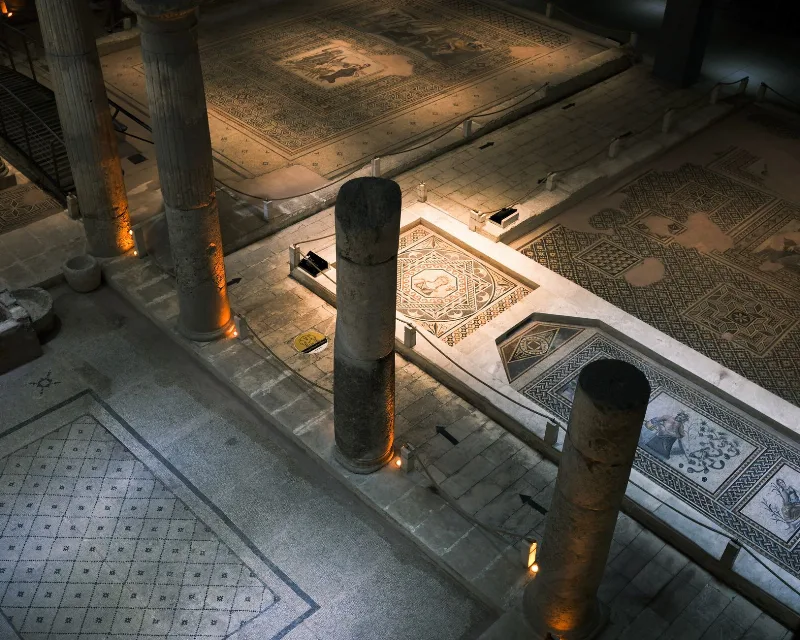
Zeugma
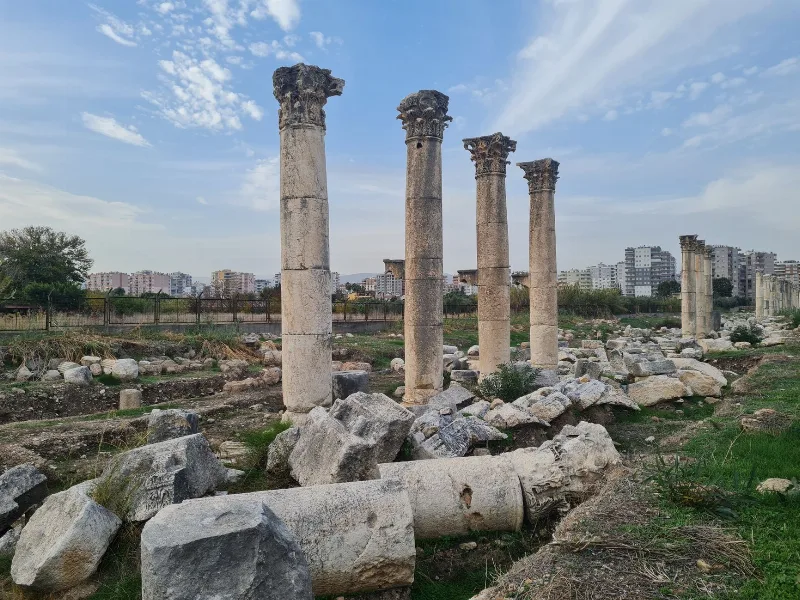
Zeugma was a twin Roman city on the Euphrates in Gaziantep Province, famous for the mosaics recovered from its riverside villas. Here is what the site is, what survives, and what to know before visiting.
Zeugma
Zeugma was a Hellenistic and Roman city on the Euphrates in Gaziantep Province, important for its river crossing and Roman garrison. Its excavated houses produced celebrated mosaics, many now shown in the Zeugma Mosaic Museum in Gaziantep.
Baklava
Baklava is a traditional Turkish dessert made of layered phyllo dough, filled with nuts and sweetened with syrup. Strongly associated with Gaziantep, it is a staple of celebrations and a symbol of Turkish hospitality.
1-Day Gaziantep Route
A compact one-day route through central Gaziantep, moving from the Zeugma Mosaic Museum to the castle hill, the historic hans and bazaars, and a baklava finish in the old centre.
Southeastern Anatolia Region
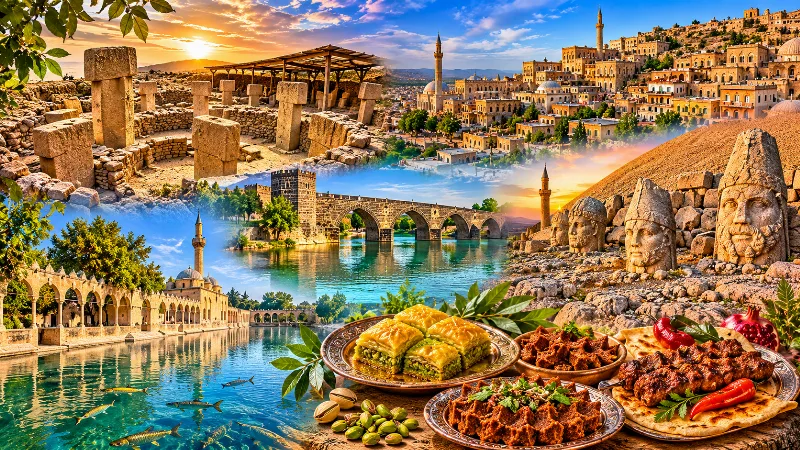
Southeastern Anatolia is known for its ancient cities, extraordinary archaeological heritage, traditional stone architecture and rich culinary culture. From the historic streets of Mardin to the monumental landscapes of Şanlıurfa and the Euphrates River, the region reflects thousands of years of civilization.
5-Day Tigris and Euphrates Route
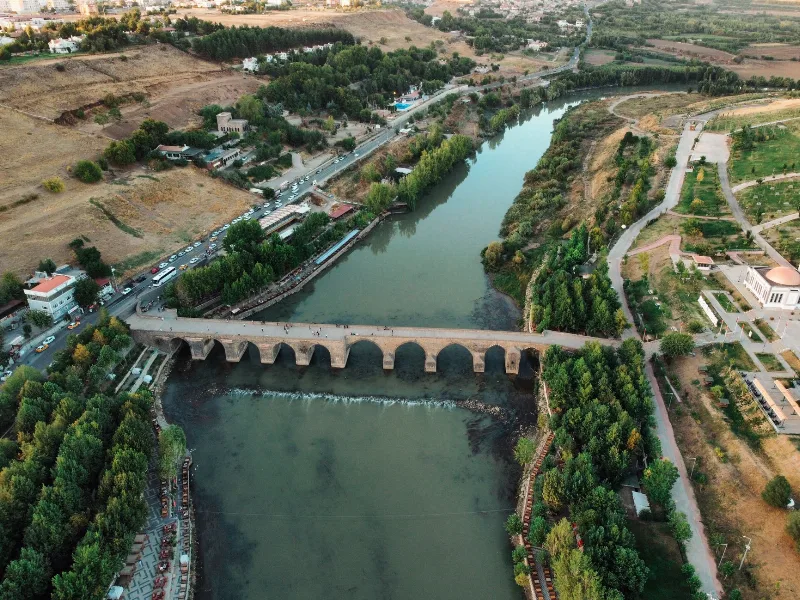
A five-day, east-to-west journey across Southeastern Anatolia from Diyarbakır to Gaziantep, following the Tigris and Euphrates through Mardin, Şanlıurfa, Göbeklitepe and Harran.