
Zeugma
Zeugma was a Hellenistic and Roman city on the Euphrates in Gaziantep Province, important for its river crossing and Roman garrison. Its excavated houses produced celebrated mosaics, many now shown in the Zeugma Mosaic Museum in Gaziantep.
Zeugma is an ancient city in Gaziantep Province, southeastern Turkey, beside the Euphrates near the village of Belkıs in Nizip district. Founded in the Hellenistic period as a Seleucid settlement and later absorbed into the Roman world, it controlled one of the main crossing points of the Euphrates and developed into a prosperous garrison town and trading centre. Its importance today lies in the excavated remains of Roman houses and in the exceptionally rich mosaics recovered from them, many of which are displayed in the Zeugma Mosaic Museum in Gaziantep.
A River Crossing Between Seleucid and Roman Worlds
The name Zeugma comes from a Greek word for a yoke, a link or a bridge of boats. The name reflects the city's function: it stood at a place where the Euphrates could be crossed, and that crossing gave the settlement strategic value long before the Roman period. The city is generally associated with Seleucus I Nicator, one of the generals who succeeded Alexander the Great, and with the Seleucid programme of founding cities across the Hellenistic Near East. The foundation is usually dated to around 300 BC, but the earliest occupation and the precise sequence of settlement are known mainly through archaeology rather than through a continuous written record.
Zeugma was not an isolated settlement. The crossing was important enough that ancient settlements stood on both sides of the river, and the city on the Euphrates formed part of a wider network of Hellenistic foundations and trade routes. Its position between Anatolia, Syria and Mesopotamia made it a natural point of contact, exchange and military movement. That geographical advantage explains why the city remained significant after the Hellenistic kingdoms gave way to Roman power.
Roman Zeugma and the Garrison on the Euphrates
Roman influence in the region increased in the first century BC. Zeugma came under Roman control and became part of the frontier zone between the Roman Empire and the Parthian and later Sasanian worlds. Its position on the Euphrates made it a natural crossing for armies, officials and merchants. A Roman legion, Legio IV Scythica, was stationed at Zeugma, and the presence of soldiers, administrators and traders shaped the city's urban development.
In the Roman imperial period Zeugma expanded beyond its Hellenistic core. Excavations have revealed streets, houses and civic structures, although the city has not been fully exposed. The wealth of the city was connected to river trade and to the movement of goods between Syria, Mesopotamia and Anatolia. Roman Zeugma was therefore both a military installation and a commercial town, a combination that helps explain the quality of its domestic architecture and decoration.
Third-Century Crisis and Abandonment
In the third century AD Zeugma suffered a major blow when the Sasanian king Shapur I attacked the city. The attack is dated to the mid-third century, and archaeological evidence of destruction and burning has been linked to this event. The city did not disappear immediately, but it never recovered its earlier scale. Earthquakes, shifts in trade routes and the changing frontier contributed to its decline, and the site was gradually abandoned. The urban prominence of Zeugma belongs above all to the Hellenistic and Roman periods, and later remains at the site should not be confused with the mosaics and houses of its Roman heyday.
The Roman Houses and Their Mosaic Floors
The most celebrated remains from Zeugma are the mosaics of its Roman houses. Wealthy residences on the terraces above the river had floors decorated with figural scenes, geometric borders and mythological subjects. The mosaics are associated with the Roman imperial period, especially the second and third centuries AD. They are important not only for their artistry but also for what they show about domestic life, taste and the mixing of local and Mediterranean traditions in a frontier city.
One of the best-known works is the so-called Gypsy Girl mosaic, a striking portrait-like panel with large eyes that has become an emblem of Zeugma. Other mosaics depict mythological figures, personifications and scenes from literature and daily life. These floors were removed from the site for conservation and display, and the Zeugma Mosaic Museum in Gaziantep now presents many of them in a controlled indoor setting. The museum is therefore essential for understanding what the excavated houses once looked like.
Rescue Archaeology and the Birecik Dam
Zeugma's lower city lies close to the Euphrates, and the construction of the Birecik Dam on the Euphrates changed the conditions of the site. As the reservoir filled, parts of the ancient city were threatened by rising water. International rescue excavations were carried out in the late twentieth and early twenty-first centuries, focusing on areas that would be submerged or affected. These campaigns uncovered houses, streets and mosaics, and they transformed knowledge of the city. Some lower areas are now under the reservoir, while the higher terraces and excavated sectors remain visible on land.
The rescue work also changed the public profile of Zeugma. The mosaics found during these campaigns brought the city international attention and led to the creation of a dedicated museum in Gaziantep. At the same time, the flooding means that the archaeological site today cannot be understood as a complete ancient city. It is a partially preserved and partially submerged site whose most famous artworks are conserved away from their original floors.
What Remains at Belkıs Today
At the archaeological site near Belkıs, visitors see the exposed remains of the ancient city rather than a fully reconstructed town. The surviving features include terrace walls, foundations of Roman houses, sections of streets, and traces of rooms and courtyards. Some areas are protected by modern shelters, and the relationship between the city and the Euphrates is still legible in the landscape. Because the lower city was partly flooded, the site today is not a complete image of ancient Zeugma; it is an excavated fragment of a much larger urban complex.
The archaeological area is an open-air site with uneven ground, loose stone and limited shade. Walking requires care, especially in hot weather. The ruins are best understood with prior knowledge of the city's history, because the standing remains are foundations and fragments rather than monumental facades. The mosaics that made Zeugma famous are largely elsewhere, in the museum in Gaziantep.
The Zeugma Mosaic Museum in Gaziantep
The Zeugma Mosaic Museum in Gaziantep is the main place to see the material recovered from the ancient city. It displays mosaics from Roman houses, along with sculpture, coins and other finds. For many visitors, the museum is the key to understanding the site: the mosaics provide the colour, figural detail and domestic context that the excavated foundations at Belkıs cannot convey on their own. The museum is in Gaziantep city centre, while the ancient city itself lies east of the city near the Euphrates.
The museum also makes clear why Zeugma is important beyond Turkey. Its mosaics are part of the wider corpus of Roman floor decoration in the eastern Mediterranean, and they document the tastes of a prosperous frontier city. The collection should not be confused with the archaeological site itself: one is an indoor museum in Gaziantep, the other is an outdoor excavated area near Belkıs. A complete visit to Zeugma's heritage therefore involves both.
Approaching Zeugma from Gaziantep and Nizip
Zeugma is reached by road from Gaziantep through Nizip, and the archaeological site is near Belkıs. The museum is separately located in Gaziantep, so a visit that combines both requires planning. The surrounding region is part of the Euphrates valley, with a landscape shaped by the river, dams and agriculture. Other historic places in the wider area include Birecik, Halfeti and Rumkale, all connected with the Euphrates and its crossings, although each has a different history and should not be confused with Zeugma.
The climate is hot in summer and milder in spring and autumn. For walking around an exposed archaeological site, spring and autumn are generally more comfortable. Summertime visits require water, sun protection and an awareness that shade is scarce. The site is not a theme park or a reconstructed Roman town; it is an archaeological landscape where the evidence of ancient urban life is read from foundations, floors, fragments and the river setting. Zeugma is not a UNESCO World Heritage Site, and its protection depends on archaeological management and museum conservation rather than on a reconstructed visitor experience.
Routes
All routes →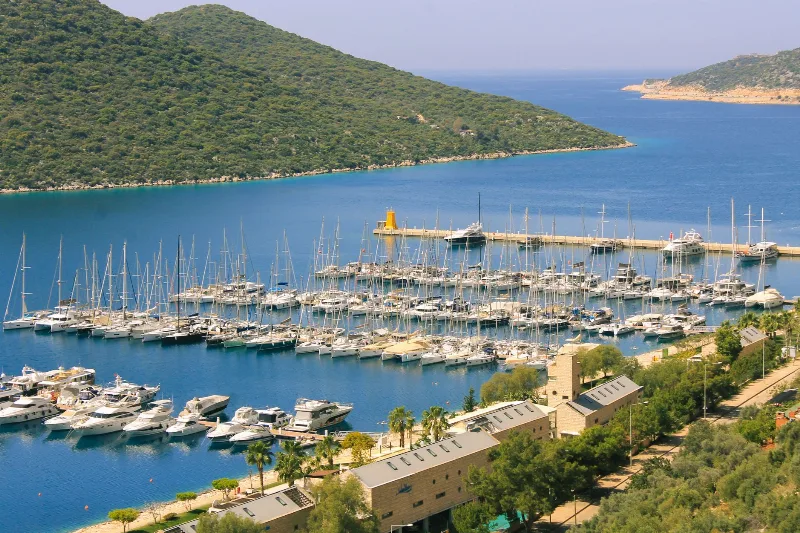
5-Day Fethiye to Kaş Lycian Coast Route
A five-day linear route along the Lycian coast from Fethiye to Kaş, linking Ölüdeniz, Kabak, the Xanthos valley, Patara and Kalkan by road and on foot.
Explore →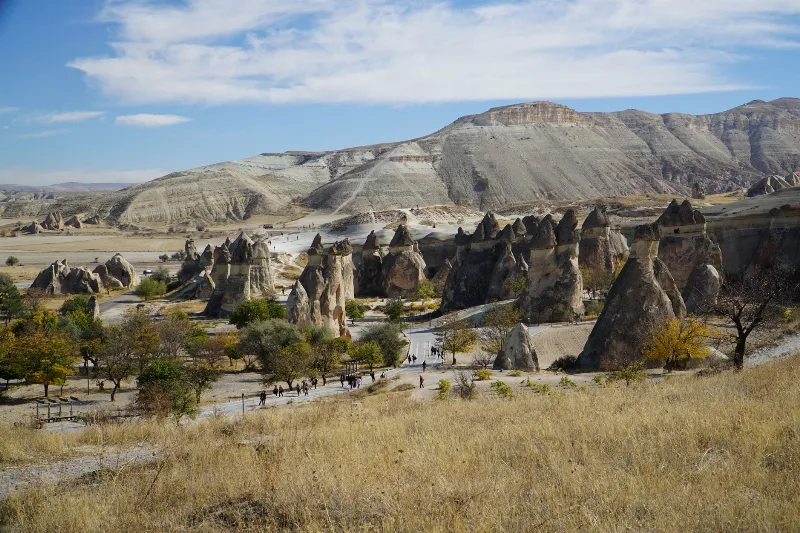
4-Day Cappadocia to Konya Route
A four-day southbound route from Cappadocia's rock-cut valleys to Konya, linking the underground cities of Derinkuyu and Kaymaklı, the Ihlara canyon, Selime Monastery and the Mevlana Museum. It is a linear, self-drive journey across the volcanic plateau of Central Anatolia into the Konya plain.
Explore →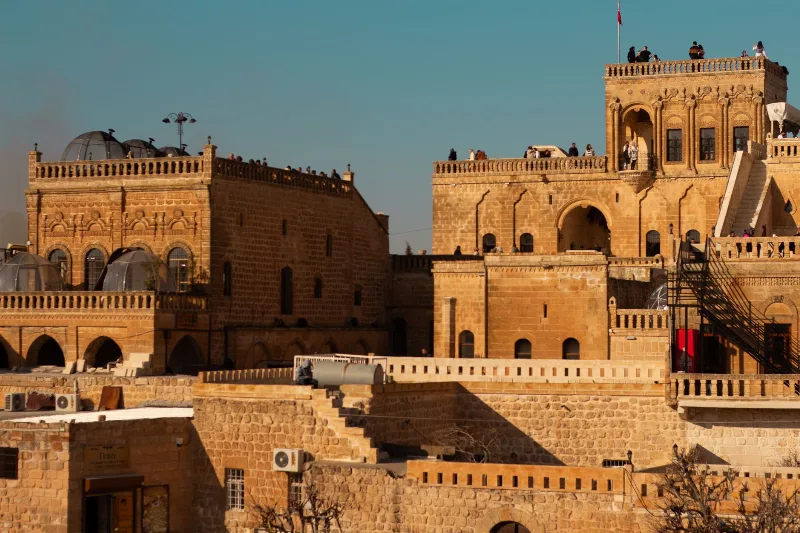
3-Day Mardin and Midyat Route
Explore the stone architecture of Mardin's old city and the historic monasteries of Midyat on this 3-day route through southeast Türkiye. The itinerary starts in Mardin, travels east to Midyat, and visits Deyrulzafaran and Mor Gabriel monasteries.
Explore →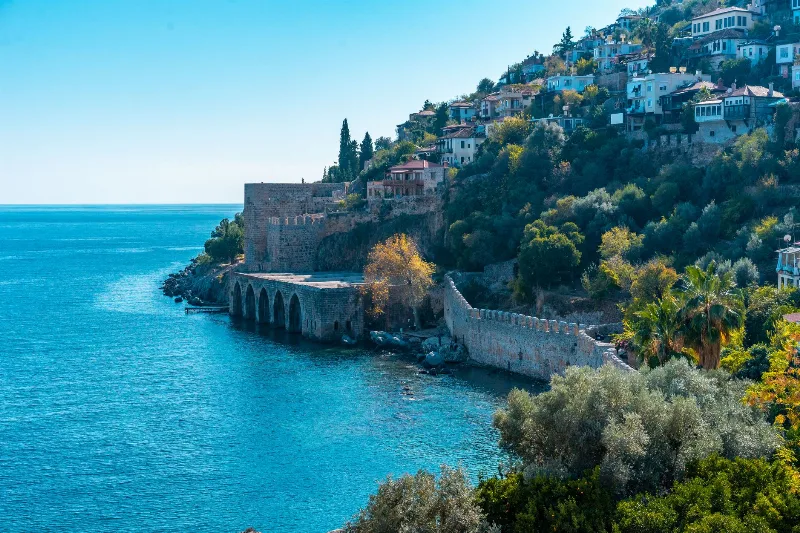
3-Day Alanya and Side Route
A three-day route along Türkiye's eastern Mediterranean coast, starting at Alanya Castle, continuing west to the ancient city of Side, and ending at the Manavgat Waterfalls.
Explore →Related content
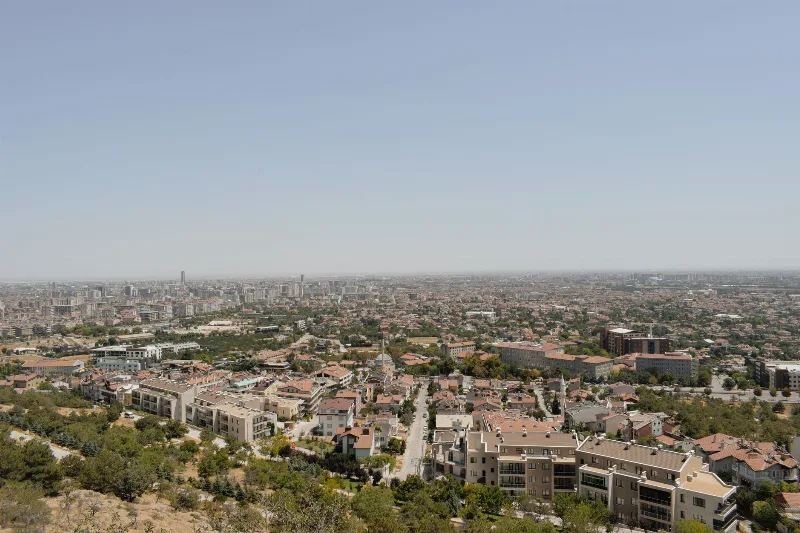
Gaziantep
Gaziantep is a major city in southeastern Türkiye and the administrative centre of its province, widely recognised as the country's gastronomic capital and known for its citadel, bazaars and the Zeugma Mosaic Museum.
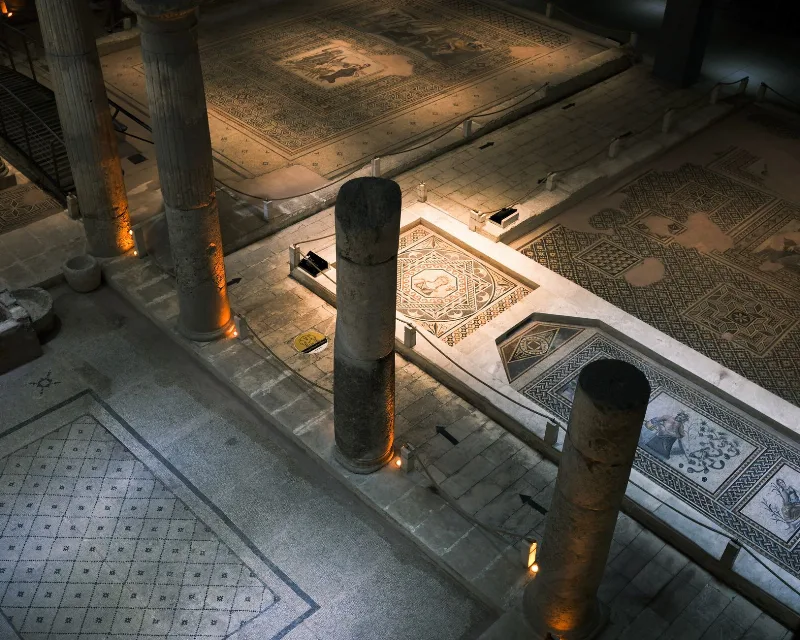
Zeugma
Zeugma was a twin Roman city on the Euphrates in Gaziantep Province, famous for the mosaics recovered from its riverside villas. Here is what the site is, what survives, and what to know before visiting.
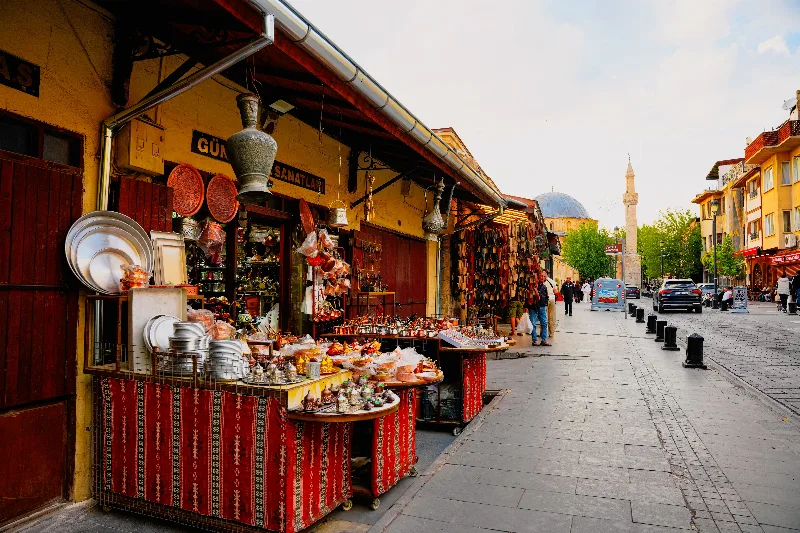
1-Day Gaziantep Route
A compact one-day route through central Gaziantep, moving from the Zeugma Mosaic Museum to the castle hill, the historic hans and bazaars, and a baklava finish in the old centre.
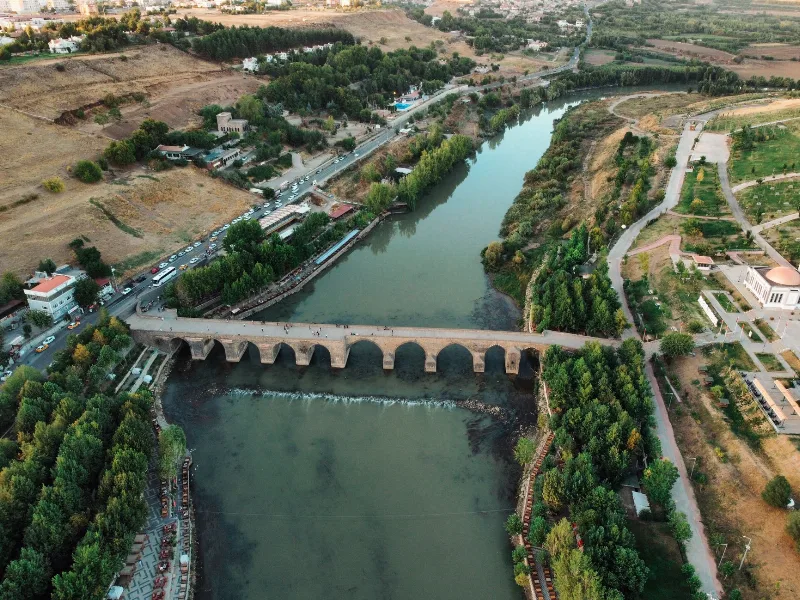
5-Day Tigris and Euphrates Route
A five-day, east-to-west journey across Southeastern Anatolia from Diyarbakır to Gaziantep, following the Tigris and Euphrates through Mardin, Şanlıurfa, Göbeklitepe and Harran.
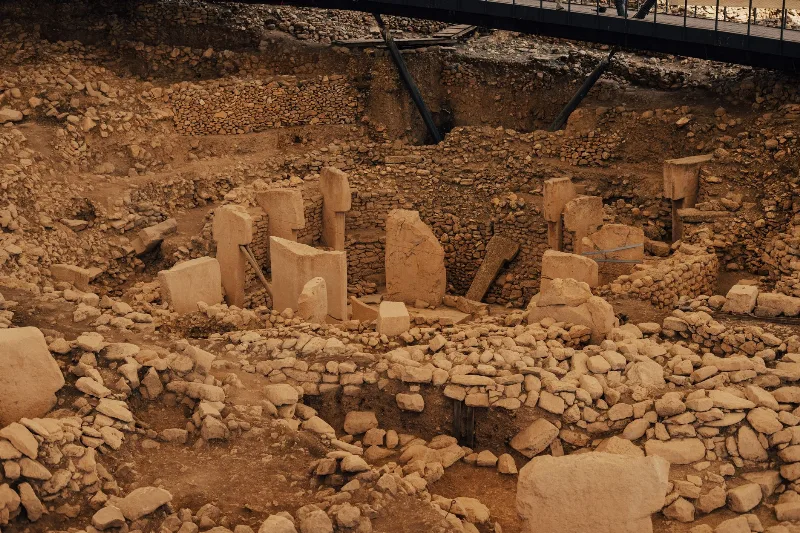
4-Day Southeastern Anatolia Route: Gaziantep to Mardin via Şanlıurfa
A four-day linear route across Southeastern Anatolia, linking the historic cities of Gaziantep, Şanlıurfa and Mardin by road, with the Neolithic site of Göbeklitepe and the ancient settlement of Harran fitted into the middle of the journey.
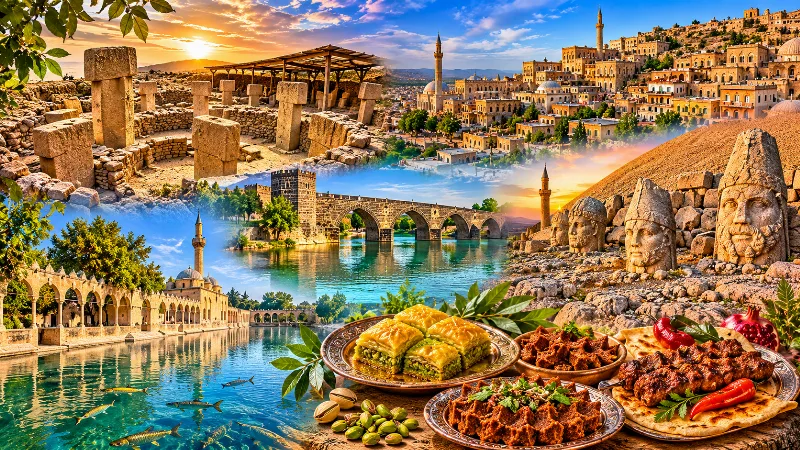
Southeastern Anatolia Region
Southeastern Anatolia is known for its ancient cities, extraordinary archaeological heritage, traditional stone architecture and rich culinary culture. From the historic streets of Mardin to the monumental landscapes of Şanlıurfa and the Euphrates River, the region reflects thousands of years of civilization.