
5-Day Fethiye to Kaş Lycian Coast Route
A five-day linear route along the Lycian coast from Fethiye to Kaş, linking Ölüdeniz, Kabak, the Xanthos valley, Patara and Kalkan by road and on foot.
This five-day route runs along the Lycian coast from Fethiye in Muğla province eastward to Kaş in Antalya province. It is a linear journey rather than a loop, and it combines driving with short walks on the Lycian Way. The sequence moves through the sheltered bays and pine-covered slopes west of Fethiye, drops south through the steep Faralya and Kabak section, turns inland briefly into the Xanthos valley for the archaeological sites of Xanthos and Letoon, then returns to the shore at Patara before continuing through Kalkan to Kaş. The character of the trip changes as it goes: the first two days are about coves, cliffs and walking, the middle day is about Lycian history and a long sandy beach, and the final two days are about a quieter harbour coast with a mountain backdrop. Most travellers cover the route between spring and late autumn, when the coastal roads are clear and the walking sections are comfortable.
Day 1: Fethiye and Ölüdeniz
The route begins in Fethiye, a working coastal town built around a sheltered bay, with a back-of-harbour market area and a hillside of Lycian rock tombs looking down over the water. Fethiye works as the natural starting point because it is the largest settlement on this stretch of coast and the place where the road network of the western Lycian shore comes together.
From Fethiye the road runs south around the bay to Ölüdeniz, where the landscape changes quickly into a shallow blue lagoon backed by pine forest and a long pebble beach. Ölüdeniz is worth the stop not only for the lagoon itself but because it marks the point where the coast turns from a busy resort edge into the more enclosed, cliff-backed shoreline that defines the next stage of the trip. The afternoon is best spent at an easy pace here, since the following day involves far more climbing and far fewer facilities.
Geographically the day is short and contained, and that is deliberate: it keeps you close to Fethiye while you settle into the coast and gives you the option of walking a short stretch of the Lycian Way above the lagoon before continuing south the next morning.
Day 2: Faralya and Kabak
Leaving Ölüdeniz, the road climbs and then descends through Faralya, a village strung along the ridge above the coast, and continues down a steep, winding lane to Kabak. This is the most dramatic section of the whole route. The cliffs here fall almost directly into the sea, the bays below are reached only on foot or by a rough final descent, and the Lycian Way runs along the slope above them.
Kabak is the day's main destination. It is a place to walk rather than to tick off: the reward is the sequence of small bays and the view back along the coast toward Ölüdeniz, and the walking is genuinely uphill on the return, so it makes sense to plan the day around one solid walk rather than several. Travellers who prefer not to drive the steep access lane can base themselves at Faralya and walk down.
This day also sets up the transition into the next stage of the route. Kabak sits at the western end of the long coastal stretch that leads toward the Xanthos valley, and from here the road turns inland and south, leaving the resort coast behind.
Day 3: Xanthos, Letoon and Patara
From the Faralya and Kabak area the route continues south and then inland into the Xanthos valley, which was the heart of ancient Lycia. Xanthos, the region's principal city in antiquity, sits on a hillside above the river, and Letoon, its religious sanctuary, lies a short distance away in the same valley. Visiting the two together makes sense because they were politically and religiously linked, and because they are close enough to be seen in one unhurried half-day.
The route then returns to the coast at Patara, where a long sandy beach runs behind the archaeological site of the ancient city. Patara is the natural place to end the day: it is the point where the inland detour rejoins the sea, and it breaks the journey between the western Lycian shore and the Kalkan coast. Because the beach and the ruins sit side by side, the day combines driving, archaeological walking and open shoreline without any long transfers.
Day 4: Kalkan and the coast road east
From Patara the road continues east along the coast to Kalkan, a town built on a steep slope above a small harbour. Kalkan is compact and walkable, and its value in this route is as a change of tempo: after the cliffs of Kabak and the open sand of Patara, it offers a dense, vertical townscape and a waterfront that is best appreciated on foot in the evening.
The stretch of coast beyond Kalkan is where the road and the sea run closely together, with the mountains dropping straight to the water. Rather than pushing straight through to Kaş, it is worth treating this section as the day's slow passage, stopping where the shoreline opens out and following the coast road at an unhurried pace. The day's progression is simple and linear: west to east, from the Patara plain into increasingly steep coastal terrain.
Day 5: Kaş
The final day brings the route into Kaş, a harbour town of whitewashed houses and bougainvillea set against a limestone ridge, with the Greek island of Meis visible offshore. Kaş is the logical end point: it is the last substantial coastal town on this stretch before the road turns inland toward the Antalya hinterland, and it has enough surrounding interest to justify a full day.
The town itself rewards wandering — the narrow streets behind the harbour, the small theatre carved into the hillside, and the waterfront where the day's catch and local produce shape the character of the place. Beyond the centre, the coast on either side of Kaş offers clear water and rocky inlets, and the Lycian Way passes through the town, so the walking theme of the first days returns here at the end of the journey.
Route notes
This is a linear route, roughly west to east, and it needs a vehicle for most of its length; the walking sections at Ölüdeniz, Kabak and around Kaş are additions rather than replacements for driving. The coastal roads are winding and the Faralya–Kabak descent is steep, so allow generous time between stops rather than planning tightly.
Spring and autumn are the most comfortable seasons, with milder temperatures for the walking sections and clearer conditions on the coast road. Midsummer is hot and busy on the western end of the route around Ölüdeniz, while the Kaş end stays somewhat calmer. Winter brings rain and occasional rough conditions on the exposed stretches, though the main coastal road remains the practical way to travel.
Travellers who want to extend the walking side of the trip can link parts of the Lycian Way between Faralya and Kabak, and those more interested in history can give more time to the Xanthos valley on Day 3. Either way, the route's logic holds: cliffs and coves first, then the Lycian interior, then a long beach, and finally a harbour town to finish.
Remarkable Places
See all places →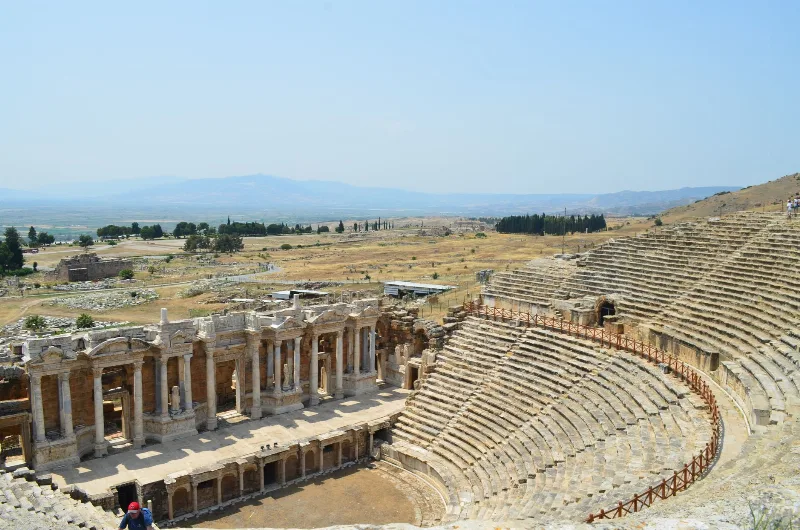
Letoon
Letoon is a Lycian sanctuary near Xanthos in Muğla Province, dedicated to Leto, Artemis and Apollo. Its three temples, theatre and trilingual inscription make it one of southwestern Turkey’s most significant archaeological sites.
Explore →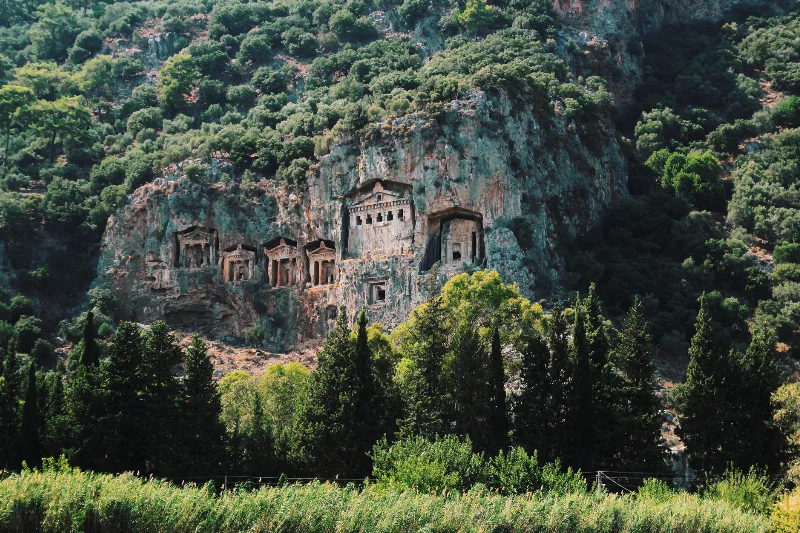
Kaunos
Kaunos is an ancient Carian city on the Dalyan River in Muğla Province, known for its temple-style rock-cut tombs and the extensive ruins of a harbour that silted up centuries ago.
Explore →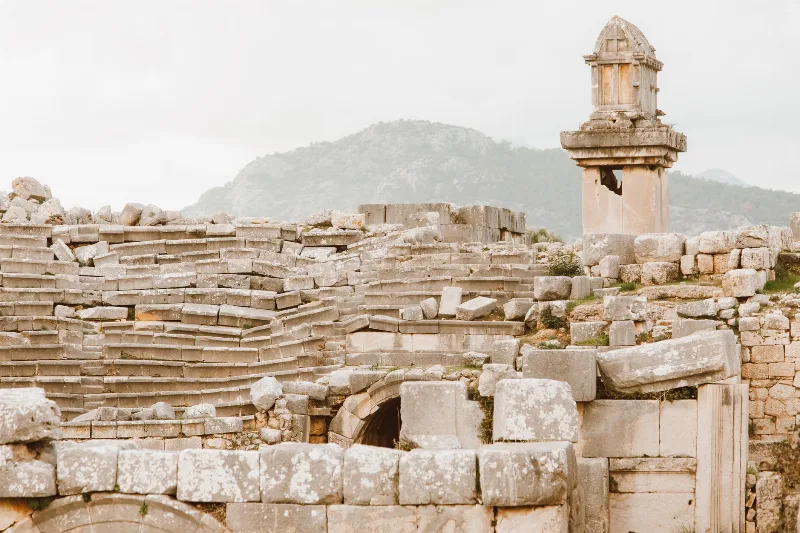
Xanthos
Xanthos is an ancient Lycian city in Antalya Province and a UNESCO World Heritage Site, known for its Lycian tombs, Roman theatre and role as a leading city of Lycia.
Explore →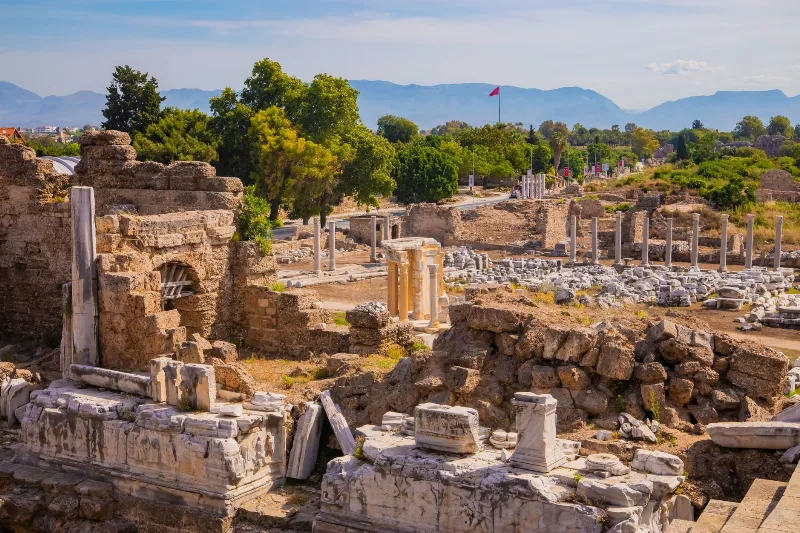
Phaselis
Phaselis is a Rhodian-founded port city on the eastern Lycian coast, where paved streets, agoras, baths and a small theatre stand among pines between three sheltered bays.
Explore →Related content
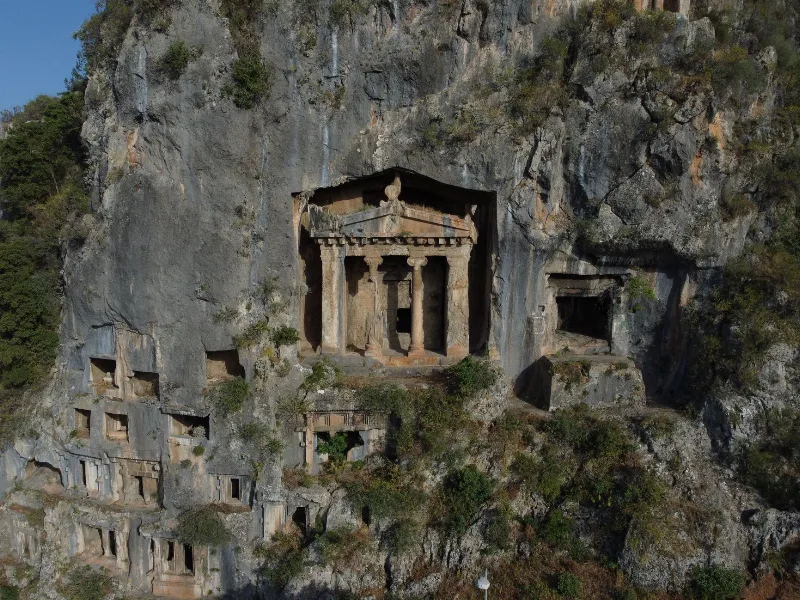
Fethiye
Fethiye is a captivating coastal town known for its stunning blue lagoon, thrilling paragliding experiences, and ancient rock tombs.
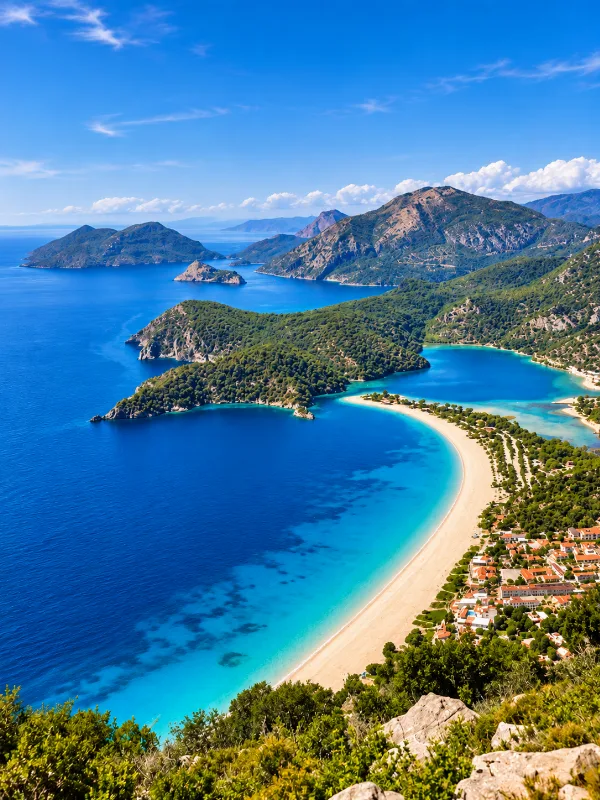
Ölüdeniz
A coastal area near Fethiye in southwestern Türkiye, known for its sheltered lagoon, turquoise water, surrounding mountains, beaches and Mediterranean landscape.
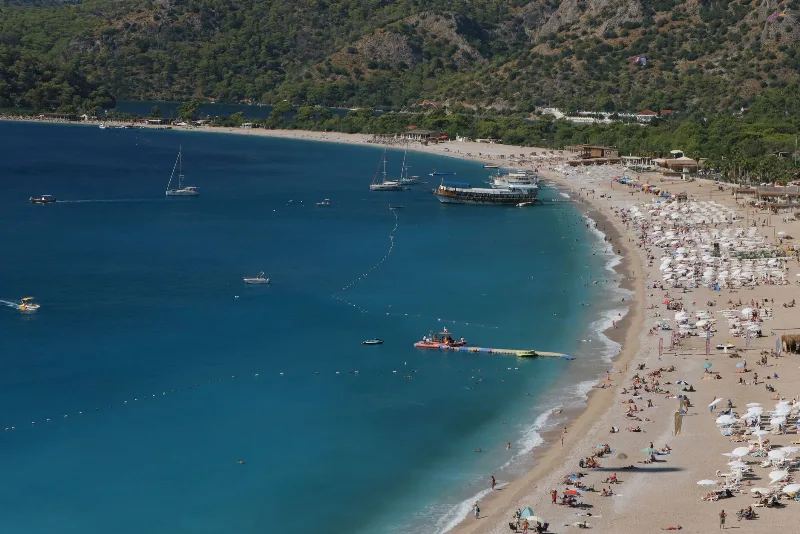
Ölüdeniz
Ölüdeniz, Türkiye'nin Fethiye ilçesine yakın bir konumda bulunan, sakin turkuaz suları ve yamaç paraşütü imkanları ile ünlü bir lagün ve plajdır.
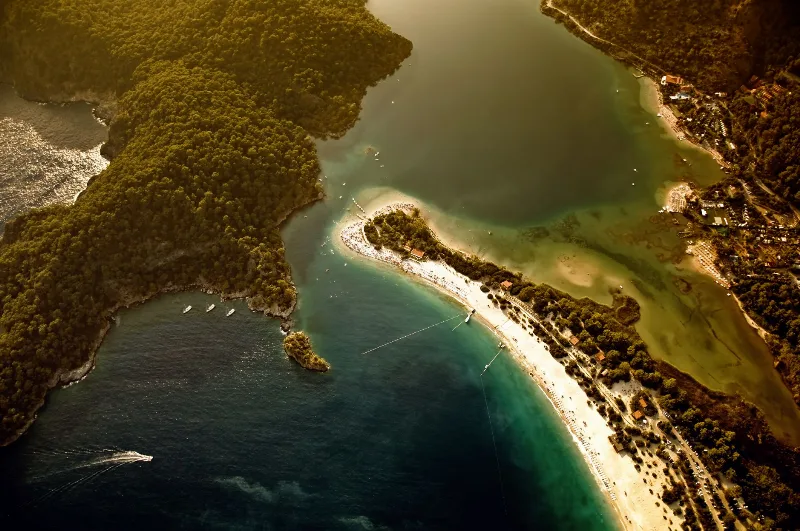
4-Day Lycian Coast Route
A four-day route along Turkey's Lycian coast, driving from Fethiye and Ölüdeniz through Kalkan, Kaş, Kekova, Demre and Olympos to finish in Antalya.
3-Day Fethiye and Ölüdeniz Route
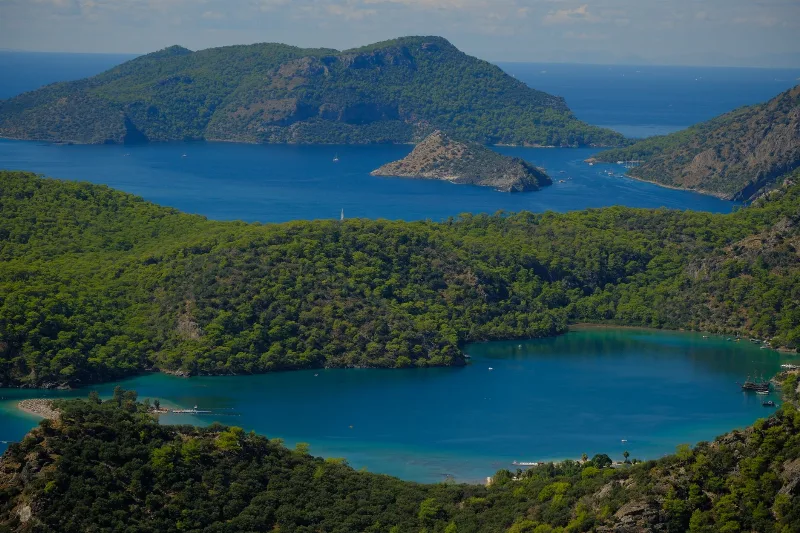
A three-day loop based in Fethiye that combines the Lycian rock tombs and old harbour quarter with the Blue Lagoon at Ölüdeniz, the abandoned village of Kayaköy and the inland gorge at Saklıkent.
6-Day Mediterranean Coast Route: Antalya to Marmaris
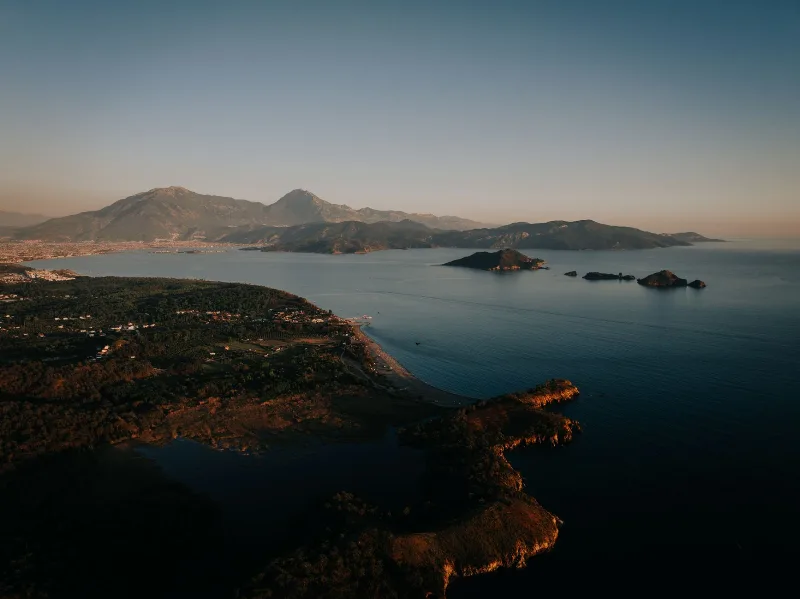
A six-day linear route along Türkiye's Mediterranean coast, linking Antalya, Olympos, Demre, Kekova, Kaş, Kalkan, Patara, Fethiye and Dalyan before finishing in Marmaris. It mixes ancient cities, long beaches and small harbour towns on a continuous westward drive.