
Xanthos
Xanthos is an ancient Lycian city in Antalya Province and a UNESCO World Heritage Site, known for its Lycian tombs, Roman theatre and role as a leading city of Lycia.
Xanthos is an ancient Lycian city in Antalya Province, south-west Türkiye, and one of the most important archaeological sites in Lycia. It lies near the village of Kınık, close to the Eşen Çayı, the river known in antiquity as the Xanthos. The city was a major political and cultural centre of Lycia and is inscribed on the UNESCO World Heritage List as part of the Xanthos-Letoon property. Its reputation rests on a compact but rich group of monuments: Lycian pillar tombs, sarcophagi, a Roman theatre, city walls and the remains of public buildings, among them the celebrated Harpy Tomb.
What Xanthos is and where it sits
Xanthos occupies a site above the floodplain of the Eşen Çayı, in a landscape of dry hills, scrub and agricultural land between the Lycian coast and the interior. The ancient city was built on a raised area with an acropolis, and its ruins are spread across sloping ground rather than a single flat terrace. This setting helps explain both its strategic importance and the way the site is experienced today: paths climb between tomb platforms, wall lines and later Roman structures, with views across the river plain.
The city is often described as the capital of Lycia, and it was certainly one of the region’s leading centres. Its name appears in ancient accounts of Lycian history, and its monuments show a culture that combined local Lycian traditions with Greek, Persian and Roman influences. Xanthos is not an isolated ruin in an empty landscape; it belongs to a wider Lycian network that includes Letoon, Patara, Tlos and other ancient settlements in the region.
Why Xanthos matters in Lycian history
Xanthos was a principal city of the Lycian League and a place where Lycian identity was expressed through architecture, burial customs and public dedications. The city’s tombs are especially significant because they preserve evidence of Lycian funerary practice, including pillar tombs that raise the burial chamber above the ground. These monuments are not simply graves; they are statements about status, ancestry and the relationship between the living city and its dead.
Ancient writers describe dramatic episodes in the city’s history, including sieges in which the inhabitants chose collective destruction rather than surrender. Such accounts should be read with care, but they underline how strongly Xanthos was associated with resistance and civic identity. In the Roman period the city continued to function and was rebuilt in places, leaving a layered site in which Lycian, Hellenistic and Roman elements are close together.
The UNESCO listing of Xanthos with Letoon recognises the exceptional value of the wider sanctuary and city ensemble. Letoon, the sanctuary of Leto and her children Artemis and Apollo, lies in the same cultural landscape and is closely linked to Xanthos. Together they provide evidence of religious, political and artistic life in Lycia that is difficult to match elsewhere.
The monuments visible at Xanthos
Visitors to Xanthos can see a variety of structures within a relatively small area. The most immediately recognisable are the Lycian tombs, including pillar tombs and sarcophagi, which stand above and around the main path. The Harpy Tomb is one of the best known: a Lycian pillar tomb with carved marble reliefs, traditionally associated with harpies but now understood as part of a broader repertoire of Lycian funerary imagery. The reliefs are a key reason the monument is studied, although the original sculptures are not all on site.
Another famous monument from Xanthos is the Nereid Monument, a monumental tomb built in the form of a small Ionic temple. Its sculptures were removed in the nineteenth century and are now displayed in the British Museum, while the site preserves the context from which the monument came. The absence of the original sculpture can be disappointing if it is not expected, but it is also part of the story of Xanthos: the site has been excavated, studied and dispersed, and its monuments have influenced the study of Lycian art far beyond Türkiye.
The Roman theatre is among the most visible later additions. It reflects the city’s continued importance after the Lycian period and its integration into the Roman world. Around the theatre and acropolis are traces of walls, public spaces and later buildings, including remains that show how the city changed over centuries. Some areas are fragmentary and require imagination, so it helps to arrive with a basic understanding of the site rather than expecting a single reconstructed monument.
The Harpy Tomb and Lycian funerary tradition
The Harpy Tomb is a pillar tomb, a form particularly associated with Lycia. The burial chamber is elevated on a tall pier, separating the dead from the ordinary ground level and making the tomb a visible landmark. Its carved reliefs show figures in a scheme that has been interpreted in different ways, and the name “Harpy Tomb” is a conventional label rather than a certain description of what the imagery meant to its creators.
For a reader trying to understand Xanthos, the tomb is important because it shows how Lycian elites used monumental architecture to make claims about themselves. The tomb is not an isolated curiosity; it belongs with the other tombs at the site and with the wider Lycian tradition seen at places such as Pinara and Tlos. Looking at the Harpy Tomb alongside the other funerary monuments makes the site more legible than treating each tomb as a separate object.
The Nereid Monument and the theatre
The Nereid Monument is one of the most celebrated tombs of the ancient world, and its influence on later architecture and sculpture is considerable. At Xanthos, what remains is the setting and the archaeological trace of a building whose sculpted decoration is now elsewhere. The monument’s temple-like form shows how Lycian tomb architecture could draw on Greek architectural language while remaining part of a local funerary tradition.
The theatre introduces a different scale of experience. It is a Roman structure in a city with a much older Lycian past, and it helps explain how Xanthos functioned as an urban centre. The seating, stage area and surrounding remains are best understood as part of a city that continued to be inhabited and modified long after the Lycian League had lost its independence. The theatre also provides a useful orientation point when walking the site.
Landscape and physical characteristics
Xanthos is set in a Mediterranean environment of hot, dry summers and milder, wetter winters. The vegetation around the ruins includes scrub, trees and cultivated land, and the river plain below the city contrasts with the higher acropolis. The site is exposed in many places, with little shade along some paths, and the ground is uneven. This is not a site of manicured lawns and smooth walkways; it is an archaeological landscape where ancient masonry, loose stone and natural slopes are part of the visit.
The river setting matters historically as well as visually. The Eşen Çayı connected Xanthos to its hinterland and to the coast, and the city’s position above the plain gave it some protection while keeping it close to communication routes. The landscape also makes clear why Letoon and other Lycian settlements are part of the same world: travel, trade and religion linked the cities of the region rather than leaving them isolated.
Visiting Xanthos: access, terrain and timing
Xanthos is reached by road from the surrounding Lycian coast, with the archaeological site located near Kınık in Antalya Province. The approach is by vehicle or organised transport rather than a major urban walk, and the site is a stopping point for travellers exploring the Kaş–Fethiye region. Because the ruins are spread over sloping ground, visitors should allow enough time to walk between the main monuments without rushing. Sensible shoes, water and sun protection are more useful than a detailed plan of every stone.
The terrain is uneven, with steps, slopes and rough paths in places. Visitors with limited mobility should expect difficulties, and wheelchairs are not suitable for much of the site. The acropolis and higher areas require more effort than the lower monuments. Spring and autumn are generally the most comfortable seasons, while high summer can be very hot and exposed. Winter visits may be quieter but can be affected by rain, and the light at the beginning or end of the day is often better for seeing carved details and the shape of the landscape.
Nearby places that share the Lycian context
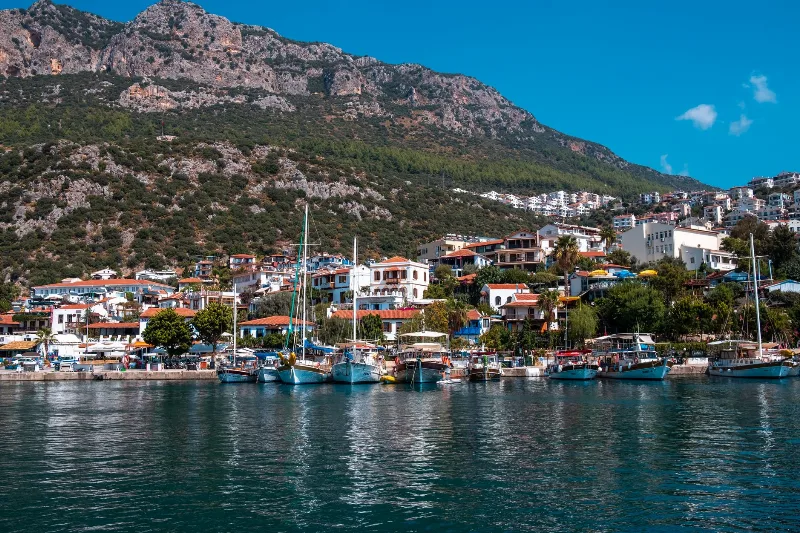
Xanthos is best understood as part of a wider Lycian itinerary. Letoon, the sanctuary linked with Xanthos in the UNESCO inscription, is the most directly related nearby site and helps explain the religious dimension of the city. Patara, with its ancient city and long beach, and Tlos, with its acropolis and rock-cut tombs, are also significant Lycian sites in the region. The town of Kaş provides a practical base for visiting several of these places, while Fethiye and the surrounding coast are useful for understanding the geography of western Lycia.
For travellers interested in Lycian tombs and urban remains, Xanthos works well alongside Pinara, Tlos and Letoon rather than as a standalone stop. Each place shows a different aspect of the same culture: a sanctuary at Letoon, a fortified settlement at Tlos, and a major city with monumental tombs at Xanthos. This wider context makes the site easier to read and gives a more complete picture of ancient Lycia.
What to know before you go
Xanthos is an archaeological site, not a theme park, and its value lies in the evidence it preserves. Some monuments are fragmentary, some sculpture is in museums abroad, and the site requires careful looking. A basic understanding of Lycian tombs and the Lycian League will make the visit far more rewarding. Visitors should also respect the ruins, stay on paths where they exist and avoid climbing on fragile masonry.
The site is most useful to travellers who are already interested in ancient history, archaeology or the Lycian landscape. It is less suited to visitors seeking a quick photo stop with reconstructed buildings and interpretative centres. Those who take time to walk from the theatre to the tombs and up toward the acropolis will see why Xanthos was a leading city of Lycia and why its UNESCO status is tied to a broader cultural landscape rather than a single monument.
Related content
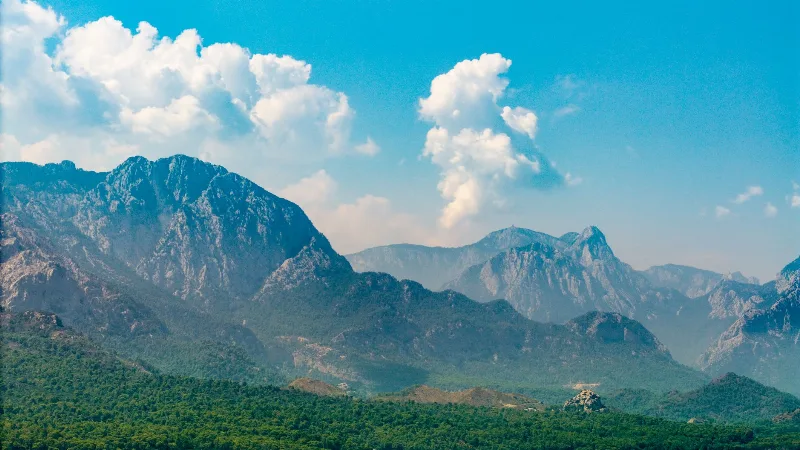
Antalya
Antalya offers a unique blend of vibrant history and stunning natural beauty, making it a must-visit destination in Türkiye.
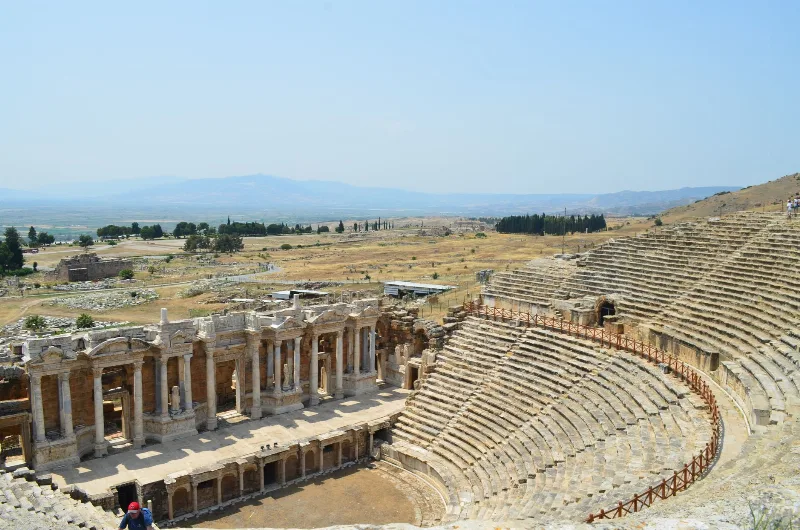
Letoon
Letoon is a Lycian sanctuary near Xanthos in Muğla Province, dedicated to Leto, Artemis and Apollo. Its three temples, theatre and trilingual inscription make it one of southwestern Turkey’s most significant archaeological sites.
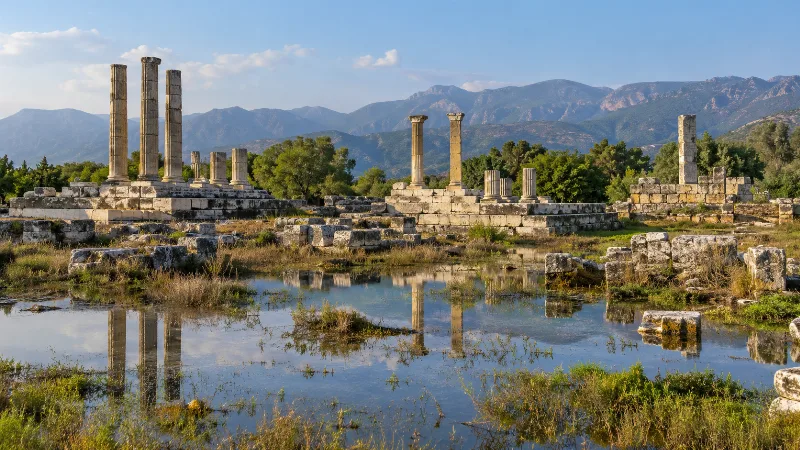
Letoon
Letoon is the ancient Lycian sanctuary of Leto near Xanthos in Muğla Province, home to three temples and the trilingual inscription that helped decipher the Lycian language.
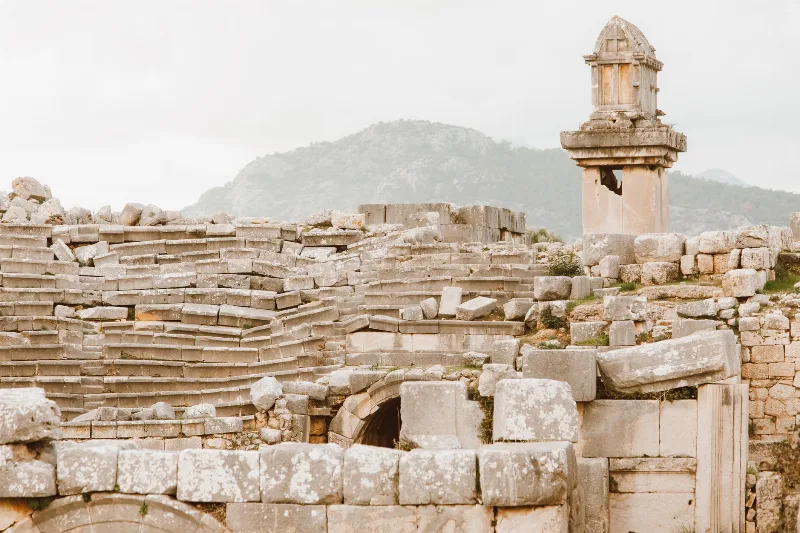
Xanthos
Xanthos was a leading city of Lycia and the seat of the Lycian League, on the frontier between the Antalya and Muğla provinces of Türkiye. Its surviving theatre, agora and tomb monuments, together with the nearby sanctuary of Letoon, form a UNESCO World Heritage Site.
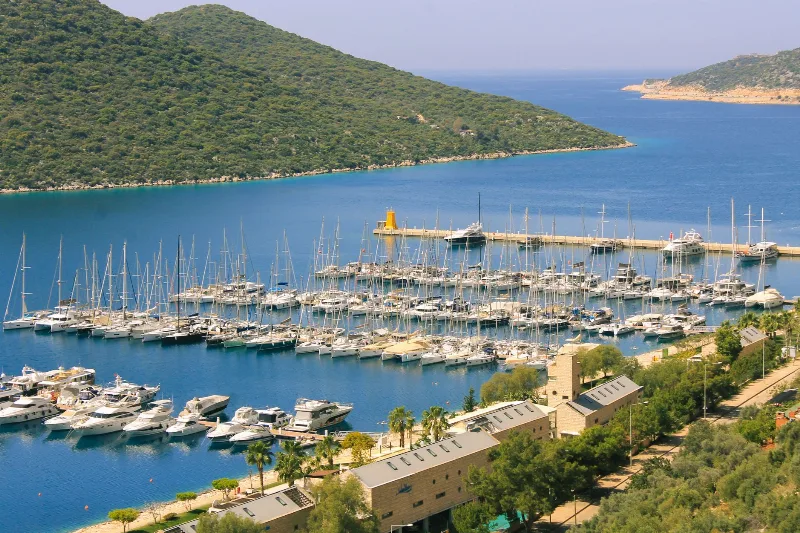
5-Day Fethiye to Kaş Lycian Coast Route
A five-day linear route along the Lycian coast from Fethiye to Kaş, linking Ölüdeniz, Kabak, the Xanthos valley, Patara and Kalkan by road and on foot.
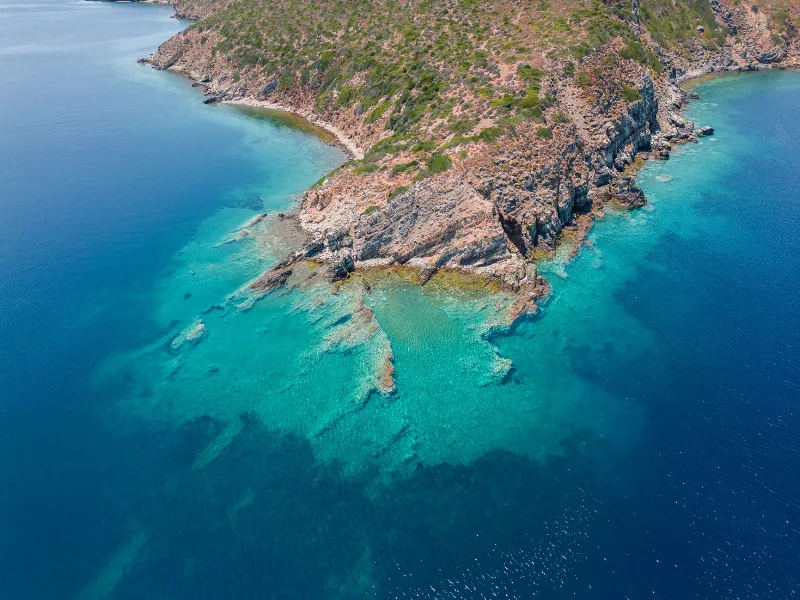
Sailing the Turquoise Coast
The Turquoise Coast follows the southwestern shoreline of Türkiye, where sheltered bays, pine hills and clear water meet. This page explores how sailing and boat trips reveal its landscapes, islands and ancient harbours.