
Xanthos
Xanthos was a leading city of Lycia and the seat of the Lycian League, on the frontier between the Antalya and Muğla provinces of Türkiye. Its surviving theatre, agora and tomb monuments, together with the nearby sanctuary of Letoon, form a UNESCO World Heritage Site.
Xanthos is an ancient Lycian city standing on the Eşen Çayı — the river the classical world knew as the Xanthos — in the Kınık area of the Seydikemer district, on the border between the Antalya and Muğla provinces of southwestern Türkiye. It was one of the leading cities of Lycia and the seat of the Lycian League, the federal union of Lycian city-states, and it is remembered both for its surviving theatre, agora and tomb monuments and for the accounts of its inhabitants destroying their own city rather than surrender it. Since 1988 it has been inscribed on the UNESCO World Heritage List together with the nearby sanctuary of Letoon.
Where Xanthos Stands
The site occupies a plateau above the west bank of the Eşen Çayı, roughly midway between the modern towns of Fethiye and Kaş, and close to the village of Kınık. The river valley opens toward the Mediterranean to the south, and the city controlled a fertile plain as well as access between the coast and the interior. Its position made it a natural centre for a region where mountains meet the sea; Lycia's settlements are typically set among steep limestone ridges, and Xanthos is no exception. The acropolis rises directly above the river, while the lower city spreads across the flatter ground to the north and east.
Xanthos and the Lycian League
Lycia was a distinct cultural region of Anatolia, inhabited by speakers of Lycian, an Anatolian language written in its own alphabet. From at least the Hellenistic period, its cities were organised into a league — a koinon — with a federal assembly in which member cities held votes roughly in proportion to their size. Xanthos was among the largest and most influential members and is often described as the capital of the League. This system of shared, representative government, described by the geographer Strabo, is frequently cited as one of the earliest examples of its kind in the ancient world. The League allowed Lycian cities to act together in diplomacy and defence while retaining local autonomy.
Historical Phases of the City
Xanthos was already a significant settlement in the Archaic period, and its monuments and inscriptions span roughly a thousand years. In the mid-sixth century BC, Lycia came under Persian control; later, the region passed through a phase of dynastic rule by local Lycian families who commissioned elaborate tombs. In the Hellenistic period, following the conquests of Alexander the Great, Lycia was drawn into the wider Greek world and then into the orbit of successive Hellenistic kingdoms. From the second century BC onward, Roman influence grew, and Lycia was incorporated into the Roman province system. The city's theatre and agora largely belong to the Roman imperial period, when Xanthos was again a prosperous urban centre. A Byzantine basilica on the acropolis reflects the city's later Christian phase, before the settlement declined and was eventually abandoned, apparently by around the seventh century AD.
The Ancient Accounts of Destruction
Ancient writers recorded two episodes in which the Xanthians are said to have destroyed their own city rather than accept capture. The first, described by Herodotus, concerns the Persian general Harpagus in the sixth century BC; the second, recounted in Roman sources, is set during the civil wars of the first century BC, when the city was besieged. These accounts are vivid and frequently repeated, but they should be treated as historical traditions rather than as fully verified events. Archaeological evidence shows that the city was indeed rebuilt and continued to flourish after periods of conflict, which is consistent with a settlement that suffered destruction but was not permanently abandoned at those points.
The Monuments of Xanthos
The Theatre
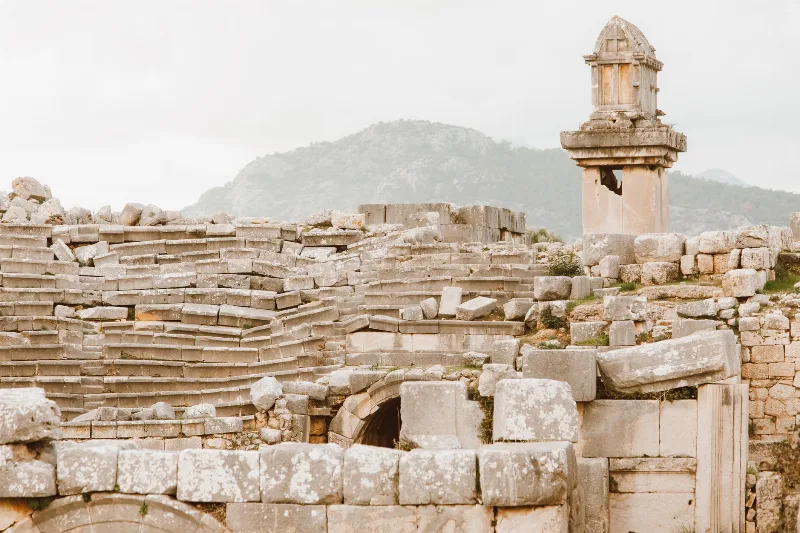
The theatre stands on the slope of the acropolis and is the most immediately recognisable structure on the site. Its cavea, the tiered seating area, is cut into the hillside, while the stage building shows signs of more than one building phase and later modification. Like many Anatolian theatres, it combines Greek traditions of hillside seating with Roman-era stage architecture.
The Agora
Below the acropolis lies a broad agora, the civic and commercial heart of the Roman city. Its paving and surrounding structures indicate a planned open space bordered by porticoes. Inscriptions recovered from the area have helped scholars reconstruct the city's public life and its system of civic benefaction.
Tombs and Funerary Monuments
Xanthos is especially noted for its funerary architecture, which reflects Lycian traditions of honouring the dead with prominent, sometimes elevated monuments. These include pillar tombs, house-type tombs and Lycian sarcophagi with characteristic pointed, ogival lids. Among the most studied are the so-called Harpy Tomb, a pillared structure decorated with relief sculpture, and several sarcophagi that were carved with inscriptions and figural scenes. Many of the finest reliefs and entire monuments were removed in the nineteenth century and are now displayed in the British Museum in London; the corresponding sculptures at Xanthos are largely casts or replicas. This relocation is part of the site's modern history and a frequent subject of discussion in debates about cultural heritage.
Inscriptions and the Lycian Language
Xanthos has yielded an unusually rich body of inscriptions, including texts in Lycian, in Greek and in a related Anatolian language sometimes called Milyan. A monument known as the Xanthos stele carries parallel texts that have been central to the modern decipherment of Lycian. Because the city was continuously occupied and literate across many centuries, its inscriptions provide some of the most important evidence for Lycian language, institutions and religious practice.
What Visitors Can See Today
The archaeological area presents a wide range of remains. Visitors can walk among the theatre, the agora, the foundations of public buildings, the acropolis with its later basilica, and numerous tombs and sarcophagi distributed across the site. Because much of the original sculpture was taken abroad, the experience is as much architectural and topographical as it is sculptural: the value lies in reading the layout of the city, the relationship between acropolis and lower town, and the surviving stonework. The terrain includes slopes and uneven ground, and the site is spread out, so a visit involves a fair amount of walking in the open. There is little shade in the middle of the day, and the summer heat can be considerable.
UNESCO World Heritage Status
Xanthos was inscribed on the UNESCO World Heritage List in 1988 as part of the property known as Xanthos-Letoon, together with the sanctuary of Letoon south of the city. The listing recognises the outstanding importance of the two sites for understanding Lycian civilisation, particularly the distinctive fusion of local Anatolian traditions with Greek and later Roman influences.
Letoon and the Lycian Landscape
Letoon, a short distance from Xanthos, was the religious sanctuary of the Lycian League, dedicated to Leto and her children Artemis and Apollo. Its three temples and its own inscriptions complement the civic and funerary character of Xanthos and are best understood together with it. Other Lycian centres in the surrounding region, such as Patara, Tlos and Pinara, share the same cultural background and are frequently studied alongside Xanthos as part of the wider Lycian landscape.
Reaching Xanthos and When to Go
The site lies close to the main road running between Fethiye and Kaş, near the village of Kınık, which makes it reachable by road from the coastal towns of the region. The nearest larger centres are Fethiye to the northwest and Kaş to the southeast. Because the site is largely open-air and unshaded, spring and autumn generally offer the most comfortable conditions for walking and examining the remains, while the height of summer is hot and the midday sun intense. Visitors should expect uneven surfaces, slopes and loose stone underfoot, and should allow enough time to move between the acropolis and the lower monuments. Any changes to access, hours or facilities are best confirmed locally before travelling, as such details can vary.
Routes
All routes →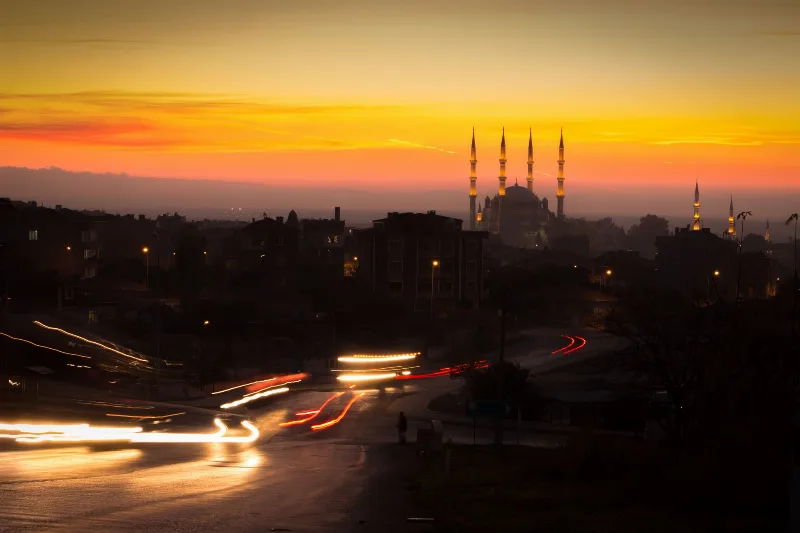
3-Day Thrace Route: Edirne, Kırklareli and Tekirdağ
A practical three-day west-to-east, then south, driving route across Turkish Thrace, linking Edirne's Ottoman monuments with Kırklareli's inland towns and Tekirdağ's Marmara vineyards and coast.
Explore →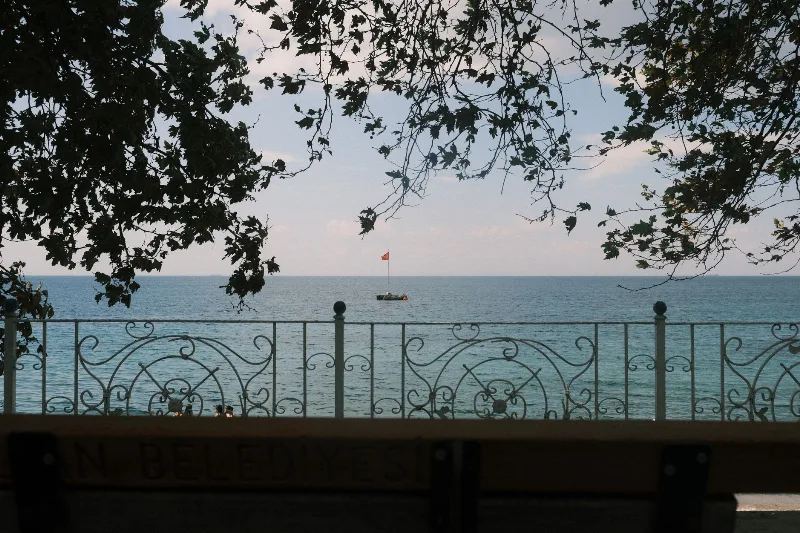
4-Day Marmara Sea Route
A four-day loop around the Sea of Marmara that starts in Istanbul, crosses to Yalova, travels inland to Bursa and finishes among the ruins of Troy and the memorials of the Gallipoli peninsula. The itinerary is built around short, logical daily drives rather than long transfers.
Explore →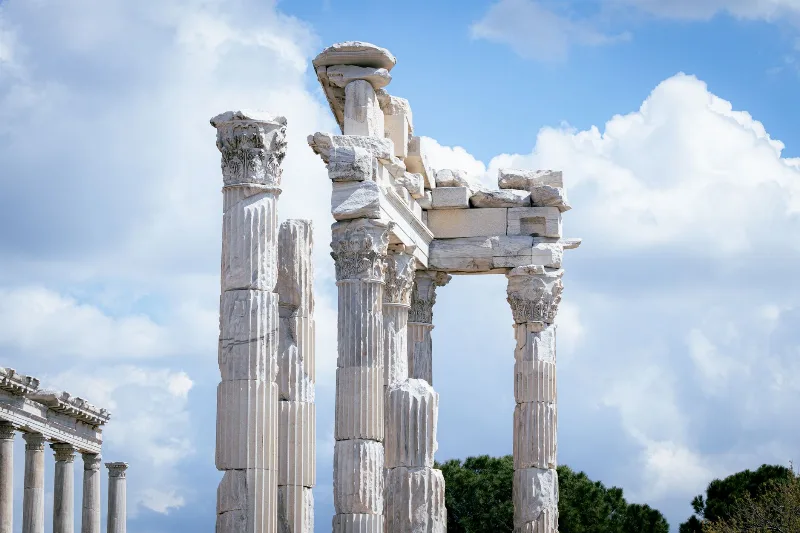
2-Day Bergama and Ayvalık Route: Pergamon to Cunda Island
A compact two-day route that pairs the terraced ruins of ancient Pergamon in inland Bergama with the olive-growing Aegean coast at Ayvalık and the causeway-linked island of Cunda.
Explore →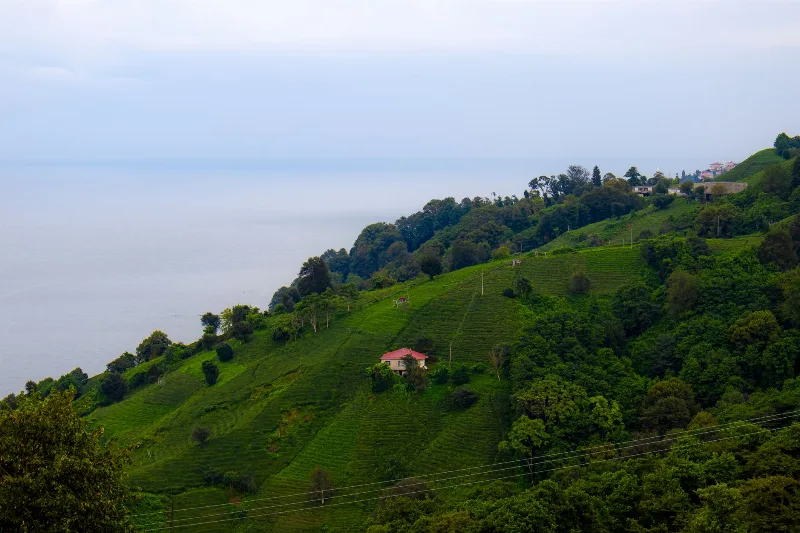
2-Day Rize and Ayder Route
A two-day linear route from Rize city through the coastal tea gardens and the Fırtına Valley to the Ayder Plateau in the Kaçkar Mountains.
Explore →Related content
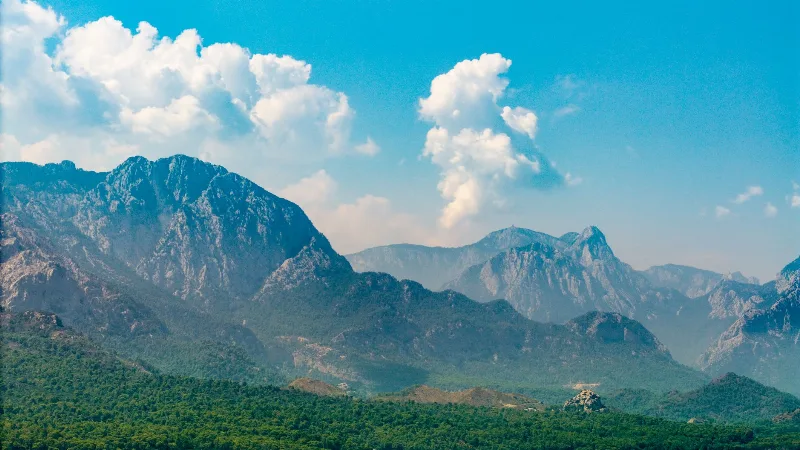
Antalya
Antalya offers a unique blend of vibrant history and stunning natural beauty, making it a must-visit destination in Türkiye.
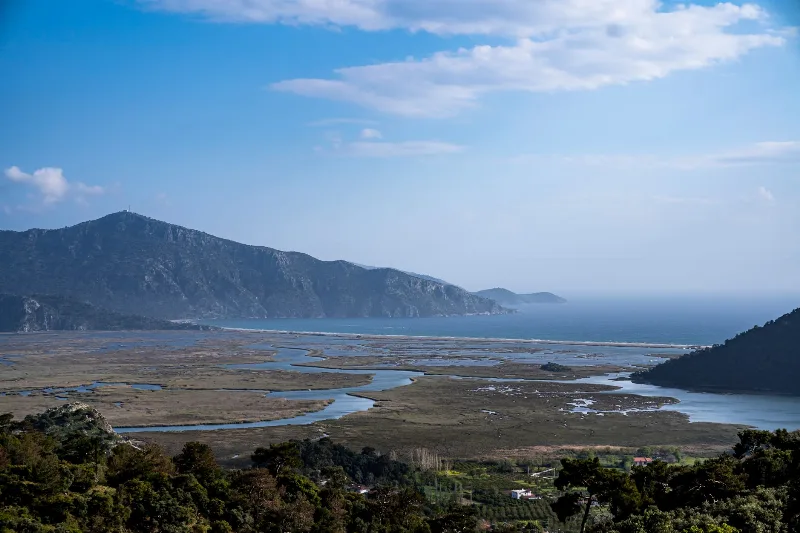
Muğla
Muğla is a captivating province in southwestern Türkiye, renowned for its stunning Aegean coastline and rich cultural heritage.
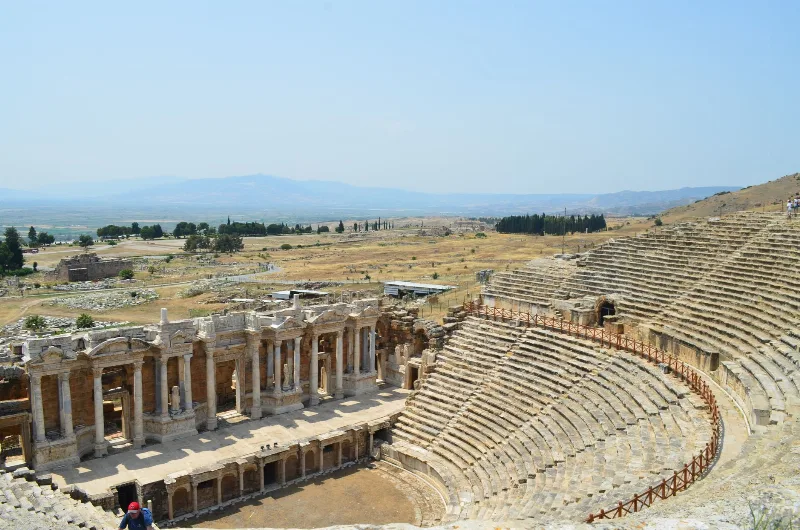
Letoon
Letoon is a Lycian sanctuary near Xanthos in Muğla Province, dedicated to Leto, Artemis and Apollo. Its three temples, theatre and trilingual inscription make it one of southwestern Turkey’s most significant archaeological sites.
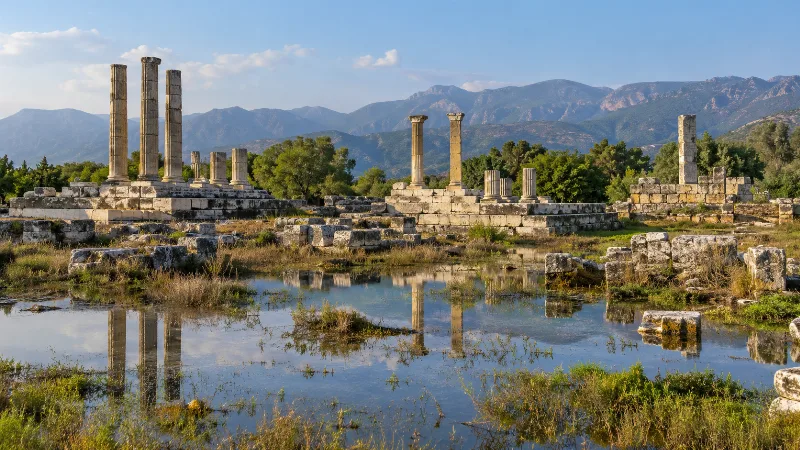
Letoon
Letoon is the ancient Lycian sanctuary of Leto near Xanthos in Muğla Province, home to three temples and the trilingual inscription that helped decipher the Lycian language.
5-Day Fethiye to Kaş Lycian Coast Route
A five-day linear route along the Lycian coast from Fethiye to Kaş, linking Ölüdeniz, Kabak, the Xanthos valley, Patara and Kalkan by road and on foot.
Xanthos
Xanthos is an ancient Lycian city in Antalya Province and a UNESCO World Heritage Site, known for its Lycian tombs, Roman theatre and role as a leading city of Lycia.