
4-Day Marmara Sea Route
A four-day loop around the Sea of Marmara that starts in Istanbul, crosses to Yalova, travels inland to Bursa and finishes among the ruins of Troy and the memorials of the Gallipoli peninsula. The itinerary is built around short, logical daily drives rather than long transfers.
This four-day route circles the Sea of Marmara, beginning in Istanbul and ending at Çanakkale, the city that guards the Dardanelles. It takes in the southern shore of the sea: the green coastal hills of Yalova, the historic core and mountain foothills of Bursa, the lake country of the interior, and finally the two landscapes that define the region's history — the archaeological site of Troy and the Gallipoli peninsula. The journey is a loop rather than a straight line, so it works in one direction only, with the sea always to the north as you travel west.
The character of the trip changes noticeably from day to day. Day one is a short ferry crossing and a slow coastal afternoon. Day two moves inland into one of Türkiye's most historic cities. Day three is the longest section of road, crossing the broad agricultural plains of the southern Marmara interior. Day four is entirely given over to ancient and modern history, with a second ferry crossing over the Dardanelles. A car is the most practical way to cover the middle days, while the first day can be done on foot and by ferry alone. Anyone relying on public transport can complete the loop, but must expect more time waiting and fewer stops between towns.
Day 1: Istanbul to Yalova Across the Eastern Marmara
The route begins on the Istanbul side of the sea, at one of the ferry terminals that serve the southern shore. Ferries cross to Yalova from several points on the Istanbul coast, and the crossing is short enough to turn the morning into a genuine change of scenery: the city skyline recedes, the water opens out, and the wooded slopes of the southern shore come into view. Book or plan around the ferry rather than the drive, because the crossing is the one fixed element of the day.
Yalova itself is a working provincial town with a long waterfront promenade, backed by hills of orchards and market gardens. The region has a well-established reputation for fruit growing and cut flowers, and roadside stalls along the coast road are part of the landscape rather than a tourist add-on. Inland from the town, the Termal district sits among forested slopes around mineral springs that have been used since antiquity; the area is a good place to slow down, with wooded walking paths and the remnants of older spa buildings.
Those with energy left can follow the coast toward Çınarcık for views back across the bay toward Istanbul. The afternoon is deliberately light, because the next day heads inland into Bursa province and benefits from an early start. Overnight in Yalova or in the Termal district keeps the following day's drive short.
Day 2: Yalova to Bursa via İznik
Leaving the coast, the road turns east and then south, running along the sheltered Gulf of Gemlik before the landscape opens into olive groves and low hills. A natural detour is İznik, on the eastern shore of its own lake. The town is enclosed by long stretches of Byzantine-era walls and gates, and its Roman street grid is still legible in the modern layout. İznik is also the historic centre of the region's tile and ceramic craft, and the kilns and workshops visible around town explain why the town's name became attached to a whole decorative tradition.
From İznik the route continues west toward Bursa, descending into the city that was the first Ottoman capital. Bursa is a Cities & Districts destination in its own right and should not be rushed. The historic core around Ulu Cami, the covered bazaar area and the Muradiye complex gives a compact introduction to early Ottoman architecture, while the slopes of Uludağ rise directly behind the city and give it a distinctly mountain-backed skyline. On the lower slopes, Cumalıkızık preserves rows of colourful old houses and a village layout that belongs to the same early Ottoman period as the city monuments; it is listed among the region's Villages & Small Towns for good reason.
The geography here is important to the itinerary. Bursa sits at the foot of a mountain massif, so the roads east and south climb quickly, while the roads west and north run out onto flat, open plains. Day three takes the western option. Spend the evening in the city and see the historic quarter early the next morning if time allows.
Day 3: Bursa to Çanakkale Through the Southern Marmara Interior
This is the longest driving day of the four, and it is best started early. Leaving Bursa westward, the route crosses the flat farmland of the Karacabey plain, where irrigation channels and fields of sunflowers and rice mark the transition from mountain foothills to open lowland. Near Karacabey, Lake Uluabat spreads out shallow and reedy, one of the largest freshwater lakes in the country and an important site for water birds. On its shore, the village of Gölyazı is reached by a causeway and is a natural stopping point: old stone houses, fishing boats and a quiet waterfront that shows a side of the Marmara region far removed from its cities.
Beyond the lake the road continues west across the rolling country of Mustafakemalpaşa and then onto the Biga peninsula, where the land becomes more wooded and slightly more rugged. Villages here are small and spaced out, and the sense of leaving the densely populated eastern Marmara behind is strong. As the road nears the coast, the Dardanelles come into view and the route descends into Çanakkale, a lively university city strung along the strait.
The late afternoon is well spent on the waterfront, watching the shipping traffic slide between Europe and Asia, and walking through the older streets behind the promenade. Çanakkale is the logical base for the final day because both Troy and the Gallipoli peninsula lie within reach of the city, on opposite sides of the water.
Day 4: Troy and the Gallipoli Peninsula
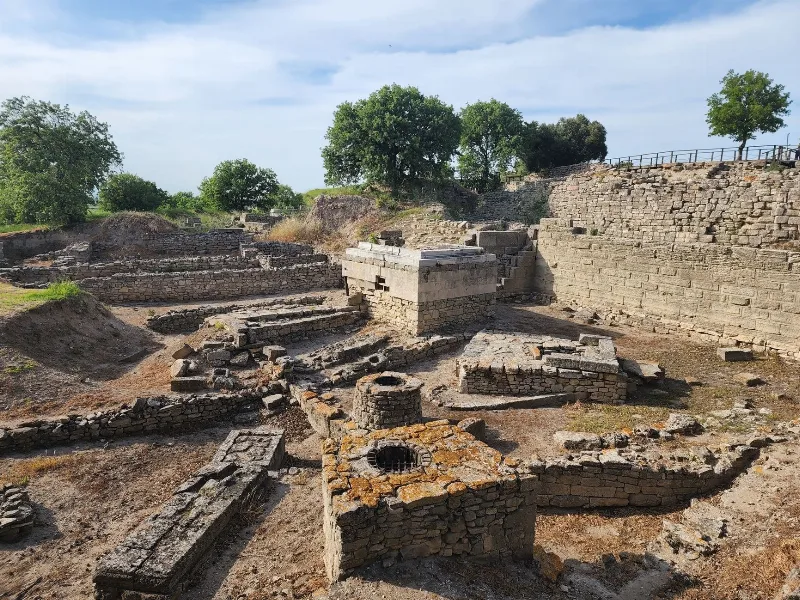
The last day begins with the short run south along the Asian shore to the archaeological site of Troy, near the village of Tevfikiye. The setting is unexpectedly modest — a low mound in open farmland close to the coast — but the excavations reveal layer upon layer of settlement, with walls, ramps and a reconstructed wooden horse marking the point where the legendary and the archaeological meet. Allow time to walk the circuit rather than photographing it from the entrance, and to look out across the plain toward the sea, which explains why a city was built here at all.
From Troy the route returns toward Çanakkale and crosses the Dardanelles by ferry to Eceabat on the European side. This crossing is essential to the itinerary: the Gallipoli peninsula is a narrow, long finger of land with memorials and cemeteries scattered along its southern tip, and distances between them add up. The afternoon is best planned around a single coherent stretch rather than the whole peninsula. The area around Kilitbahir, with its castle guarding the narrowest point of the strait, sits close to the ferry landing, while the memorials and cemeteries of the southern tip require a longer drive down the peninsula's spine.
The route ends here, at the tip of Gallipoli or back at Eceabat. To close the circle completely, a second ferry connects the peninsula to the Asian shore further north, from where the road follows the northern rim of the Marmara Sea through Tekirdağ and back toward Istanbul.
Season, Terrain and Transport Notes
Spring and autumn are the most comfortable months for this loop. Summers are hot on the southern shore and busy on the coast around Yalova and Gemlik, while the plains of the interior can feel exposed. Winters are mild along the water but cold and often snowy on the upper slopes of Uludağ above Bursa, which can affect mountain roads but rarely the main route described here.
Terrain changes three times in four days: coastal hills, a mountain-backed city, then open lake country and the ridges of the Biga peninsula. Two ferry crossings are built into the route — one at the start and one before Gallipoli — and both are frequent enough that travellers should simply plan the day around them rather than relying on a fixed timetable. A car gives the most freedom, particularly on day three; walking is the main way to see Yalova's waterfront, Bursa's historic core, Troy and the memorial sites.
Remarkable Places
See all places →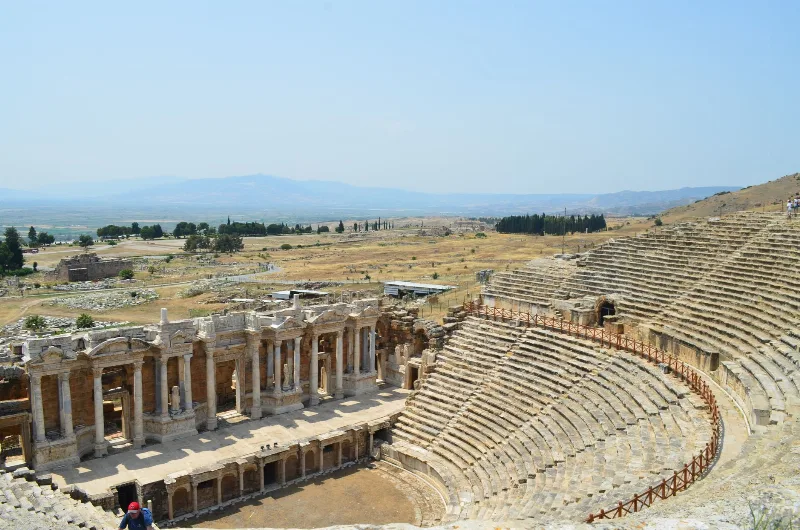
Letoon
Letoon is a Lycian sanctuary near Xanthos in Muğla Province, dedicated to Leto, Artemis and Apollo. Its three temples, theatre and trilingual inscription make it one of southwestern Turkey’s most significant archaeological sites.
Explore →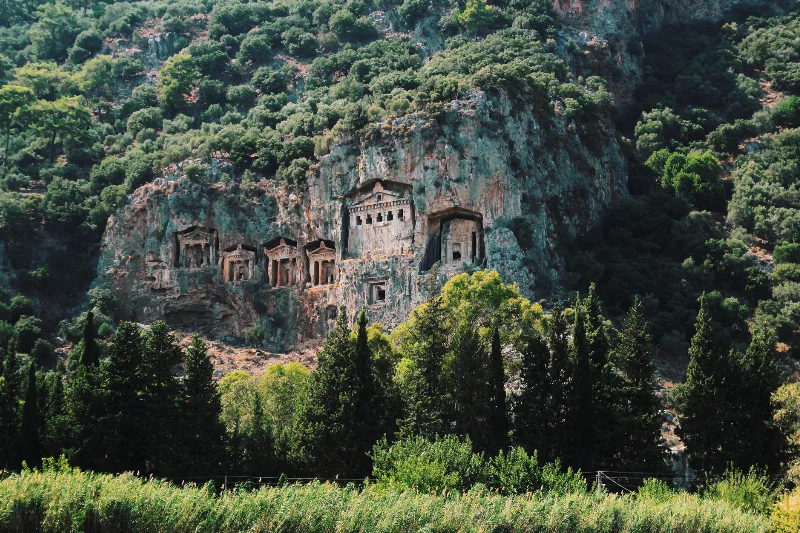
Kaunos
Kaunos is an ancient Carian city on the Dalyan River in Muğla Province, known for its temple-style rock-cut tombs and the extensive ruins of a harbour that silted up centuries ago.
Explore →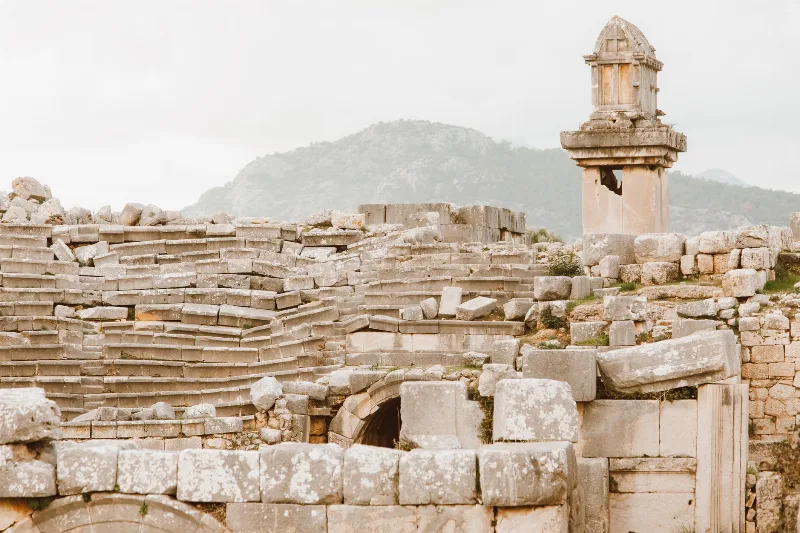
Xanthos
Xanthos is an ancient Lycian city in Antalya Province and a UNESCO World Heritage Site, known for its Lycian tombs, Roman theatre and role as a leading city of Lycia.
Explore →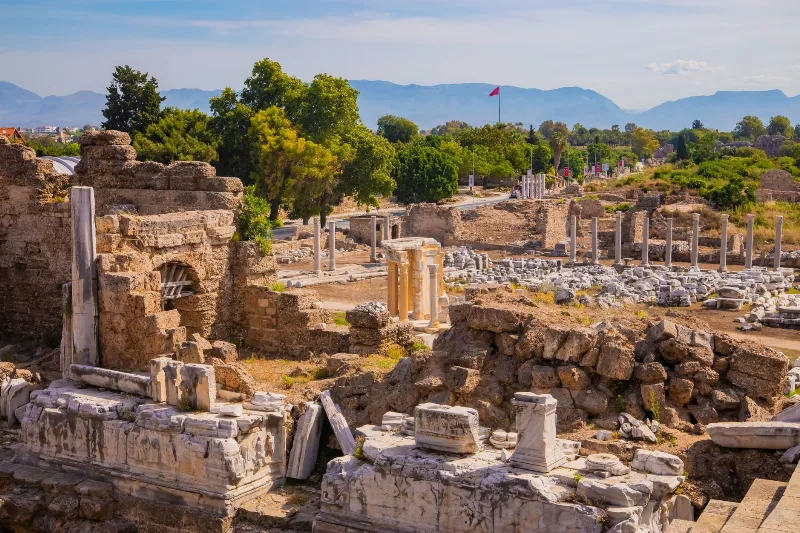
Phaselis
Phaselis is a Rhodian-founded port city on the eastern Lycian coast, where paved streets, agoras, baths and a small theatre stand among pines between three sheltered bays.
Explore →Related content
Istanbul
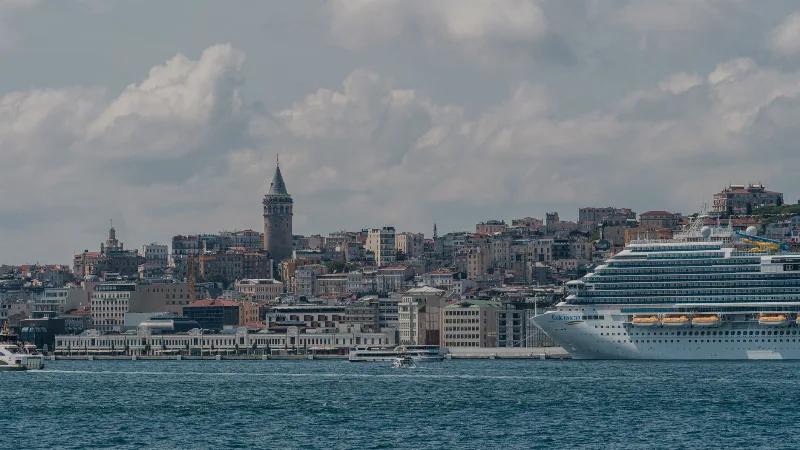
Istanbul is Türkiye's largest city and the country's only metropolis that spans two continents, divided by the Bosphorus strait into a European and an Asian half. Its long run as an imperial capital left a historic core of palaces, mosques and bazaars that still shapes the city's identity.
Bursa
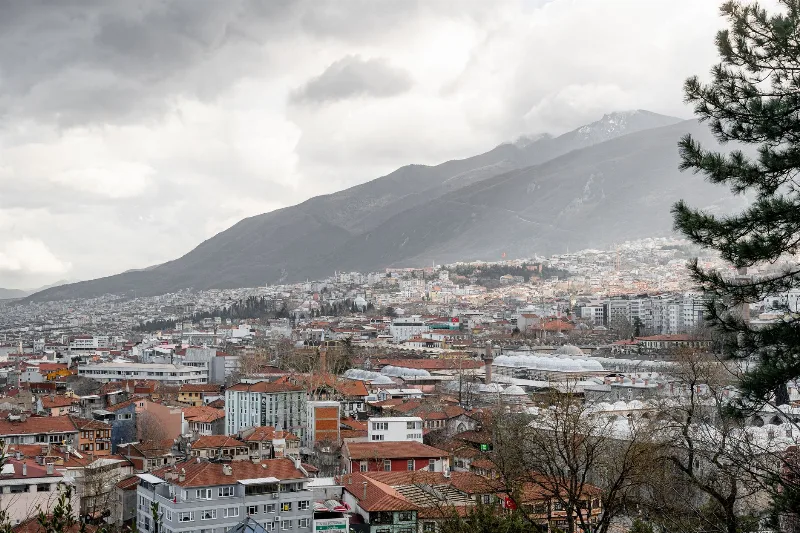
Bursa is a major metropolitan city in northwestern Türkiye and the first great capital of the Ottoman Empire, known for its silk heritage, thermal springs and the mountain of Uludağ rising directly behind it.
Troy
Troy is the excavated mound of Hisarlık in Çanakkale Province, Türkiye, inhabited from the Early Bronze Age to the Roman era and linked with the Ilion of Homer's Iliad. Its nine settlement layers and surviving Bronze Age fortifications make it one of the most important stratified sites in the eastern Mediterranean.
Marmara Region
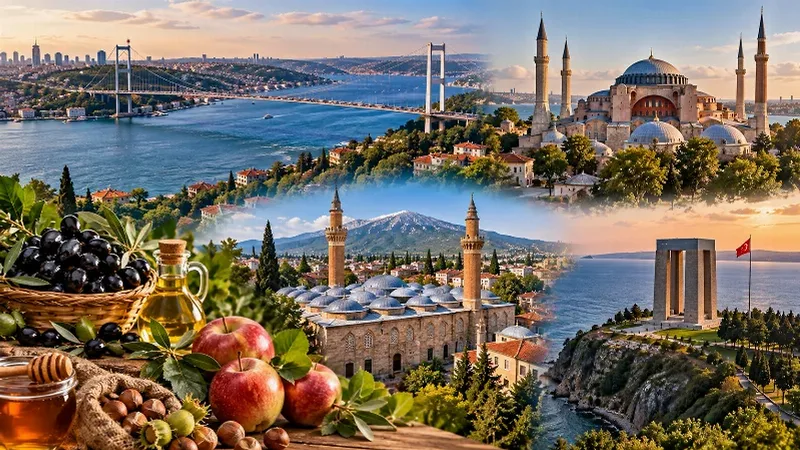
The Marmara Region connects Europe and Asia, bringing together historic cities, beautiful coastlines, green landscapes and a rich cultural heritage. From Istanbul's iconic skyline to the peaceful shores of the Marmara Sea, the region offers a remarkable variety of places to discover.
3-Day Istanbul to Bursa Route
Explore the first Ottoman capital on a three-day route from Istanbul to Bursa, combining historic city sites, the mountain landscapes of Uludağ, and the preserved village of Cumalıkızık.
Gemlik
Gemlik is a coastal district of Bursa Province on the Gulf of Gemlik, an inlet of the Sea of Marmara, known for its olive groves, its working port and its position between Bursa and Istanbul.