
Troy
Troy is the excavated mound of Hisarlık in Çanakkale Province, Türkiye, inhabited from the Early Bronze Age to the Roman era and linked with the Ilion of Homer's Iliad. Its nine settlement layers and surviving Bronze Age fortifications make it one of the most important stratified sites in the eastern Mediterranean.
Troy, called Truva or Troya in Turkish, is an ancient city whose ruins occupy the low limestone ridge of Hisarlık, beside the village of Tevfikiye in the Biga Peninsula of Çanakkale Province, in northwestern Türkiye. The mound was inhabited from the Early Bronze Age, around 3000 BC, until the Roman period, and it preserves nine principal settlement levels stacked one above the other. Its fame comes from the Iliad, in which Homer names Ilion as the city besieged by a Greek coalition, and from a long scholarly argument over whether the epic reflects a real conflict in the Late Bronze Age.
Where Troy Stands
The ruins sit on a modest hill on the western edge of the Biga Peninsula, several kilometres from the present shore of the Dardanelles, the strait that separates Asian Türkiye from the Gallipoli peninsula in Europe. In the Bronze Age the sea reached closer to the mound, and the plain between the hill and the coast was gradually silted up over the following millennia by the rivers that still cross it. That position gave Troy a measure of control over a maritime corridor linking the Aegean with the Sea of Marmara and, beyond it, the Black Sea, as well as over land routes running between Anatolia and the Balkans. The mound itself rises roughly fifteen metres above the surrounding plain, formed entirely by the accumulated debris of successive settlements.
Nine Settlements on a Single Hill
Because each community rebuilt on the ruins of the previous one, the hill is a stratified sequence. Archaeologists usually divide it into nine major levels, labelled Troy I to IX, and these are further split into dozens of sub-phases. Troy I dates from the Early Bronze Age, around 3000 BC, and consists of a small fortified settlement with a stone circuit wall and simple megaron-type houses. Troy II was considerably wealthier, with a more elaborate citadel, gateways and larger buildings. The gold and silver objects that Heinrich Schliemann announced as "Priam's Treasure" in 1873 belong to this early level and are therefore roughly a thousand years older than the era of the Trojan War, a point that was not understood at the time of their discovery.
Troy III, IV and V continue the Early Bronze Age occupation. Troy VI, dating to the first half of the second millennium BC, is the first settlement that can reasonably be described as a major Late Bronze Age city. It was protected by a strong, steeply battered wall of carefully cut limestone with projecting towers, and it contained substantial houses. Destruction layers in this level point to earthquake damage. Troy VIIa is a reoccupation within the same fortifications, and its destruction by fire in the late thirteenth or early twelfth century BC is the horizon most frequently associated with the fall of Homeric Troy.
Is There a Historical Trojan War?
The Iliad and the Odyssey, attributed to Homer, describe a ten-year siege of Ilion by a coalition of Greek rulers and the events surrounding it. The poems are epic poetry rather than documentary record, and the war they describe cannot be treated as a straightforward historical account. Even so, many scholars accept that the tradition preserved a memory of real conflict. Hittite cuneiform archives from central Anatolia mention a place called Wilusa in northwestern Anatolia and a ruler whose name resembles that of Alexander (Paris), but the identification of Wilusa with Ilios, and of these documents with the Trojan War, is a hypothesis rather than an established fact. What excavation has shown is that the Late Bronze Age settlement was indeed destroyed by fire around 1180 BC; whether the cause was warfare, internal upheaval or natural disaster remains debated.
The Trojan Horse as Legend
The wooden horse is one of the best-known elements of the story, but it does not appear in the Iliad. It belongs to the Odyssey and to later Greek and Roman writers, and it is a literary device rather than an archaeological find. No physical trace of such a structure has ever been recovered, and nothing at the site supports its historical reality. The horse should be read as part of the legend that grew around Troy, not as evidence of an event.
Hellenistic and Roman Ilion
Occupation did not end with the Bronze Age. The site was resettled in the Iron Age, and by the Archaic period a sanctuary stood on the hill. In the Hellenistic age the settlement was known as Ilion, and its claim to the Homeric past brought it prestige. Alexander the Great visited in 334 BC and is reported to have made offerings at the sanctuary; one of his successors, Lysimachus, later enclosed the city with a new fortification wall. Roman interest was equally strong, since Roman tradition traced its own origins through Aeneas to Troy. The hill was remodelled in the Roman period, with a council building, a small theatre and an enlarged sanctuary, and the city continued to issue its own coinage. Decline followed in the Byzantine era, and the site was eventually abandoned.
How Troy Was Rediscovered
By the nineteenth century the location of Troy had long been uncertain, and competing claims placed it elsewhere. The British consular official Frank Calvert was the first to dig on the Hisarlık mound. The German businessman and self-taught archaeologist Heinrich Schliemann followed from 1870 onwards, cutting a large trench through the hill; his methods destroyed part of the stratigraphy but demonstrated that the mound held many superimposed cities. Wilhelm Dörpfeld continued the work in the 1890s and refined the sequence. Carl Blegen's expedition between 1932 and 1938 established the chronology that is still in use. From 1988, Manfred Korfmann's team combined excavation with geomagnetic survey and showed that a lower town, with a defensive ditch, extended well beyond the citadel, evidence that Bronze Age Troy was larger and more complex than the small stronghold previously imagined. Work at the site has continued under Turkish direction since 2005.
What Remains Visible at the Site
Visitors walk through an open-air site containing the excavated remains of several levels at once. Among the most legible features are:
- long stretches of the Troy VI circuit wall and its towers, built of large, closely fitted stone blocks
- the ramp and gate area that gave access to the Late Bronze Age citadel
- remains of early megaron buildings from Troy II, whose stone foundations survive
- the Roman period structures on the hill, including the council building and the small theatre
- the sanctuary area, where the remains of the temple of Athena are visible
- Schliemann's large trench, which cuts through the mound and exposes the layering
A modern replica of the Trojan Horse stands near the entrance, where it serves as a visual marker rather than an original monument. Paths cross the mound and wooden walkways protect parts of the masonry, but the ground is uneven, with loose stone and a few gentle slopes.
The Troy Museum
Finds from the excavations are shown in the Troy Museum at Tevfikiye, which opened in 2018 and displays objects from the site's long sequence in a modern building near the ruins. Seeing the collections alongside the excavated mound gives a fuller picture of how the settlement developed and changed across its many phases.
UNESCO World Heritage Status
The Archaeological Site of Troy was inscribed on the UNESCO World Heritage List in 1998. Recognition rests on the exceptional stratigraphy of the mound, which documents more than three thousand years of continuous or repeated occupation, and on the site's place in the literary and cultural history shared by Anatolia and Europe.
Visiting the Site
The site lies south of the city of Çanakkale on the Biga Peninsula, reached by road through farmland and small settlements. The terrain is exposed and there is little shade, so spring and autumn are generally more comfortable than high summer, and winter visits can be cold and windy. The walking is moderate, with uneven ground and gentle slopes, and most of the principal remains can be seen in a half day. Practical arrangements can change, so it is worth confirming current conditions locally before travelling.
Related Places on the Biga Peninsula
Several other historic sites lie within reach of Troy and help place it in context. Çanakkale itself has an archaeological museum and a naval museum, and the Gallipoli peninsula across the strait holds the memorials of the 1915 campaign. On the coast south of Troy stands Alexandria Troas, a Hellenistic and Roman city, and further south along the Aegean shore is Assos at Behramkale, with its temple of Athena and ancient harbour. Inland to the south, near Gülpınar, are the remains of the sanctuary of Apollo Smintheus. The island of Bozcaada, known in antiquity as Tenedos and mentioned in the epic tradition, lies offshore, and the mound at Beşik Bay, close to the coast, has been linked in tradition with Achilles. Together these places show how densely the Troad was settled in antiquity.
Routes
All routes →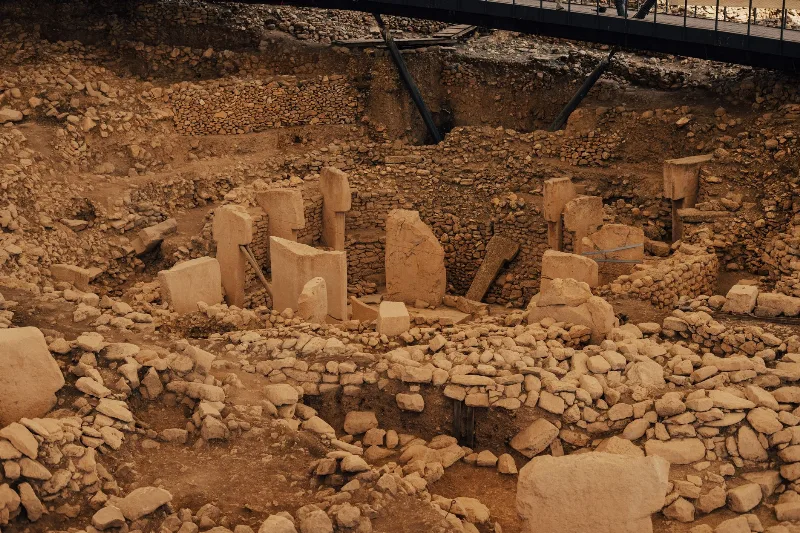
4-Day Southeastern Anatolia Route: Gaziantep to Mardin via Şanlıurfa
A four-day linear route across Southeastern Anatolia, linking the historic cities of Gaziantep, Şanlıurfa and Mardin by road, with the Neolithic site of Göbeklitepe and the ancient settlement of Harran fitted into the middle of the journey.
Explore →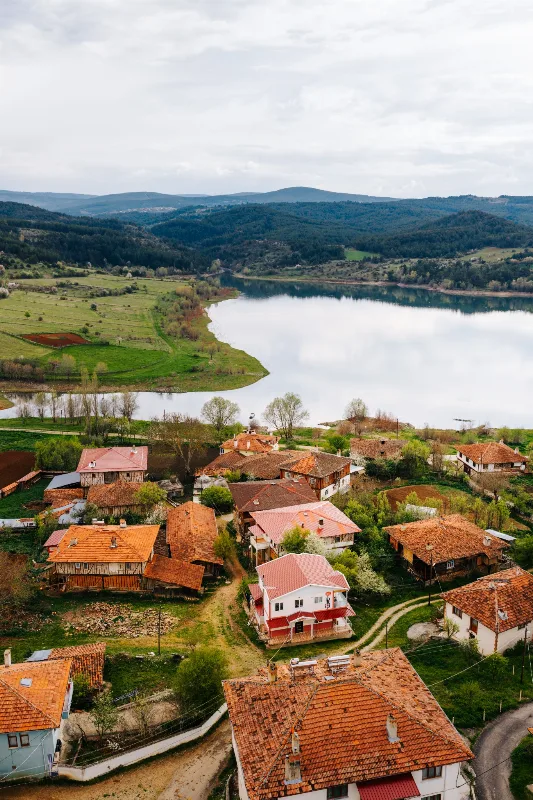
3-Day Kastamonu and Ilgaz Route
A three-day drive from Kastamonu's old town to the fir-covered slopes of Ilgaz National Park, combining Ottoman-era streets with mountain walking in Türkiye's Western Black Sea region.
Explore →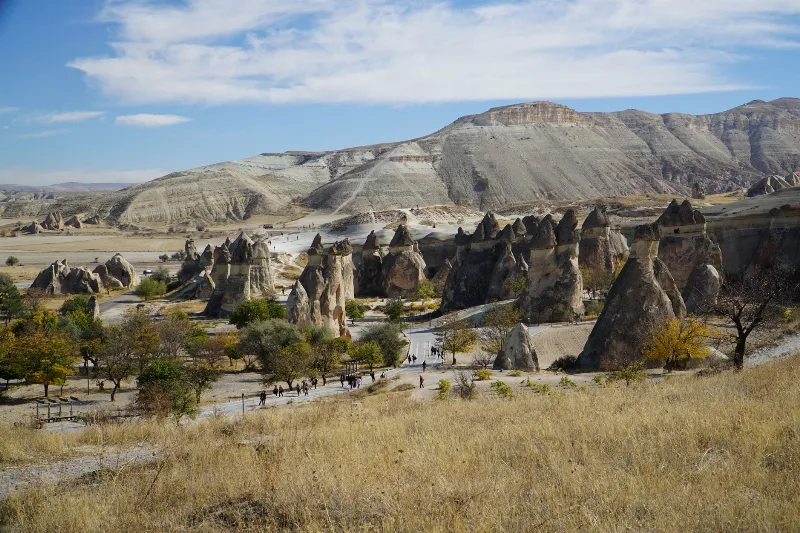
4-Day Cappadocia to Konya Route
A four-day southbound route from Cappadocia's rock-cut valleys to Konya, linking the underground cities of Derinkuyu and Kaymaklı, the Ihlara canyon, Selime Monastery and the Mevlana Museum. It is a linear, self-drive journey across the volcanic plateau of Central Anatolia into the Konya plain.
Explore →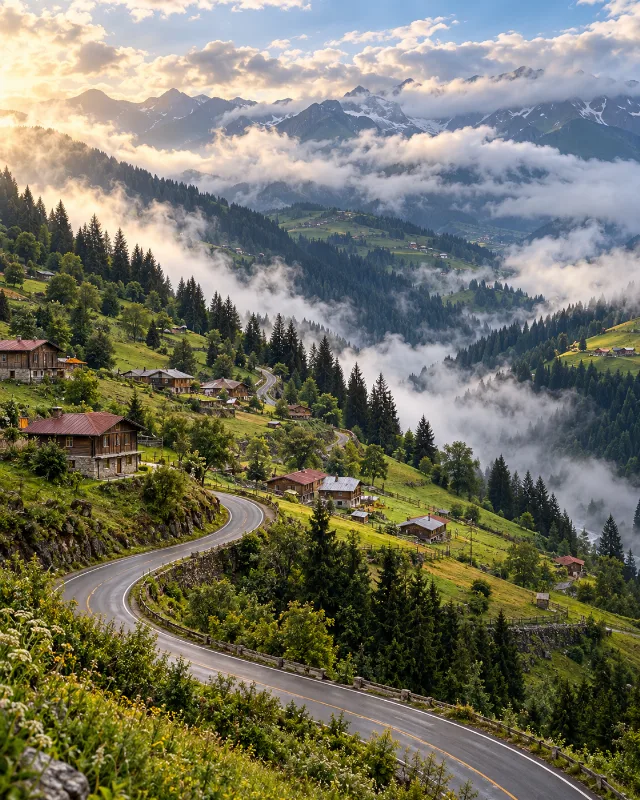
5-Day Eastern Black Sea Route
A five-day journey from Trabzon through Uzungöl, Rize, Çamlıhemşin, Ayder, Borçka and Şavşat, combining Black Sea culture with forests, lakes and highlands.
Explore →Related content
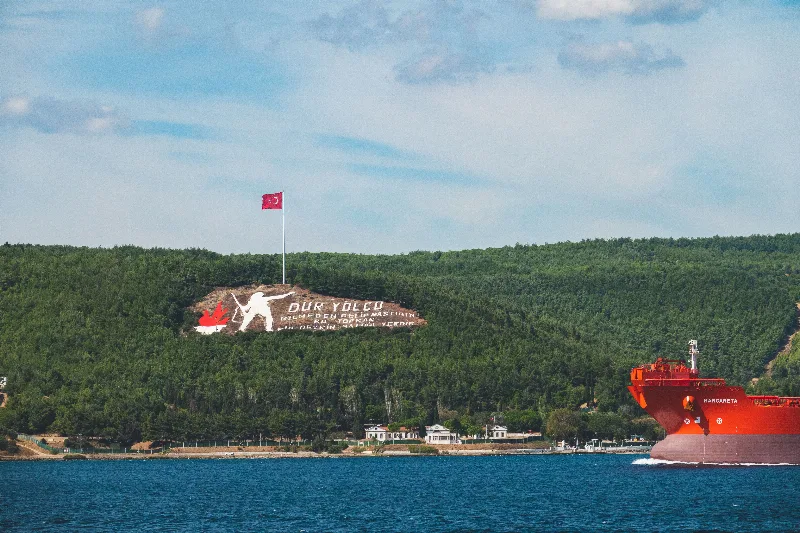
Çanakkale
Çanakkale is a northwestern Turkish city on the Asian shore of the Dardanelles, the strait separating Europe from Asia. It is the administrative centre of a province that includes the Gallipoli battlefields and the archaeological site of Troy.
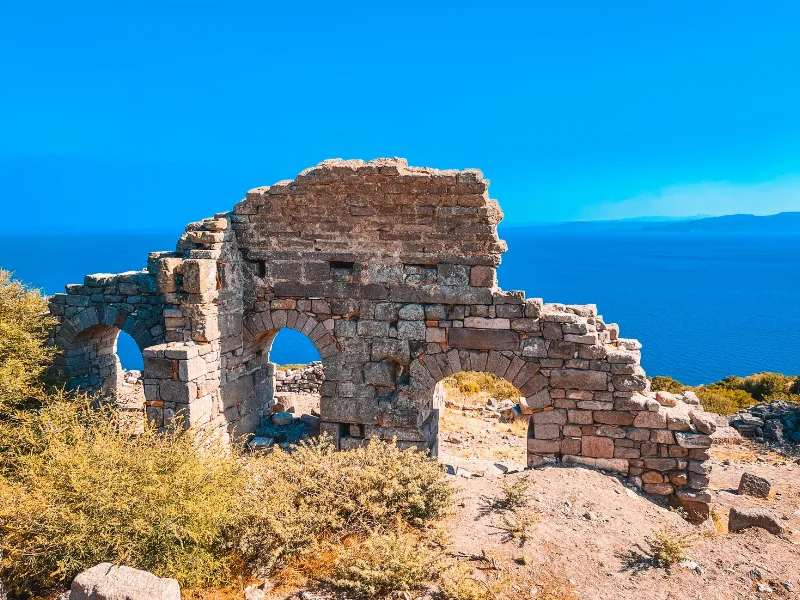
Assos
Assos is an ancient city and hilltop village in Çanakkale province, Türkiye, known for its Temple of Athena and for the years the philosopher Aristotle spent here. The modern settlement, Behramkale, sits above the ruins and an old harbour on the Aegean coast facing Lesbos.
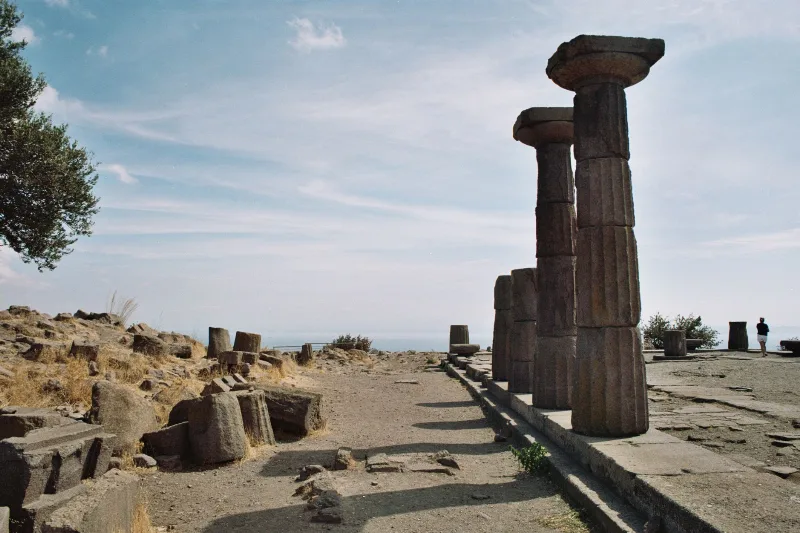
Assos
The ancient Greek city of Assos in Çanakkale, Türkiye, is defined by its sixth-century BC Temple of Athena, kilometres of surviving walls and a small Aegean harbour. Here is how the site is arranged and what a visit involves.
3-Day Assos and Troy Route
A three-day route through Turkey's Troad region, starting in Çanakkale and finishing at the clifftop village and ancient harbour of Assos, with Troy and the lesser-known classical ruins in between.
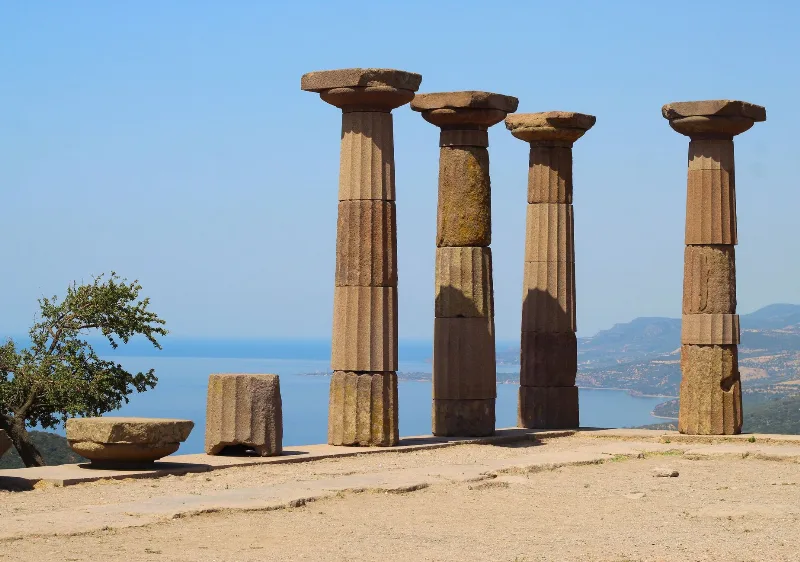
3-Day Çanakkale and Gallipoli Route
A three-day route based in Çanakkale that pairs the memorial landscapes of the Gallipoli Peninsula with the archaeological site of Troy and the southern Troad coast around Assos, using the Dardanelles ferry crossings as the link between two shores.
7-Day North Aegean to Ephesus Route
A seven-day southbound route through Troy, Assos, Bozcaada, Ayvalık, Bergama, İzmir and Ephesus, combining archaeology, coastal towns and Aegean culture.