
4-Day Southeastern Anatolia Route: Gaziantep to Mardin via Şanlıurfa
A four-day linear route across Southeastern Anatolia, linking the historic cities of Gaziantep, Şanlıurfa and Mardin by road, with the Neolithic site of Göbeklitepe and the ancient settlement of Harran fitted into the middle of the journey.
A four-day journey across Southeastern Anatolia begins in Gaziantep and finishes in Mardin, crossing the broad plains and old cities that lie between the Euphrates valley and the Mesopotamian plateau. The line of travel runs in a single direction, west to east: Gaziantep, then Şanlıurfa, then the Neolithic site of Göbeklitepe, then the ancient settlement of Harran, and finally the hillside old city of Mardin. Because the stops are spread over a wide region and public transport to the smaller archaeological sites is limited, the route works best with a car, with most days divided between driving and walking through dense historic quarters.
The overall character of the trip is urban and archaeological rather than coastal or mountainous. Two large cities with well-preserved old quarters frame the journey, and the middle two days move between a major Neolithic excavation and a ruined caravan town on the plain. Spring and autumn are the most comfortable seasons for this sequence, since the summer heat on the Mesopotamian plain is intense and the exposed sites offer little shade.
Day 1: Gaziantep
The route opens in Gaziantep, the largest city in the region and the natural western gateway to Southeastern Anatolia. Begin with the old quarter, where the citadel sits on its low hill above a maze of stone streets, hans and covered markets. The coppersmiths' market is one of the most distinctive corners of the old town, and the surrounding lanes still carry the rhythm of a working trading city rather than a museum district. Gaziantep belongs to the Cities & Districts section, and its historic core is a good example of how a living bazaar quarter can sit beside modern boulevards.
The afternoon is best given to the mosaic collection for which the city is known, where Roman floor mosaics recovered from the nearby site of Zeugma are displayed in a dedicated museum. This is the strongest single reason to spend a full day in Gaziantep rather than passing through, and it sets up the archaeological theme that continues for the rest of the route. Regional produce is part of the city's identity too — pistachios and the layered pastry made with them are local specialities — and a short walk through the food streets gives a sense of how central this trade is to the area. Overnight in Gaziantep.
Day 2: Gaziantep to Şanlıurfa
Leave Gaziantep heading east, following the road across open farmland toward the Euphrates. A worthwhile detour along the way is the riverside district of Halfeti, where the waters of the dammed river have partly submerged the older village and the ruined castle of Rumkale stands above the water. It is a slower, greener landscape than the dry plains that follow, and it breaks the drive naturally before the road continues inland toward Şanlıurfa.
Şanlıurfa itself is a city of pilgrimage and bazaars. The centre of the old town is built around the Balıklıgöl complex, a pool and garden setting with the Halil-ür Rahman mosque beside it, surrounded by tea gardens and shaded courtyards. From there, walk into the covered bazaar and the adjoining hans, where the trading structure of the city is still visible, then climb toward the citadel for a view across the rooftops. The city's archaeology museum is the other essential stop, since it holds material from Göbeklitepe and the surrounding Neolithic sites and prepares you for the following morning. Overnight in Şanlıurfa.
Day 3: Göbeklitepe, Harran and the Road to Mardin
Start early and drive out to Göbeklitepe, the Neolithic temple complex on a ridge northeast of Şanlıurfa. Its circular stone enclosures and carved pillars are among the oldest monumental structures known, and a visit is usually timed for the cooler part of the morning. Allow enough time on site, then return toward the city and continue south across the plain to Harran.
Harran is a different kind of archaeology: a historic settlement with distinctive beehive-shaped mud-brick houses, the remains of its grand mosque and fragments of its old walls. Its position on the old caravan routes explains why it appears in the Historic Places and Remarkable Places sections of the region. The contrast between the polished Neolithic presentation at Göbeklitepe and the weathered mud-brick town at Harran is one of the most memorable shifts on the whole route.
From Harran, retrace the road north and then turn east, crossing the plain through the towns on the way to Mardin. The landscape opens out considerably here, with long views toward the Syrian border and low hills on the horizon. You arrive in Mardin in the evening, when the old city on its terraced hillside is at its most atmospheric, and the Mesopotamian plain stretches away below. Overnight in Mardin.
Day 4: Mardin Old City
The final day stays within Mardin. The old city is built in pale stone along a single ridge, with streets that step down the slope and views that open suddenly across the plain. Begin at the main street and the bazaar, where the town's mixed heritage — Turkish, Arabic, Kurdish and Syriac — is visible in the architecture, the languages heard in the markets and the churches and mosques standing close together. The Kasımiye and Zinciriye madrasas are the most complete of the historic buildings, with courtyards, domes and carved stonework that reward a slow visit.
A short drive east of the city brings you to the Syriac Orthodox monastery of Deyrulzafaran, still in use and set among vineyards and olive groves at the edge of the plateau. It makes a suitable final stop before returning to the old city for the late afternoon, when the light on the stone facades is at its best. The route ends in Mardin, which is also a comfortable place to break the journey before travelling onward.
Extending the Trip Beyond Mardin
If more days are available, the natural continuation is east and north of Mardin. Midyat, with its own stone old town and silverwork tradition, lies further east, and the nearby monastery of Mor Gabriel is one of the oldest surviving Syriac Christian sites in the region. The ancient city of Dara, closer to Mardin, adds another archaeological layer to the sequence. All of these keep the route's logic intact, since they sit within the same limestone plateau and can be reached in a single direction without doubling back.
Driving, Season and Route Conditions
This is a linear route, not a circular one, and it involves a substantial amount of driving between the three main centres. Individual days are manageable, but the third day is the longest, combining an early archaeological visit, a southern detour and a cross-plain transfer. Roads between the cities are generally good, while access tracks to smaller sites are simpler and slower.
Spring and autumn are the best windows. Mardin sits higher than Şanlıurfa and Gaziantep and is noticeably cooler in summer and colder in winter, while the plain around Harran and Şanlıurfa becomes very hot in midsummer. Winter travel is possible but brings rain and occasional cold snaps on the plateau. Walking shoes are useful throughout, since all three old cities are steep, stepped and paved in smooth stone, and the archaeological sites are largely exposed to sun and wind.
Remarkable Places
See all places →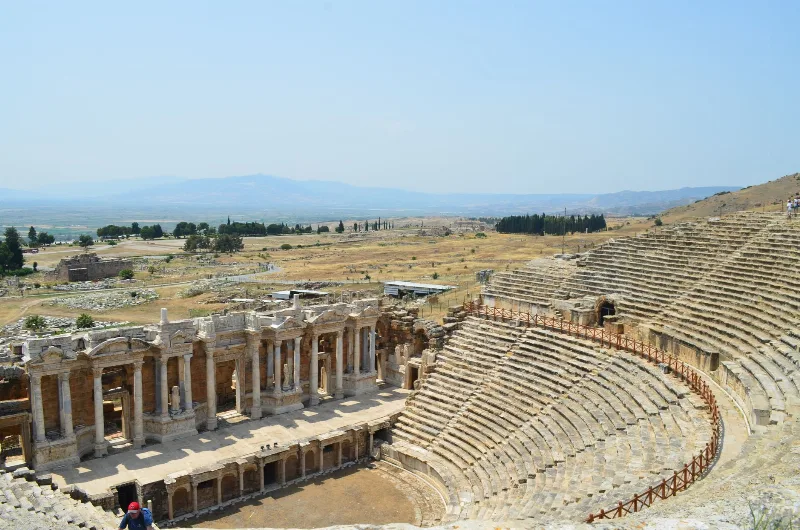
Letoon
Letoon is a Lycian sanctuary near Xanthos in Muğla Province, dedicated to Leto, Artemis and Apollo. Its three temples, theatre and trilingual inscription make it one of southwestern Turkey’s most significant archaeological sites.
Explore →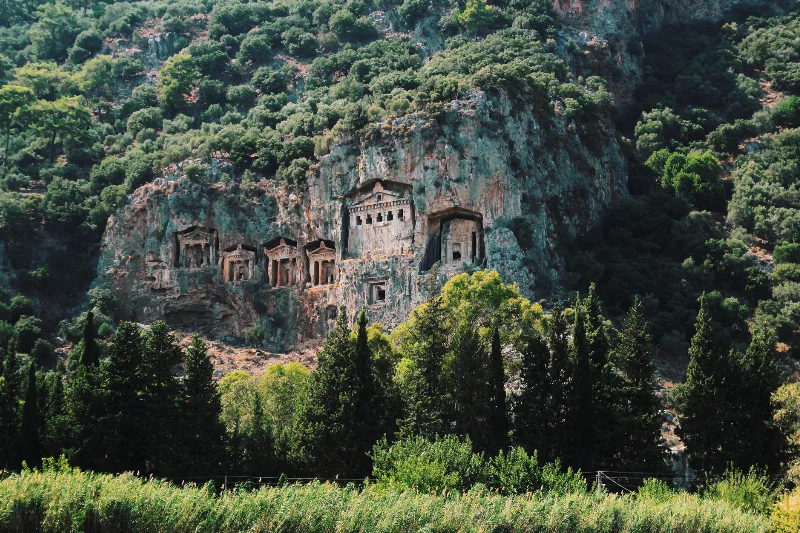
Kaunos
Kaunos is an ancient Carian city on the Dalyan River in Muğla Province, known for its temple-style rock-cut tombs and the extensive ruins of a harbour that silted up centuries ago.
Explore →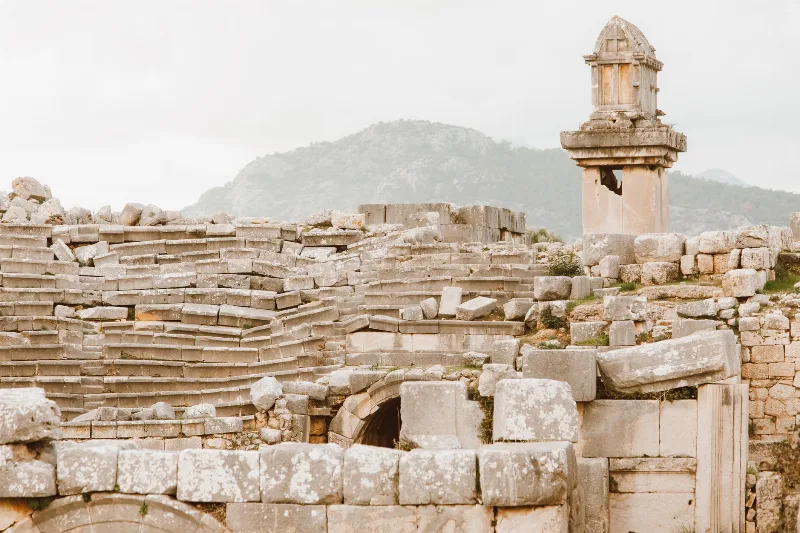
Xanthos
Xanthos is an ancient Lycian city in Antalya Province and a UNESCO World Heritage Site, known for its Lycian tombs, Roman theatre and role as a leading city of Lycia.
Explore →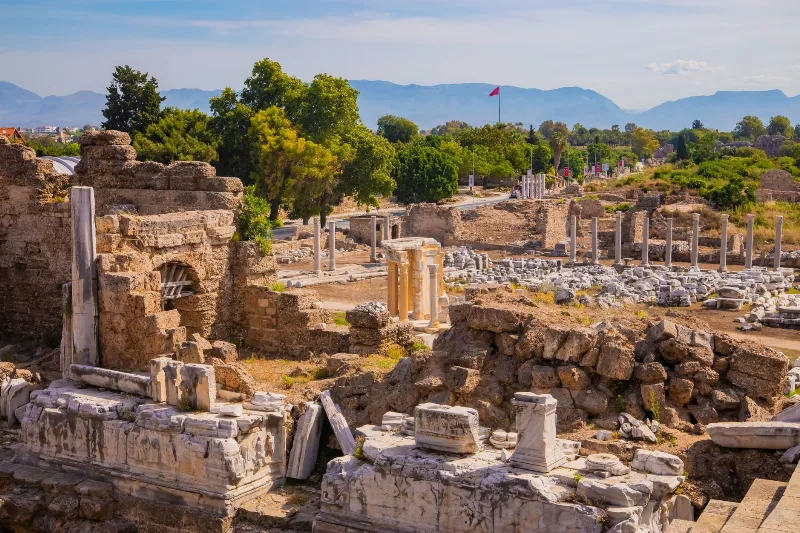
Phaselis
Phaselis is a Rhodian-founded port city on the eastern Lycian coast, where paved streets, agoras, baths and a small theatre stand among pines between three sheltered bays.
Explore →Related content
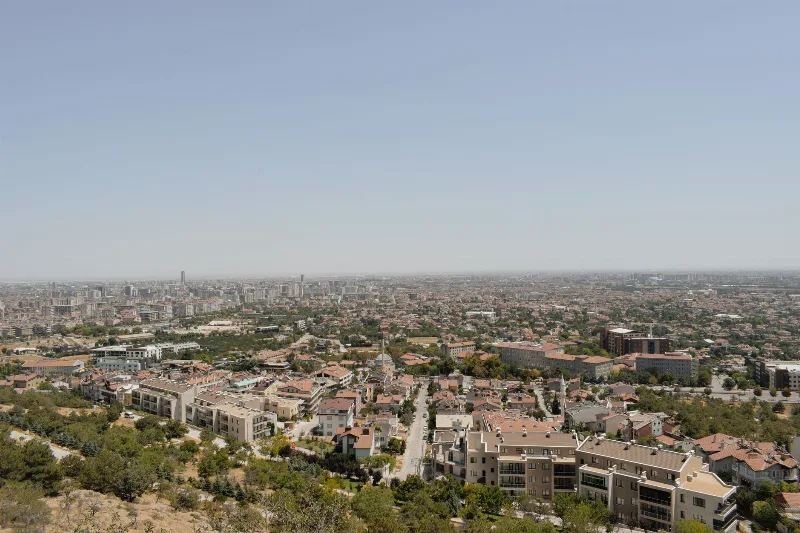
Gaziantep
Gaziantep is a major city in southeastern Türkiye and the administrative centre of its province, widely recognised as the country's gastronomic capital and known for its citadel, bazaars and the Zeugma Mosaic Museum.
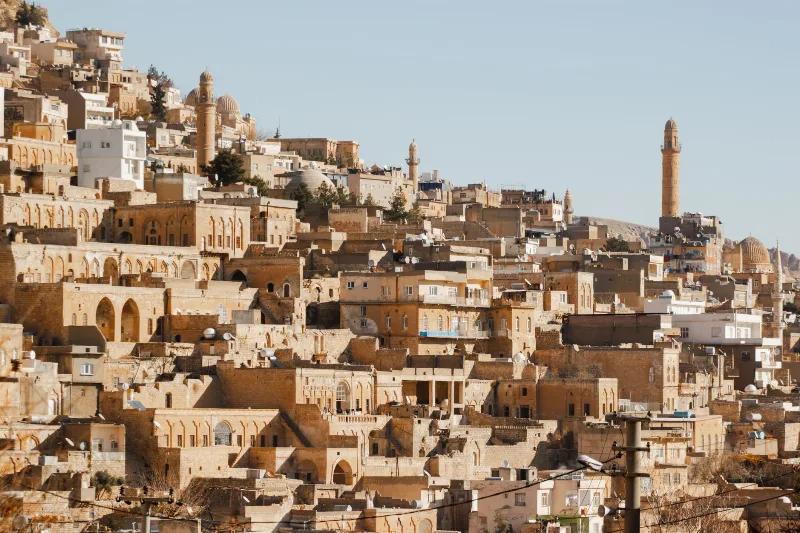
Mardin
Mardin is a historic city in southeastern Türkiye, built on a rocky hillside above the Mesopotamian plain and known for its honey-coloured stone architecture and Syriac Christian heritage.
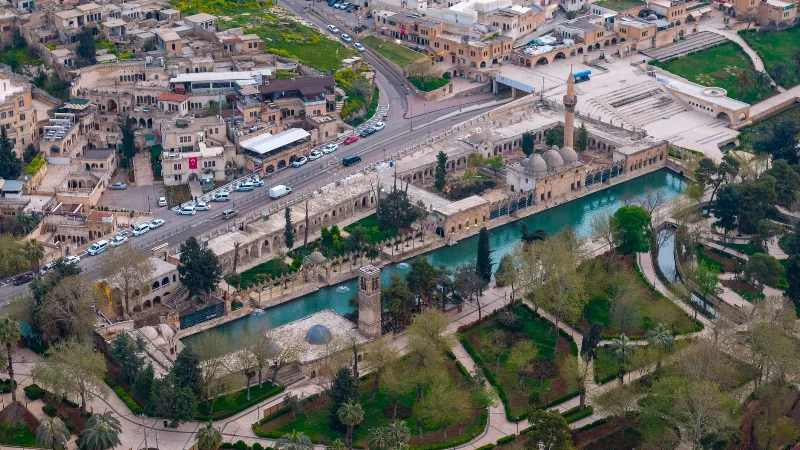
Şanlıurfa
Şanlıurfa, commonly called Urfa, is a large city in southeastern Türkiye and the capital of its province. It is known both as a place tied to the tradition of the Prophet Abraham and as the gateway to Göbekli Tepe, one of the oldest monumental sites ever found.
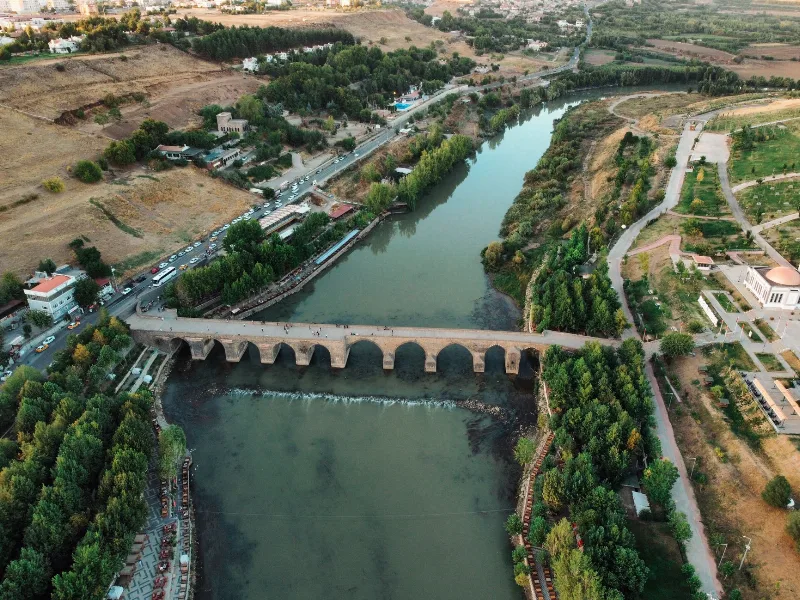
5-Day Tigris and Euphrates Route
A five-day, east-to-west journey across Southeastern Anatolia from Diyarbakır to Gaziantep, following the Tigris and Euphrates through Mardin, Şanlıurfa, Göbeklitepe and Harran.
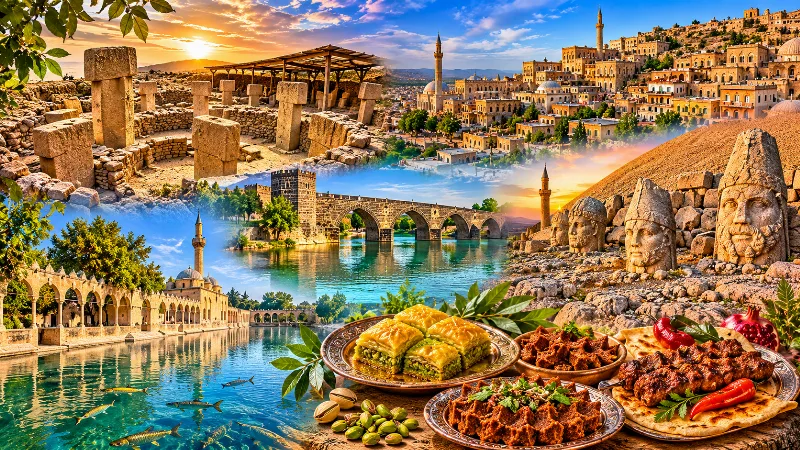
Southeastern Anatolia Region
Southeastern Anatolia is known for its ancient cities, extraordinary archaeological heritage, traditional stone architecture and rich culinary culture. From the historic streets of Mardin to the monumental landscapes of Şanlıurfa and the Euphrates River, the region reflects thousands of years of civilization.

Lahmacun
Lahmacun is a thin, round flatbread spread with finely minced meat, tomato, pepper and spices, baked quickly at high heat and served with lemon and fresh parsley. It is one of Türkiye's most recognisable street and oven foods, with strong regional traditions across the southeast and beyond.