
Lahmacun
Lahmacun is a thin, round flatbread spread with finely minced meat, tomato, pepper and spices, baked quickly at high heat and served with lemon and fresh parsley. It is one of Türkiye's most recognisable street and oven foods, with strong regional traditions across the southeast and beyond.
Lahmacun is a very thin, round flatbread topped with a layer of finely minced meat mixed with tomato, pepper, onion and spices, then baked quickly in a very hot oven. The name comes from the Arabic words for "meat" and "dough", and the dish is often described in English as Turkish pizza, though the comparison only goes so far. The base is rolled far thinner than a pizza, the topping is spread almost like a paste rather than layered, and the result is a soft, pliable flatbread that is folded or rolled before eating. It is strongly associated with southeastern Türkiye — particularly Gaziantep, Şanlıurfa and Adana — but it is eaten throughout the country and sold from countless small bakeries and street stands.
What Lahmacun Actually Is
The defining feature of lahmacun is the balance between a paper-thin dough and a thin, even spread of raw meat mixture that cooks on top of it. The topping is not a sauce; it is a dense, finely chopped blend that is pressed flat across the surface before baking. The dough is usually a simple, lightly leavened mixture of flour, water, salt and a little yeast, rolled out to a diameter roughly the size of a dinner plate or slightly larger. Because the layer of dough is so thin, the whole thing bakes in a matter of minutes, giving a crisp edge and a softer, faintly chewy centre.
It is worth separating the dish from its ingredients. Lahmacun is the finished baked flatbread; the minced meat, tomatoes, peppers and spices are its components, and the quality of those components varies from region to region depending on what local agriculture provides.
Where It Comes From
Lahmacun belongs to a broad family of meat-topped flatbreads found across the Levant, Anatolia and the wider Middle East. Its strongest regional identity within Türkiye is in the southeast, where the cities of Gaziantep, Şanlıurfa, Adana and Mardin all have their own established traditions of making it. In these cities lahmacun is treated as a serious everyday food rather than a novelty, and many families have firm opinions about how the topping should be balanced.
The precise historical origin is difficult to pin down with confidence. Similar flatbreads with minced meat appear in several regional culinary traditions, and it is more accurate to describe lahmacun as part of a shared regional heritage than to credit a single city with inventing it. What is clear is that the southeastern cities shaped the version most widely recognised today, and that lahmacun travelled with migration and trade to become common in Istanbul, Ankara, Izmir and abroad.
Main Ingredients
The topping is built around finely minced meat — usually lamb, beef, or a mixture of the two. In many traditional versions the meat is chopped by hand or passed through a very fine mincer so that it becomes almost smooth. To this are added tomatoes, fresh peppers such as green or red capsicum, onion, and often a mild or moderately hot chilli. Parsley, garlic, salt, black pepper and sometimes a small amount of tomato or pepper paste are folded in. Some regional versions include a touch of isot pepper, a dried and slightly smoked chilli associated with the southeast.
The dough itself is deliberately plain. Its job is to hold the topping and provide texture, not to compete with it. Because the topping is spread thinly and the dough is thin, the meat cooks through quickly rather than steaming under a heavy layer.
How It Is Traditionally Prepared
Preparation starts with the dough, which is kneaded, rested and then divided into small balls. Each ball is rolled out very thin, sometimes by hand and sometimes with a long, narrow rolling pin. In parallel, the topping is prepared by combining the minced meat with the chopped vegetables, herbs and spices. Traditionally the mixture is worked together, sometimes by hand, until it becomes a cohesive, slightly sticky paste.
The meat mixture is then spread across the raw dough in a thin, even layer, usually leaving a narrow border of bare dough around the edge. The flatbreads are baked in a very hot oven or on a hot stone surface. The high heat is essential: it sets the dough before it can dry out and cooks the meat topping in a short time. The finished lahmacun comes out soft enough to fold, with the edges slightly crisp and the topping moist rather than crumbly.
Some versions are baked with the topping spread all the way to the edge, while others leave a visible rim. Both approaches exist and neither is universally considered the only correct one.
Texture and Flavour
A well-made lahmacun is soft and flexible, not stiff. The dough is thin enough that the topping almost becomes part of it, and the two are eaten together in a single bite. The flavour is savoury and lightly spiced, with the sweetness of tomato and pepper balanced by the richness of the meat. Heat levels vary widely: some versions are mild and almost herbal, while others carry a clear chilli warmth.
Fresh parsley and a squeeze of lemon are added after baking, and these two elements change the character of the dish considerably. The lemon cuts through the fat of the meat, and the parsley adds a fresh, slightly bitter note that balances the cooked topping.
How It Is Served
Lahmacun is almost always served with lemon wedges and a handful of flat-leaf parsley, and often with sliced onion, sumac and sometimes pickled vegetables or a simple salad. The flatbread is typically rolled or folded around the parsley, onion and a squeeze of lemon before being eaten. In many places it is accompanied by ayran, a chilled yoghurt drink, or by tea.
It is eaten at almost any time of day. It is common as a quick lunch or a light evening meal, and in the southeast it is also served as part of a larger spread of grilled and baked dishes.
Regional Variations
Variations are mostly in the topping rather than the dough. In Gaziantep and Şanlıurfa, lahmacun is often made with lamb and a moderate amount of chilli, and the topping is finely worked so that it holds together. In other regions beef is more common, and the mixture may be milder or heavier on tomato. Some versions add a little pepper paste or isot pepper for colour and depth.
Outside Türkiye, lahmacun is frequently adapted — sometimes with a thicker base or a more heavily sauced topping — which moves it closer to a pizza-style bake than to the traditional thin flatbread. These adaptations are recognisably related but different in texture and balance.
How It Differs from Similar Dishes
Lahmacun is often confused with pide, another Turkish flatbread, but the two are distinct. Pide usually has a thicker, boat-shaped dough and a heavier filling, often including cheese, egg, sausage or larger pieces of meat. Lahmacun, by contrast, is thin, round and topped with a finely minced meat spread rather than chunky fillings.
It also differs from Arab and Levantine meat flatbreads in style and seasoning, though the family resemblance is real. The distinguishing feature is the combination of an extremely thin dough, a fine meat paste topping, and a very short, very hot bake. That combination is what gives lahmacun its particular softness and its role as a food that is folded and eaten by hand.
Cultural Significance
Lahmacun sits at the intersection of home cooking, bakery production and street food. In southeastern cities it is a familiar part of daily eating, produced in neighbourhood bakeries and eaten in simple settings rather than as a special-occasion dish. Its affordability, speed of preparation and portability have made it one of the most widely available foods in Türkiye, and it remains closely tied to the regional culinary identity of Gaziantep, Şanlıurfa and the surrounding area.
Related content
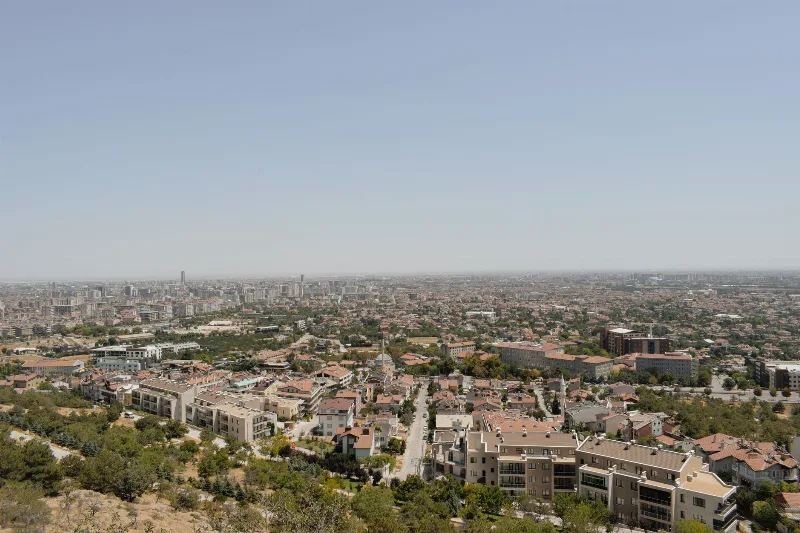
Gaziantep
Gaziantep is a major city in southeastern Türkiye and the administrative centre of its province, widely recognised as the country's gastronomic capital and known for its citadel, bazaars and the Zeugma Mosaic Museum.
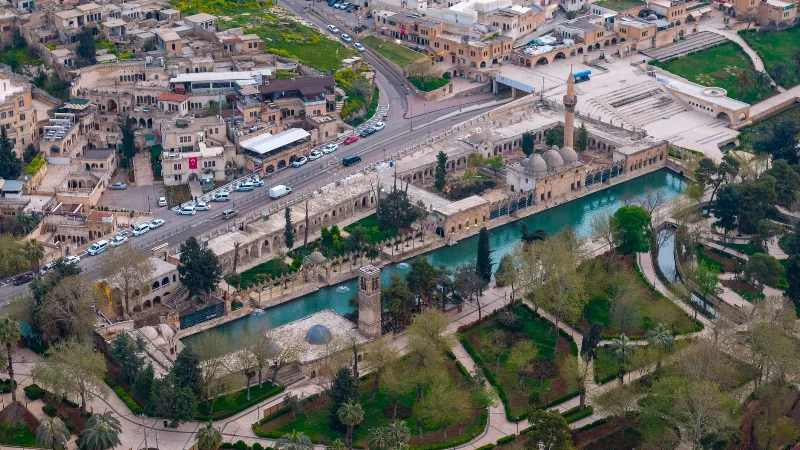
Şanlıurfa
Şanlıurfa, commonly called Urfa, is a large city in southeastern Türkiye and the capital of its province. It is known both as a place tied to the tradition of the Prophet Abraham and as the gateway to Göbekli Tepe, one of the oldest monumental sites ever found.
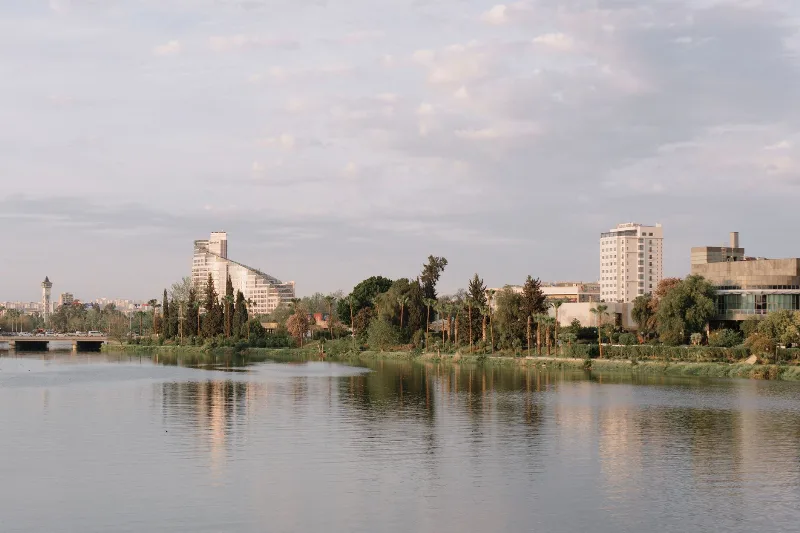
Adana
Adana is a major metropolitan city in southern Türkiye and the urban heart of the Çukurova plain, defined by the Seyhan River, a Roman-era stone bridge and a deeply rooted kebab and agricultural culture.
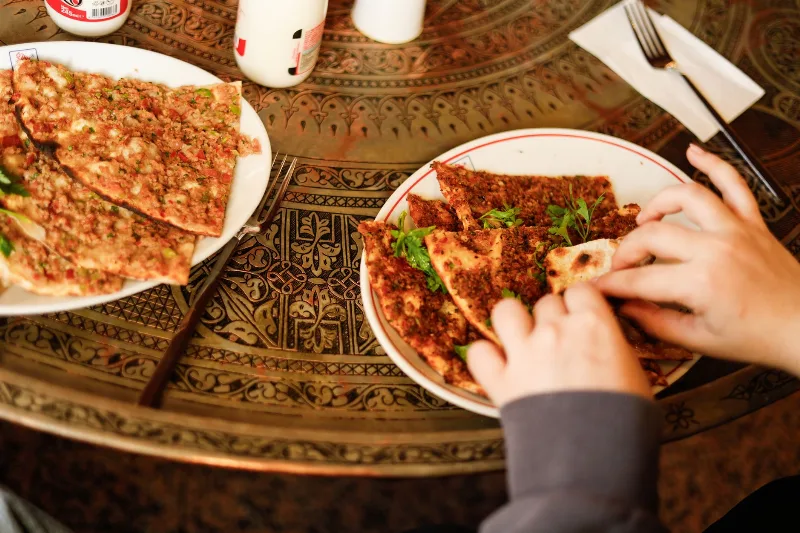
Lahmacun
Lahmacun is a paper-thin flatbread spread with a finely chopped, spiced meat topping and baked quickly at high heat. It is most closely associated with Şanlıurfa and Gaziantep, and is traditionally eaten rolled with lemon and parsley.
Kahramanmaraş
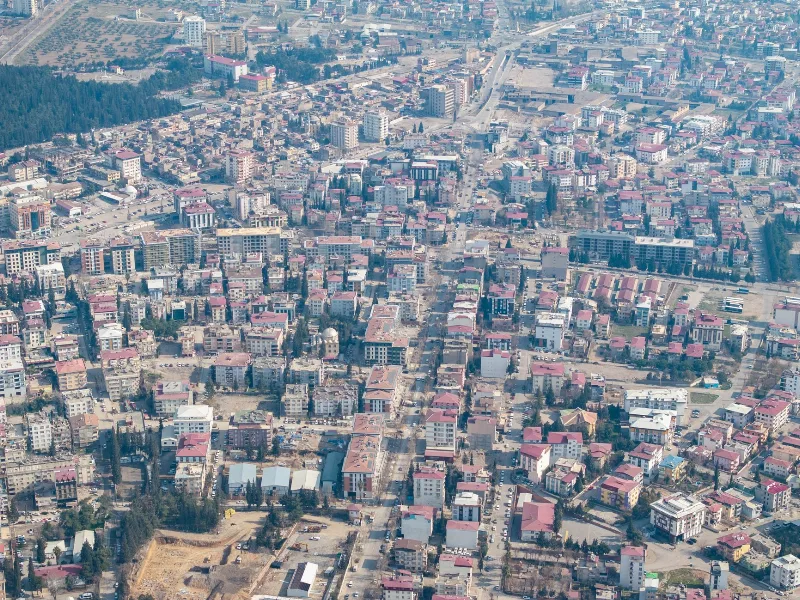
Kahramanmaraş is an inland city in southern Türkiye, set on a plain below the Taurus Mountains, known worldwide for its elastic salep-based dondurma and for a textile industry built on denim.
Why Turkish Food Changes from Region to Region
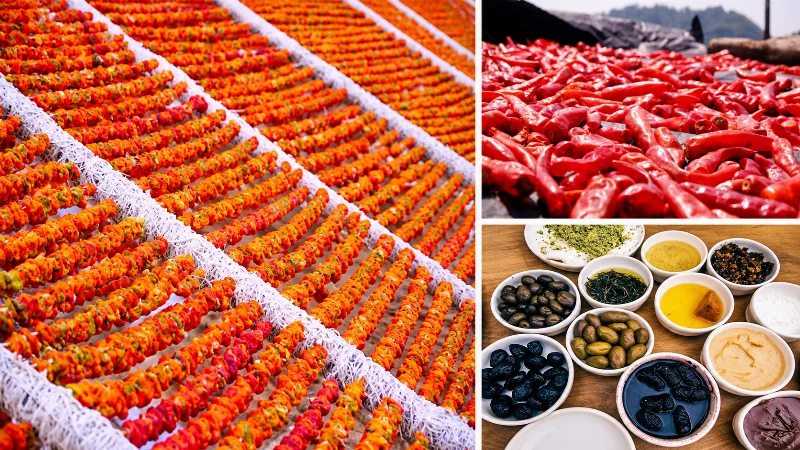
Climate, geography, agriculture and local history shape the ingredients, cooking methods and everyday dishes found across Türkiye. Türkiye’s cuisine is often described as a single national tradition, but food changes considerably from one region to another. Coastal climate, mountain geography, agricultural production, local history and available ingredients all influence what is cooked and how meals are prepared. A dish common on the Black Sea coast may be uncommon in southeastern Türkiye, while ingredients associated with the Aegean can play a much smaller role in the interior. These regional differences form one of the main characteristics of Turkish food culture.