
Kahramanmaraş
Kahramanmaraş is an inland city in southern Türkiye, set on a plain below the Taurus Mountains, known worldwide for its elastic salep-based dondurma and for a textile industry built on denim.
Kahramanmaraş is an inland city in the Mediterranean Region of southern Türkiye, standing at roughly 570 metres above sea level on the Maraş Plain, directly beneath the slopes of Ahır Dağı in the Taurus Mountains. It is the administrative centre of both the province and the metropolitan municipality that share its name. Two things have carried the name of the city far beyond Türkiye: Maraş dondurma, an unusually dense and elastic ice cream made with salep and goat's milk, and a textile sector that has turned the city into one of the country's major centres of denim production.
Setting and Surrounding Geography
The province sits where the Mediterranean world of Adana and Osmaniye meets the interior of southeastern Anatolia, sharing borders with Gaziantep, Adıyaman, Malatya, Sivas, Kayseri and Adana. The city itself occupies the northern edge of a broad cultivated plain, with the Ahır Dağı massif rising immediately to the west and blocking any easy view toward the coast. Further north and east the land climbs into the Nurhak and Binboğa ranges, whose high pastures and wooded slopes belong to a very different landscape from the plain.
The Ceyhan River, one of the largest rivers of the eastern Mediterranean basin, rises in the highlands of this province and runs south across the plain before eventually reaching the sea in neighbouring Adana. That combination of a fertile plain, mountain water and a position on the road between Anatolia's interior and the Mediterranean coast has shaped the settlement pattern of the region for centuries.
From Maraş to Kahramanmaraş
The site has been inhabited since antiquity, when it was known as Germanicia. Late Roman floor mosaics discovered in the city point to a prosperous classical town on the routes crossing the region. In the medieval period the area became the heartland of the Dulkadirid principality, which was based around Maraş and nearby Elbistan and was absorbed into the Ottoman state in the early sixteenth century. Under Ottoman rule the town remained a regional market and administrative centre on the road to Aleppo and the Syrian interior.
The modern name carries a political memory. After the First World War, during the French occupation of the region, the town resisted and was eventually reclaimed. In recognition of that struggle, the honorific Kahraman, meaning heroic, was formally attached to the old name Maraş in the 1970s. Locals still commonly call the city simply Maraş.
The Shape of the City
Kahramanmaraş was reorganised as a metropolitan municipality in 2012, and its central urban area is divided between two districts, Dulkadiroğlu and Onikişubat. The historic core clusters around the rocky hill crowned by Kahramanmaraş Castle, whose foundations reach back to antiquity beneath later medieval and Ottoman rebuilding. Just below the citadel, the old commercial quarter preserves the Ulu Cami, a mosque from the Dulkadirid period, and the Taş Medrese, a stone-built religious school of the same era, together with covered market streets that once served the caravan trade.
The city has expanded far beyond those old limits, with wide boulevards, apartment blocks and industrial zones spreading across the plain. The earthquakes of February 2023, whose epicentres lay in the Pazarcık and Elbistan districts of the province, caused severe damage in the historic centre and across many residential neighbourhoods, and reconstruction has become part of the city's recent story.
Ice Cream, Peppers and a Distinctive Local Identity
Maraş dondurma is the city's most recognisable export. It is made from goat's milk, salep obtained from the tubers of wild orchids, and sugar, then worked with long wooden paddles until it becomes thick, chewy and slow to melt. The same salep tradition feeds into the city's winter drinks, while the local red pepper, dried and crushed into flakes and paste, gives the regional kitchen much of its character. Tarhana, bulgur dishes and dairy products from the surrounding villages are part of the same food culture. The province has also produced well-known folk poets and musicians whose work belongs to a broader Anatolian aşık tradition.
Economy and the Wider Province
Textiles dominate the modern economy of the city, with spinning, weaving and garment production concentrated in organised industrial zones, and denim among the most important product lines. The province as a whole is more varied than its capital. Elbistan and Afşin, to the north, sit on one of Türkiye's largest lignite deposits and host major thermal power plants. Andırın, in the forested Taurus highlands to the west, is a district of wooded slopes and summer pastures, while Göksun, Nurhak and Çağlayancerit belong to the mountainous belt. Pazarcık and Türkoğlu spread across the agricultural plain south of the city, and Ekinözü occupies a high valley of its own.
Climate and the General Best Time to Visit
The climate is a continental version of the Mediterranean pattern: summers are hot and dry, with daytime temperatures that regularly climb well above 30°C, and winters are cold enough for frost and snow on the plain, with heavy snow in the mountains. Spring and autumn are the mildest and most comfortable seasons for moving around the city and the surrounding countryside, while the warmest weeks of summer are better suited to the higher pastures than to the plain itself.
Reaching the Area and Regional Connections
Kahramanmaraş has its own airport, served by domestic flights, and the city lies on a road network linking it eastward toward Gaziantep and Adıyaman, northward toward Malatya and Kayseri, and southward toward Adana and Osmaniye. Its position makes it a natural stopping point between the Mediterranean coast and the interior of southeastern Türkiye. Travellers heading for the coast at Adana or the historic centres of Gaziantep and Şanlıurfa pass through a region whose identity is genuinely its own, defined by mountain water, a broad agricultural plain, a long record of urban life and a food and textile culture that has made the name Maraş familiar far beyond the borders of the country.
Discover Food in Türkiye
All food →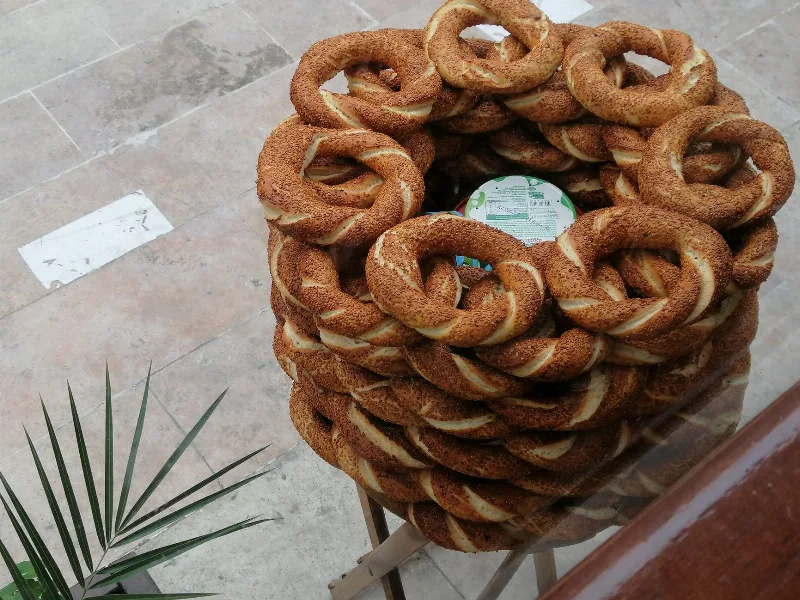
Simit
Simit is a ring-shaped Turkish bread covered in sesame seeds, strongly associated with Istanbul and sold as everyday street food. It is eaten fresh, most often with tea, and has a crisp crust around a chewy crumb.
Explore →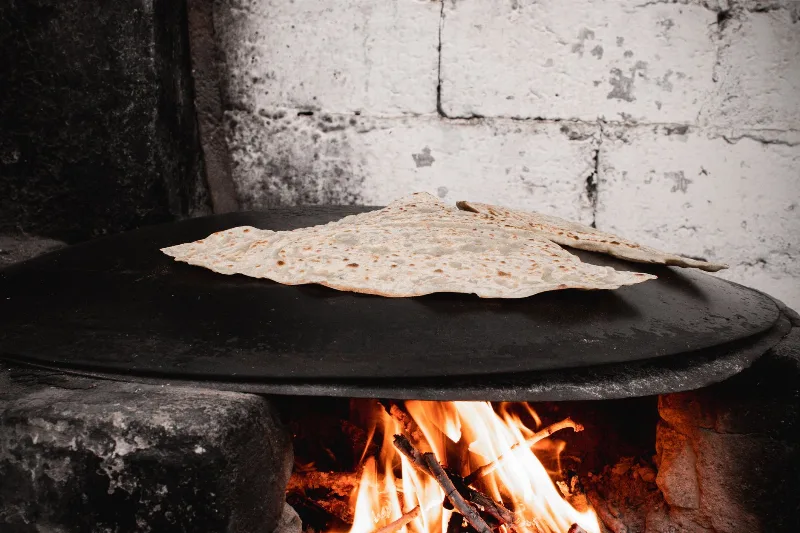
Bazlama
Bazlama is a soft, thick Turkish flatbread made from a leavened dough and cooked on a hot griddle. It is a staple of village baking across Anatolia, eaten warm with butter or used to wrap other foods.
Explore →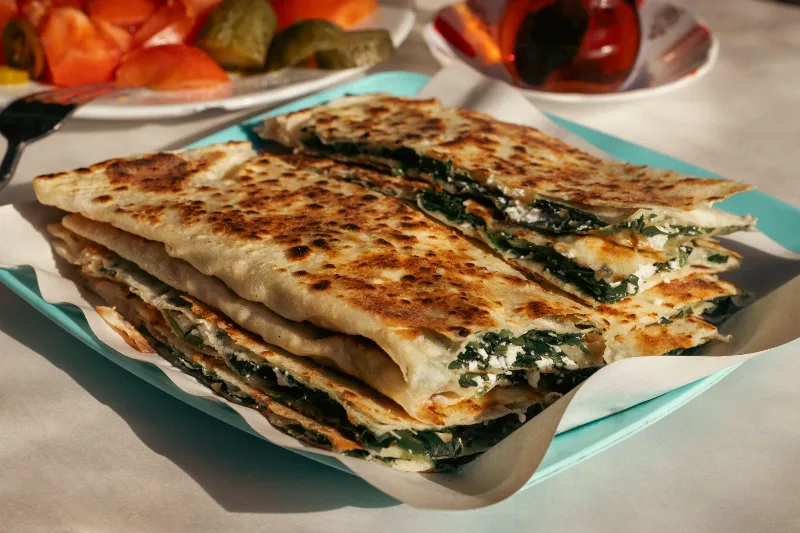
Gözleme
Gözleme is a thin, hand-rolled Anatolian flatbread folded around savory fillings such as cheese, spinach, or minced meat and cooked on a sac griddle. The article covers its regional variations, cooking method, texture, and traditional serving style.
Explore →Related content
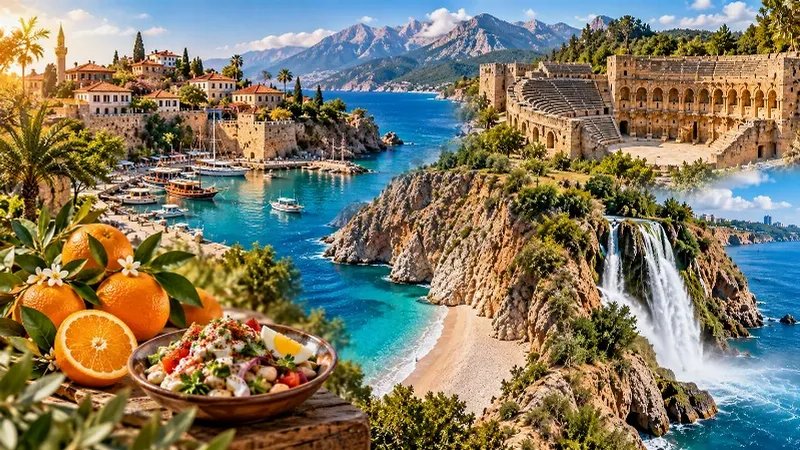
Mediterranean Region
Türkiye's Mediterranean Region combines turquoise coastlines, dramatic mountains, ancient cities and fertile landscapes. From Antalya's beautiful beaches to the historic settlements of the eastern Mediterranean, the region offers a rich blend of natural scenery, cultural heritage and traditional local life.
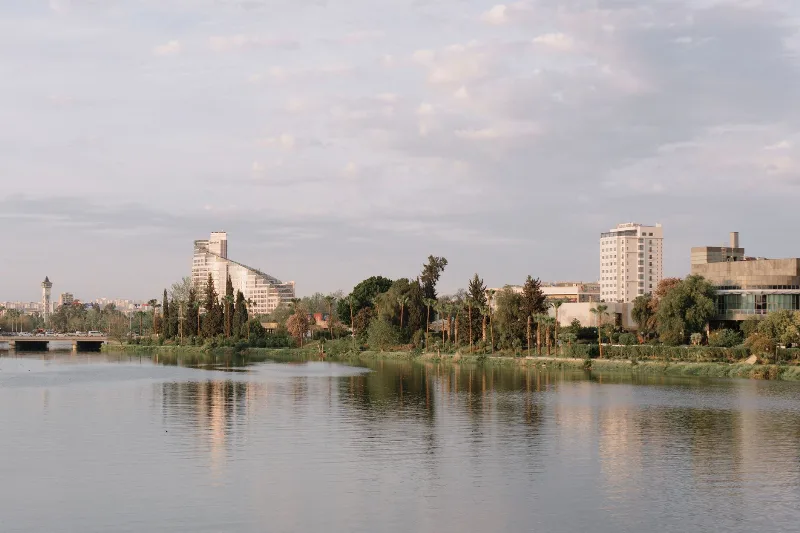
Adana
Adana is a major metropolitan city in southern Türkiye and the urban heart of the Çukurova plain, defined by the Seyhan River, a Roman-era stone bridge and a deeply rooted kebab and agricultural culture.
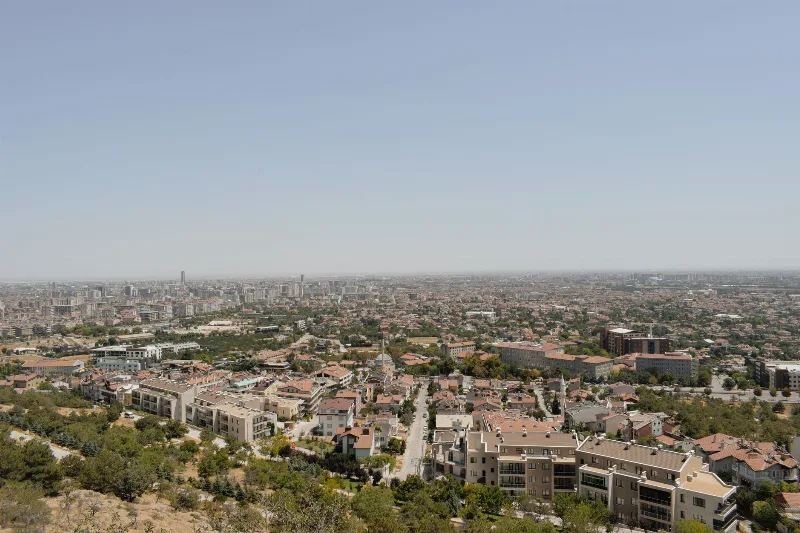
Gaziantep
Gaziantep is a major city in southeastern Türkiye and the administrative centre of its province, widely recognised as the country's gastronomic capital and known for its citadel, bazaars and the Zeugma Mosaic Museum.
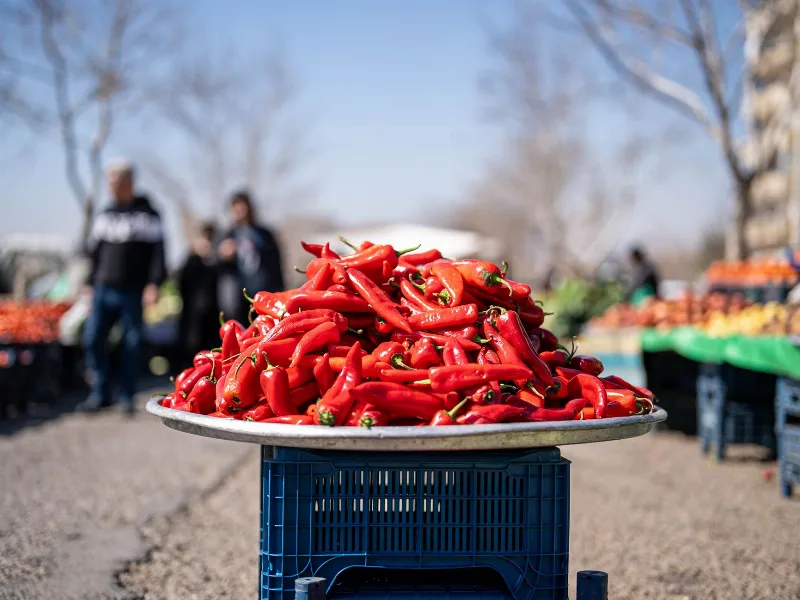
Kahramanmaraş Peppers
Kahramanmaraş peppers are the red peppers grown on the inland plains of southern Türkiye, where hot, dry summers and fertile soils give the crop its deep colour, moderate heat and smoky aroma.
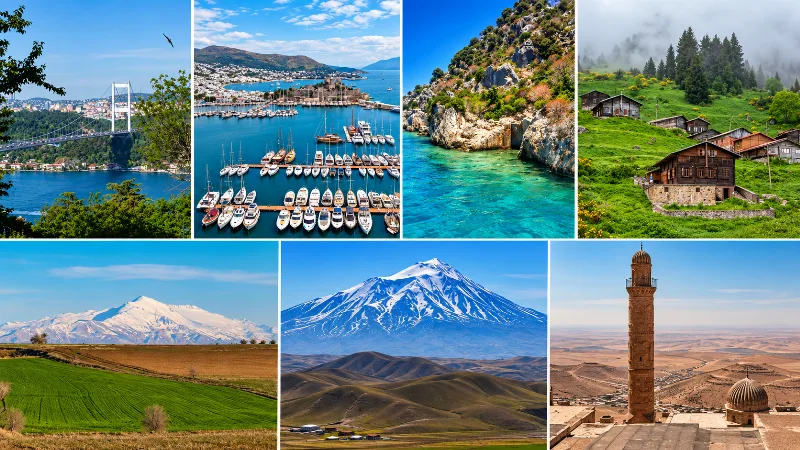
The Seven Geographical Regions of Turkey
An introduction to Turkey’s seven geographical regions and the landscapes, climates and cultural characteristics that distinguish them.
Ceyhan River Cotton Fields in Adana
The Ceyhan River crosses the Çukurova plain east of Adana, where irrigated cotton fields shape one of Türkiye's most distinctive agricultural landscapes.