
Kahramanmaraş Peppers
Kahramanmaraş peppers are the red peppers grown on the inland plains of southern Türkiye, where hot, dry summers and fertile soils give the crop its deep colour, moderate heat and smoky aroma.
Kahramanmaraş peppers are a group of red pepper varieties of the species Capsicum annuum grown in the Kahramanmaraş province of southern Türkiye. Although the province belongs to the Mediterranean region, its pepper fields lie inland on a high plain rather than on the coast, and this inland setting is the reason the crop has become so closely identified with the area. The peppers are harvested when fully ripe and red, then dried in the sun and usually processed into flakes or powder, which is how they travel from the fields into kitchens across the country.
Where Kahramanmaraş Peppers Are Grown
The crop is cultivated on the plains around the city of Kahramanmaraş and in the surrounding districts and villages of the province, where irrigation water from the Ceyhan River and its tributaries supports the fields through the dry summer months. The city itself sits at roughly 550 to 600 metres above sea level, on a broad basin enclosed by mountain ranges. That combination of a relatively high plain, a long growing season and easy access to river water creates the conditions pepper plants need: plenty of sun, reliable moisture at the roots and warm nights that allow the fruit to ripen fully.
Pepper growing is not restricted to a single valley. It spreads across the farmland that surrounds the urban centre and into the agricultural districts that depend on the same plain, so the landscape in late summer is marked by plots of deep red fruit alongside the more familiar cotton, wheat and vegetable fields of the region.
Why the Local Climate and Soil Suit the Crop
Kahramanmaraş has a transitional climate. Its summers are hot and dry, with strong sunshine and low humidity, while winters are distinctly cold and often frosty because the province lies far enough inland to be cut off from the moderating influence of the sea. Peppers are warmth-loving plants, and this pattern suits them well: the long, hot, rain-free summer gives the fruit time to colour and concentrate its sugars, while the sharp day-to-night temperature difference on the plain encourages the thick, fleshy walls that later dry into flakes with a full flavour.
The soils of the basin are largely alluvial and deep, formed by material carried down by the rivers and streams that cross the plain. They drain reasonably well but hold enough moisture to carry the plants through the hottest weeks. Where irrigation is available, growers can keep the crop healthy through July and August, the period when the fruit is swelling and turning from green to red.
The Pepper Plant and Its Growing Cycle
Peppers are grown as annual crops in this region. Seedlings are raised first and then transplanted into the open fields once the risk of late frost has passed, which means planting generally falls in spring. The plants grow into bushy, upright shrubs with dark green leaves and small white flowers that appear through the early summer.
The fruit that follows is botanically a berry. It starts green, firms up through the summer, and only reaches its characteristic deep red colour when fully mature. That final stage matters a great deal for dried peppers, because the colour, aroma and sweetness of the finished product depend on the fruit being left on the plant until it is completely ripe rather than picked early.
Harvest and Sun-Drying
Harvest begins in late summer and continues into autumn. Growers pick the reddened fruit by hand, often working through the fields more than once so that only fully ripe peppers are taken. After picking, the peppers are traditionally spread out or strung up and left to dry in the open air, making use of the same hot, dry, sunny weather that ripened them. Whole strings or laid-out fruit drying on rooftops and in open yards are a familiar late-season sight in the province.
Once dried, the peppers are destemmed and the seeds are commonly removed. The remaining flesh is then crushed, rubbed or ground. Coarse crushing produces flakes, while finer milling gives a powder. A small amount of oil is sometimes worked into the flakes to keep them soft and to carry their aroma, a step that reflects the oily, slightly clinging texture of good Maraş pepper rather than a purely industrial process.
What Makes Maraş Peppers Distinctive
Kahramanmaraş peppers are valued for a flavour profile that is rich rather than simply hot. The dried flakes are a deep, dark red, with a fruity, slightly smoky aroma and a warmth that builds gradually instead of striking immediately. The flesh is thick and slightly oily, which helps the flakes release colour and flavour when they are warmed in oil.
Both hotter and milder types are grown in the province. The hotter peppers are used where heat is wanted, while sweeter, fleshier types are dried for a gentler flake. The distinction between the two is part of what makes the regional pepper tradition varied, and growers and buyers alike pay attention to it.
How the Peppers Are Used
Dried Kahramanmaraş pepper is most often used as a seasoning. Flakes are sprinkled over soups, stews, legumes, rice dishes and grilled vegetables, or stirred into hot oil to release their colour and aroma before other ingredients are added. Because the flakes are not overwhelmingly hot, they are used generously as a flavour base as much as a source of heat. Ground powder is used in spice blends and in stuffings, and the fresh peppers also appear in regional cooking when in season. The dried flakes are typically stored in a cool, dark place, where they keep their colour and aroma for many months.
A Crop That Shapes the Local Agricultural Scene
Pepper cultivation is woven into the rhythm of farming in Kahramanmaraş. The crop occupies land through the summer, is harvested in the autumn, and then feeds into a drying and processing stage that continues long after the fields have been cleared. This extended cycle supports work beyond the farm gate — picking, stringing, drying, destemming, crushing and packing — and gives the province a distinctive seasonal pattern that is tied directly to the pepper harvest.
Kahramanmaraş Peppers and Other Regional Pepper Traditions
Southern and south-eastern Türkiye has several well-established dried pepper traditions, and Kahramanmaraş is one of the recognised centres. Nearby Şanlıurfa is associated with its own dark, oily pepper flakes, and Gaziantep has a separate pepper culture of its own. Each region's peppers differ in heat, colour and aroma because of local varieties, local soils and local drying conditions. Within Kahramanmaraş province, the pepper fields spread across the plain served by the Ceyhan River and its tributaries, tying the crop firmly to the geography of the basin rather than to any single village.
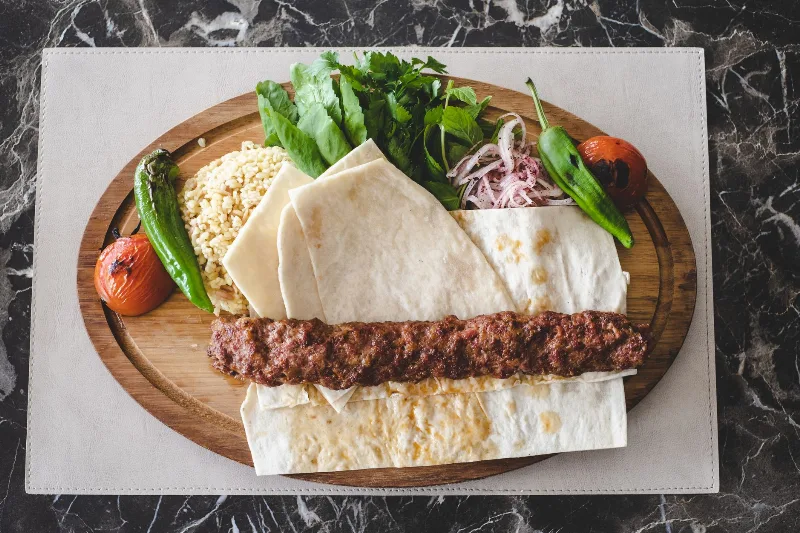
Adana Kebap: Spicy Hand-Minced Lamb Kebab from Adana
Adana kebap is a charcoal-grilled minced lamb kebab from the Çukurova plain, defined by hand-chopped meat, tail fat and generous chilli heat. This article explains its ingredients, preparation, flavour and how it differs from Urfa kebap.
Explore →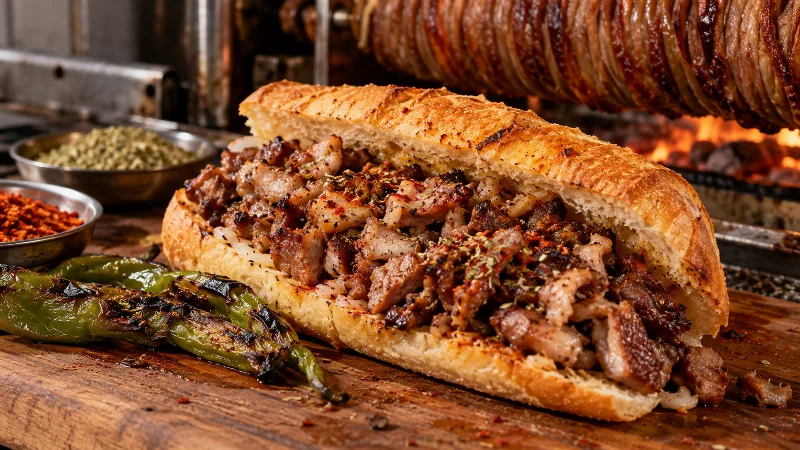
Kokoreç
Kokoreç is a Turkish street food of lamb intestines wound around a skewer, grilled over charcoal and chopped with hot pepper and oregano. It is most often eaten stuffed into half a loaf of bread, and its two best-known styles come from Istanbul and İzmir.
Explore →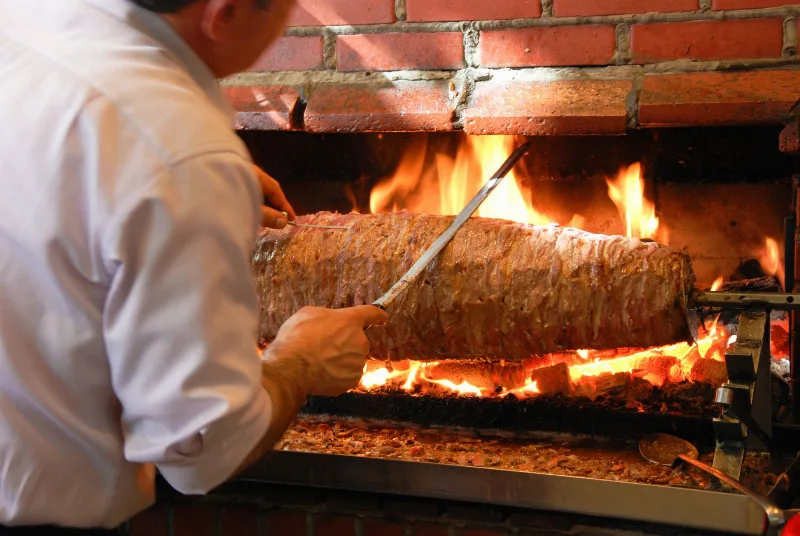
Cağ Kebabı
A regional lamb kebab from Erzurum, Cağ Kebabı is cooked on a horizontal rotisserie and served on skewers. Its tender, juicy meat and simple accompaniments make it a celebrated dish in eastern Turkey.
Explore →Related content
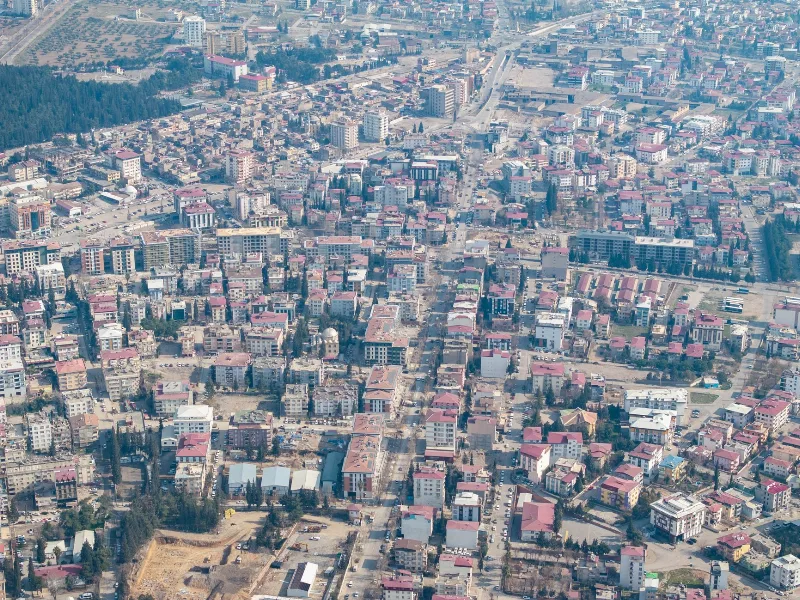
Kahramanmaraş
Kahramanmaraş is an inland city in southern Türkiye, set on a plain below the Taurus Mountains, known worldwide for its elastic salep-based dondurma and for a textile industry built on denim.
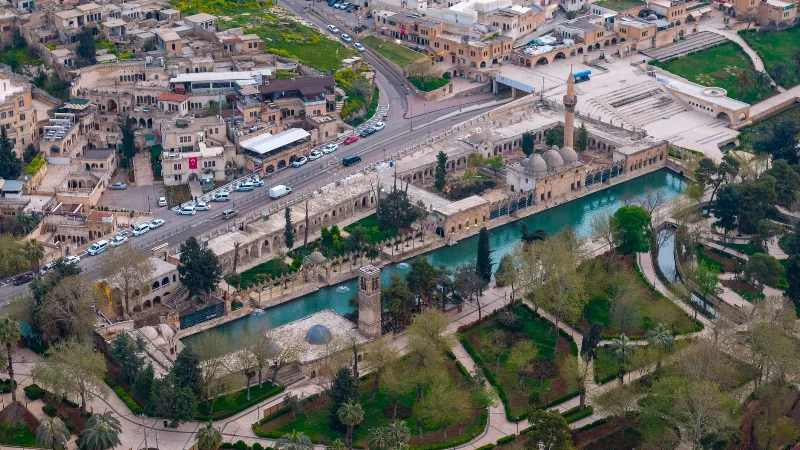
Şanlıurfa
Şanlıurfa, commonly called Urfa, is a large city in southeastern Türkiye and the capital of its province. It is known both as a place tied to the tradition of the Prophet Abraham and as the gateway to Göbekli Tepe, one of the oldest monumental sites ever found.
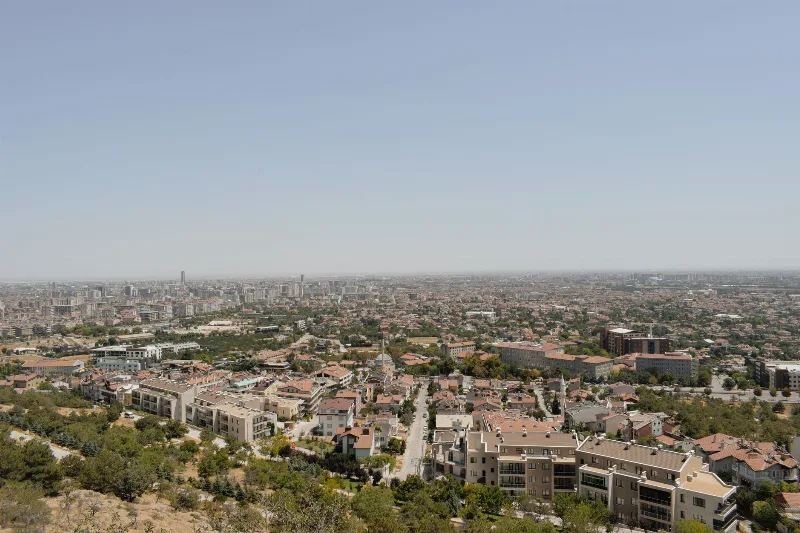
Gaziantep
Gaziantep is a major city in southeastern Türkiye and the administrative centre of its province, widely recognised as the country's gastronomic capital and known for its citadel, bazaars and the Zeugma Mosaic Museum.
Kahramanmaraş Red Pepper and Traditional Butter
Two staple flavours of the Kahramanmaraş kitchen — sun-dried red pepper and clarified butter — show how highland pastures and long summers shape the region's cooking.
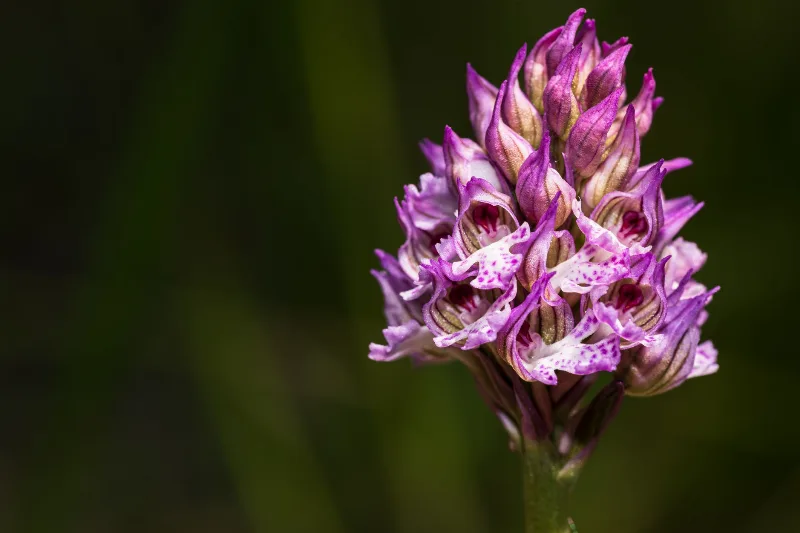
Orchid Bloom in Kahramanmaraş
Wild terrestrial orchids flower across the hills and mountains of Kahramanmaraş each spring, creating a short-lived season that draws botanists and photographers to southern Türkiye. The timing shifts with altitude and weather, usually running from late March into May.
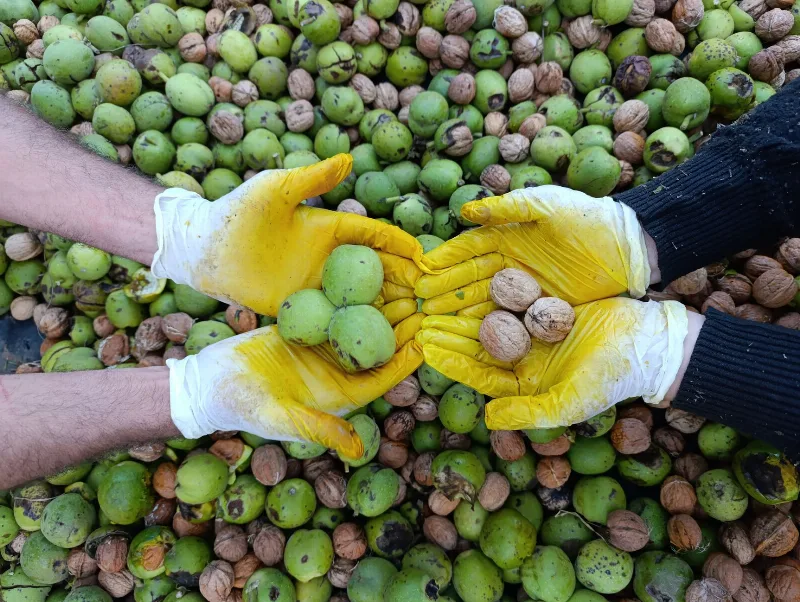
Walnut Harvest in Kahramanmaraş
Every September, walnut growers across Kahramanmaraş province gather their crop as the thick green husks begin to split open. The work is short, weather-dependent and still largely carried out by families in village orchards.