
Assos
The ancient Greek city of Assos in Çanakkale, Türkiye, is defined by its sixth-century BC Temple of Athena, kilometres of surviving walls and a small Aegean harbour. Here is how the site is arranged and what a visit involves.
Assos is an ancient Greek city on the Aegean coast of north-western Turkey, in the Ayvacık district of Çanakkale Province. It occupies a steep, rocky hill on the southern shore of the Biga Peninsula — the historical region known as the Troad — directly facing the Greek island of Lesbos across a narrow stretch of the Aegean. The site is known above all for the Temple of Athena, raised on its summit in the sixth century BC, and for one of the longest and best-preserved circuits of ancient city walls in Anatolia. The modern village of Behramkale stands on the same hill around the ruins, while a small harbour lies at the foot of the slope below.
How the ancient city is laid out
The hill of Assos rises to roughly 240 metres above sea level, and the ancient city was built in terraces up and around it. The fortified acropolis occupies the highest ground, with the Temple of Athena on its summit. Below the temple, the inhabited area held the public life of the city: an agora, civic buildings, a theatre and a gymnasium. A ring of walls enclosed the whole settlement and its approaches, and outside those walls lay the necropolis, the city of the dead, which is unusually rich in carved stone sarcophagi.
At the base of the hill, about a kilometre from the village, is the ancient harbour. It was the reason the city prospered: sheltered from the prevailing winds and positioned on a sea route between the Greek mainland, the Aegean islands and the coast of Asia Minor. The harbour remains in use today as a small boat shelter, and the walk or drive down to it follows the old connection between the city and the sea.
Why Assos is distinctive
Three things set Assos apart from other archaeological sites in Türkiye. The first is the Temple of Athena, one of the earliest Doric temples built in Asia Minor, whose surviving columns still stand on the summit. The second is the circuit of walls, built of dark local andesite, which survives for kilometres and gives the site a scale that many ancient cities have lost to stone-robbing and later building. The third is its place in intellectual history: Aristotle spent several years here in the fourth century BC. The combination of an Archaic temple, substantial Hellenistic fortifications and a documented philosophical community makes Assos a site where archaeology and written history reinforce each other.
The Temple of Athena
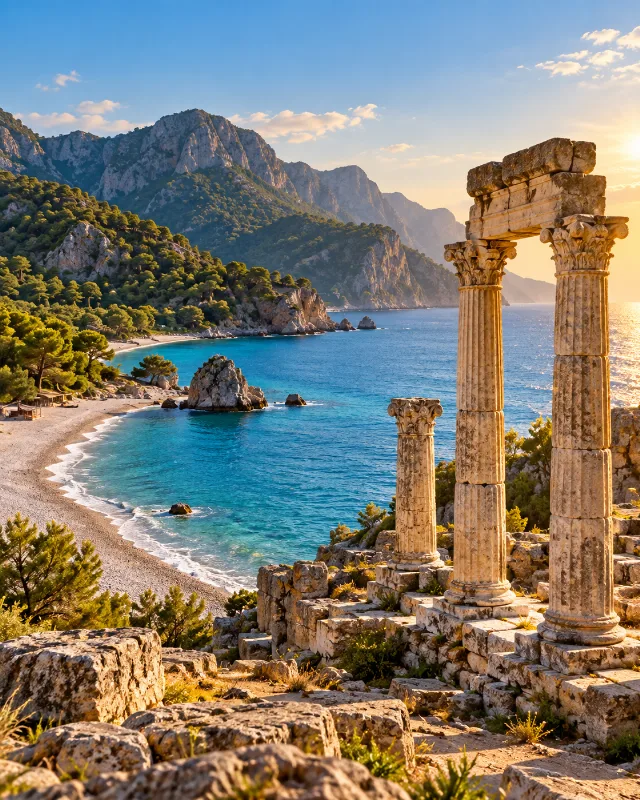
The Temple of Athena was built around 530 BC, in the Archaic period, and is among the earliest Doric temples known in Anatolia. It was constructed from local andesite, a dark grey volcanic stone quarried in the surrounding hills, which gives the ruins their characteristic colour. The temple stood on the highest point of the acropolis, visible from the sea, and its superstructure carried carved reliefs along the architrave — an unusual feature for a Doric building of this date. Fragments of this sculpture were removed during nineteenth-century excavations and are now held in museums, including the Istanbul Archaeology Museums, while others were taken abroad.
The building did not end its life as a temple. In late antiquity it was adapted for Christian worship and converted into a basilica, and traces of that later phase can still be read in the ruins. What survives today is the platform, the lower drums of several columns and enough of the plan to make the original structure legible.
Aristotle at Assos
In the middle of the fourth century BC, Assos was ruled by Hermias, a local dynast who also controlled the nearby town of Atarneus. Around 348 or 347 BC, Aristotle came to Assos at Hermias's invitation and gathered a small circle of philosophers around him. He remained for roughly three years, married Pythias, who was connected to Hermias's family, and left for the island of Lesbos only after Hermias was seized and killed by the Persians. The period is regarded as an important stage in Aristotle's development, and the city's own intellectual tradition continued afterwards: the Stoic philosopher Cleanthes, who later led the school founded by Zeno, was born at Assos.
The walls, gates and surviving monuments
The fortification walls of Assos are the most extensive ancient remains at the site. Built mainly in the Hellenistic period on earlier foundations, they were constructed from andesite blocks and strengthened with towers at intervals, following the natural contours of the rock. Sections of the circuit, together with the main gates, remain standing to a considerable height.
Within the walls, visitors can trace the plan of the city: the foundations of the agora, the meeting place and market at the centre of civic life; the remains of the bouleuterion, where the council met; a gymnasium; a theatre set into the slope; and Roman-period baths. Outside the walls, the necropolis contains a large number of stone sarcophagi, some still in place, which illustrate the burial customs of the city over many centuries.
Behramkale village and the harbour
The modern village of Behramkale grew up on the same hill as the ancient city, and its houses — many built of local stone, some reusing ancient blocks — sit among the ruins. A small mosque and an old stone bridge at the foot of the village date to the Ottoman period and show that the site was never entirely abandoned. The village is the practical base for a visit to the acropolis.
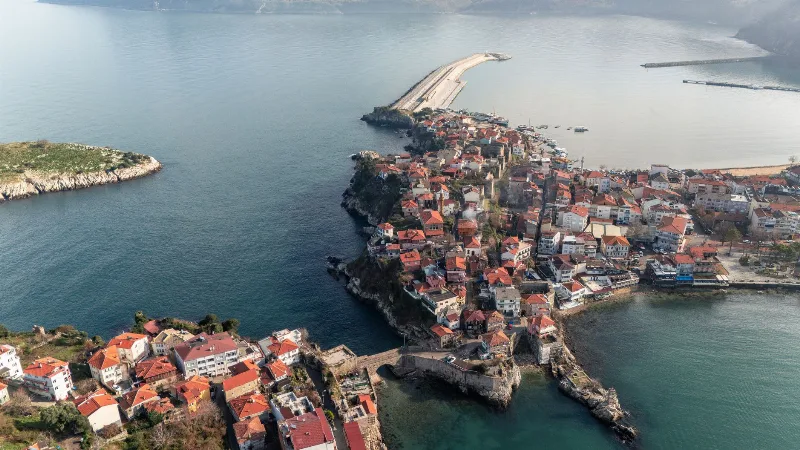
Below, the harbour is a compact, sheltered inlet with a breakwater and a handful of simple buildings at the water's edge. The ancient harbour works, including the remains of moles and defensive structures, can still be identified in and around the modern shelter.
Excavation and study of the site
Assos was among the first ancient sites in Anatolia to be excavated systematically. An American expedition worked there between 1881 and 1883, uncovering the temple, the walls and much of the city plan and removing a number of sculptures and other finds. Turkish excavations resumed in the 1980s and have continued since, adding to what is known about the city's chronology and its buildings.
Getting there and visiting
Assos is reached by road. The nearest administrative centre is Ayvacık, and the site lies a short distance from the coastal town of Küçükkuyu; the regional centre, Çanakkale, is roughly an hour and a half away by car. The acropolis is managed as an archaeological site, and access to the walled area and the temple is through a ticketed entrance. The site is not a single enclosed museum but a landscape of ruins spread across a hill and down to the sea, so a visit involves moving between several distinct areas — the temple summit, the walled city, the village and the harbour.
Terrain, walking and accessibility
The ground at Assos is steep, stony and uneven. Paths and steps climb from the village to the temple, and the ruins themselves are set on terraces and slopes rather than level ground. The road between the harbour and the village has a significant gradient. Visitors should expect to walk on rough surfaces and should wear firm footwear. Because of the steps, slopes and loose stone, large parts of the site are difficult for visitors with limited mobility, and the acropolis in particular is not easily accessible.
Climate and the best time to visit
The coast around Assos has a Mediterranean climate, with hot, dry summers and mild, wetter winters. Summer daytime temperatures are high and the site offers little shade, particularly on the exposed summit. Spring, from about April to June, and early autumn, in September and October, are generally the most comfortable periods, with moderate temperatures and, in spring, green hillsides. Winter can be wet and windy, though the ruins are quieter and the light on the stone is often clearer.
Nearby places connected to Assos
Several other destinations lie within easy reach and share the history of the region. To the north are the ruins of Troy and the Hellenistic city of Alexandria Troas, both part of the same Trojan landscape. To the east rises Mount Ida, known today as Kaz Dağı, the mountain of legend and a national park. The coastal town of Küçükkuyu sits at the edge of the Edremit Gulf, and the village of Babakale, at Cape Baba, marks the westernmost point of the Anatolian mainland. Across the water, the island of Lesbos is visible from the acropolis and the harbour, a short sea crossing that explains much of Assos's early history as a settlement founded from the Aegean islands.
Related content
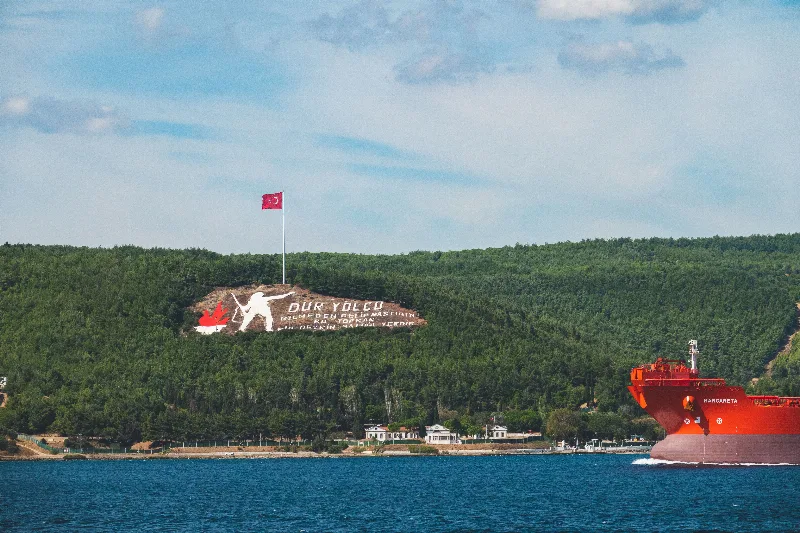
Çanakkale
Çanakkale is a northwestern Turkish city on the Asian shore of the Dardanelles, the strait separating Europe from Asia. It is the administrative centre of a province that includes the Gallipoli battlefields and the archaeological site of Troy.
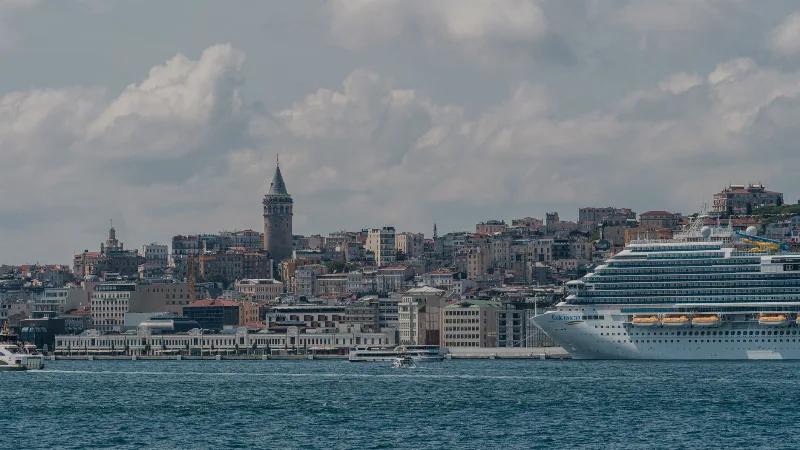
Istanbul
Istanbul is Türkiye's largest city and the country's only metropolis that spans two continents, divided by the Bosphorus strait into a European and an Asian half. Its long run as an imperial capital left a historic core of palaces, mosques and bazaars that still shapes the city's identity.
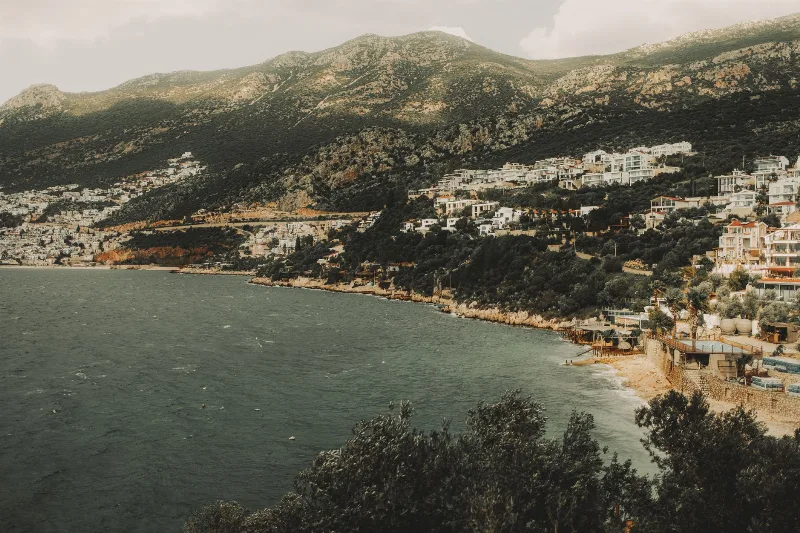
Küçükkuyu
Küçükkuyu is a coastal town in Çanakkale Province, Turkey, at the foot of Kazdağı and surrounded by olive groves. Known for its seafood and proximity to ancient Assos, it offers a mix of Aegean coastline and mountain scenery.
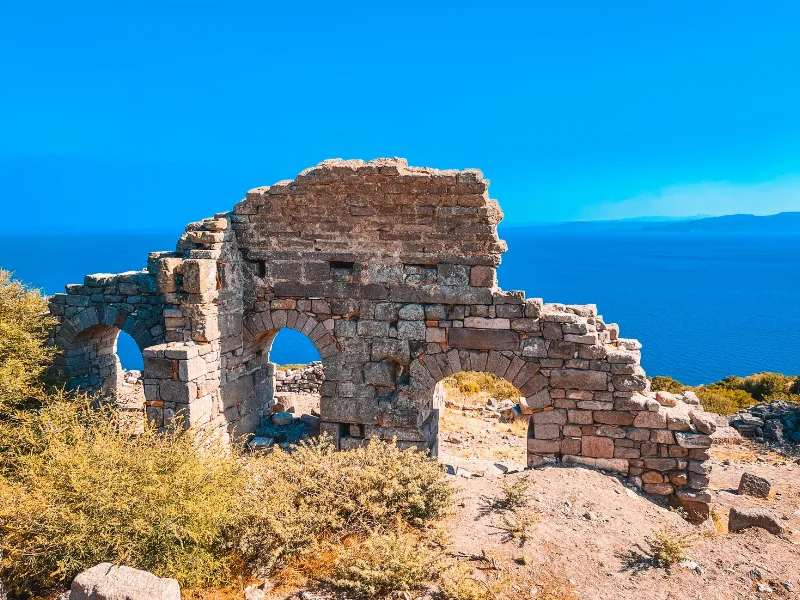
3-Day Assos and Troy Route
A three-day route through Turkey's Troad region, starting in Çanakkale and finishing at the clifftop village and ancient harbour of Assos, with Troy and the lesser-known classical ruins in between.
Assos
Assos is an ancient city and hilltop village in Çanakkale province, Türkiye, known for its Temple of Athena and for the years the philosopher Aristotle spent here. The modern settlement, Behramkale, sits above the ruins and an old harbour on the Aegean coast facing Lesbos.
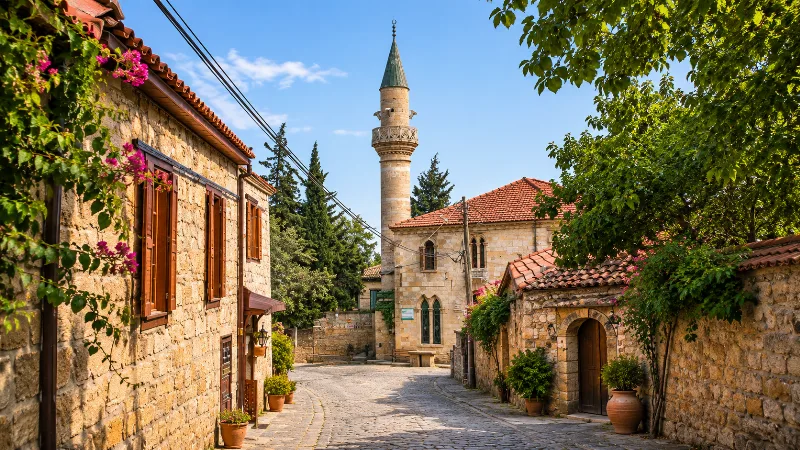
Yeşilyurt: A Stone Village on the Slopes of Kazdağı, Çanakkale
Yeşilyurt is a traditional mountain village in the Ayvacık district of Çanakkale, built on the slopes of Kazdağı and known for its stone houses and olive oil.