
Çanakkale
Çanakkale is a northwestern Turkish city on the Asian shore of the Dardanelles, the strait separating Europe from Asia. It is the administrative centre of a province that includes the Gallipoli battlefields and the archaeological site of Troy.
Çanakkale is a city in northwestern Türkiye, built on the Asian shore of the Dardanelles, the strait that divides Europe from Asia and links the Aegean Sea to the Sea of Marmara. It is the administrative centre of Çanakkale Province, a territory that extends across both continents. Two names shape how the area is known internationally: Gallipoli, the peninsula of battlefields on the European side of the strait, and Troy, the ancient city whose excavated remains lie a short distance south of the modern urban centre.
A City Defined by a Strait
Few settlements are as directly shaped by their geography as Çanakkale. The Dardanelles is a narrow, winding channel with strong currents and persistent winds, and the city developed at one of its most practical crossing points on the Asian side. The province occupies land on both banks of the water: the Gelibolu, or Gallipoli, Peninsula on the European side, and the much larger Biga Peninsula on the Asian side, where the city itself stands. This double geography gives the province an unusual character — European and Asian landscapes, coastlines and histories sit within a single administrative boundary, separated only by a stretch of water that can be crossed by ferry in a short time.
The Shape of the City
Çanakkale is a mid-sized Turkish city rather than a metropolitan centre. Its core faces the strait, with a waterfront promenade that serves as the social spine of the town, where the ferry terminals, passenger quays and public open space come together. The cityscape is relatively low-rise, rising gently away from the water toward residential slopes behind the centre. A large wooden horse recalling the legend of Troy stands on the waterfront, an appropriate emblem for a city that functions as the gateway to that site. Çanakkale Onsekiz Mart University gives the city a student population and a cultural life that extends beyond the seasonal rhythm of visitors. Historically the settlement was known in Ottoman times as Kale-i Sultaniye, a name that reflected its fortified position commanding the strait.
Gallipoli: The Shore Across the Water
Directly opposite the city lies the Gallipoli Peninsula, known in Turkish as Gelibolu. It is inseparable from the events of 1915, when Allied forces attempted to force the Dardanelles and landings took place along the peninsula's Aegean coast. The area is now preserved largely as a commemorative landscape of cemeteries, monuments and memorials, including the Çanakkale Martyrs' Memorial overlooking the strait at its southern end. Much of the peninsula is protected as a historical national park, and the small towns of Eceabat and Gelibolu serve as bases for those exploring it. The peninsula is also rural in its own right, with farmland, pine-covered hills and quiet Aegean beaches away from the commemorative sites.
Troy and the Trojan Plain
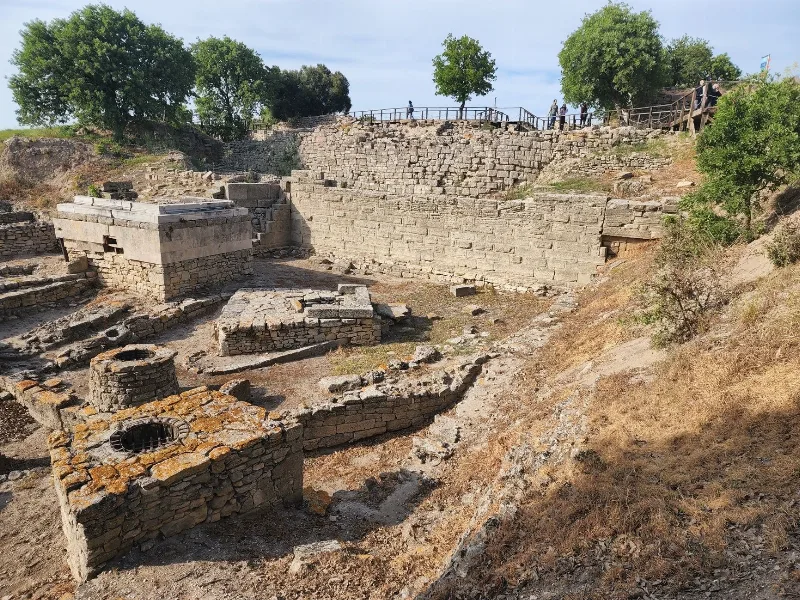
South of the city, near the village of Tevfikiye, stands the mound of Hisarlık, identified as the site of Troy and inscribed on the UNESCO World Heritage List. Excavation has revealed a succession of cities built one above another across many centuries, from the Early Bronze Age onward. The site is closely tied to the wider landscape known as the Troad, the historical region surrounding Troy, which contains numerous other ancient settlements. For the modern city, Troy is both a scholarly resource and a defining cultural reference, and the plain between the city and the site remains largely agricultural.
The Island Districts
Two inhabited islands belong to Çanakkale Province and give it an Aegean dimension distinct from the strait itself. Gökçeada, historically Imbros, is the larger and more rugged of the two, with hills, open landscapes and traditional village architecture. Bozcaada, historically Tenedos, is smaller and known for its vineyards and its fortified harbour town. Both are reached by ferry from the mainland and have their own seasonal rhythms, busier in summer and noticeably quieter outside it.
Coastline and Landscape
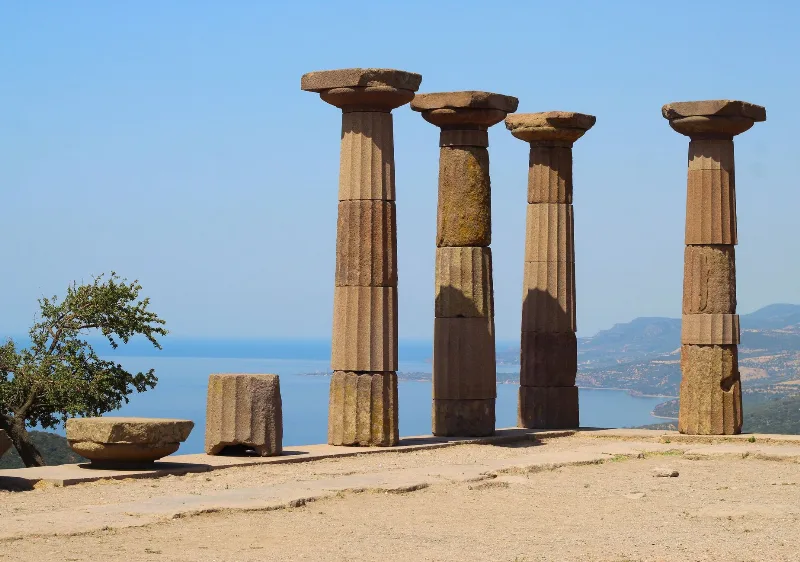
The Aegean shoreline of the Biga Peninsula forms the province's western edge, running south from the Dardanelles toward the Gulf of Edremit. This coast includes the historic site and village of Assos at Behramkale, set on a rocky headland, as well as quieter stretches of shoreline, olive groves and small coastal settlements. Inland, the peninsula is hilly and agricultural, with a landscape of fields, pine woodland and scattered villages rather than dense urban development.
Climate and General Visiting Conditions
Çanakkale has a transitional Mediterranean climate. Summers are warm and generally dry, winters are mild and wet, and the strait is famous for its winds, which blow steadily through much of the year. Spring and autumn offer the most comfortable conditions for exploring both the city and the surrounding archaeological and commemorative sites, with moderate temperatures and fewer visitors. Summer is the busiest period, particularly along the coast and on the islands, while winter brings rain and a much calmer atmosphere in the city.
Reaching the Area
Çanakkale sits on the main route between the Marmara region and the Aegean coast of western Türkiye. The city is served by intercity coach services and has its own airport. Ferry crossings connect the two shores of the strait, linking Çanakkale with the Gallipoli Peninsula and continuing the long tradition of waterborne movement across the Dardanelles. The 1915 Çanakkale Bridge, a suspension bridge spanning the strait further north, now provides a fixed road link between the European and Asian sides. Visitors arriving by road from Istanbul typically travel through eastern Thrace and the Gelibolu Peninsula or approach from the south via Balıkesir.
Çanakkale in the Wider Region
The city occupies a pivotal position in northwestern Türkiye, sitting between the Marmara region and the northern Aegean. It relates closely to Balıkesir to the southeast, to the Aegean coast beyond, and to the Thracian side of the strait. Because so much of its identity is tied to the water, Çanakkale functions as a natural hub for the surrounding area — for the battlefields and monuments of Gallipoli, the archaeology of Troy and the Troad, the coast and villages of the Biga Peninsula, and the island districts offshore. Understanding the strait is the key to understanding the city: it explains the settlement's location, its history, its maritime life and its role as a crossing point between two continents.
Discover Food in Türkiye
All food →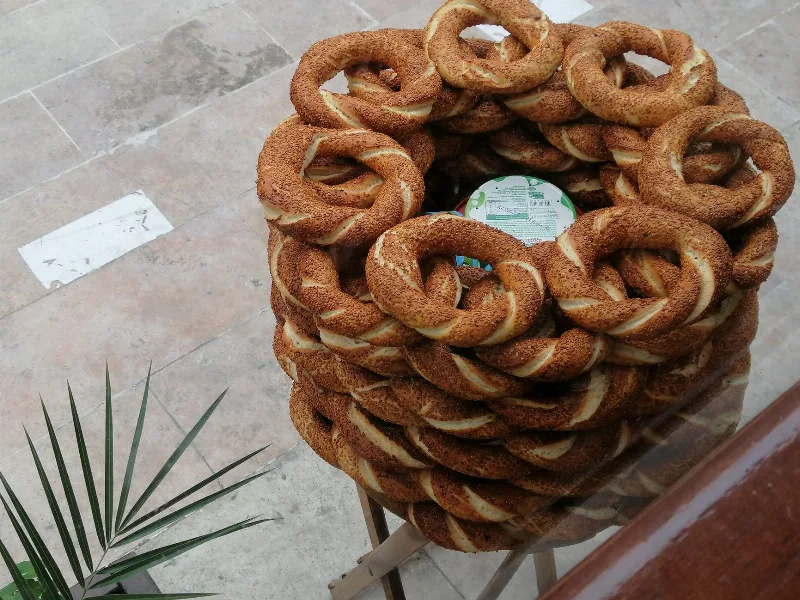
Simit
Simit is a ring-shaped Turkish bread covered in sesame seeds, strongly associated with Istanbul and sold as everyday street food. It is eaten fresh, most often with tea, and has a crisp crust around a chewy crumb.
Explore →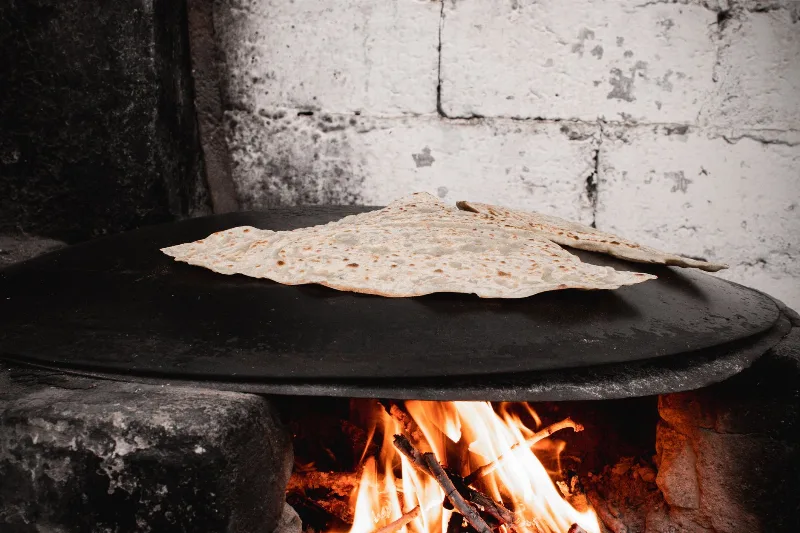
Bazlama
Bazlama is a soft, thick Turkish flatbread made from a leavened dough and cooked on a hot griddle. It is a staple of village baking across Anatolia, eaten warm with butter or used to wrap other foods.
Explore →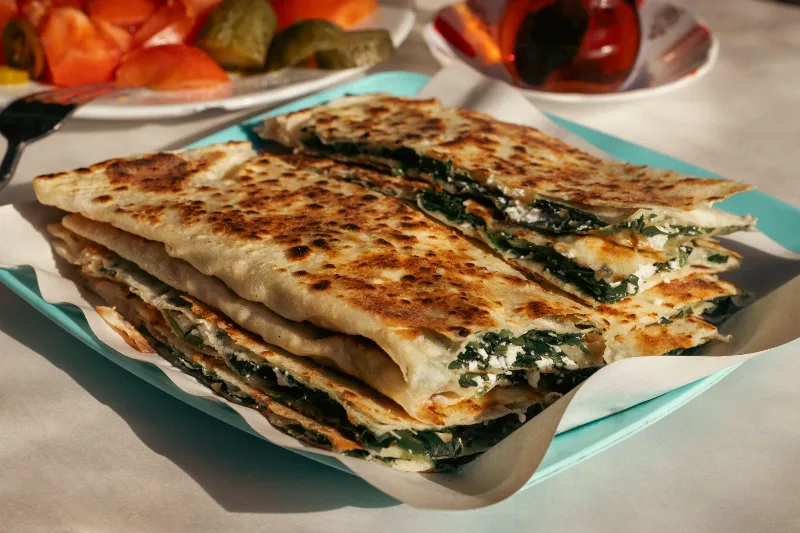
Gözleme
Gözleme is a thin, hand-rolled Anatolian flatbread folded around savory fillings such as cheese, spinach, or minced meat and cooked on a sac griddle. The article covers its regional variations, cooking method, texture, and traditional serving style.
Explore →Related content
Troy
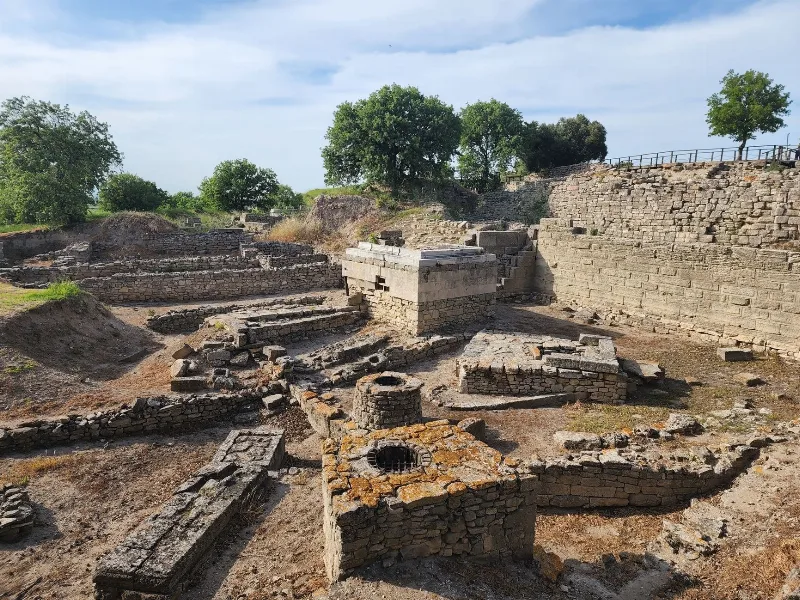
Troy is the excavated mound of Hisarlık in Çanakkale Province, Türkiye, inhabited from the Early Bronze Age to the Roman era and linked with the Ilion of Homer's Iliad. Its nine settlement layers and surviving Bronze Age fortifications make it one of the most important stratified sites in the eastern Mediterranean.
Troy
Troy is an ancient city on the Hisarlık mound in Çanakkale province, northwestern Turkey, known from Homer's Iliad and excavated into nine settlement layers. It is a UNESCO World Heritage Site with a large modern wooden horse near its entrance.
Kale
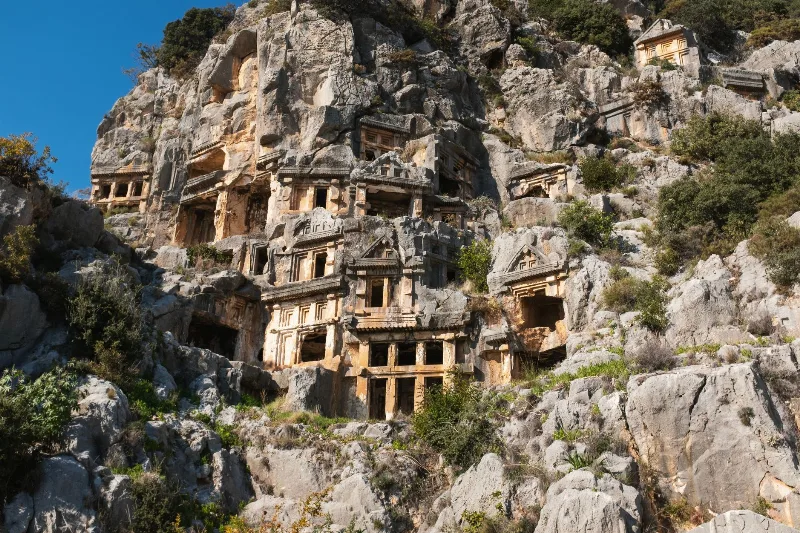
A working agricultural town on Antalya's Lycian coast, Kale — now usually called Demre — contains the Roman city of Myra, its cliff-cut Lycian rock tombs, a Byzantine church linked to St. Nicholas and the ancient harbour of Andriake.
3-Day Assos and Troy Route
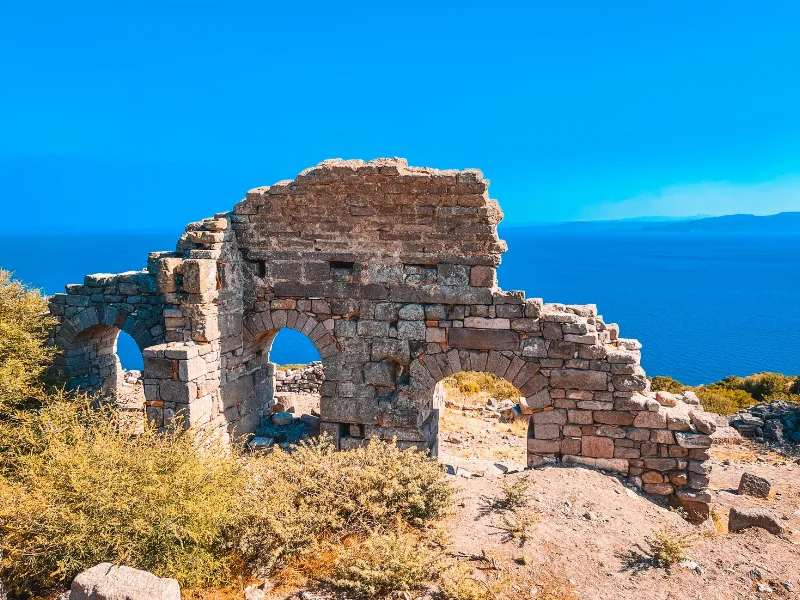
A three-day route through Turkey's Troad region, starting in Çanakkale and finishing at the clifftop village and ancient harbour of Assos, with Troy and the lesser-known classical ruins in between.
3-Day Çanakkale and Gallipoli Route
A three-day route based in Çanakkale that pairs the memorial landscapes of the Gallipoli Peninsula with the archaeological site of Troy and the southern Troad coast around Assos, using the Dardanelles ferry crossings as the link between two shores.
Ancient Archaeological Sites of Troy
The archaeological site of Troy near Çanakkale reveals nine settlement layers, Bronze Age defences and a story that links Anatolia's real past with Homeric legend.