
2-Day Bergama and Ayvalık Route: Pergamon to Cunda Island
A compact two-day route that pairs the terraced ruins of ancient Pergamon in inland Bergama with the olive-growing Aegean coast at Ayvalık and the causeway-linked island of Cunda.
This two-day route runs from the inland town of Bergama in northern İzmir province to the Aegean coastal town of Ayvalık and the adjoining island of Cunda. Day one is spent among the ruins of ancient Pergamon and the historic town beneath them; day two moves west toward the sea, swapping archaeological terraces for olive groves, stone houses and a sheltered island harbour. The journey is linear and follows a single westbound direction of travel, and it works best for travellers with their own vehicle, since the link between the two towns crosses open countryside rather than a dense transport corridor. The distances are moderate, and the whole route can comfortably be driven and walked in two full days, with the second day requiring only a short causeway crossing to reach Cunda.
Day 1: Bergama and the Pergamon Acropolis
Start the day in Bergama itself, a working district town built across a wide valley floor with the steep hill of the ancient acropolis rising directly above it. The town is the natural base for the first half of the route, and everything worth seeing on day one sits within a short distance of the centre.
The headline stop is the Pergamon Acropolis, the terraced hilltop where the Great Altar, the steep theatre and the upper city walls once stood. The climb is genuinely steep, and the site is served both by a road and by a cable car, so allow time for walking between the terraces and for the view out across the plain below. Because the ruins sit directly above the modern town, there is no separate journey needed to reach them: the geography of the day is vertical rather than horizontal.
From the acropolis, move down into Bergama for the second cluster of monuments. The Asklepion, the ancient healing sanctuary, lies in its own hollow just outside the town and is a short drive from the centre. The Red Basilica, a monumental brick structure from the Roman period, stands close to the river that runs through the middle of town. Together with the acropolis, these form a compact archaeological circuit that can be covered in a single day without long transfers between distant points.
The old quarter on the lower slopes, with its Ottoman-era houses and narrow lanes, is worth an hour at the end of the afternoon, and the local archaeological museum fills in the context of what has been excavated on the hill. Bergama is also known across the region for its carpets, and the weaving workshops in the town are part of the district's character rather than a separate attraction. End the day in Bergama, ready to head west in the morning.
Day 2: Ayvalık and Cunda Island
Leave Bergama heading west and north toward the coast. The road leaves the river plain, crosses low hills, and descends toward the Aegean around Ayvalık, a town whose character comes directly from its olive groves and its Greek-era stone architecture. The drive is short enough to reach the coast well before midday, leaving the whole afternoon for the town and the island.
Begin in Ayvalık's old quarter, where narrow streets are lined with neo-classical houses, many of them restored, and where the waterfront faces a bay scattered with small islands. This is a walking town, so leave the car and explore on foot. Ayvalık is the present-day centre of the region's olive-oil culture, and the groves that surround it are part of the landscape you cross on the way in.
From the town, continue to Cunda, also known as Alibey Island, which is connected to the mainland by a causeway and can therefore be reached by road without a ferry. Cunda's harbour is the social heart of the island, backed by stone houses, the restored Taksiyarhis church and quiet lanes leading inland. The island is small and easily covered on foot or with short drives between the harbour and the surrounding coves.
The last part of the day belongs to the coastline around Ayvalık. Şeytan Sofrası, a hilltop viewpoint above the town, looks out over the whole scattering of islands and bays that gives this stretch of coast its shape, while the long sandy beach at Sarımsaklı lies further south along the same shoreline. Neither is far from Cunda, so the closing hours can combine a viewpoint, a beach stop and a final wander through the island harbour before the day ends.
Route Shape, Terrain and Best Season
The route is linear: it starts inland at Bergama, moves west to the coast at Ayvalık, and finishes on Cunda. There is no need to backtrack, and the second day's stops, from old town to causeway to island to shoreline, are arranged around a single bay, so the driving stays short and walking does most of the work.
Terrain changes noticeably between the two days. Day one is dominated by a steep archaeological hill and a valley town, while day two is flat coastal and island ground backed by olive groves and low hills. Spring and autumn are the most comfortable seasons, since the acropolis involves real climbing in the open and the coast can be very hot in high summer. Winter is milder but wetter, and both the exposed hilltop at Pergamon and the coastal viewpoint are less enjoyable in strong wind or rain.
The route suits travellers with a car, although the Ayvalık to Cunda crossing itself is by road causeway rather than ferry. Anyone relying on public transport can still manage both towns, but the island and the coastal viewpoints are easiest to reach with your own vehicle. Two days is enough to see the main archaeological site, the historic town and the island without feeling rushed; a third day would only make sense if you preferred to slow down on the coast rather than extend the geography of the route.
Remarkable Places
See all places →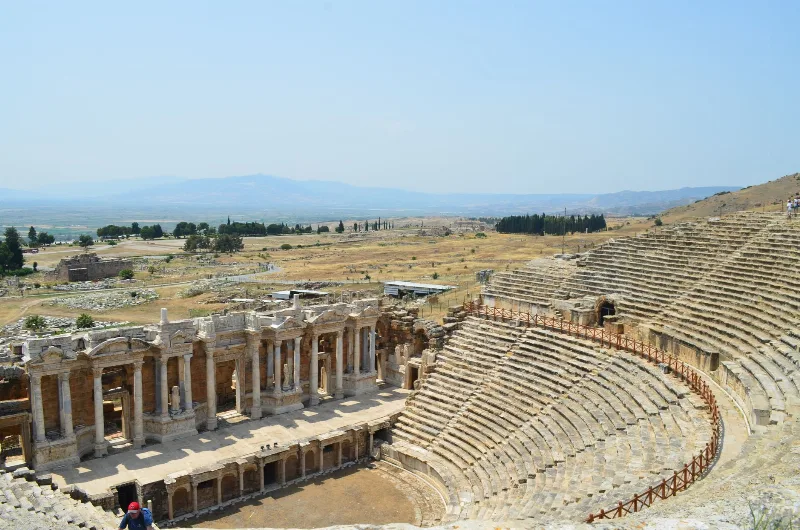
Letoon
Letoon is a Lycian sanctuary near Xanthos in Muğla Province, dedicated to Leto, Artemis and Apollo. Its three temples, theatre and trilingual inscription make it one of southwestern Turkey’s most significant archaeological sites.
Explore →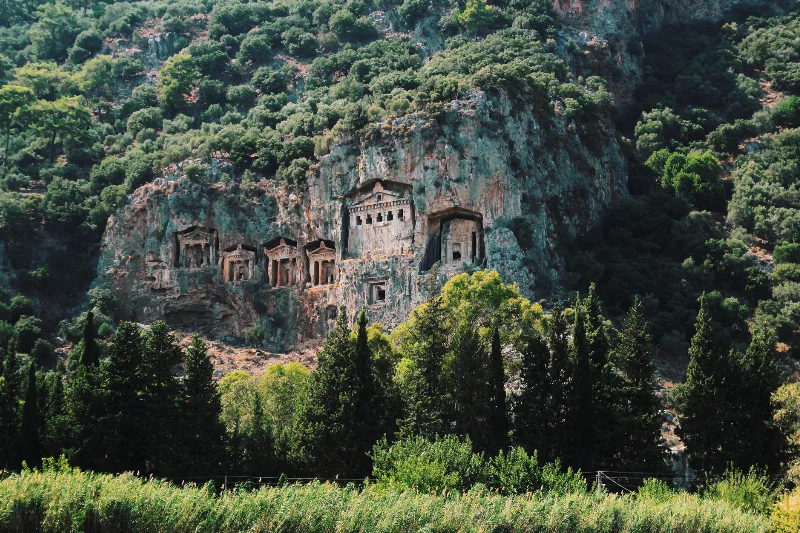
Kaunos
Kaunos is an ancient Carian city on the Dalyan River in Muğla Province, known for its temple-style rock-cut tombs and the extensive ruins of a harbour that silted up centuries ago.
Explore →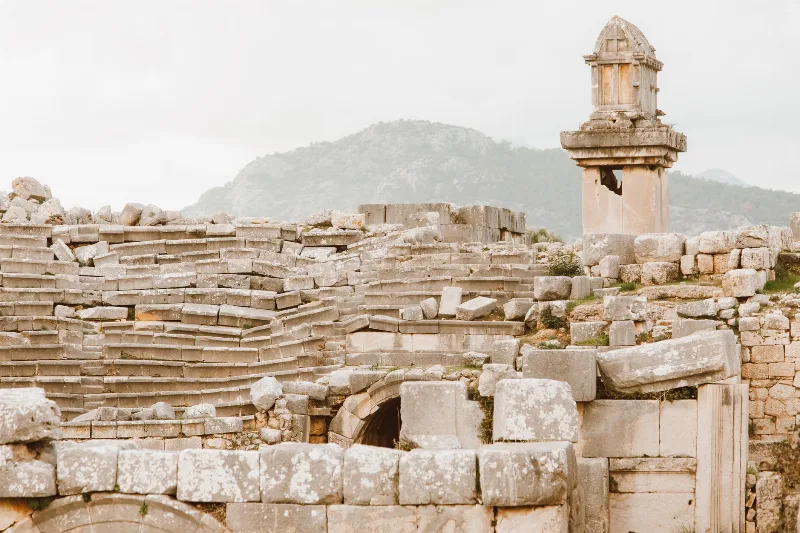
Xanthos
Xanthos is an ancient Lycian city in Antalya Province and a UNESCO World Heritage Site, known for its Lycian tombs, Roman theatre and role as a leading city of Lycia.
Explore →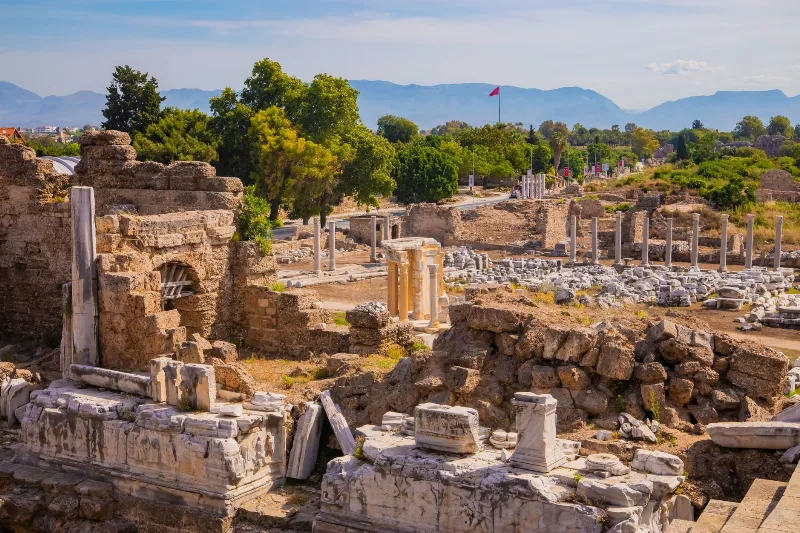
Phaselis
Phaselis is a Rhodian-founded port city on the eastern Lycian coast, where paved streets, agoras, baths and a small theatre stand among pines between three sheltered bays.
Explore →Related content
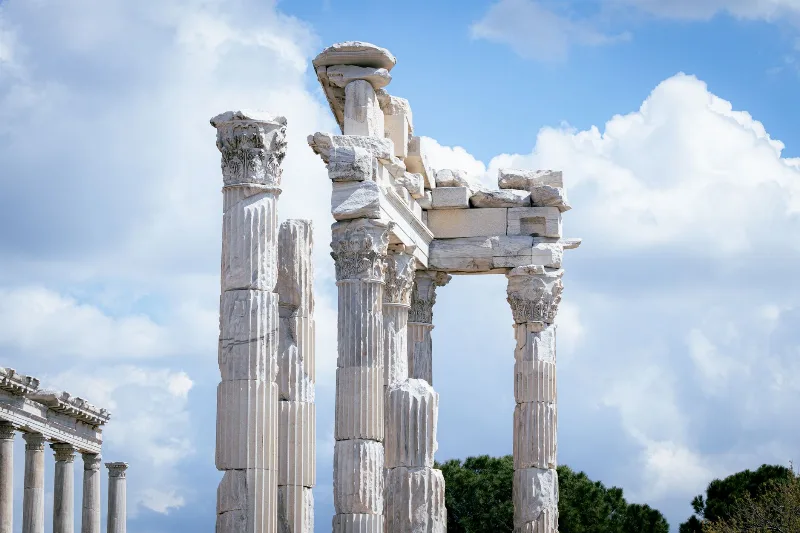
Bergama
Bergama is an inland district of İzmir Province on the Bakırçay plain, built around the ancient city of Pergamon, a UNESCO World Heritage Site reached by a cable car up to its acropolis.
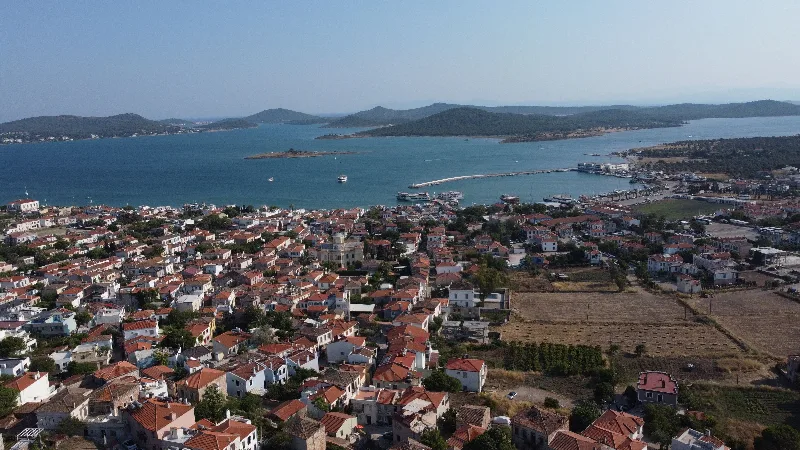
Ayvalık
Ayvalık is a coastal district of Balıkesir Province in western Türkiye, known for its olive oil, its Greek-influenced old town and the offshore island of Cunda.
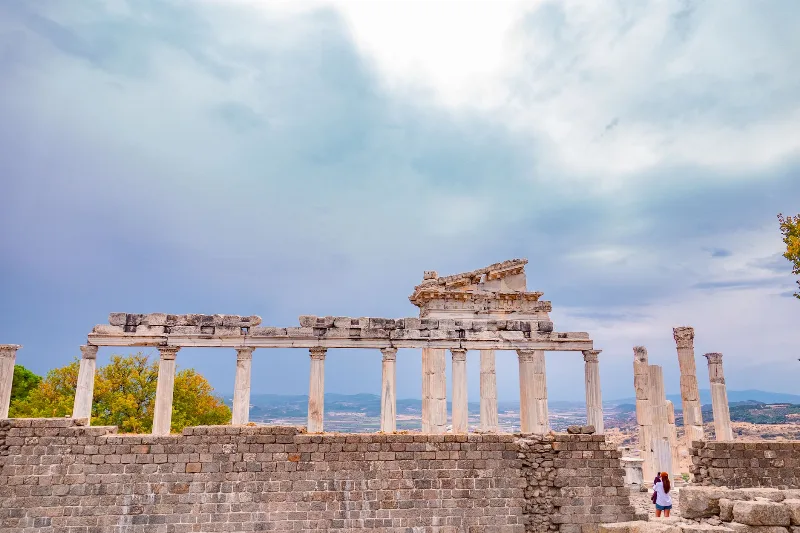
Pergamon
Pergamon was the Hellenistic capital of the Attalid dynasty in western Türkiye, built around a steep acropolis above the modern town of Bergama. Its Great Altar, theatre and Sanctuary of Asclepius make it one of the most important archaeological sites in Anatolia and a UNESCO World Heritage Site.
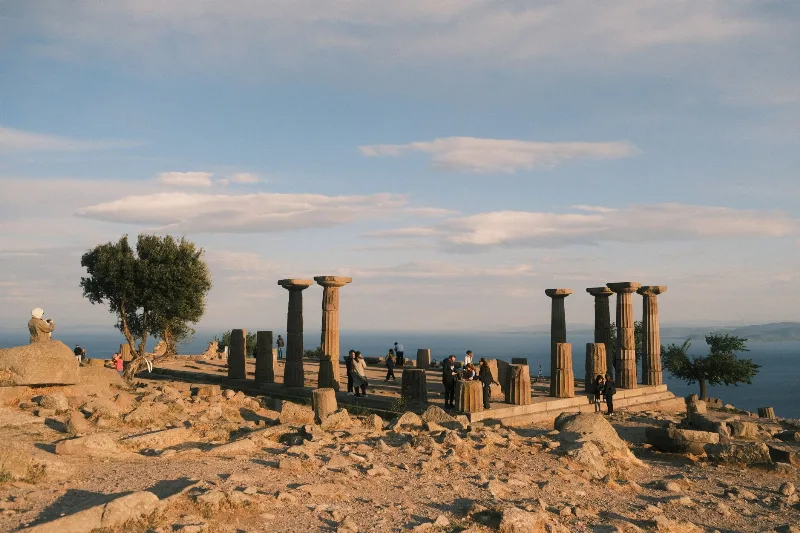
4-Day North Aegean Coast Route
A four-day linear route along the North Aegean coast from Assos to İzmir, with stops at Ayvalık, Cunda, Dikili, Çandarlı, Bergama and Foça. The itinerary is designed for a realistic coastal and inland road trip by car.
7-Day North Aegean to Ephesus Route
A seven-day southbound route through Troy, Assos, Bozcaada, Ayvalık, Bergama, İzmir and Ephesus, combining archaeology, coastal towns and Aegean culture.
Pergamon
Pergamon is an ancient Greek city in Aeolis, today the modern town of Bergama in İzmir Province, Türkiye. Its acropolis, library and Great Altar of Zeus, together with the Asclepion healing sanctuary, form one of the most important archaeological settings in the eastern Mediterranean.