
Pergamon
Pergamon is an ancient Greek city in Aeolis, today the modern town of Bergama in İzmir Province, Türkiye. Its acropolis, library and Great Altar of Zeus, together with the Asclepion healing sanctuary, form one of the most important archaeological settings in the eastern Mediterranean.
Pergamon is an ancient Greek city in the region of Aeolis, located on and around a steep hill above the modern town of Bergama in İzmir Province, western Türkiye. It was the capital of the Attalid dynasty during the Hellenistic period and became one of the wealthiest and most influential cultural centers of the Greek world. Its acropolis, royal library, monumental altars, theatre, and the healing sanctuary of the Asclepion made it a place where politics, scholarship, architecture and medicine converged. The entire archaeological landscape was inscribed as a UNESCO World Heritage Site, recognized for its layered urban structure and for the way its monuments were adapted to difficult terrain.
Where Pergamon Sits
The ancient city occupies a dramatic, isolated hill rising roughly 300 meters above the surrounding plain, with the modern town of Bergama spreading at its base. The Bakırçay (ancient Caicus) plain stretches to the north and east, while the hill itself commands a wide view toward the Aegean coast, about 25 kilometers to the west. This geography was not incidental: the site was chosen for its defensibility, its visibility across the plain, and its proximity to trade routes linking the interior of Anatolia with the Aegean ports. The acropolis sits on the summit, the residential and commercial quarters spread down the slopes, and the Asclepion lies on a separate, flatter area to the southwest of the modern town.
What Makes Pergamon Distinctive
Several features set Pergamon apart from other ancient Greek city-states. First, it was a royal capital, not merely a polis, and its rulers invested heavily in monumental architecture. Second, its library was one of the largest and most celebrated in the ancient world, traditionally said to have rivaled the library of Alexandria. Third, the Great Altar of Zeus, with its sculpted frieze depicting the battle between the gods and the giants, is among the most ambitious works of Hellenistic sculpture. Fourth, the Asclepion developed into a major healing center of the Roman world, combining religious ritual with early forms of medical treatment. These elements together make Pergamon a rare example of a site where political power, intellectual ambition, religious healing and engineering skill are all visible in a single landscape.
The Acropolis and Its Monuments
The upper acropolis contains the core of the ancient city. Visitors encounter the terraces of the royal palace, the remains of the library, the Temple of Athena, the Temple of Trajan, and the steepest theatre in the ancient world, built into the hillside and capable of holding around ten thousand spectators. The famous altar dedicated to Zeus and Athena once stood on a terrace of the acropolis; its sculpted reliefs are now housed in a museum in Berlin, while the foundations remain on site. Water management was a major engineering achievement here: the city used cisterns, channels and a pressurized water system to supply a settlement on top of a hill with no natural spring at the summit.
The Asclepion Healing Center
Below and to the southwest of the acropolis lies the Asclepion, a sanctuary dedicated to Asclepius, the god of medicine. In Roman times it became one of the most famous healing institutions in the Mediterranean, associated with the physician Galen, who was born in Pergamon. The complex included a sacred spring, a colonnaded courtyard, treatment rooms, and a circular building sometimes identified with incubation or ritual sleep, in which patients awaited guidance from the god. Methods used there combined diet, bathing, exercise, dream interpretation and prayer, reflecting a worldview in which physical and spiritual healing were tightly connected.
Landscape and Physical Character
The terrain is steep and rocky, with the acropolis accessible by a winding road and by a cable car that carries visitors up the slope. Paths inside the site are uneven, with steps, exposed stone and limited shade on the summit. The lower city and the Asclepion sit on gentler ground, where walking is easier. The climate is Mediterranean: dry, hot summers and mild, rainy winters. The archaeological area is largely open-air, so weather strongly shapes the experience.
Access and Practical Visiting Notes
Bergama is reached by road from İzmir, roughly two hours away, and by regional buses from nearby towns. The acropolis and the Asclepion are separate sites with separate entry points, and visiting both requires transport between them. Because the two areas are not adjacent, planning the order of the visit matters. Comfortable shoes, water and sun protection are essential for the acropolis, while the Asclepion is more forgiving for visitors with limited mobility. Signage and on-site information vary between monuments, so a basic understanding of the site layout before arriving helps a great deal.
Best Periods to Visit
Spring and autumn are generally the most comfortable seasons, with moderate temperatures and clearer conditions for walking and photography. Summer afternoons on the acropolis can be extremely hot, which makes early morning visits far more practical. Winter brings rain and occasional slippery stone, but also fewer visitors and greener surroundings in the plain below.
Nearby and Related Places
Bergama itself retains layers of Roman, Byzantine, Seljuk and Ottoman heritage, including the Red Basilica, a monumental temple complex later used as a church. The surrounding Bakırçay plain holds further archaeological traces of the ancient Caicus valley, and the Aegean coast to the west connects Pergamon to the wider historical geography of western Anatolia. The nearby town of Ayvalık and the broader İzmir region offer additional historical and natural destinations that complement a visit.
Things Worth Knowing Before You Go
- The acropolis and the Asclepion are distinct sites; plan transport between them in advance.
- The summit is exposed, steep and largely without shade.
- Many original sculptures, including the altar reliefs, are held in museums abroad, so the on-site experience is mainly architectural and topographical.
- Galen's connection to Pergamon gives the Asclepion a specific place in the history of medicine.
- Pergamon's UNESCO status covers a wider landscape than a single monument.
Pergamon rewards visitors who approach it as a layered landscape rather than a single ruin. The hill, the royal terraces, the library, the theatre and the healing sanctuary together explain how a Hellenistic kingdom turned difficult terrain into a center of power, learning and medicine, and why the site remains one of the most significant archaeological places in Türkiye.
Related content
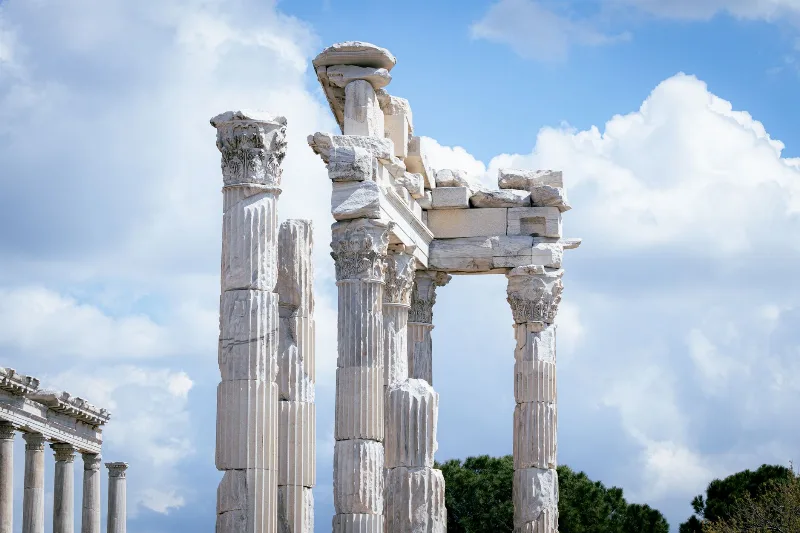
Bergama
Bergama is an inland district of İzmir Province on the Bakırçay plain, built around the ancient city of Pergamon, a UNESCO World Heritage Site reached by a cable car up to its acropolis.
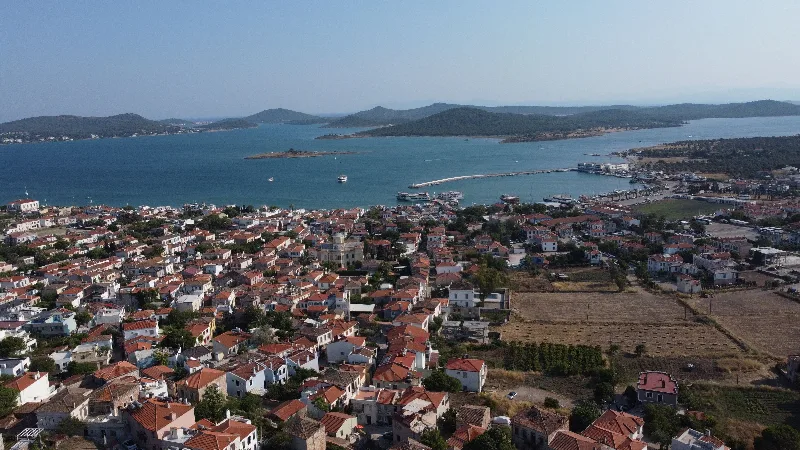
Ayvalık
Ayvalık is a coastal district of Balıkesir Province in western Türkiye, known for its olive oil, its Greek-influenced old town and the offshore island of Cunda.
2-Day Bergama and Ayvalık Route: Pergamon to Cunda Island
A compact two-day route that pairs the terraced ruins of ancient Pergamon in inland Bergama with the olive-growing Aegean coast at Ayvalık and the causeway-linked island of Cunda.
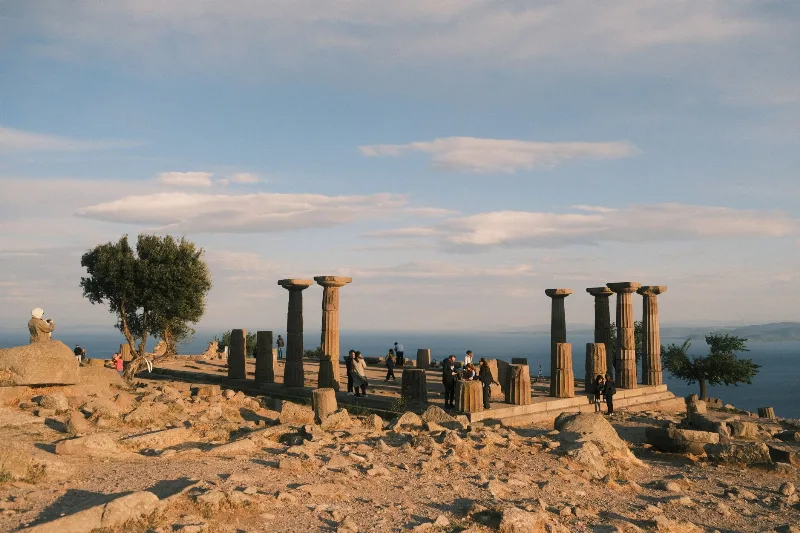
4-Day North Aegean Coast Route
A four-day linear route along the North Aegean coast from Assos to İzmir, with stops at Ayvalık, Cunda, Dikili, Çandarlı, Bergama and Foça. The itinerary is designed for a realistic coastal and inland road trip by car.
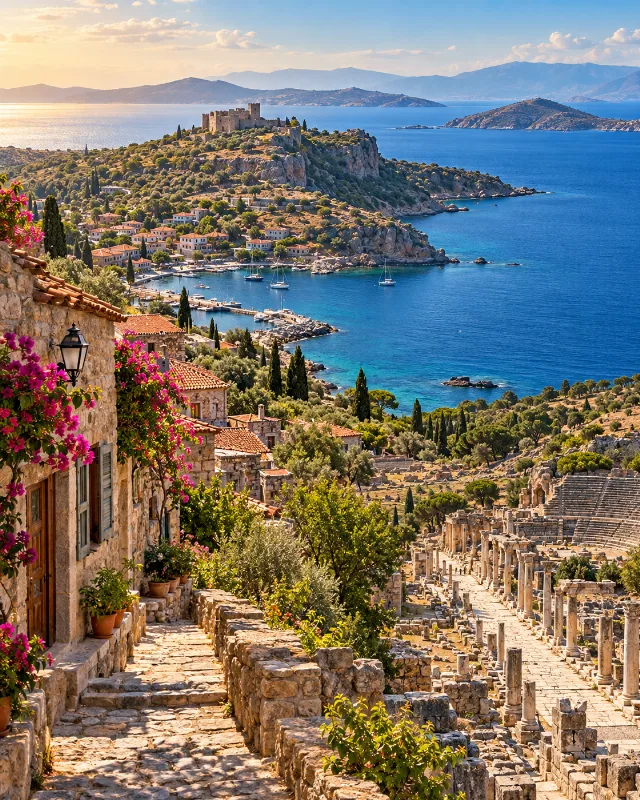
7-Day North Aegean to Ephesus Route
A seven-day southbound route through Troy, Assos, Bozcaada, Ayvalık, Bergama, İzmir and Ephesus, combining archaeology, coastal towns and Aegean culture.
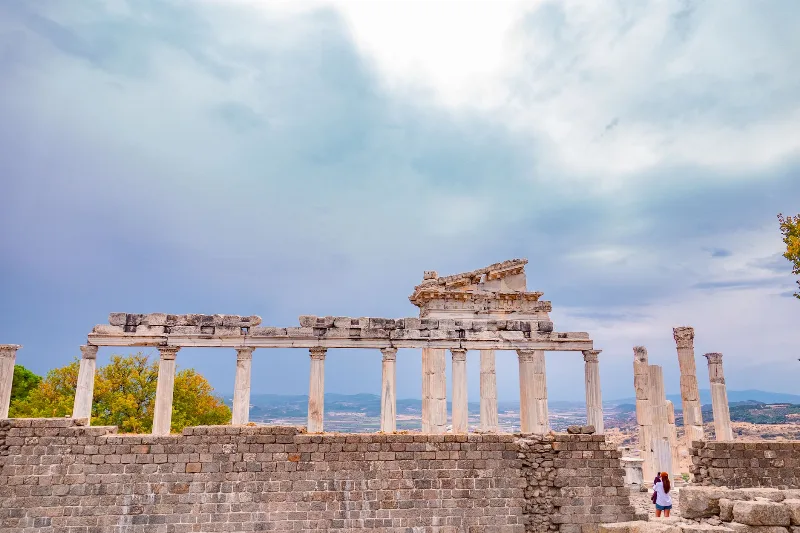
Pergamon
Pergamon was the Hellenistic capital of the Attalid dynasty in western Türkiye, built around a steep acropolis above the modern town of Bergama. Its Great Altar, theatre and Sanctuary of Asclepius make it one of the most important archaeological sites in Anatolia and a UNESCO World Heritage Site.