
5-Day Antalya to Fethiye Coastal Route
A five-day driving itinerary along Turkey's Mediterranean shore, linking Antalya, Phaselis, Olympos, Demre, Kekova, Kaş, Kalkan, Patara and Fethiye. The route is linear, coastal for most of its length, with short inland detours to Lycian ruins.
This five-day route runs west along Turkey's Mediterranean coast from Antalya to Fethiye, following the Teke Peninsula through the core of ancient Lycia. It begins in Antalya, ends in Fethiye, and passes Kemer, Phaselis, Adrasan, Olympos, Demre, Kekova, Kaş, Kalkan, Patara and the Fethiye district. The journey is linear rather than circular, so the natural way to travel it is by car, moving further west each day and stopping where the coast, the mountains and the archaeological sites meet the road. Most days mix driving with walking through ruins, along beaches and, on one section, by boat to see sunken remains.
Day 1: Antalya, Phaselis and Olympos
The day starts in Antalya and heads west out of the city, following the Gulf of Antalya toward Kemer. The first substantial stop is Phaselis, an ancient port city set on a low peninsula where three small harbours sit among pine trees. Its paved streets, theatre, aqueduct and harbour walls are spread across flat ground close to the water, which makes it an easy introduction to the region's archaeology without demanding a long climb.
From Phaselis the road continues south past Tekirova and then turns inland toward Adrasan, a bay sheltered by mountains and one of the quieter stretches of this coast. Beyond Adrasan the route descends into the valley of Olympos, where a Lycian and Roman city lies in a gorge crossed by a stream, its tombs and walls half-hidden by vegetation. The nearby village of Çıralı offers an alternative base, and above it the permanent flames of Yanartaş burn from vents on the hillside, a short walk from the road. Staying overnight around Olympos or Çıralı keeps the next day's westward drive short.
Day 2: Olympos to Demre and the Kekova Waters
Leaving Olympos, the route climbs back to the main coastal road and continues southwest past Kumluca toward Demre. Demre, the ancient Myra, is the day's main archaeological stop: rock-cut Lycian tombs are carved into the cliff face above the Roman theatre, and the town also holds the church associated with Saint Nicholas. The site is compact and sits directly beside the modern settlement, so it fits neatly into a driving day.
Just beyond Demre lies Andriake, the ancient harbour of Myra, with its own ruins and a shoreline that marks the edge of the Kekova region. From the small harbour villages of Üçağız and Kaleköy, the customary way to see the sunken city of Kekova is from the water, since the submerged foundations and the half-submerged walls of the ancient settlement are best viewed from a boat. Kaleköy, reached above the water, is a tiny hillside village crowned by a small castle with wide views over the bay and its island. The day ends in this area or back in Demre.
Day 3: Demre to Kaş
The third day follows the coast from Demre to Kaş, a stretch where the road repeatedly climbs and drops between the sea and the mountains. Kaş itself is a small, compact town built around a harbour, and much of it can be explored on foot. Above the town stands the theatre of ancient Antiphellos, and Lycian sarcophagi are scattered among the streets and gardens below it.
The peninsula west of Kaş is dotted with small bays and coves, some reached by walking paths from the town and others by local boats. The town works well as a slower afternoon after two days of driving, and it is the natural stopping point before the final push along the coast. The road continues to run west from here, and the following day's stops lie close together, so there is no need to rush the evening.
Day 4: Kaş, Kaputaş, Kalkan and Patara
This day covers a short but varied stretch between Kaş and the Patara area. The first stop is Kaputaş, a beach in a steep-sided gorge where the road bridges a ravine and steps lead down to pale sand between high cliffs; it is one of the most distinctive coastal scenes on the route and belongs naturally with the region's beaches and bays.
Kalkan follows, a hillside town of whitewashed houses that rises above a small harbour, with narrow lanes and rooftop terraces looking out over the water. From Kalkan the route turns slightly inland to Patara, where a long sandy beach runs behind the ruins of the Lycian capital. Patara's site includes a theatre, a colonnaded street, a bath complex and a triumphal arch, spread across level ground near the sand. Further inland, near the village of Kınık, stand Xanthos and Letoon, two major Lycian centres with monumental tombs and sanctuaries that are often visited together because they sit in the same valley. Overnight in Kalkan or near Patara keeps the final day manageable.
Day 5: Kalkan to Fethiye via Tlos and Saklıkent
The last day leaves the coast behind for a while and heads inland into the mountains before returning to the sea at Fethiye. The first detour is to Saklıkent, a deep, narrow gorge cut by a cold river, where walkways follow the water between towering rock walls. The mountain road here is a clear change of scene from the coast, with pine forest and higher ground replacing the shoreline.
Nearby stands Tlos, one of the oldest and most imposing Lycian cities, built on a rocky acropolis with tombs, a stadium and a theatre looking over the valley. From Tlos the route descends toward Fethiye, where the day ends. Fethiye's harbour is backed by Lycian rock tombs cut into the cliff, most famously the tomb of Amyntas, and the town is a working port as well as a base for the surrounding coast. South of Fethiye lies Ölüdeniz, a sheltered lagoon behind a long spit of sand, and inland from it the abandoned village of Kayaköy, whose empty stone houses stand on a hillside. Between them they make a natural closing pair of stops for the route.
Route Conditions, Terrain and Best Season
The route is linear and one-directional, so travellers either arrange a return by road or continue onward from Fethiye. Most of the driving is on the coastal highway, but the section between Demre and Kaş, the inland approach to Saklıkent and the mountain roads above Fethiye involve repeated climbs and bends. A car gives the most flexibility, while the Kekova section is normally seen from the water and the bays around Kaş are partly reached on foot.
Spring and autumn are the most comfortable seasons, when temperatures suit both walking through ruins and driving. Summer brings intense heat along the coast, and the exposed archaeological sites offer little shade, so early starts are sensible. Winter is mild at sea level but the inland and mountain stretches can be affected by weather, and some higher roads become less pleasant in poor conditions. The coast remains the reliable spine of the journey throughout the year, while the mountain detours are best treated as optional when conditions are uncertain.
Remarkable Places
See all places →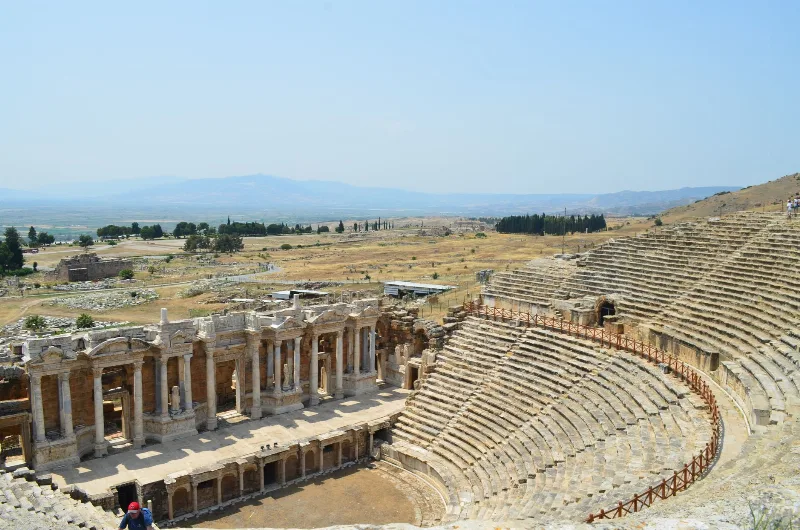
Letoon
Letoon is a Lycian sanctuary near Xanthos in Muğla Province, dedicated to Leto, Artemis and Apollo. Its three temples, theatre and trilingual inscription make it one of southwestern Turkey’s most significant archaeological sites.
Explore →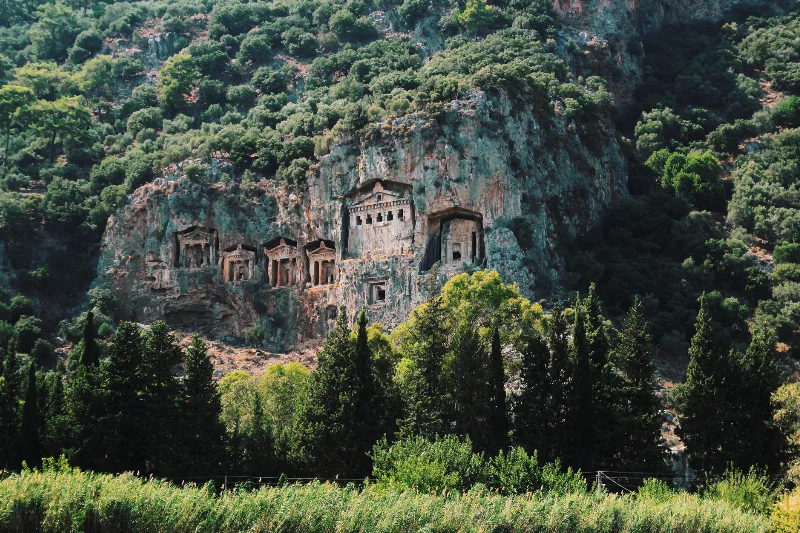
Kaunos
Kaunos is an ancient Carian city on the Dalyan River in Muğla Province, known for its temple-style rock-cut tombs and the extensive ruins of a harbour that silted up centuries ago.
Explore →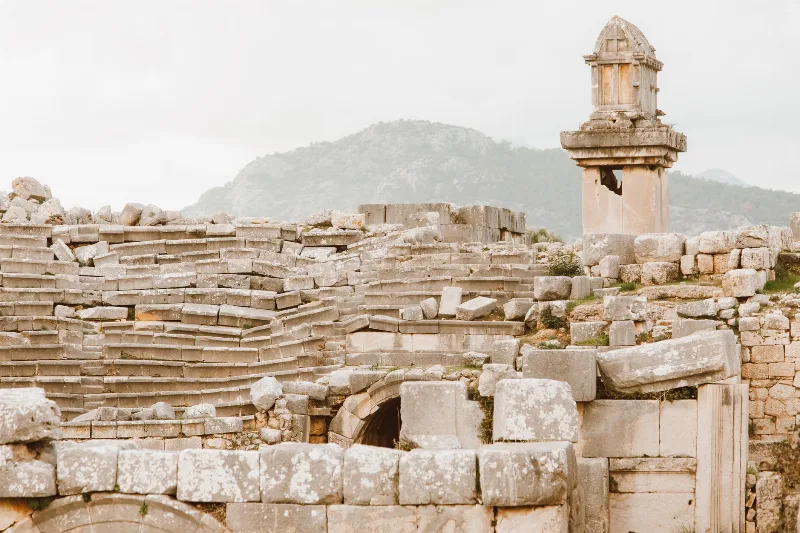
Xanthos
Xanthos is an ancient Lycian city in Antalya Province and a UNESCO World Heritage Site, known for its Lycian tombs, Roman theatre and role as a leading city of Lycia.
Explore →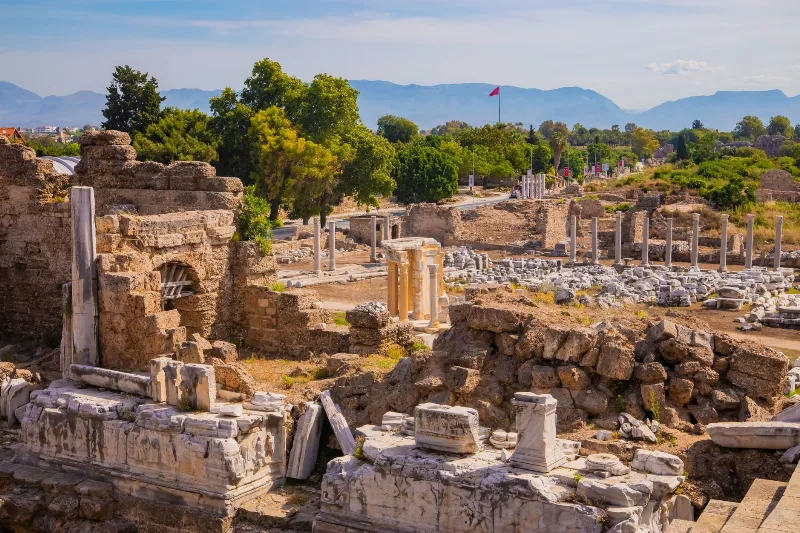
Phaselis
Phaselis is a Rhodian-founded port city on the eastern Lycian coast, where paved streets, agoras, baths and a small theatre stand among pines between three sheltered bays.
Explore →Related content
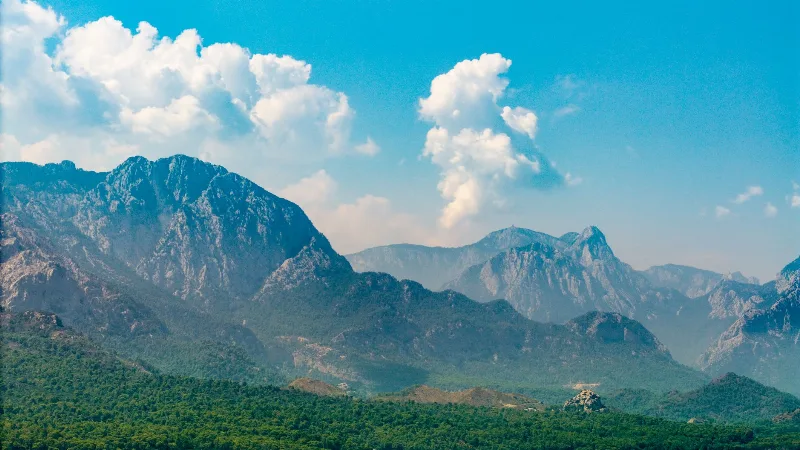
Antalya
Antalya offers a unique blend of vibrant history and stunning natural beauty, making it a must-visit destination in Türkiye.
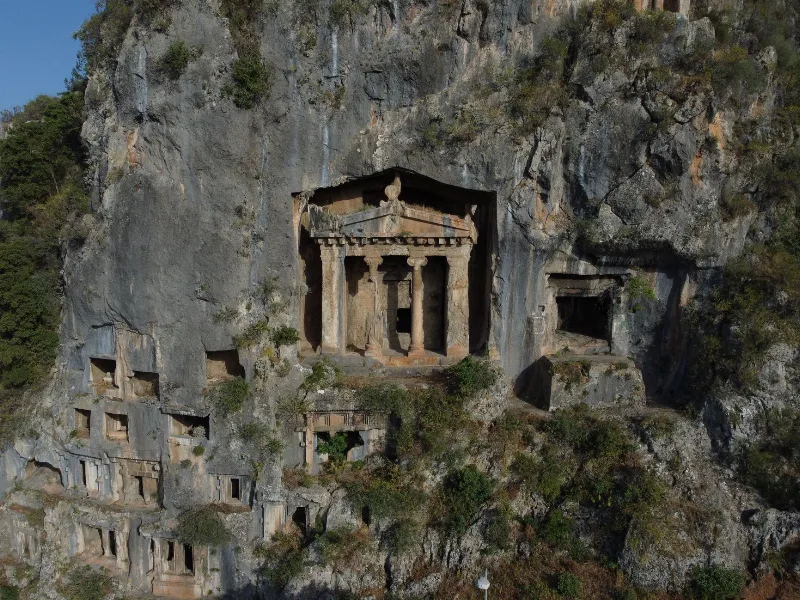
Fethiye
Fethiye is a captivating coastal town known for its stunning blue lagoon, thrilling paragliding experiences, and ancient rock tombs.
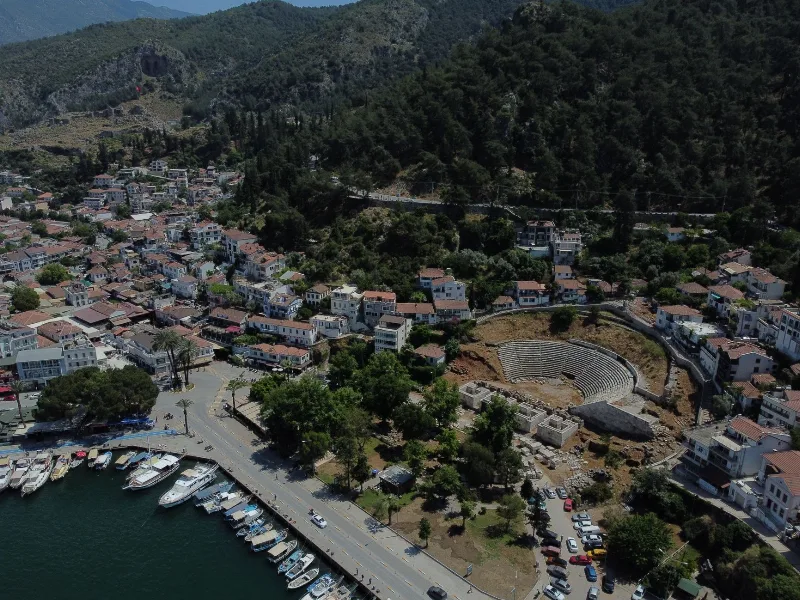
Phaselis
Phaselis is an ancient Greek and Roman harbour city on a low peninsula near Kemer in Antalya Province, known for its three harbours, a long paved main street and a triple-arched gate built in honour of the emperor Hadrian.
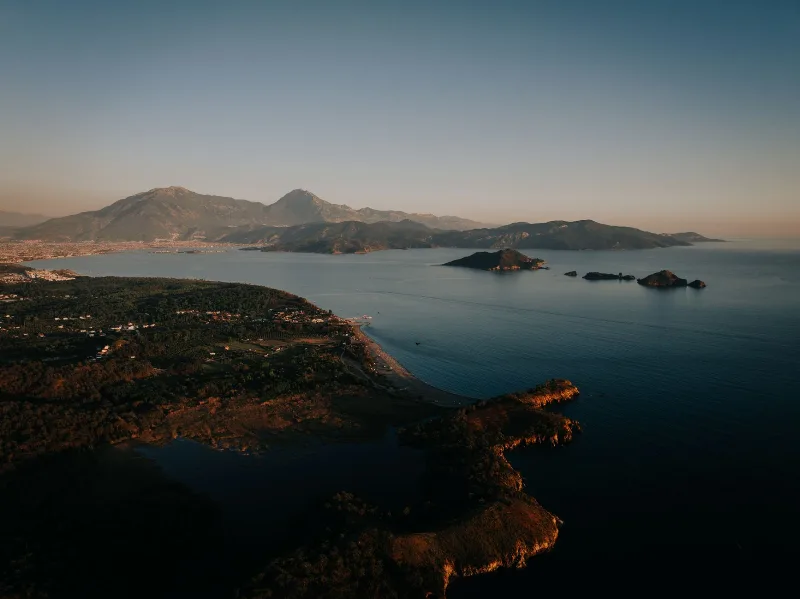
6-Day Mediterranean Coast Route: Antalya to Marmaris
A six-day linear route along Türkiye's Mediterranean coast, linking Antalya, Olympos, Demre, Kekova, Kaş, Kalkan, Patara, Fethiye and Dalyan before finishing in Marmaris. It mixes ancient cities, long beaches and small harbour towns on a continuous westward drive.
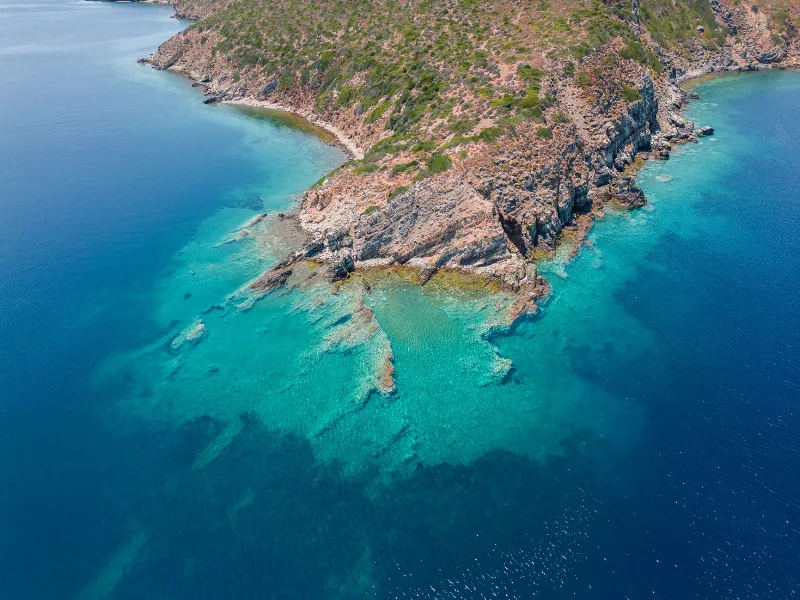
Sailing the Turquoise Coast
The Turquoise Coast follows the southwestern shoreline of Türkiye, where sheltered bays, pine hills and clear water meet. This page explores how sailing and boat trips reveal its landscapes, islands and ancient harbours.
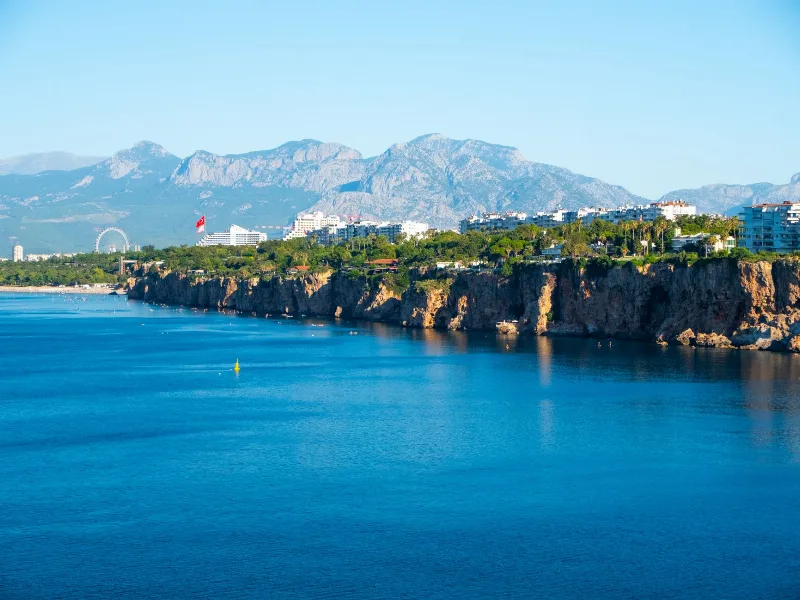
A Scenic Adventure on the Lycian Way
The Lycian Way in Türkiye offers a spectacular hiking experience with its stunning coastal views and rich historical landscapes.