
Menemen
Menemen is a Turkish breakfast dish of eggs cooked with tomatoes and green peppers in olive oil or butter, traditionally eaten with bread. It takes its name from a district of İzmir Province and is prepared in households across Türkiye.
Menemen is a Turkish egg dish in which eggs are cooked together with tomatoes and green peppers, usually in olive oil or butter, and eaten mainly at breakfast. It is named after Menemen, a district of İzmir Province in western Türkiye, although today it is made throughout the country and belongs to a wider Aegean and Anatolian breakfast tradition rather than to a single local kitchen. The defining components are simple: ripe tomatoes, green peppers — most commonly the long, relatively mild sivri biber sold in Turkish markets — and eggs, seasoned with salt and often black pepper. From these few ingredients cooks produce a soft, spoonable mixture that is scooped up with bread rather than eaten as a separate course.
Where the Name and the Dish Come From
The dish carries the name of the town of Menemen, on the plain north of İzmir, and a common assumption is that it originated there. The precise origin is not firmly documented, however, and it would be inaccurate to present a single definitive story. What can be said with confidence is that the combination of tomatoes, peppers and eggs belongs to the wider family of egg-and-vegetable dishes found around the eastern Mediterranean and the Aegean, and that in Türkiye the version made with these ingredients came to be identified with the name of the district. Over the twentieth century it spread well beyond its namesake region to become a standard item of the Turkish breakfast table.
Ingredients and the Onion Question
The base is tomatoes and green peppers, cooked down until they soften and release their liquid, with eggs added at the end. Olive oil is common in the Aegean and along the coast, while butter or a mixture of butter and oil appears in many inland kitchens. Some cooks add a spoonful of tomato paste to deepen the colour and flavour, particularly outside the tomato season. Parsley is sometimes scattered on top, and pul biber (flaked red pepper) or black pepper may be used for heat.
The most discussed ingredient is onion. There is no single answer: in many households and in parts of the country menemen is made without onion, on the argument that onion overwhelms the tomato and changes the character of the dish, while in others a little finely chopped onion is softened first and treated as a normal part of the base. Both approaches are widespread, and the difference is usually presented as a matter of family and regional preference rather than of correctness.
How Menemen Is Traditionally Prepared
The peppers are generally chopped and softened in the heated fat before the tomatoes are added, so that they lose their raw edge without browning. The tomatoes follow and are cooked until they collapse into a loose, slightly thickened sauce. At this stage cooks sometimes add a small amount of tomato paste, salt, and any additional seasoning. The eggs are then added to the pan and stirred gently into the tomato mixture until they are just set.
The important point in preparation is that the eggs should remain soft. Menemen is not a dry scramble; the tomato base keeps the eggs moist, and overcooking turns the mixture stiff and watery at once. Because the dish is made in a shallow pan and cooks quickly, it is usually prepared just before it is eaten.
Eggs Whole or Scrambled: Two Ways of Finishing
Menemen is finished in one of two general ways. In the more common style, the eggs are broken into the pan and stirred through the tomato and pepper base so that they form soft, uneven curds. In the other style — often described as yumurtalı menemen or menemen with whole eggs — the base is prepared first and eggs are cracked on top and left to set, either sunny side up or lightly covered, so that the yolks remain intact and the eater breaks them at the table. Neither form is more authentic than the other; the choice depends on the household and on how the dish is expected to be eaten.
Texture, Flavour and Appearance
A well-made menemen has a loose, moist consistency somewhere between a sauce and a soft scramble. The tomato gives acidity and sweetness, the peppers a mild green flavour, and the eggs a mild richness that binds the two together. The colour is a warm red-orange, streaked with yellow where the egg has set and flecked with green pepper and, if used, parsley. It should taste of ripe tomato first, with the eggs present as a background rather than the dominant note. When it is served dry or rubbery, the balance has been lost.
How Menemen Is Served
Menemen is almost always eaten with bread, which is used to scoop it from the pan or from a shallow plate. In homes it is frequently brought to the table still in the pan in which it was cooked. It may be accompanied by tea, and it often appears alongside other breakfast items such as white cheese, olives, cucumber and tomato, honey or jam, and cold cuts — though menemen itself is substantial enough to be the centre of the meal. Some cooks serve it with a spoonful of yogurt on the side, although this is not universal.
Regional and Household Variations
Beyond the onion question and the two ways of finishing the eggs, variations are numerous and mostly informal. Sucuk (spiced dried sausage) or pastırma may be fried with the peppers before the tomatoes are added, producing a richer and more savoury version. Some cooks stir in white cheese or kaşar near the end, or fold in a little butter for a fuller finish. In some kitchens the peppers are roasted and peeled first; in others a spoonful of pepper paste joins the tomato paste. Menemen made with tomato paste alone, when fresh tomatoes are not at their best, is a common winter adaptation. These are household and regional habits rather than fixed regional schools, and travellers are likely to encounter a slightly different menemen in each home.
Menemen and Similar Egg Dishes
Menemen is often compared with shakshuka, the North African and Middle Eastern dish of eggs poached in a tomato and pepper sauce. The two share ingredients, but the usual Turkish approach stirs the eggs through the base rather than poaching them whole, and the result is looser and more integrated. It also differs from a plain Turkish scramble or from çılbır, which is poached eggs served over garlic yogurt, and from vegetable dishes such as türlü in which eggs play no part. Within Turkish cooking, menemen is best understood as an egg dish built on a pepper-and-tomato base, sitting between a sauce and a scramble.
Menemen in Turkish Breakfast Culture
Menemen belongs to the Turkish breakfast tradition, known as kahvaltı, which brings together many small items around bread and tea. Because it can be made quickly from ingredients most kitchens keep on hand, it works both as a weekend breakfast prepared for a group and as a simple everyday meal, and it is sometimes eaten at other times of day as well. Its connection with the town of Menemen in İzmir Province remains part of its identity, even though the dish is now far more widespread than the place that gave it its name. For anyone learning Turkish cooking, menemen is one of the clearest examples of how a few familiar ingredients — tomato, green pepper and egg — can be turned into a distinct dish through careful cooking and restraint.
Related content

Bird Migration in the Gediz Delta, İzmir
The Gediz Delta in İzmir is one of the eastern Mediterranean's most important stopover wetlands, where spring and autumn migration fill the lagoons, salt pans and mudflats with flamingos, cormorants, waders and waterfowl.
Turkish Ceramics and Pottery
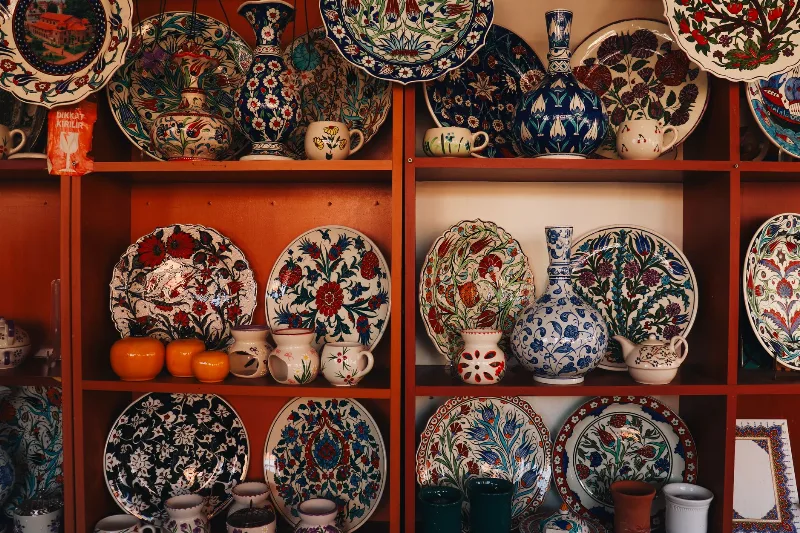
Turkish ceramics and pottery reflect centuries of Anatolian craftsmanship, from Ottoman İznik tiles to the clay workshops of Avanos and Kütahya. Their colours, forms and motifs remain part of Türkiye's living cultural heritage.
The Traditional Turkish Breakfast Spread Across Türkiye
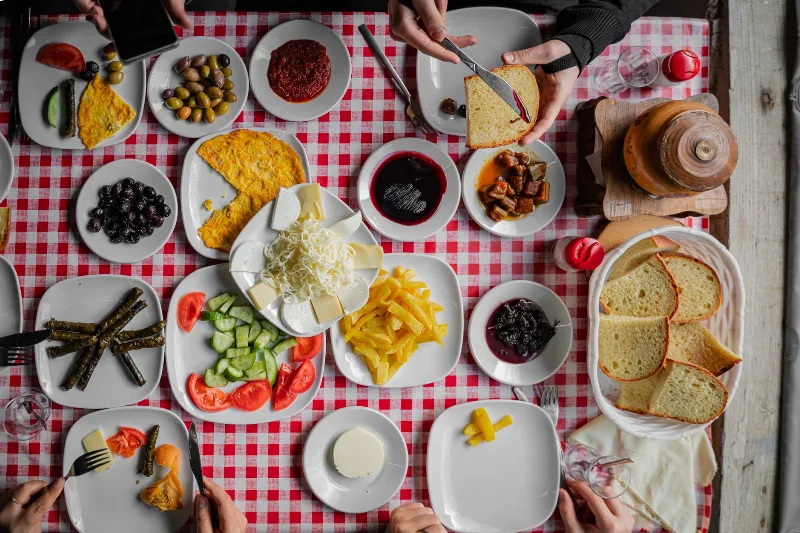
Turkish breakfast, or kahvaltı, is a leisurely morning meal of cheeses, olives, breads, and teas that reflects Türkiye's regional diversity and communal spirit.

Izmir
Izmir is a major Aegean port city in western Türkiye, built around the Gulf of Izmir and known for its Kordon waterfront. It is the country's third-largest city and the main urban gateway to the ancient sites of Ephesus and Pergamon.
Bergama
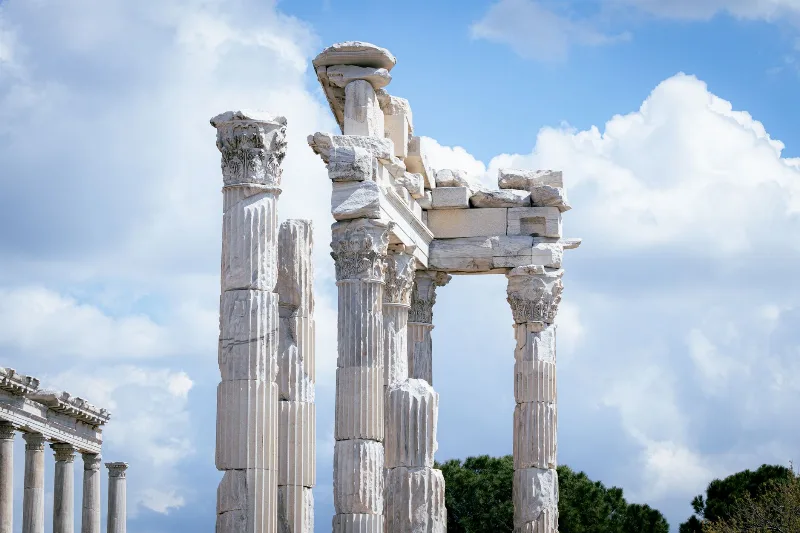
Bergama is an inland district of İzmir Province on the Bakırçay plain, built around the ancient city of Pergamon, a UNESCO World Heritage Site reached by a cable car up to its acropolis.

Foça
Foça is a coastal district of İzmir Province in western Türkiye, built over the site of ancient Phocaea and known for its harbour quarter, the offshore Siren Rocks and a protected marine area for Mediterranean monk seals.