
Foça
Foça is a coastal district of İzmir Province in western Türkiye, built over the site of ancient Phocaea and known for its harbour quarter, the offshore Siren Rocks and a protected marine area for Mediterranean monk seals.
Foça is a district of İzmir Province on the Aegean coast of western Türkiye, set on a small peninsula about 70 km north-west of central İzmir. It is a coastal district whose identity rests on three things at once: it stands on the site of ancient Phocaea, one of the leading maritime cities of Ionia; it is a working fishing and summer settlement with an Ottoman-era harbour quarter; and its surrounding sea is part of a protected area established for the Mediterranean monk seal.
Where Foça sits on the Aegean
Foça faces the open Aegean rather than the sheltered inner Gulf of İzmir. The district occupies a stretch of rocky shoreline with a hinterland of low hills covered in maquis and olive groves. To the south, across the water, lies the Karaburun Peninsula, which closes the northern side of the Gulf of İzmir; to the north the coast runs towards the Çandarlı Gulf and the Aliağa area. The shoreline is irregular, alternating small coves and headlands with a few longer beaches, and the water deepens quickly close to shore.
The district contains more than one settlement. The two principal ones are Eski Foça (Old Foça), which is the administrative and commercial centre and sits directly on the ancient site, and Yeni Foça (New Foça), a separate coastal town further north along the same shore. Smaller villages and rural neighbourhoods lie inland between and around them.
Eski Foça and Yeni Foça
Eski Foça is the district's heart. Its centre is arranged around a small harbour and the rocky promontory that carries the town's castle, with narrow streets, low houses and a waterfront that still functions as a fishing port. The town spreads outward from the harbour along the coast and up the gentle slopes behind it, and the ancient ruins are interspersed with the modern buildings rather than fenced off from them.
Yeni Foça developed separately, with a different origin. It grew around a Genoese trading settlement in the medieval period, when the alum deposits of the area were worked and exported. Today it is a quieter coastal town with its own harbour and beachfront, connected to Eski Foça by a coastal road. Visitors sometimes treat the two as a single destination, but they are distinct places with distinct histories.
Phocaea and the Ionian maritime past
Ancient Phocaea was one of the Ionian Greek cities of the western Anatolian coast, and it was known above all for seafaring. Its sailors founded colonies far beyond the Aegean, including settlements in the western Mediterranean, and Phocaean traders were active across a wide area. The city's coins carried the image of a seal, a device linked to the name Phokaia itself. Control of the coast later passed through Persian, Hellenistic, Roman and Byzantine hands, and in the medieval period Genoese merchants made use of the harbour and the region's natural resources.
Traces of the ancient city survive within and around modern Eski Foça, including remains associated with its civic and religious buildings. These are treated as historic monuments rather than as a separate archaeological zone, so the ancient and the contemporary town overlap in a way that shapes how the place is experienced.
Coastline, islands and the Siren Rocks
Offshore from Eski Foça lie several small islands, among them Orak, İncir, Fener, Hayırsız and Metalik, which give the bay its enclosed, island-studded character. They are largely rocky and uninhabited, and small boats run out to them in the warmer months. The most widely known feature of the coast, however, is the group of rocky islets known as the Siren Rocks, which take their name from the sirens of Homer's Odyssey and stand in open water near the shoreline.
The district's beaches are mostly small and pebbly, set in coves along the coast between Eski Foça and Yeni Foça and on the islands, rather than long sandy strands. This pattern follows the geology of the coast: the land meets the sea in rocky steps rather than in broad plains.
Monk seals and the protected marine area
The Mediterranean monk seal is one of the rarest marine mammals in the world, and the coast around Foça is one of the places where it has been recorded and protected. A special environmental protection area was declared here in the 1980s, covering the sea and the islands, with restrictions intended to limit damage to the species' habitat and to the caves and shores it uses. The seal has become a symbol of the district and its conservation status is one of the main reasons the Foça coast is managed differently from many other Aegean shorelines.
Townscape and architecture
The most prominent structure in Eski Foça is the castle on the promontory by the harbour, commonly known as Beşkapılar after the gates in its walls. It incorporates masonry from earlier Byzantine and Genoese phases beneath later Ottoman rebuilding, and it functions today as a landmark around which the harbour quarter is organised. Around it, the town's streets are narrow and irregular, with whitewashed and stone houses, small squares and a waterfront lined with fishing boats. The overall scale is that of a small coastal town rather than a city, and that scale is central to its character.
Climate and when to visit
Foça has a Mediterranean climate: hot, dry summers and mild, wet winters. The sea is generally warm enough for swimming from late spring into early autumn, peaking in midsummer. Spring and autumn bring milder temperatures and are comfortable for walking and for exploring the coast and the surrounding hills. The prevailing northerly wind, which is typical of this part of the Aegean, can be strong at times and affects both boat trips and the water conditions.
Getting there and regional connections
Foça has no airport or rail connection. It is reached by road from İzmir, generally via Menemen and Aliağa, and the nearest major airport is the one serving İzmir. Road access from the north comes along the coast through the Aliağa and Çandarlı direction. Sea travel in the bay is limited to local boat trips rather than scheduled passenger services.
The district is a natural base for exploring the northern Aegean coast of İzmir Province. Aliağa and the Çandarlı area lie to the north, the Karaburun Peninsula lies across the water to the south, and the wider region includes the historic sites and coastal towns of the Bergama and Ayvalık directions. Foça is also close enough to İzmir to be visited as a day trip, though its fishing harbour and slow evenings give it a pace of its own.
For anyone planning a visit, the most useful way to think about Foça is as two coastal towns, a bay full of small islands, a rocky shoreline with coves, and an ancient city beneath it all, with a marine protection regime that has kept parts of the coast comparatively undeveloped.
Discover Food in Türkiye
All food →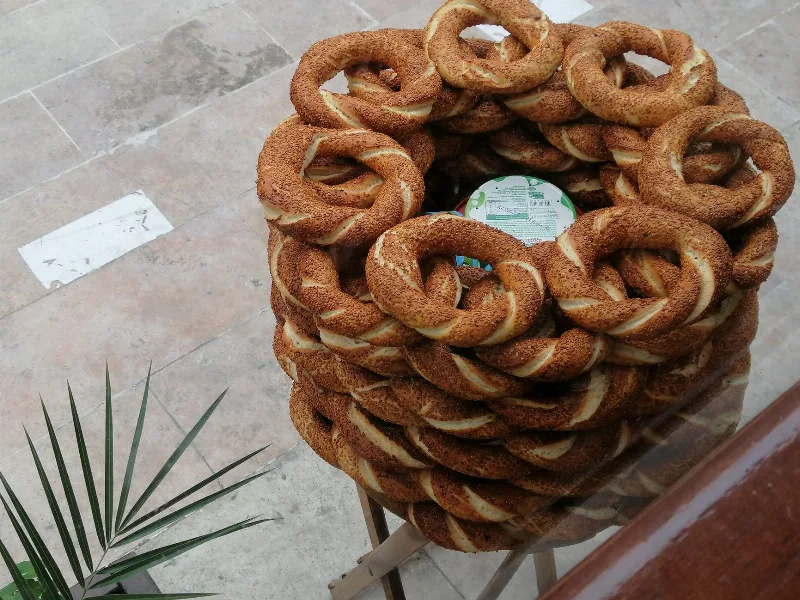
Simit
Simit is a ring-shaped Turkish bread covered in sesame seeds, strongly associated with Istanbul and sold as everyday street food. It is eaten fresh, most often with tea, and has a crisp crust around a chewy crumb.
Explore →
Bazlama
Bazlama is a soft, thick Turkish flatbread made from a leavened dough and cooked on a hot griddle. It is a staple of village baking across Anatolia, eaten warm with butter or used to wrap other foods.
Explore →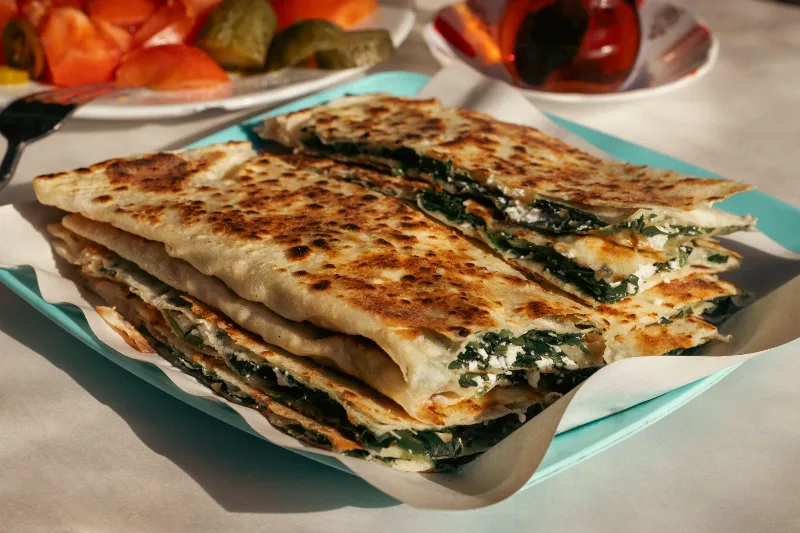
Gözleme
Gözleme is a thin, hand-rolled Anatolian flatbread folded around savory fillings such as cheese, spinach, or minced meat and cooked on a sac griddle. The article covers its regional variations, cooking method, texture, and traditional serving style.
Explore →Related content
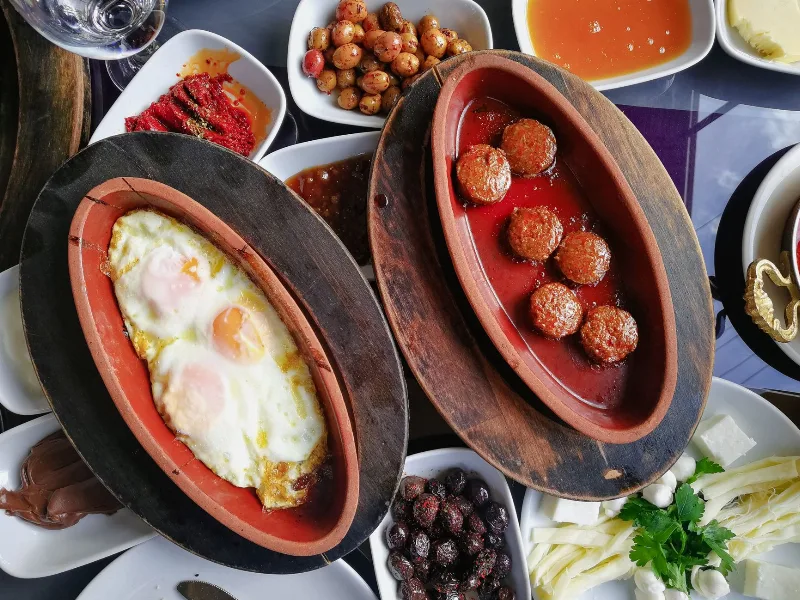
Menemen
Menemen is a Turkish breakfast dish of eggs cooked with tomatoes and green peppers in olive oil or butter, traditionally eaten with bread. It takes its name from a district of İzmir Province and is prepared in households across Türkiye.
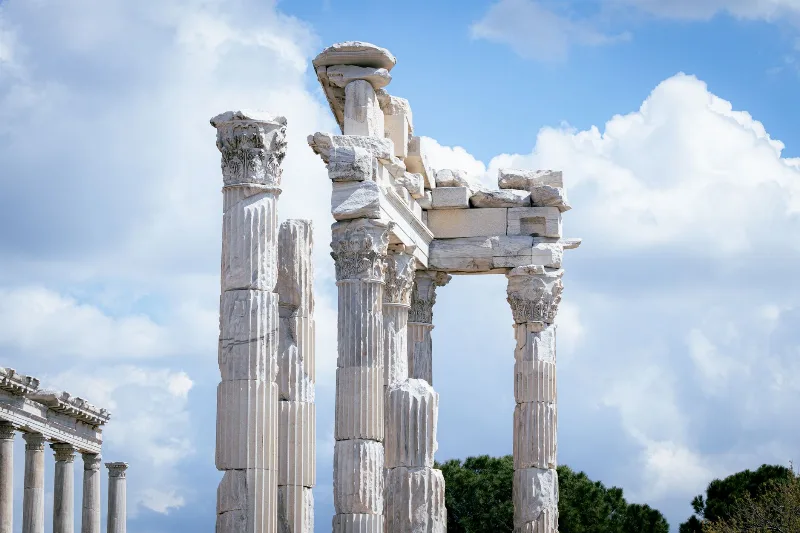
Bergama
Bergama is an inland district of İzmir Province on the Bakırçay plain, built around the ancient city of Pergamon, a UNESCO World Heritage Site reached by a cable car up to its acropolis.
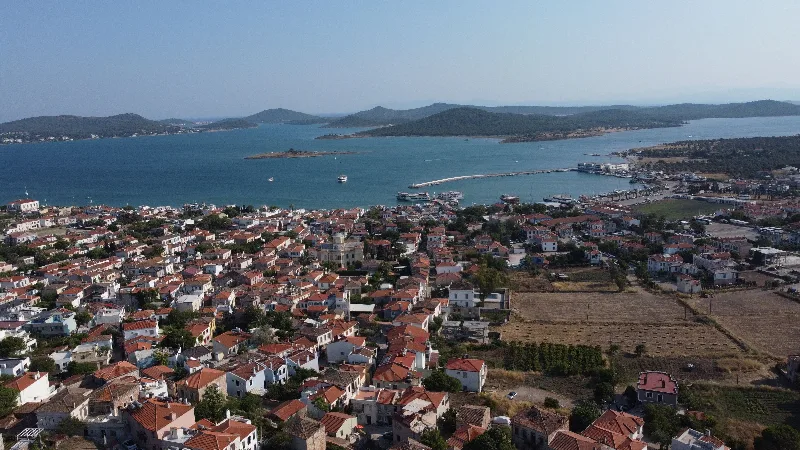
Ayvalık
Ayvalık is a coastal district of Balıkesir Province in western Türkiye, known for its olive oil, its Greek-influenced old town and the offshore island of Cunda.
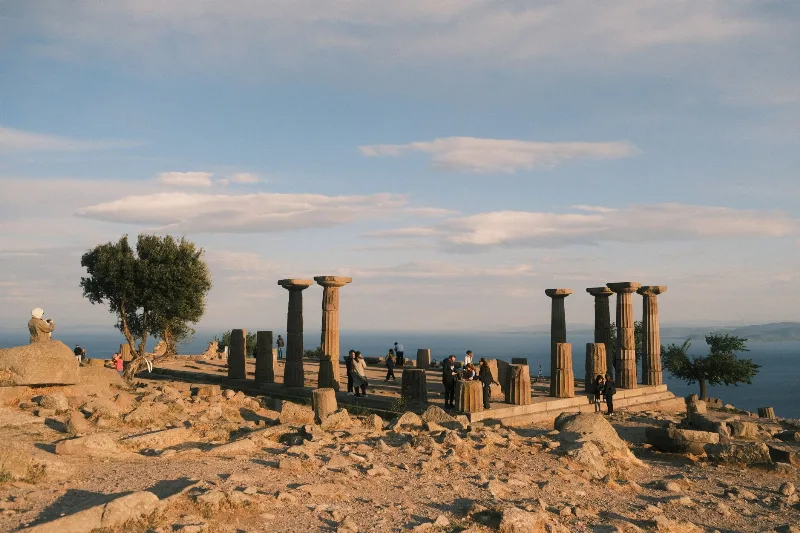
4-Day North Aegean Coast Route
A four-day linear route along the North Aegean coast from Assos to İzmir, with stops at Ayvalık, Cunda, Dikili, Çandarlı, Bergama and Foça. The itinerary is designed for a realistic coastal and inland road trip by car.
2-Day Bergama and Ayvalık Route: Pergamon to Cunda Island
A compact two-day route that pairs the terraced ruins of ancient Pergamon in inland Bergama with the olive-growing Aegean coast at Ayvalık and the causeway-linked island of Cunda.
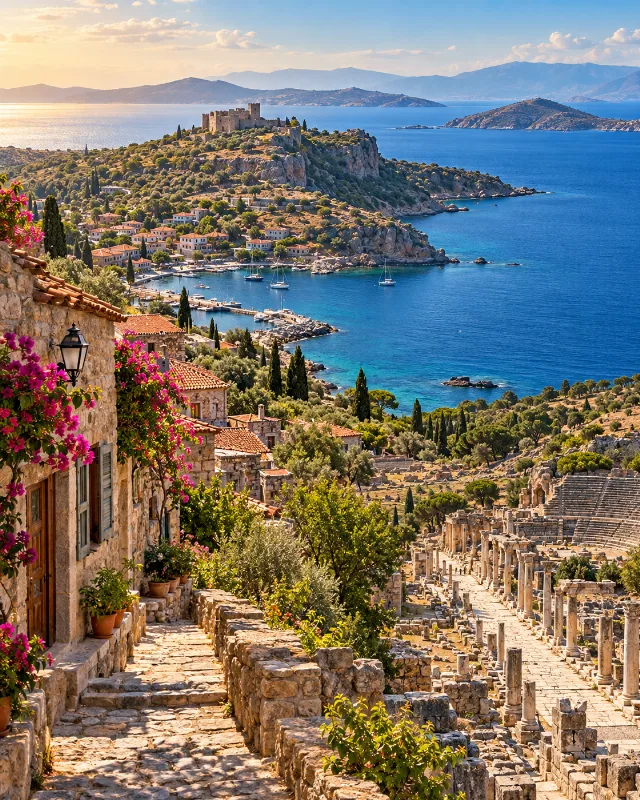
7-Day North Aegean to Ephesus Route
A seven-day southbound route through Troy, Assos, Bozcaada, Ayvalık, Bergama, İzmir and Ephesus, combining archaeology, coastal towns and Aegean culture.