
Keşkek
Keşkek is a ceremonial Anatolian dish of whole wheat berries and meat, slow-cooked and then pounded until the two merge into a thick, smooth mass. It belongs to Central Anatolia and the Aegean region, where it is still prepared in large cauldrons for weddings and religious holidays.
Keşkek is a traditional Anatolian dish made from whole wheat berries and meat — usually lamb or mutton, sometimes chicken — that are simmered together until both are soft, then pounded or stirred vigorously until the mixture becomes a thick, smooth, porridge-like mass. It is strongly associated with Central Anatolia and the Aegean region of Türkiye, and it is above all a ceremonial food, prepared in large cauldrons for weddings, religious holidays and other communal gatherings. In 2011, the ceremonial keşkek tradition of Türkiye was inscribed on UNESCO's Representative List of the Intangible Cultural Heritage of Humanity.
What Keşkek Is
Keşkek sits somewhere between a stew and a porridge. Its two defining components are wheat — whole hulled wheat berries, or in many versions cracked and partly processed wheat known as dövme — and meat, which is cooked down until it can be pulled apart and blended into the grain. The finished dish has no visible pieces of either ingredient in the classic form; the wheat and the meat are worked together until the texture is even and dense.
Because it requires long cooking and a good deal of physical effort, keşkek is rarely a quick weekday meal. It is a dish made in quantity, for many people at once, which is why it is tied so closely to celebration and hospitality rather than to everyday home cooking.
Where Keşkek Comes From
Keşkek is found across a wide band of Anatolia, and no single city can reasonably claim it as its own. It is particularly identified with Central Anatolian provinces such as Çorum, Amasya, Yozgat, Kırşehir and Sivas, and it is also well established in the Aegean interior, including parts of Manisa, Kütahya, Uşak and the surrounding countryside. In these areas the dish carries a strong local identity, and families and villages often regard their own way of making it as the familiar one.
The precise origin of keşkek is not documented with certainty. It belongs to a broad family of wheat-and-meat dishes that appear in various forms across Anatolia, the Middle East and beyond, and it is more accurate to describe it as a long-established regional tradition than to attribute it to a single place or date.
The Ingredients
The base is simple. Wheat, water or broth, meat, salt and usually onion form the core, with butter used generously at the end and sometimes during cooking. The wheat is typically soaked beforehand so that it softens evenly, and the choice between whole berries and cracked dövme wheat changes the character of the finished dish: whole berries give a coarser, more rustic result, while cracked wheat breaks down faster into a smoother paste.
The meat is most often lamb or mutton, valued for its fat and depth of flavour, though chicken versions exist in some areas. Small additions vary from household to household and region to region, and the seasoning is deliberately restrained so that the wheat and meat remain the dominant flavours.
How Keşkek Is Traditionally Prepared
Preparation begins well in advance. The wheat is soaked, then placed in a large cauldron with the meat, onion, salt and water. The pot is cooked slowly over a low fire for several hours, and in some rural traditions it is set into embers or a pit oven to continue cooking gently overnight. The aim is to soften the wheat completely and to let the meat become tender enough to fall apart.
The step that gives keşkek its identity comes afterwards. The cooked mixture is pounded with long wooden mallets or heavy paddles, or stirred hard with a sturdy wooden spoon, until the meat disintegrates and the wheat loses its separate grains. This is physically demanding work, and it is traditionally shared: people take turns at the pot, which turns the pounding into a social activity as much as a cooking technique. The more thoroughly the mixture is worked, the smoother the final result.
Texture, Flavour and Appearance
Properly made keşkek is thick and cohesive rather than runny. It holds its shape on a spoon and has a dense, slightly creamy, faintly sticky quality from the released wheat starch. The colour is a pale, muted beige or light brown, depending on the wheat and how long it has cooked.
The flavour is mild and deep rather than spicy. Wheat contributes a gentle nutty sweetness, the meat and its fat give a savoury backbone, and the onion and butter round the whole thing out. Keşkek is not a strongly seasoned dish, and its appeal lies in that soft, integrated flavour rather than in any sharp note.
How Keşkek Is Traditionally Served
Keşkek is served warm, either in individual bowls or turned out onto a large communal tray or platter from which several people eat. A common finishing touch is melted butter, sometimes heated with paprika or red pepper flakes, poured over the surface just before serving. Bread usually accompanies it, and in many settings it is eaten alongside simple pickled vegetables or onions. Because it is a filling dish, portions tend to be modest despite the size of the pot it came from.
Regional Variations
Variation in keşkek appears in several places at once: the type of wheat, the cut and species of meat, the amount of butter, and how finely the mixture is pounded. Inland versions tend to favour mutton and whole wheat, producing a heavier, more rustic dish, while some Aegean and western preparations lean toward a smoother, lighter texture. Chicken keşkek is made in certain areas, particularly where poultry is the more available meat.
It is worth saying plainly that these are broad patterns, not strict rules. Keşkek is above all a household and village dish, and two families in the same province may make it differently. Claims that one specific version is the only authentic one are difficult to justify.
Keşkek and Similar Wheat-and-Meat Dishes
Keşkek is often compared with haleem or halim, the wheat-and-meat porridge found in various forms in the Middle East and South Asia. The family resemblance is real, but the Anatolian dish has its own character and its own ceremonial role, and the pounding step that gives keşkek its texture is central to how it is understood locally.
It should not be confused with aşure, the sweet wheat dessert made with sugar, dried fruit and nuts, or with hedik, a simpler boiled-wheat preparation. Although all three are built on wheat, keşkek is a savoury meat dish, and the wheat is treated as a base rather than as a sweet ingredient.
Why Keşkek Matters Culturally
Keşkek carries meaning beyond its ingredients. It is a dish of occasions: weddings, religious holidays such as Ramadan and Eid, circumcision celebrations, village gatherings and large family meals. Cooking it in a single enormous pot and pounding it together turns the dish into a shared undertaking, and in many communities the making of keşkek is as much a social ritual as the eating of it.
That collective dimension is a large part of why the tradition was formally recognised as intangible cultural heritage. Keşkek represents a way of feeding a crowd that depends on cooperation, patience and time — qualities that a fast, individually plated dish cannot reproduce.
Related content
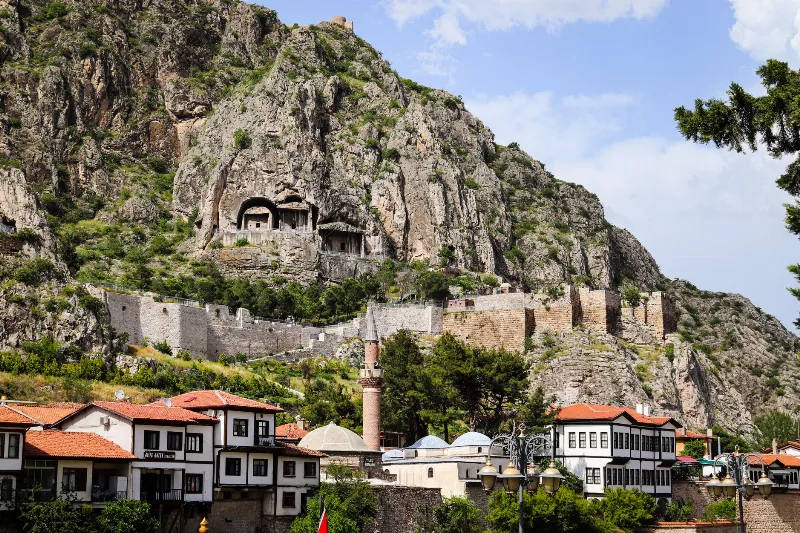
Amasya
Amasya is a river city in the interior of Türkiye's Black Sea region, where Pontic rock tombs, Ottoman riverside mansions and apple orchards sit along the narrow valley of the Yeşilırmak.
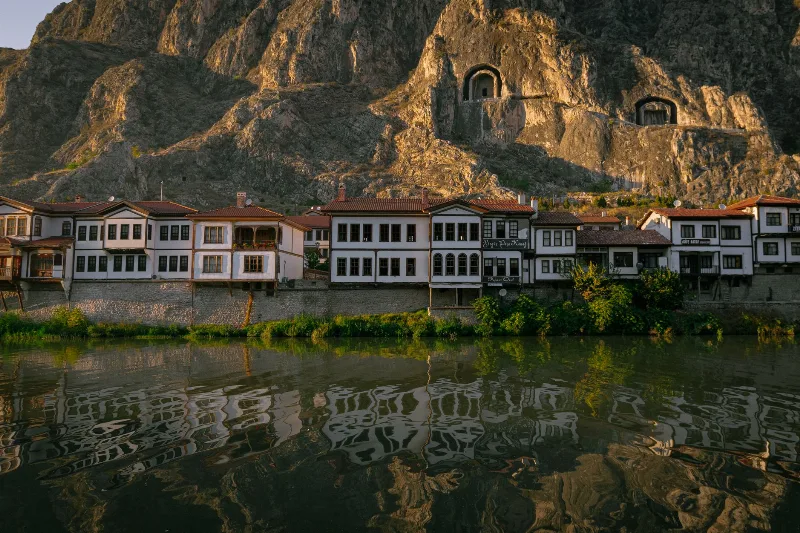
Amasya's Ottoman Houses
Amasya, set in a river valley in Türkiye's Black Sea region, preserves a remarkable row of Ottoman-era houses along the Yeşilırmak River. Their timber bay windows, courtyards and whitewashed façades reveal how a prosperous Anatolian town once lived.
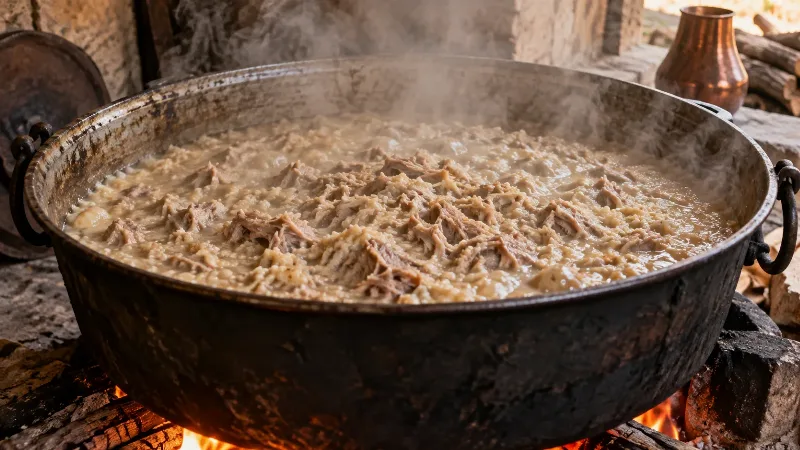
Keşkek
Keşkek is a traditional Anatolian dish made by cooking hulled whole wheat together with meat and pounding the softened mixture into a thick, dense mass. It is best known as a communal celebration food, especially at weddings.
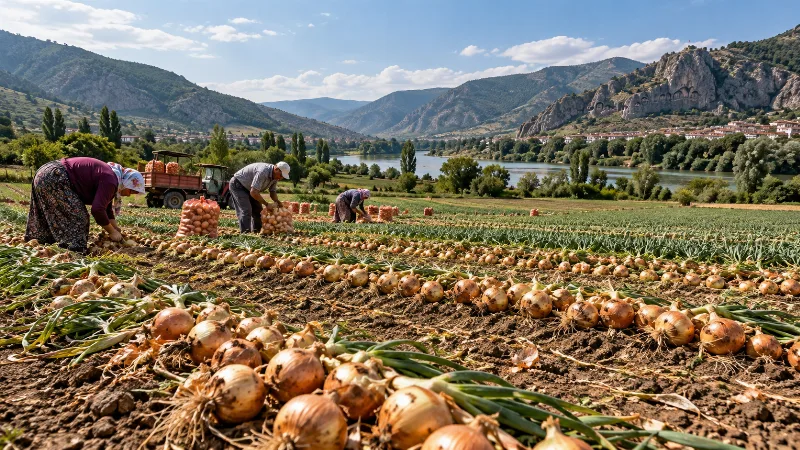
Amasya Onions
Amasya onions are a pungent, long-keeping onion variety tied to the plains and river valleys of Amasya province in northern Türkiye. The region's transitional climate and fertile alluvial soils give the crop its firm bulbs and storage quality.
Amasya Apples
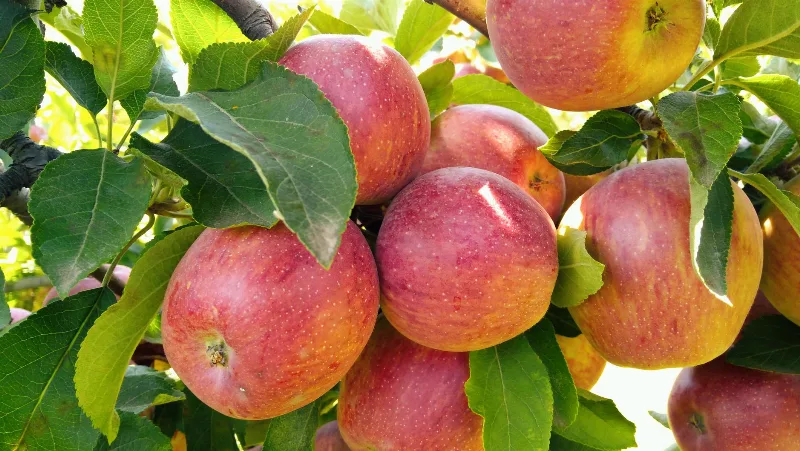
Amasya apples are apples grown in the sheltered river valleys of Amasya province in northern Türkiye, where cold winters and warm summers shape fruit known for its firm, crisp bite and balanced sweet-tart flavour.
The Timeless Beauty of Amasya's Ottoman Houses
A look at the historic Ottoman houses of Amasya in northern Türkiye, from their riverside setting and timber construction to the gardens and rooms that shaped daily life along the Yeşilırmak.