
Amasya Apples
Amasya apples are apples grown in the sheltered river valleys of Amasya province in northern Türkiye, where cold winters and warm summers shape fruit known for its firm, crisp bite and balanced sweet-tart flavour.
Amasya apples are the apples grown in and around the province of Amasya, which lies in the interior of Türkiye's Black Sea region. The area's temperate climate, with cold winters and warm summers, together with its fertile valleys, produces fruit that is valued for a crisp texture, plenty of juice and a flavour that balances sweetness with a clean, tart edge. Apples have been part of the agricultural life of the province for generations, and they remain one of the crops most closely identified with its countryside.
Where Amasya Apples Are Grown
Amasya sits inland from the Black Sea coast, in a basin cut by the Yeşilırmak, the river that crosses the province before continuing north towards the sea. Apple orchards are not concentrated in one single district; they are scattered through the province, occupying valley floors, terraced slopes and the gentler ground that rises towards the surrounding hills. Many are small family orchards attached to villages, while others are larger blocks of trees planted on the flatter valley land.
Because the province is a river basin rather than a narrow coastal strip, the orchards sit at different elevations and on different soils, and this variety of sites is one reason apple growing has spread so widely here. Amasya's identity as an apple province is tied to this landscape: a sheltered valley system where fruit trees can be planted on a scale that would be harder to sustain on the exposed plateau further south.
Why the Climate and Geography Suit Apples
Amasya lies in a transitional zone between the humid Black Sea coast and the drier Anatolian interior. That position gives the province a clearly seasonal climate rather than the mild, damp conditions of the coast or the harsh, dry cold of the high plateau. Winters are cold enough to give apple trees the dormant period they need, while summers are warm and bright enough for the fruit to ripen fully and build up sugar and aroma.
The valley setting matters as well. Slopes and hillsides around the basin offer some shelter from wind and help air move through the orchards, while the river and its tributaries keep soils in the lower ground moist and productive. The alluvial and valley soils of the basin are generally fertile and well suited to fruit trees, and rainfall is more generous than on the Anatolian plateau to the south, although less constant than along the Black Sea coast. The combination of a sheltered basin, cold winters, warm summers and reasonably supplied soils is what makes the province a natural home for apples.
The Trees and the Growing Cycle
Apples come from deciduous trees of the genus Malus, which lose their leaves in winter and come back into growth in spring. In Amasya, as in most temperate fruit-growing areas, the trees break dormancy as the weather warms, produce blossom in spring, and then carry the young fruit through the summer before it ripens in late summer and autumn.
Orchards are managed year-round. Winter is the season for pruning and for shaping the trees so that light reaches the fruit; spring brings flowering and, in some years, the risk of late cold spells that growers watch closely; summer is a period of thinning, irrigation where it is available, and monitoring for pests and disease. Because the province covers a range of elevations, flowering and ripening do not happen everywhere at exactly the same moment, and the harvest is spread over a period rather than concentrated into a few days.
Local Varieties and the Amasya Misket
The apple variety most often linked with Amasya is the Misket apple, a local type that has long been grown in the province and is closely associated with its orchards. Alongside it, growers raise other apple varieties, both traditional types and the more widely planted varieties found in orchards across Türkiye, so that the harvest includes fruit with different colours, sizes and keeping qualities.
Having more than one variety in the same growing area has practical advantages. Different apples ripen at different times, which spreads the workload of picking and allows fruit to be sold fresh over a longer season, and some varieties store better than others. Local growing traditions have developed around this mix, with each orchard shaped by the preferences of the family or the market it supplies.
Appearance, Flavour and Texture
Amasya apples are recognised above all by their eating quality. The flesh is firm and crisp rather than soft or mealy, and it releases a good amount of juice when bitten. The flavour is not simply sweet: it has a tartness that balances the sugar, which is why the fruit is often described as sweet-tart. Skin colour varies with the variety, ranging from green-yellow tones to red-blushed fruit, and aroma tends to be strongest in the local types grown in the province.
These characteristics are closely tied to the growing conditions. Warm, sunny summers allow the fruit to develop sugars and aroma, while cool nights towards the end of the season help it keep a firm texture and a fresh acidity instead of turning flat and sugary. The result is an apple that is pleasant to eat straight from the tree and also holds its shape reasonably well when cooked.
Harvest and How the Fruit Is Handled
Harvest in Amasya begins in late summer and continues through the autumn, depending on the variety and on how high the orchard sits. Apples are picked by hand, since the fruit bruises easily and needs to be handled carefully if it is to be stored or transported. Pickers judge ripeness by colour, firmness and ease of detachment from the branch rather than by the calendar alone.
After picking, the fruit is sorted, with damaged or undersized apples separated from the marketable crop. Good keeping varieties are then held in cool, ventilated stores, where they can remain in good condition for weeks or months and be sold gradually through the winter. Fruit that will not keep is directed towards juice, vinegar, jams and other processed uses closer to the time of harvest.
Apples in Amasya's Agricultural Landscape and Local Life
Apple growing shapes the look of the Amasya countryside. Orchards mark the edges of villages and line sections of the valley, and the rhythm of pruning, flowering, thinning and picking structures the working year for many families in the province. The crop supports not only the growers themselves but also the seasonal labour, transport, storage and small-scale processing that surround the harvest.
In local kitchens, apples are eaten fresh, baked into desserts and pastries, cooked down into jams and compotes, and pressed for juice. Some of the crop is dried, a simple preservation method that has long been used to keep fruit through the winter months. Apples also appear in the ordinary social life of the province — as gifts between neighbours, at village gatherings and in the markets of Amasya and its surrounding towns.
What Distinguishes Amasya Apples
Amasya apples are not distinguished by a single dramatic feature but by the fit between the fruit and the place. A sheltered river basin, cold winters, warm summers, fertile valley soils and a long local tradition of fruit growing together produce apples with a firm, juicy bite and a flavour that is sweet without losing its tartness. Apples are grown in many parts of Türkiye and in many other countries, yet the name Amasya remains closely attached to the crop in this part of northern Türkiye, because the province's valleys have made apple growing a practical and enduring part of its agriculture.

Beyti Kebabı
Beyti Kebabı is a Turkish kebab of grilled minced meat rolled inside thin lavash bread, dressed with warm tomato sauce and yogurt. It is a modern Istanbul dish rather than an old regional specialty, and it differs from İskender or Adana kebab in both its meat and its serving style.
Explore →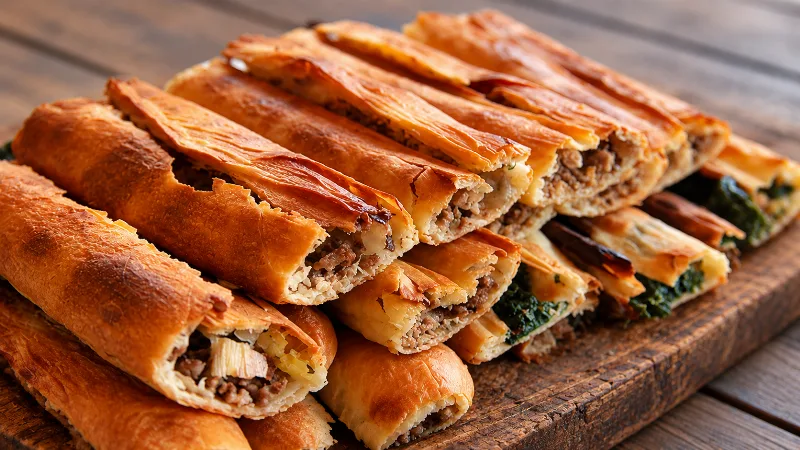
Bafra Pidesi
Bafra Pidesi is a soft, boat-shaped Turkish pide from the Bafra district of Samsun on the Black Sea coast, filled with ground meat, cheese or vegetables and baked quickly in a very hot oven.
Explore →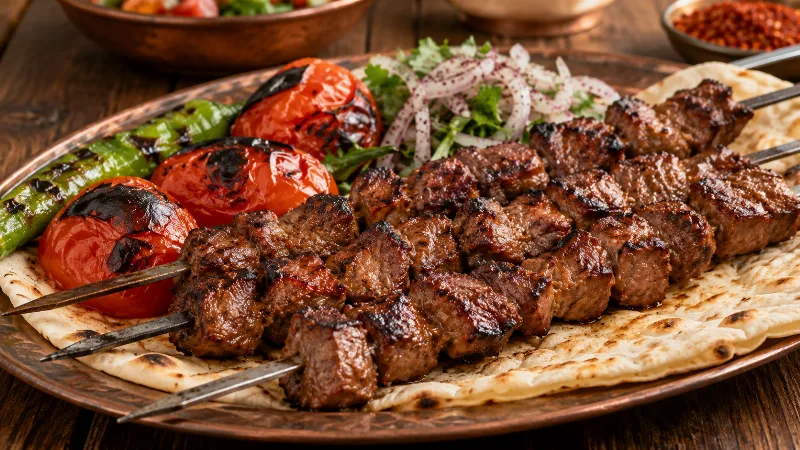
Şiş Kebap
Şiş kebap is built from cubes of marinated meat threaded onto a skewer and grilled over charcoal. It is one of the simplest forms of Turkish kebab, defined by the cut of meat, the marinade and the skewer itself.
Explore →Related content
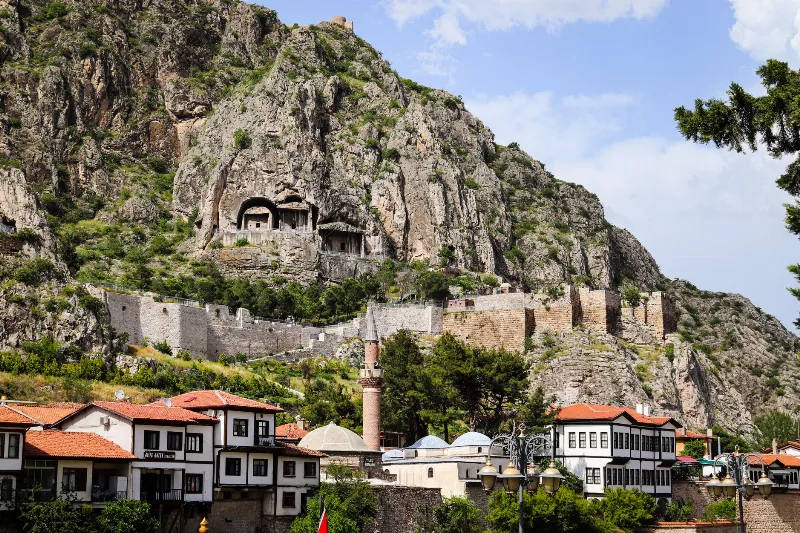
Amasya
Amasya is a river city in the interior of Türkiye's Black Sea region, where Pontic rock tombs, Ottoman riverside mansions and apple orchards sit along the narrow valley of the Yeşilırmak.
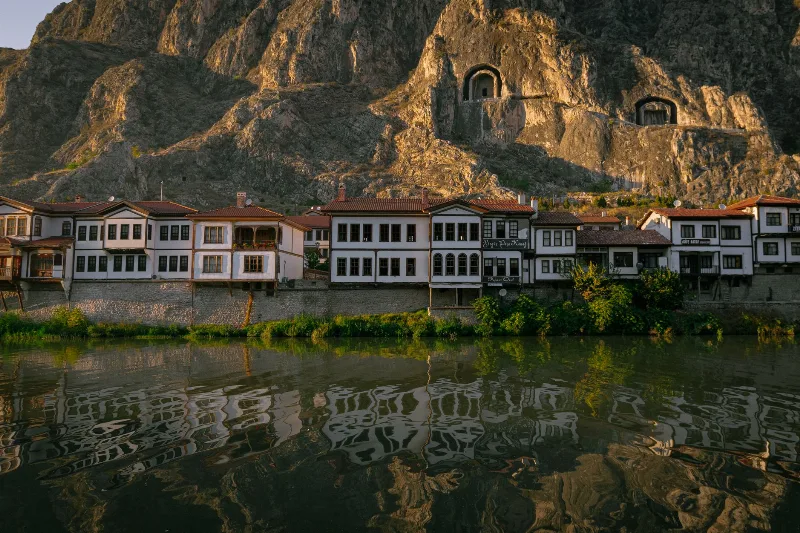
The Timeless Beauty of Amasya's Ottoman Houses
A look at the historic Ottoman houses of Amasya in northern Türkiye, from their riverside setting and timber construction to the gardens and rooms that shaped daily life along the Yeşilırmak.
Amasya's Ottoman Houses
Amasya, set in a river valley in Türkiye's Black Sea region, preserves a remarkable row of Ottoman-era houses along the Yeşilırmak River. Their timber bay windows, courtyards and whitewashed façades reveal how a prosperous Anatolian town once lived.
Yalıboyu Houses and Riverfront Architecture in Amasya
A row of Ottoman houses lines the Yeşilırmak in Amasya, where stone lower storeys and projecting timber upper floors have shaped the town's riverside character for generations.
Amasya Onions
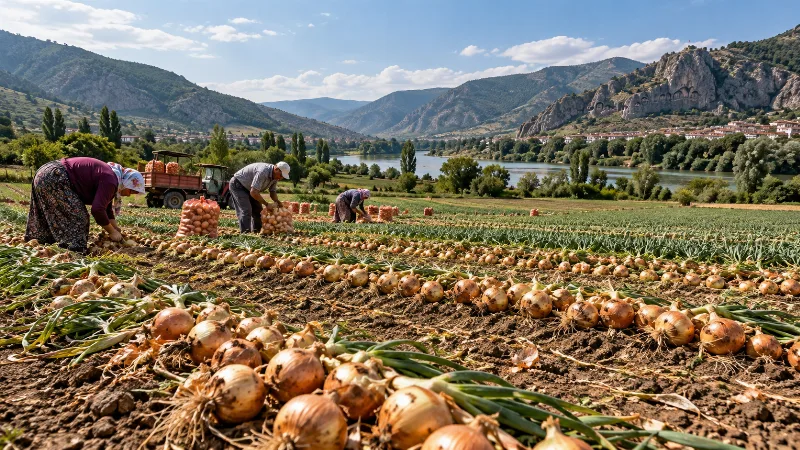
Amasya onions are a pungent, long-keeping onion variety tied to the plains and river valleys of Amasya province in northern Türkiye. The region's transitional climate and fertile alluvial soils give the crop its firm bulbs and storage quality.
5-Day Black Sea Coast Route
A five-day linear journey along Türkiye's central and eastern Black Sea coast, from Sinop to Trabzon, with an inland detour to Amasya and stops in Ordu and Giresun along the way.