
Bafra Pidesi
Bafra Pidesi is a soft, boat-shaped Turkish pide from the Bafra district of Samsun on the Black Sea coast, filled with ground meat, cheese or vegetables and baked quickly in a very hot oven.
Bafra Pidesi is a type of Turkish pide from Bafra, a district of Samsun province on the Black Sea coast. It is made from a soft, leavened dough that is rolled into an oval, filled across the middle and folded at the sides to create a raised, boat-shaped rim — the kayık form that is characteristic of pide in this part of Türkiye. The usual fillings are ground meat, cheese or vegetables, and the pide is baked quickly in a very hot oven and eaten while the crust is still soft.
What Defines Bafra Pidesi
Three things separate Bafra pidesi from many other Turkish flatbreads: the shape, the dough and the way it is baked. The dough is yeasted and relatively soft, so the finished pide has a pliable, slightly chewy crust rather than a crisp, brittle one. The edges are lifted and pinched together at the two ends, which holds the filling in place and gives the pide its boat-like silhouette. The base is spread with a thin layer of the topping, leaving the raised rim uncovered so that it browns separately.
In Samsun province, pide is often served with butter, which is allowed to melt over the hot surface just before eating. This is a common way to eat Bafra pidesi as well, and it contributes to the rich, soft character that people associate with the local style.
A District on the Black Sea Coast
Bafra sits on the Bafra Ovası, a broad alluvial plain formed by the Kızılırmak river, whose delta lies just to the north of the town. The district is one of the larger centres of Samsun province, and its surrounding plain is farmland. Pide is made all along the Black Sea coast, but local versions take the name of the town or district where they are made, and Bafra pidesi is the version identified with Bafra.
The dish belongs to a wider Black Sea pide tradition in which the dough is thicker and the crust softer than in the thin, crisp flatbreads of other regions. It should not be confused with those; the differences lie in the dough, the shaping and the baking, not only in the topping.
Fillings and Toppings
Ground meat is the most common filling. The meat is usually mixed with finely chopped onion and sometimes with tomato or pepper, and spread raw over the dough so that it cooks in the oven along with the base. Cheese is the other staple: a melting cheese is spread over the dough and comes out soft and slightly stretched. Vegetable fillings are also widespread, with spinach being the best known, often combined with cheese or with ground meat.
Beyond these, pide in Samsun and the surrounding region can be ordered with sausage (sucuk), with an egg cracked over the filling, or plainly with butter and no other topping at all. These are general options within Turkish pide making rather than exclusive to Bafra; what stays constant in Bafra pidesi is the soft, boat-shaped crust that carries them.
How It Is Traditionally Prepared
The dough is made from flour, water, yeast and salt, sometimes with a little oil or milk, and is kneaded and left to rise until it is soft and slightly airy. It is then divided into portions, each rolled or stretched by hand into an oval. The filling is spread over the centre, leaving a border of bare dough around it. The two long sides are folded up over the edge of the filling, and the ends are twisted and pinched closed, which produces the raised rim and the boat shape.
Bafra pidesi is baked in a very hot oven, traditionally a wood-fired stone oven, with the pide placed directly on the hot floor. The bake is short — only a few minutes — which is why the dough stays soft and the toppings remain juicy instead of drying out. The underside usually picks up a few darker, blistered patches where it has touched the hot stone.
Texture, Flavour and Appearance
A well-made Bafra pidesi has a pale, slightly golden crust that bends rather than snaps. The rim is the softest part, while the base under the filling is a little firmer because it has absorbed some of the juices. The meat version tastes of browned meat, onion and pepper; the cheese version is salty, mild and soft; the spinach version is greener and lighter. Butter, when it is used, adds a rounded richness that softens the whole thing further.
The pide arrives long and oval, with the filling sitting in its shallow dough trough and the pinched ends pointing outward. It is usually cut into pieces before serving, and the pieces are eaten by hand.
How It Is Served and Eaten
Bafra pidesi is eaten hot and fresh, almost always straight after baking, because the soft crust firms up as it cools. It is a meal in itself rather than a side dish. Common accompaniments are ayran, pickles and a simple salad of tomato, cucumber and parsley; black tea often follows. It can be a lunch or a casual evening meal, and in many places it is also eaten earlier in the day. Because it travels reasonably well, it is frequently bought to take away as well as eaten in.
Variations and Related Pides
Across Samsun and the Black Sea region, pide is made both open and closed. The open form, with the filling visible in the boat-shaped base, is the one normally meant by Bafra pidesi. A closed pide, in which the dough is folded over the filling and sealed before baking, produces a different, more bread-like result. Neighbouring towns have their own pide styles, and the same basic dough and oven are used for all of them; the differences lie mainly in the filling and in how thickly the dough is rolled.
How It Differs from Lahmacun and Etli Ekmek
Bafra pidesi is frequently compared with lahmacun, but the two are quite different. Lahmacun is rolled much thinner, is not folded into a boat shape, bakes in a very short time into a crisp, flexible round, and is traditionally served with lemon and parsley. Bafra pidesi has a thicker, yeasted crust and raised edges. Etli ekmek, associated with Konya, is a long, thin flatbread topped with finely chopped meat; it has no folded rim and a much thinner base. Among Black Sea pides, Bafra pidesi is recognised for the softness of its dough and for its buttered serving style.
Bafra Pidesi and Local Identity
For people from Bafra and Samsun, pide is more than a quick meal. It is a food tied to the district's name, eaten on ordinary days and ordered for guests, and it carries the local preference for a soft, generous, buttery crust over a thin, crisp one. Like other regional Turkish dishes, it shows how the same basic ingredients — flour, water, meat and cheese — can produce a recognisably local food once the dough, the shape and the oven are fixed by tradition.
Related content
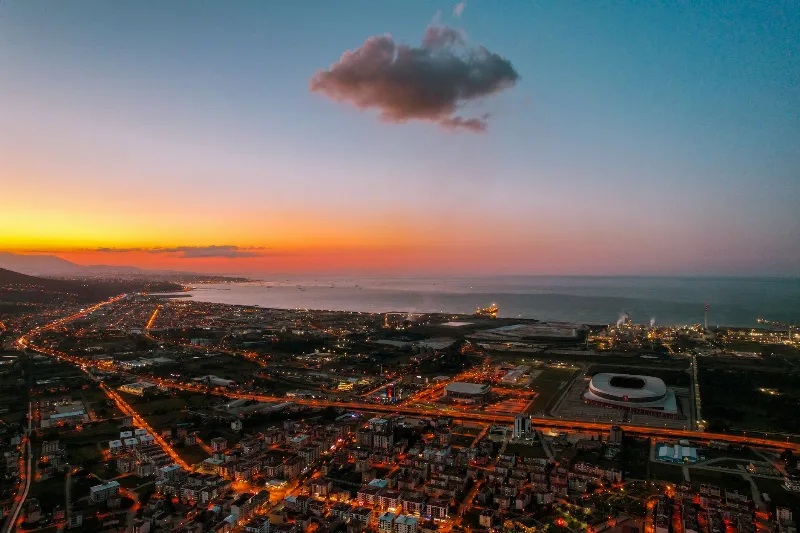
Samsun
Samsun is a large Black Sea port city in northern Türkiye and the historic starting point of the Turkish War of Independence in 1919. It is a major metropolitan centre set between wide river deltas, coastal plains and the mountains of the Black Sea hinterland.
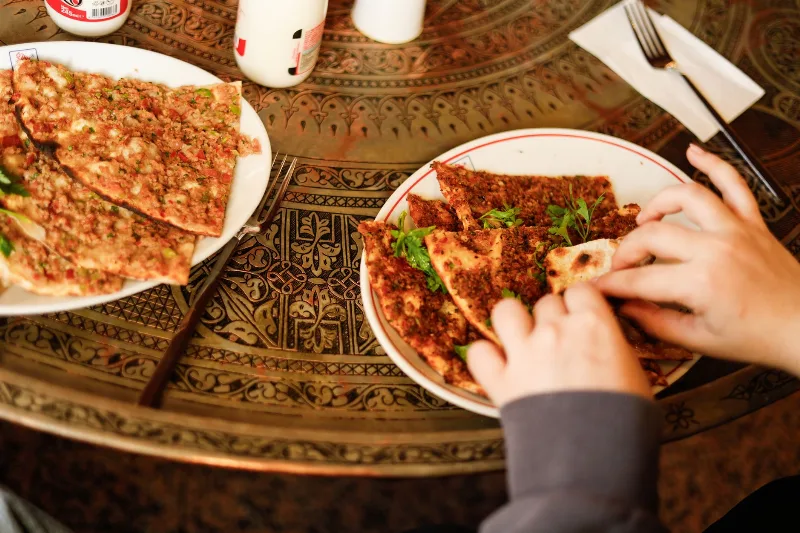
Lahmacun
Lahmacun is a thin, round flatbread spread with finely minced meat, tomato, pepper and spices, baked quickly at high heat and served with lemon and fresh parsley. It is one of Türkiye's most recognisable street and oven foods, with strong regional traditions across the southeast and beyond.
Lahmacun
Lahmacun is a paper-thin flatbread spread with a finely chopped, spiced meat topping and baked quickly at high heat. It is most closely associated with Şanlıurfa and Gaziantep, and is traditionally eaten rolled with lemon and parsley.
Bafra Plain Tobacco and Rice Fields in Samsun
The Bafra Plain in Samsun is a fertile delta built by the Kızılırmak, known for its thin-leaved tobacco, flooded rice paddies and bird-rich coastal wetlands.
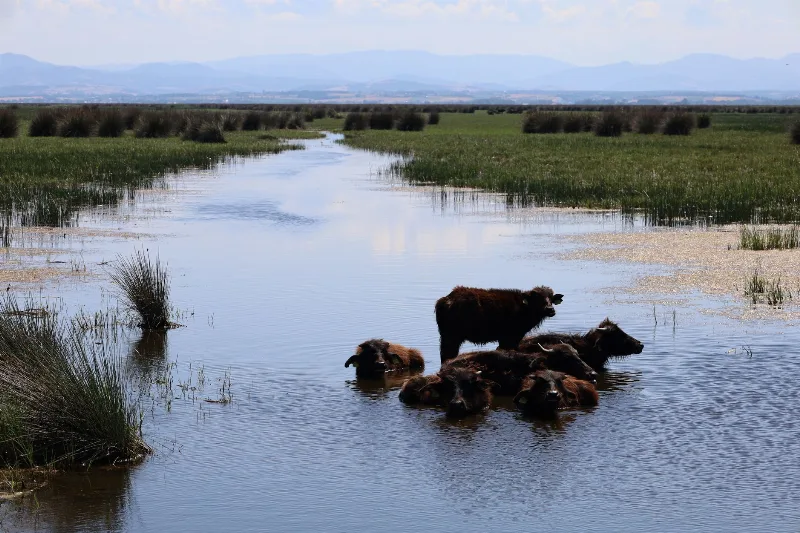
Kızılırmak Delta
The Kızılırmak Delta is a large coastal wetland where Türkiye's longest river meets the Black Sea in Samsun Province. It is a Ramsar site known for its shallow lagoons, reed beds, dunes and dense birdlife.
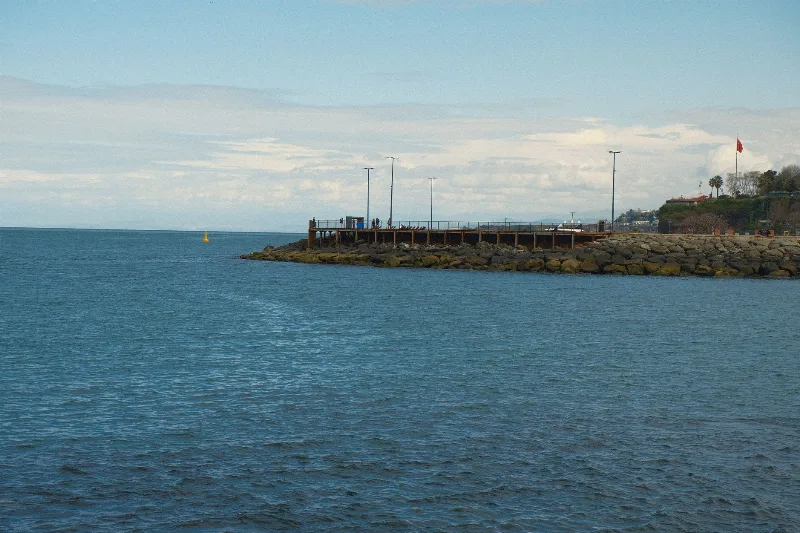
6-Day Central Black Sea Route
A six-day journey along Turkey's Central Black Sea coast from Samsun to Trabzon, visiting Ordu and Giresun with highland and beach stops.