
Amasya Onions
Amasya onions are a pungent, long-keeping onion variety tied to the plains and river valleys of Amasya province in northern Türkiye. The region's transitional climate and fertile alluvial soils give the crop its firm bulbs and storage quality.
Amasya onions are the onion type most closely identified with Amasya province in northern Türkiye, an inland area where the humid Black Sea coast gives way to the drier Anatolian interior. The province is associated with onions because of the broad, irrigated plains along the Yeşilırmak (Green River) and its tributaries, where market gardening has long been part of local farming. Onions from this area are typically described as firm, strongly flavoured bulbs with good keeping quality, and they move from Amasya's fields to markets and kitchens across the country.
Where Amasya Onions Are Grown
Onion cultivation is spread across the flatter, cultivable parts of Amasya province rather than confined to a single village. The Amasya plain around the provincial centre, together with the districts of Suluova, Merzifon, Göynücek and Taşova, forms the core of the growing area. These districts sit in valleys and basins where water is available for irrigation and where fields are large enough for field-scale vegetable production.
The Yeşilırmak and its branches are central to this pattern. Rivers carry water to the fields, and the same water has deposited the deep, workable soils that farmers rely on. Onion growing here is usually part of a broader market-gardening system that also includes other vegetables, which means the crop is woven into the ordinary rhythm of local agriculture rather than treated as a rare speciality.
The Climate and Soils Behind the Crop
Amasya sits in a transitional climatic zone. It receives more moisture than the dry central plateau but lacks the heavy, year-round humidity of the Black Sea coast. This gives the province warm, sunny summers and cold winters, with rainfall concentrated in certain seasons rather than evenly spread. For onions, a warm growing season with plenty of sunlight is an advantage: the plants build strong tops early and then put their energy into the bulb as the days lengthen.
The soils matter as much as the weather. Alluvial ground along the river valleys tends to be deep, fairly fertile and reasonably well drained, which suits a root-and-bulb crop that dislikes standing water. Good drainage keeps the bulbs from rotting during the wetter spells, while the mineral richness of valley soils supports steady growth without excessive inputs. The combination of a long, bright growing season and workable river soils is the practical reason onions became established here.
The Onion Plant and Its Growing Cycle
The crop comes from Allium cepa, the common onion, a plant that is naturally biennial but is grown as an annual for its bulb. In Amasya, as in most Turkish onion-growing areas, growers sow seed or set out young plants in prepared beds in spring, then tend the crop through the early summer. Leaves rise first and do the work of photosynthesis; the visible bulb forms later, swelling at the base as the plant stores energy.
Bulbing is governed by day length. As the days reach their summer maximum, the plant shifts from leaf growth to bulb enlargement. By late summer the tops begin to weaken and fall over, a signal that the bulb has matured and the growing cycle is closing. The exact timing varies with weather, sowing date and the choice of seed, so growers in different districts of the province may finish at slightly different points in the season.
Harvest and Curing
Amasya onions are harvested in the warm, dry part of the year, typically from late summer into early autumn. Mature bulbs are lifted from the soil and left in the field to dry, a stage known as curing. Curing lets the outer layers and the neck of the bulb lose moisture and tighten, which is what allows the onions to be stored for months rather than weeks.
After field drying, the tops and roots are trimmed and the bulbs are moved into ventilated stores. Air movement is essential: still, damp conditions encourage rot, while cool, dry, well-aired storage keeps the crop sound through the winter. Traditional practice in Turkish onion districts also includes stringing or braiding cured bulbs, a method that keeps them off the floor and lets air circulate around each bulb.
Flavour, Appearance and Keeping Quality
Onions from Amasya are generally recognised for a pronounced, pungent flavour rather than a mild, sweet one. That strength comes from the sulfur compounds the plant produces, and its intensity is shaped by variety, soil and growing conditions. The bulbs tend to be firm and tightly layered, with dry outer skins that protect the flesh during handling and transport.
Storage quality is one of the traits most often linked to the Amasya crop. High dry matter and a well-cured neck allow the bulbs to hold up over a long period, which is valuable in a country where onions are used daily and where supply must last well beyond the harvest. This keeping ability, combined with a strong taste that stands up in long cooking, explains much of the crop's reputation in the region.
Onions in Local Agriculture and the Kitchen
Onion growing contributes to the rural economy of Amasya's valley districts by providing a cash crop that can be sold fresh after harvest and also stored for later sale. Because the bulbs keep well, they can be released onto the market over an extended period instead of only in the weeks after lifting, which gives growers some flexibility in a farming landscape otherwise dominated by cereals, fruit and other vegetables.
In the kitchen, Amasya onions are used in the same everyday way as onions elsewhere in Türkiye: as a base for soups, stews, rice dishes and stuffed vegetable fillings, sliced raw into salads, and preserved in vinegar or brine as pickles. They are a staple rather than a garnish, which is precisely why a region that can produce a firm, pungent, long-keeping onion has an agricultural advantage. Similar onion growing also occurs in neighbouring parts of the interior Black Sea and Yeşilırmak basin, but Amasya province is the name most firmly attached to the crop.
For anyone tracing the origin of the onions they buy, the link between Amasya's river valleys, its bright transitional climate and a bulb that stores well is the essential story. The product is not simply an onion grown somewhere in Türkiye; it reflects a specific place where soil, water and season suit the crop.
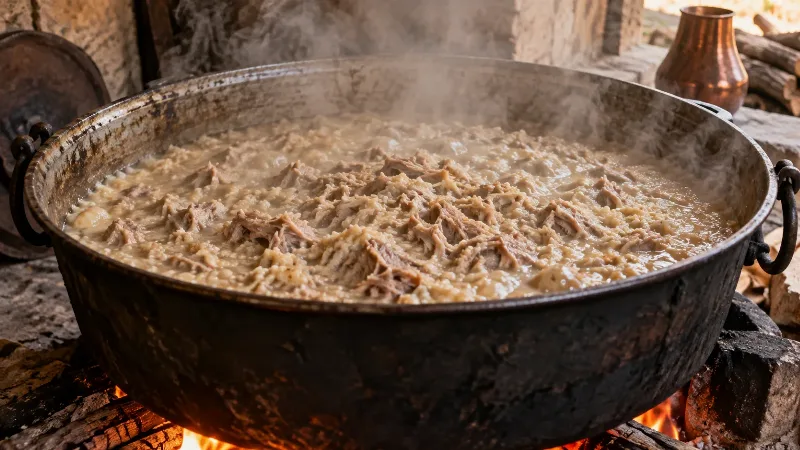
Keşkek
Keşkek is a traditional Anatolian dish made by cooking hulled whole wheat together with meat and pounding the softened mixture into a thick, dense mass. It is best known as a communal celebration food, especially at weddings.
Explore →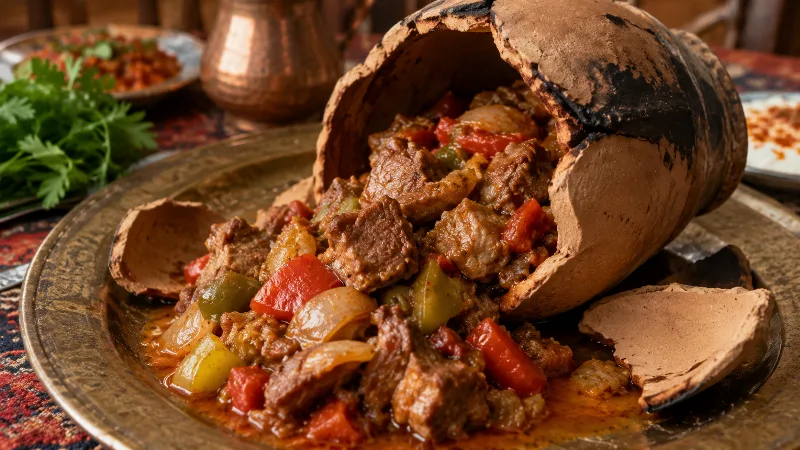
Testi Kebabı
Testi Kebabı is a traditional Turkish dish from Cappadocia where meat and vegetables are slow-cooked in a sealed clay pot that is broken open at the table. The result is tender meat and rich, aromatic vegetables.
Explore →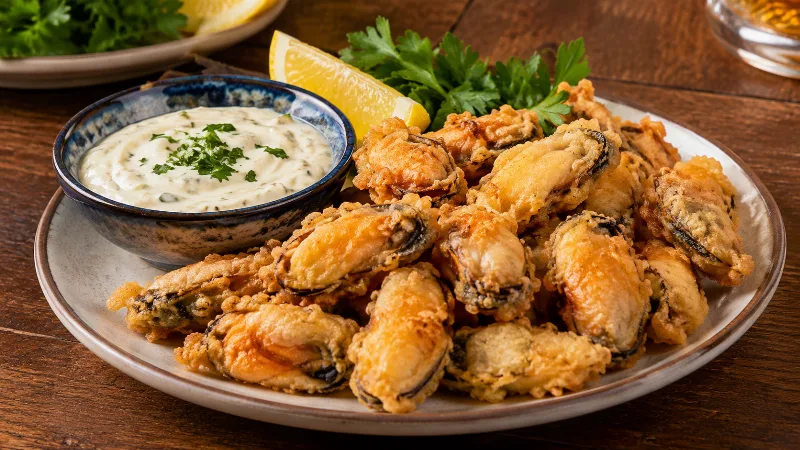
Midye Tava
Midye tava is a Turkish street food of battered, deep-fried mussels on skewers, eaten hot with tarator sauce and lemon. It is closely tied to Istanbul and the mussel-rich Marmara and Aegean coasts.
Explore →Related content
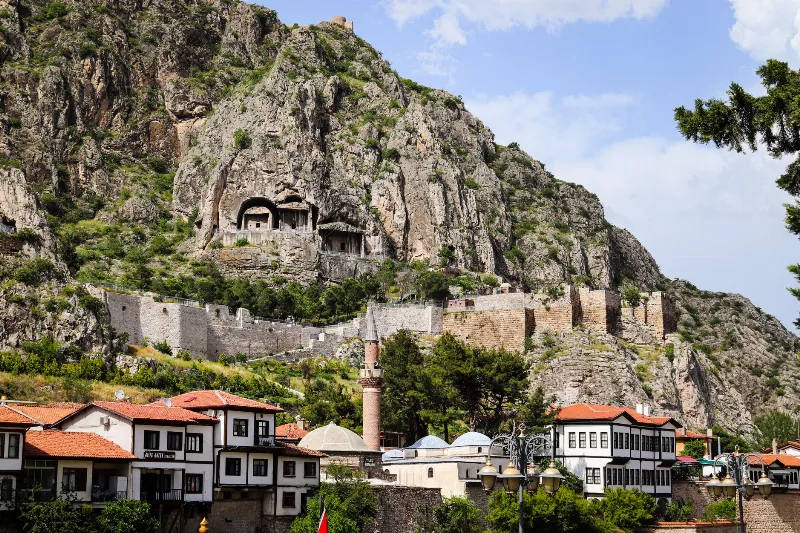
Amasya
Amasya is a river city in the interior of Türkiye's Black Sea region, where Pontic rock tombs, Ottoman riverside mansions and apple orchards sit along the narrow valley of the Yeşilırmak.
Amasya Apples
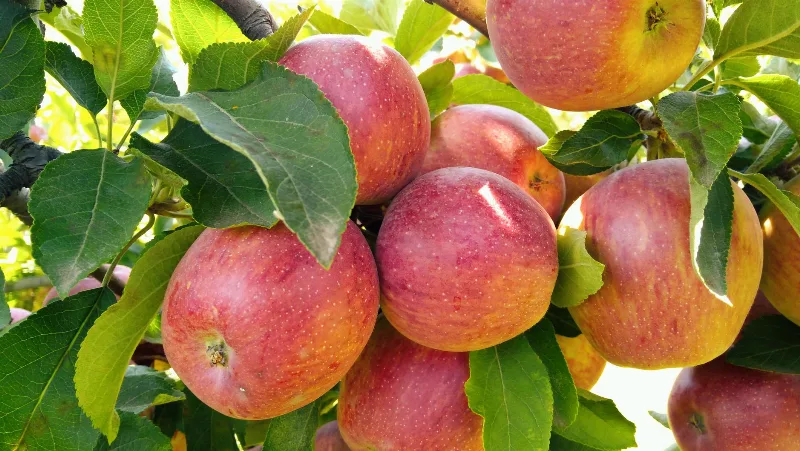
Amasya apples are apples grown in the sheltered river valleys of Amasya province in northern Türkiye, where cold winters and warm summers shape fruit known for its firm, crisp bite and balanced sweet-tart flavour.
Amasya's Ottoman Houses
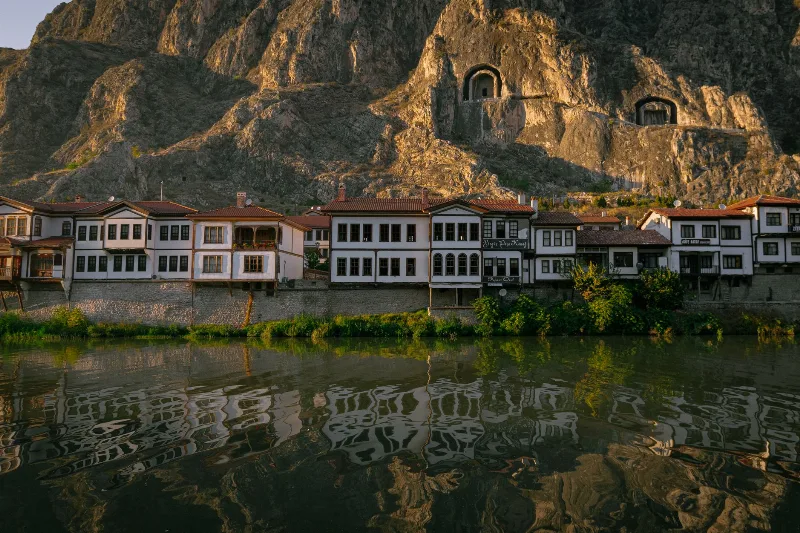
Amasya, set in a river valley in Türkiye's Black Sea region, preserves a remarkable row of Ottoman-era houses along the Yeşilırmak River. Their timber bay windows, courtyards and whitewashed façades reveal how a prosperous Anatolian town once lived.
The Timeless Beauty of Amasya's Ottoman Houses
A look at the historic Ottoman houses of Amasya in northern Türkiye, from their riverside setting and timber construction to the gardens and rooms that shaped daily life along the Yeşilırmak.
Yalıboyu Houses and Riverfront Architecture in Amasya
A row of Ottoman houses lines the Yeşilırmak in Amasya, where stone lower storeys and projecting timber upper floors have shaped the town's riverside character for generations.
5-Day Black Sea Coast Route
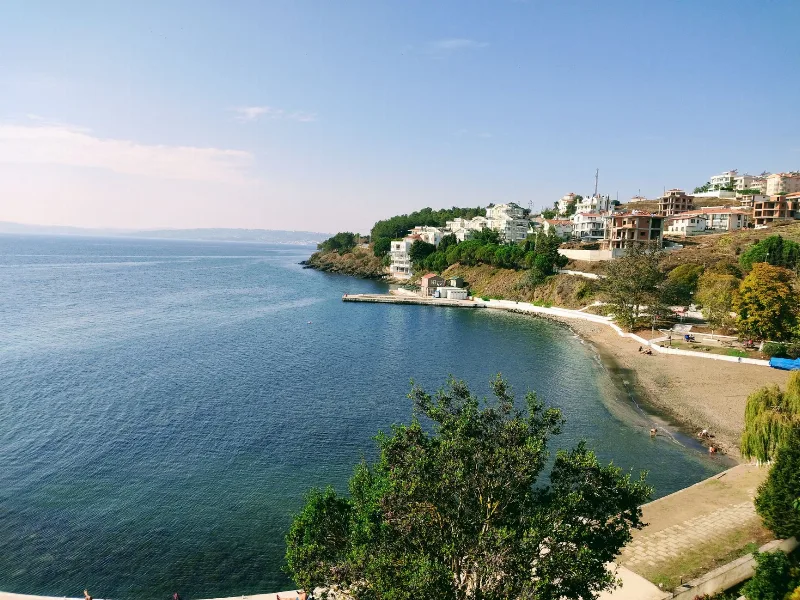
A five-day linear journey along Türkiye's central and eastern Black Sea coast, from Sinop to Trabzon, with an inland detour to Amasya and stops in Ordu and Giresun along the way.