
Lake Salda
Lake Salda is a deep, closed-basin lake in Burdur Province, Türkiye, known for its white shores and turquoise water. Its pale sediment and unusual water chemistry set it apart from other Turkish lakes.
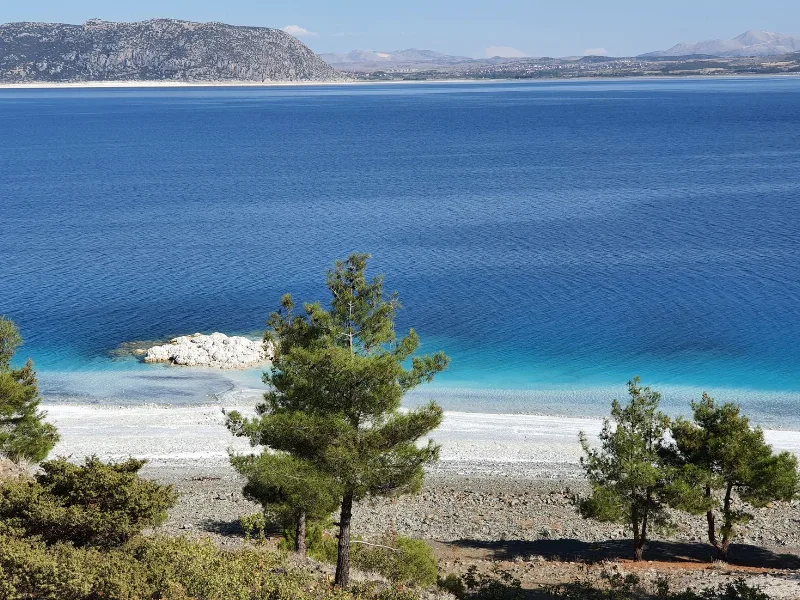
Lake Salda (Salda Gölü) is a closed-basin lake in the Yeşilova district of Burdur Province, in southwestern Türkiye. It lies at roughly 1,140 metres above sea level within a depression framed by the western Taurus Mountains, and it is among the deepest lakes in the country. The lake is commonly described as a crater lake, and it is best known for water that ranges from deep blue to pale turquoise and for shorelines of striking white material. That colour and those pale margins come from the lake's unusual water chemistry rather than from any warm or tropical setting.
Where the Lake Sits
Salda occupies a basin in the Yeşilova district, close to the small settlement of Salda. The surrounding land rises into forested hills and mountain slopes, so the lake reads as a broad, deep hollow set into an upland landscape rather than as part of a river valley. Because the basin has no outflow, Salda is an endorheic lake: water arrives through rainfall, snowmelt, groundwater and small streams, and leaves mainly through evaporation. This closed drainage is central to how the lake behaves and to why its water and sediments have developed the character they have.
Water Chemistry and the White Shores
The water of Lake Salda is alkaline and rich in dissolved minerals, particularly magnesium. This chemistry supports the formation of hydromagnesite, a magnesium-bearing mineral that accumulates as pale sediment along parts of the shore. The result is the white, sand-like ground that gives the lake much of its visual identity. The deposits are not ordinary beach sand; they are mineral sediments formed within the lake system itself. Alongside these deposits, microbial communities build layered structures on the lake floor, and the combination of clear water, mineral sediment and microbial activity is what makes Salda environmentally distinctive.
The Lake's Scientific Interest
Salda's mineral sediments and microbial structures have drawn attention from researchers studying comparable features on other planets. The lake has been used as a terrestrial reference point in the study of Jezero Crater on Mars, where similar magnesium-rich deposits and layered structures have been identified. This does not make the lake an exotic or artificial place; it simply means that its geology and microbiology are informative well beyond the region around Burdur.
Surrounding Landscape and Vegetation
The slopes around the lake are largely covered with coniferous forest, with pine woodland extending across the higher ground and along much of the shoreline's backdrop. The contrast between the dark green forest, the pale mineral shores and the deep tones of the water is the defining visual character of the area. Reeds and other wetland vegetation occur where the shoreline is flatter and where small streams enter the lake. These marginal habitats support waterfowl and other birds, and the lake and its immediate surroundings function as a habitat as well as a landscape feature.
How the Lake Changes Through the Year
Salda sits at a moderate upland elevation, so it experiences a continental-influenced pattern: warm, dry summers and cold winters, with snow falling on the surrounding higher ground. In spring, snowmelt and rainfall feed the basin, and the landscape around the lake turns green. Summer brings clear skies and strong light, when the water's colour is at its most vivid against the white shores. Autumn reduces the number of visitors and softens the light, while winter can bring cold conditions and snow on the hills, changing the appearance of the whole basin. Because the lake is large and deep, its water responds slowly to short-term weather changes, but the look of the shoreline and the surrounding slopes shifts clearly with the seasons.
Reaching and Exploring the Area
The lake is reached through the Yeşilova district, and road access connects the area with Burdur to the northeast and with the wider Denizli region to the west. The nearest settlements are small, and the approach passes through farmland and forest before the basin opens up. On foot, the terrain around the lake varies: flatter ground near the shoreline and steeper, forested slopes further back. Visitors generally move along the accessible shore areas and the open ground near the water's edge rather than across the whole perimeter, and the physical conditions of any given stretch depend on the local slope and vegetation.
Practical Conditions to Keep in Mind
Salda is a protected natural area, and its mineral sediments and microbial structures are sensitive to disturbance. The pale shoreline material is not simply sand and does not recover quickly if it is removed or trampled repeatedly. Water conditions are shaped by the lake's mineral content, and the shoreline is not a conventional swimming beach. Weather at this elevation can change, summer sun is intense and winter cold is real, so conditions are worth checking before travelling. The area is best understood as an upland natural landscape to be observed carefully rather than a resort setting.
Related Natural Places Nearby
The lake lies within a wider region of mountains, forest and inland water in Burdur and neighbouring provinces. The surrounding highlands, forested slopes and small upland lakes of the western Taurus form the broader natural context in which Salda sits, and they help explain why the basin here is cooler and more mountainous than the coast far to the south. Salda's combination of depth, closed drainage, magnesium-rich water and white mineral shores makes it difficult to confuse with any other lake in Türkiye.
Beaches & bays
See the coast →
Related content
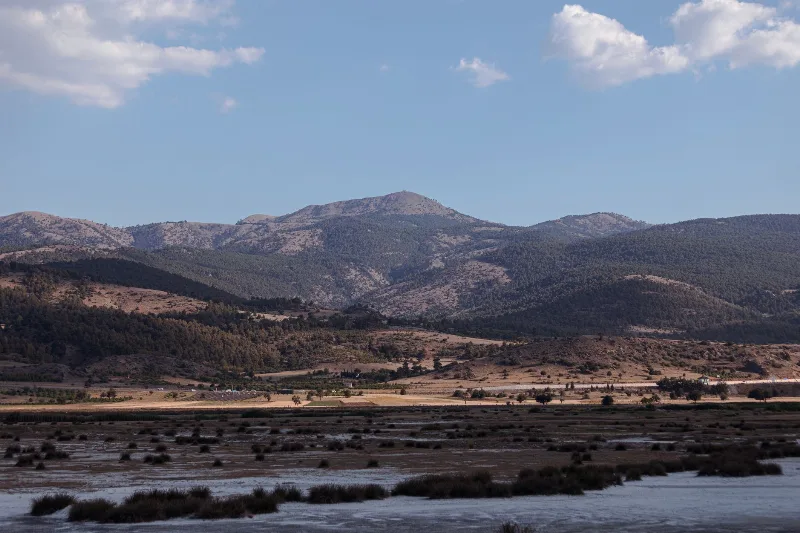
Burdur
Burdur is a provincial capital in southwestern Türkiye, set in the inland Lakes District beside a large saline lake and known for the Roman ruins of Sagalassos and one of Anatolia's oldest Neolithic settlements.
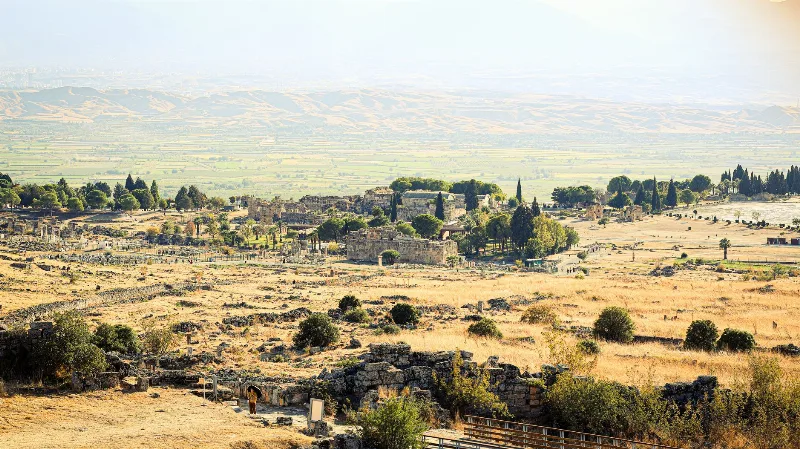
Denizli
Denizli is the inland capital of Denizli Province in Türkiye's Aegean region, known internationally for the Pamukkale travertine terraces and ancient Hierapolis, and at home as a major textile city with its own long-crowing rooster breed.
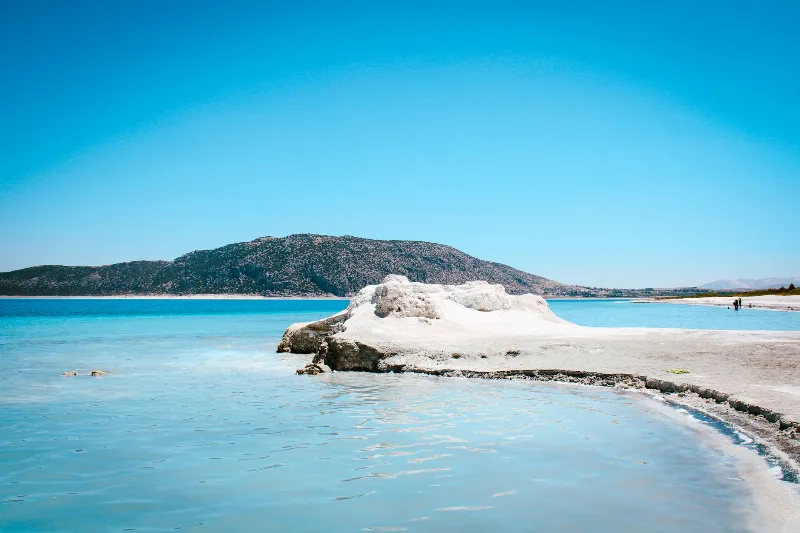
Lake Salda
Lake Salda is a striking lake in Burdur Province, southwestern Türkiye, known for its turquoise water, bright white hydromagnesite beaches and rare microbial stromatolites that draw both nature visitors and planetary scientists.
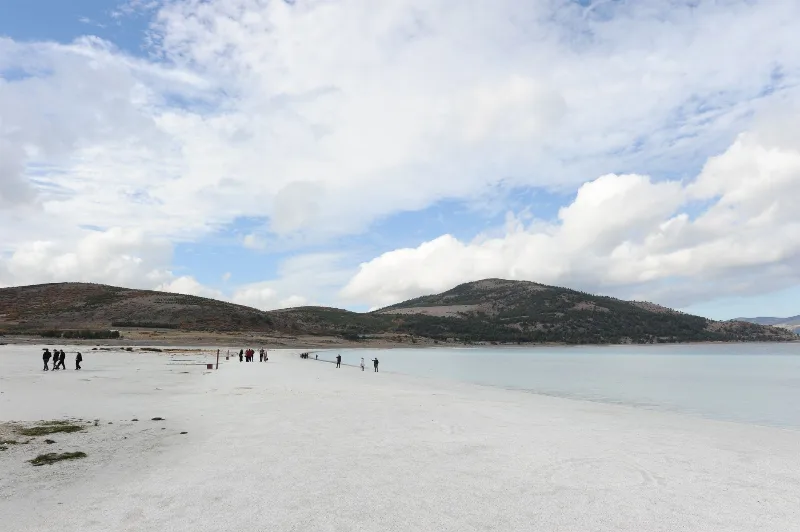
Lake Burdur
Lake Burdur is a large tectonic soda lake in Burdur Province, south-western Türkiye, with strongly alkaline water, a broad shifting shoreline and international importance for wintering waterbirds. Its closed basin, mineral chemistry and retreating waterline make it one of the most distinctive inland landscapes of the Turkish Lakes Region.
The Serene Lakes of Türkiye
Türkiye’s lakes range from vast soda lakes to salt flats and freshwater basins, each offering calm landscapes and rich wildlife. This page introduces notable lakes across different regions and their seasonal character.
Pamukkale
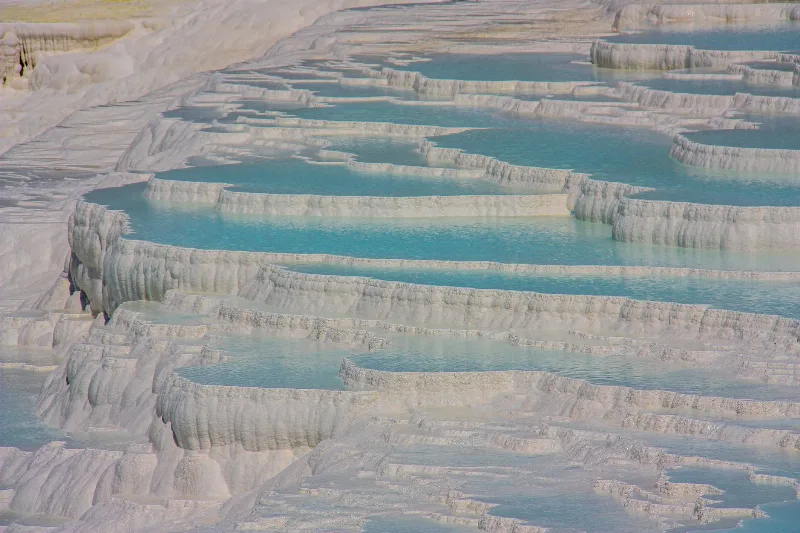
Pamukkale is a white travertine formation in Denizli Province, built up over millennia by calcium-rich thermal springs that flow down the edge of a plateau beside the ancient city of Hierapolis.