
Denizli
Denizli is the inland capital of Denizli Province in Türkiye's Aegean region, known internationally for the Pamukkale travertine terraces and ancient Hierapolis, and at home as a major textile city with its own long-crowing rooster breed.
Denizli is the administrative capital of Denizli Province, in the inner Aegean region of southwestern Türkiye. Although the province belongs to the Aegean region, the city itself lies well inland, set in a basin east of the coastal strip around Izmir, and it is one of the larger inland cities of western Anatolia. It is best known internationally for Pamukkale, the white travertine terraces formed by calcium-rich springs, and for the ancient spa city of Hierapolis that stands directly above them; the two are inscribed together as a UNESCO World Heritage Site. At the same time Denizli is a major industrial centre whose textile output — towels, bathrobes and home textiles in particular — is exported around the world, and it gives its name to the Denizli rooster, a long-crowing breed that has become a local symbol.
Geography and Setting in the Inner Aegean
Denizli occupies a broad basin drained by the Çürüksu River, part of the Büyük Menderes system that eventually reaches the Aegean Sea far to the west. The basin floor is fertile agricultural land, while mountains frame the city on several sides. To the south rises Honaz Dağı, the highest peak of the Aegean region, and other uplands separate the basin from neighbouring valleys and plains. Because the city sits inland at a moderate elevation rather than on the coast, its landscape and climate differ noticeably from the seaside towns of the Aegean, even though it shares the same region.
The surrounding countryside combines cultivated plots, orchards and vineyards with scrub-covered slopes and forested higher ground. This mix of open basin and mountain rim shapes both the city's growth and the way it connects to the wider region.
Pamukkale and Hierapolis
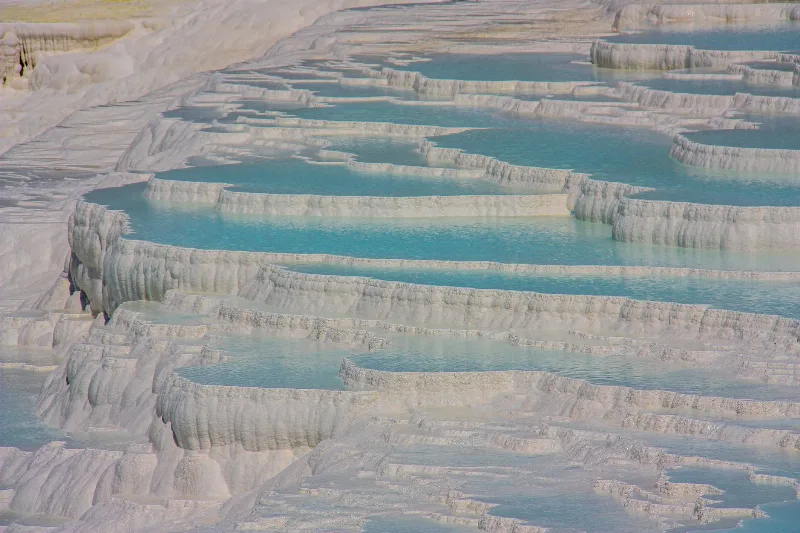
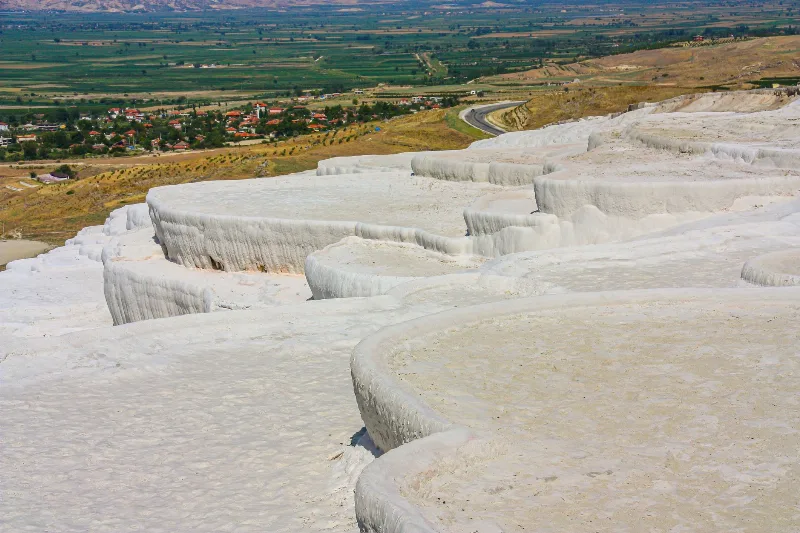
A short distance north of the city centre, thermal waters rich in calcium carbonate emerge from the ground. As the water cools on the slope, it deposits the mineral, gradually building the bright white terraced pools known as Pamukkale. The warm water has been used for centuries, and the settlement that grew around the springs is now the district of Pamukkale, which in recent decades has become a densely populated part of the wider urban area.
Above the terraces lie the ruins of Hierapolis, an ancient city founded as a spa and healing centre. Its remains include a large theatre, monumental gates, bath complexes and an extensive necropolis, and the site attracts visitors from across the world. Because Hierapolis and Pamukkale are protected as a World Heritage Site, development is carefully controlled, and the terraces are managed so that the natural formation and the archaeology can both survive. Detailed coverage of the monuments belongs with the region's historic places, while the terraces themselves are a defining feature of Denizli's identity.
A City Built on Textiles
Denizli's modern economy rests heavily on textiles. The city and its organised industrial zones produce towels, bathrobes, bed linen and other home textiles on a large scale, and the sector supports a wide network of workshops, dyeing plants and finishing facilities. This industrial base has shaped the city's growth, drawing workers from across the province and feeding a steady flow of exports. Agriculture remains important alongside manufacturing: the fertile basin yields crops, and orchards and vineyards are part of the rural landscape. The combination of factory work and farming gives Denizli a practical, working character rather than a purely touristic one.
How the City Is Organised
Denizli has expanded from a compact commercial core into a broad urban area, and since the early 2010s the central part of the province has been administered through two central districts, Merkezefendi and Pamukkale. The older heart of the city is built around busy commercial streets and a traditional market quarter, where small shops and workshops sit close together. Around this core, newer residential neighbourhoods spread outward, mixed with schools, hospitals, parks and the campus of a university that carries the Pamukkale name. The result is a city that feels distinctly Anatolian and inland, with tree-lined avenues, tea gardens and a lively daily rhythm driven by trade and manufacturing rather than by seasonal tourism.
Ancient Cities Around the Basin
Denizli's basin has been settled for millennia, and several ancient cities lie within or near the province. Among the most significant is Laodicea, an important Hellenistic and Roman city built on a rise close to the modern urban area, known in antiquity for its wealth and mentioned among the early Christian communities of Asia Minor. Nearby stood Colossae, another ancient settlement of the Lycus valley. Both belong to the wider archaeological heritage of the region and are best explored through dedicated historic-place coverage, but their presence explains why the area around Denizli has long been a crossroads rather than a remote backwater.
The Denizli Rooster
The Denizli rooster is an indigenous breed raised in and around the province, recognised for its long, drawn-out crow and its striking dark plumage with red tones. It has become a mascot of the city, appearing in public art and local celebrations, and it reflects the strong rural traditions that survive alongside Denizli's industrial economy. Alongside the rooster, regional cooking and produce — including the fruit, grapes and dairy of the surrounding countryside — form part of the area's everyday identity.
Climate and Seasonal Conditions
Because Denizli lies inland, its climate is transitional, with hot, dry summers and colder, wetter winters than the Aegean coast. Snow can reach the surrounding mountains in winter, while summer days are long and warm. Spring and autumn are generally the most comfortable seasons for walking, sightseeing and exploring the basin, and they also suit visits to the terraces and ancient sites when the heat is less intense. Summer remains the busiest period around Pamukkale, and the thermal waters are enjoyed throughout the year.
Reaching Denizli and Its Regional Role
Denizli is served by an airport and is connected to the wider country by road and rail, sitting on routes that link the Aegean coast with the interior and the lakes region further east. It functions as a gateway between the coastal Aegean and inland Anatolia, which makes it a practical base for exploring both. From the city, visitors can move easily toward the terraces and Hierapolis, the archaeological sites of the basin, the mountain slopes and the smaller district centres of the province. Understanding Denizli as an inland industrial and agricultural city — not a coastal resort — is the key to reading its landscape, its economy and the places around it.
Discover Food in Türkiye
All food →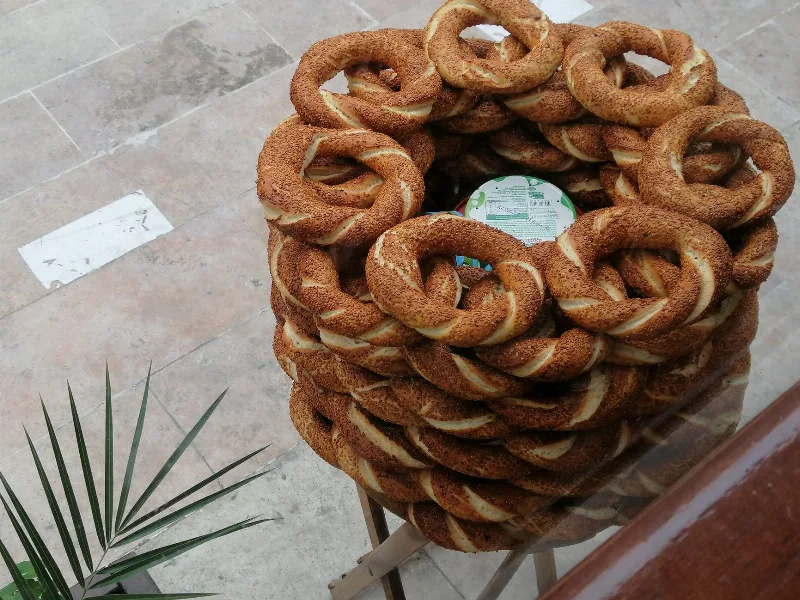
Simit
Simit is a ring-shaped Turkish bread covered in sesame seeds, strongly associated with Istanbul and sold as everyday street food. It is eaten fresh, most often with tea, and has a crisp crust around a chewy crumb.
Explore →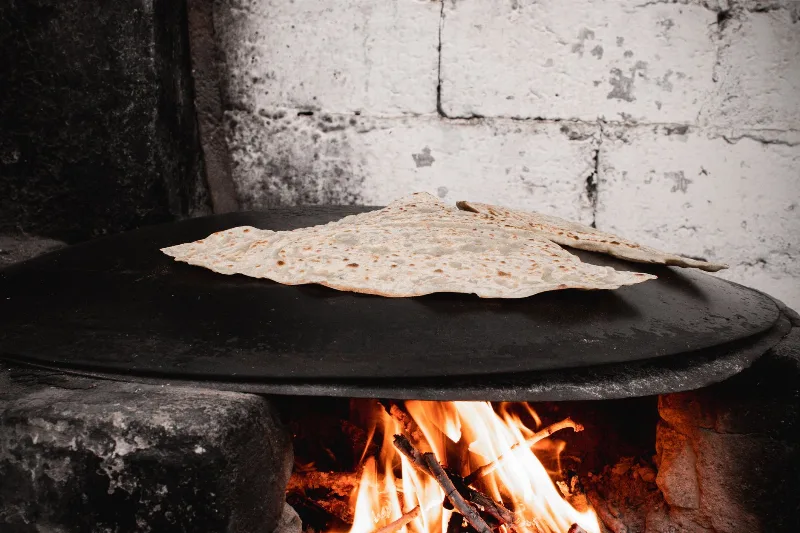
Bazlama
Bazlama is a soft, thick Turkish flatbread made from a leavened dough and cooked on a hot griddle. It is a staple of village baking across Anatolia, eaten warm with butter or used to wrap other foods.
Explore →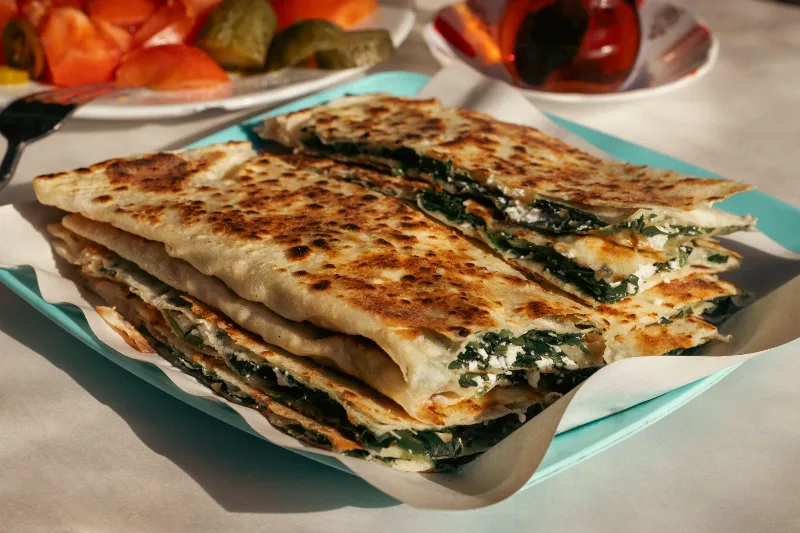
Gözleme
Gözleme is a thin, hand-rolled Anatolian flatbread folded around savory fillings such as cheese, spinach, or minced meat and cooked on a sac griddle. The article covers its regional variations, cooking method, texture, and traditional serving style.
Explore →Related content
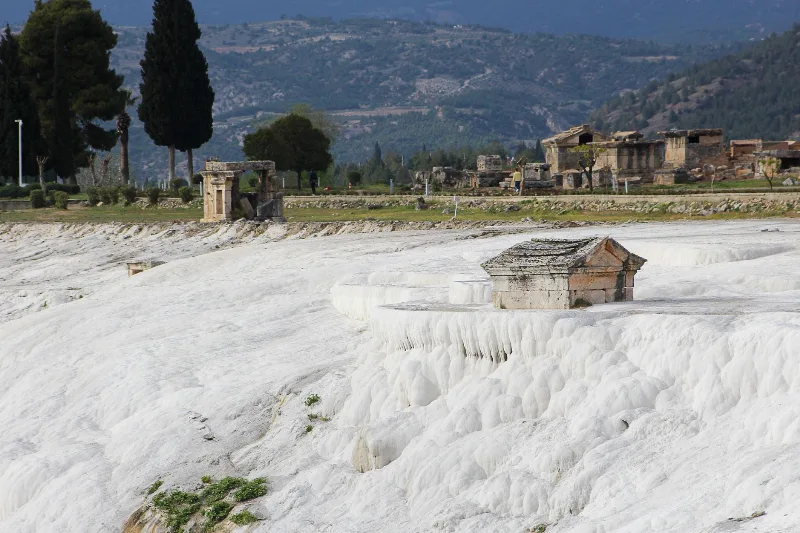
Pamukkale
Pamukkale, Türkiye'nin en etkileyici doğal harikalarından biri olarak bilinir, büyüleyici beyaz termal terasları ve antik Hierapolis kentiyle dikkat çeker.
Pamukkale
Pamukkale in Denizli province is a UNESCO World Heritage site where calcium-rich thermal water has built a cliff of white travertine terraces above the ancient city of Hierapolis. Visitors walk barefoot across the terraces, while the plateau above holds Roman baths, a theatre, the Plutonium and one of Anatolia's largest necropolises.
Pamukkale
Pamukkale is a white travertine formation in Denizli Province, built up over millennia by calcium-rich thermal springs that flow down the edge of a plateau beside the ancient city of Hierapolis.
4-Day Ephesus and Pamukkale Route
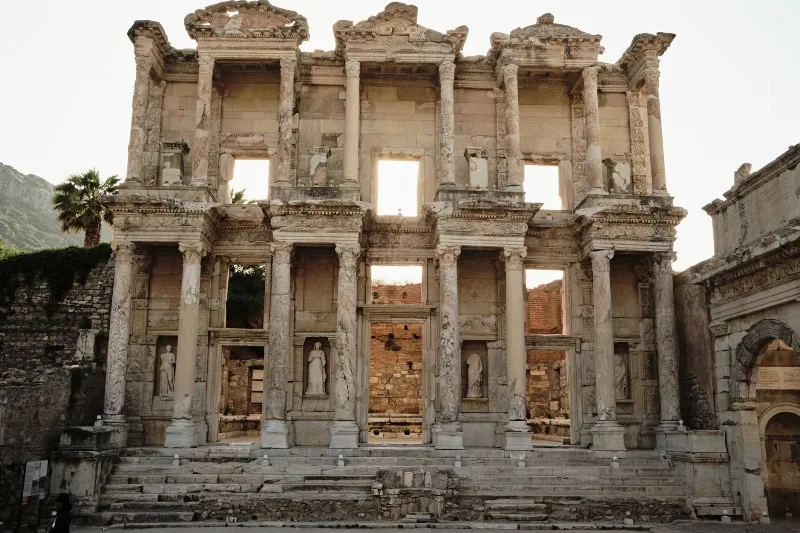
A four-day west-to-east Aegean route that links the ancient city of Ephesus and the House of Virgin Mary in Selçuk with the white travertine terraces and Hierapolis ruins at Pamukkale, near Denizli.
The Natural Wonders of Pamukkale
Pamukkale in Denizli, Türkiye, is a hillside of white travertine terraces and warm mineral springs that has been shaped by geology for millennia.
6-Day Aegean Ancient Cities Route
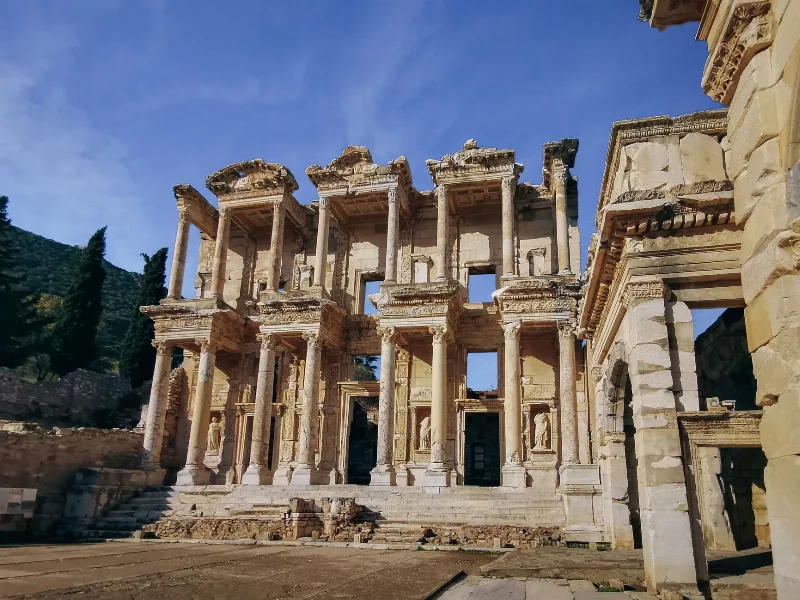
A six-day linear journey from Izmir to Denizli through the great ancient cities of the Aegean, linking Ephesus, Priene, Miletus, Didyma, Lake Bafa, Pamukkale, Laodicea and Aphrodisias in one coherent corridor.