
Pamukkale
Pamukkale in Denizli province is a UNESCO World Heritage site where calcium-rich thermal water has built a cliff of white travertine terraces above the ancient city of Hierapolis. Visitors walk barefoot across the terraces, while the plateau above holds Roman baths, a theatre, the Plutonium and one of Anatolia's largest necropolises.
Pamukkale is a natural and archaeological site in the Denizli province of southwestern Türkiye, formed by a hillside of white calcium carbonate terraces created by hot mineral springs. Directly above the terraces stands the ancient city of Hierapolis, whose ruins extend along the plateau edge. Together the travertine field and the Greco-Roman city were inscribed on the UNESCO World Heritage List in 1988 as a mixed property valued for both natural and cultural significance. The name Pamukkale means "cotton castle" in Turkish, a reference to the visual effect of the bright, layered rock when seen from the valley floor below.
Where Pamukkale Is and How the Site Is Laid Out
The site lies on the northern side of the Çürüksu valley, close to the town also called Pamukkale and roughly twenty kilometres from the centre of Denizli. The terraces occupy the face of a steep escarpment; the ancient city sits on the broad plateau immediately behind and above them. This vertical arrangement shapes every visit: the geological formation and the archaeological site are two parts of one landscape, not two separate destinations.
Access is by road from Denizli, and the site has two main entrances at different elevations. One lies at the foot of the travertine cliff, next to the settlement. The other opens onto the plateau, beside the ruins of Hierapolis. The choice of entrance largely determines the order in which a visitor experiences the site, and the walk between the lowest and highest points involves a considerable change in altitude.
How the Travertine Terraces Were Formed
The terraces are made of travertine, a sedimentary rock of calcium carbonate deposited from water. Deep circulation in a tectonically active region heats groundwater and loads it with dissolved calcium bicarbonate. When this water reaches the surface, carbon dioxide escapes into the air, the water becomes supersaturated with carbonate, and a solid mineral crust is precipitated on whatever surface the water flows over.
Because the springs emerge along the top of the escarpment, the water spreads across gentle steps and then spills over their edges. Each spillway builds a thin lip of carbonate; the lip grows, water pools behind it, and new lips form further out. Over a long period this repeated process has produced the stacked, scalloped basins that give the slope its characteristic appearance. Where water trickles down vertical faces for long periods, it leaves hanging ribbons and stalactite-like deposits rather than flat pools. The surface is stark white when dry, but the flowing water and mineral crust can appear pale blue, turquoise or grey, and dry edges sometimes darken as they oxidise.
The water leaves the springs at a temperature well above ambient, so steam is visible in cool weather. The volume and distribution of the flow has not been constant. During the twentieth century, water was diverted to serve buildings on the plateau, and parts of the terraces lost their water supply and turned brownish or grey. After the World Heritage inscription, the buildings were removed and the flow was reorganised to spread across the formation again, which is why some sections now look markedly whiter than others.
Hierapolis Above the Terraces
Hierapolis was a Hellenistic foundation, traditionally linked to the Attalid dynasty of Pergamon, and it grew into a substantial Roman and early Byzantine city. Its name, generally understood as "sacred city", reflects the presence of major sanctuaries. The urban plan follows the plateau: a long colonnaded main street runs through the settlement, interrupted by monumental gates, and public buildings cluster along it.
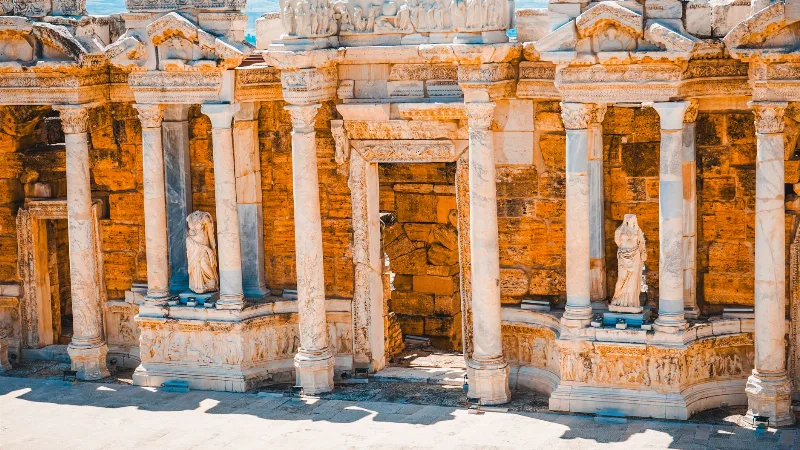
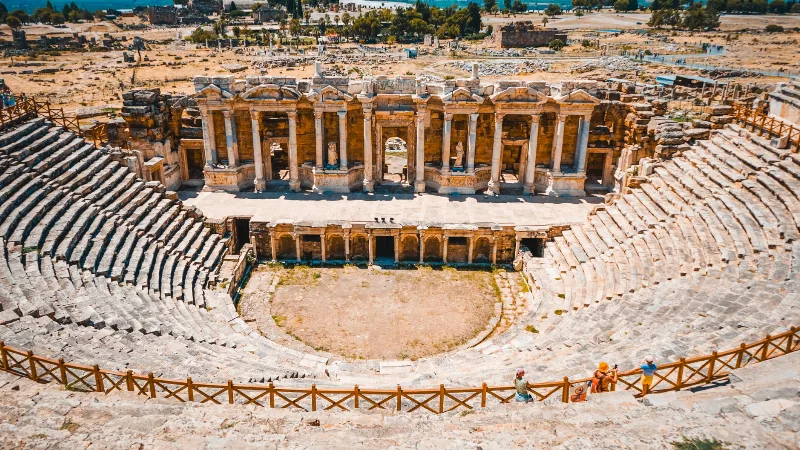
Among the structures still legible on the ground are a large Roman bath complex, a theatre with a well-preserved stage building, temples, fountains and a city wall. The bath complex now houses the site's archaeological museum. On a hill outside the city stands an octagonal martyrium associated with the apostle Philip, whose tomb tradition is tied to the city.
One of the most unusual features is the Plutonium, a small cave opening in the ground near the theatre from which carbon dioxide seeps continuously. In antiquity the emission was interpreted as the breath of a chthonic deity, and the place was used for rites connected with Pluto and Cybele. The gas is still present and the area is fenced for safety.
Beyond the city walls lies an exceptionally large necropolis, with tombs of several types: simple sarcophagi, tumuli and elaborate family grave houses. The range of burial forms, built across a long period, makes the cemetery one of the most informative archaeological zones in Anatolia.
What You Actually See and Do
Most visitors spend their time in two distinct ways. On the terraces, the activity is walking: paths cross the mineral crust, and from the upper edge there is a clear view down the valley toward the plain. On the plateau, the activity is archaeological: a walk along the colonnaded street, the theatre, the baths, the Plutonium and the necropolis.
There is also a thermal pool among fallen column drums within the ancient city, where swimming is permitted, and it is the only place on the site where bathing is possible. The pools on the terraces themselves are not for swimming; they are the active surface of the formation and are treated as a protected geological feature.
Practical Information Before You Go
Shoes must be removed to walk on the travertine. This rule protects the mineral surface, but it also affects the experience: the rock is hard, uneven and abrasive, and it becomes slippery where water is flowing. Visitors who find barefoot walking difficult should bring footwear that is easy to carry and consider limiting time on the crust itself.
The site is large and largely without shade, and the white rock reflects sunlight strongly. Water, sun protection and a hat matter more here than on a typical ruin site. Walking from the lower entrance to the plateau involves a sustained climb; entering from the upper gate and descending is less strenuous, though the return to the upper gate is then uphill.
The terraces are extremely popular and can be very crowded in the middle of the day. Early morning and late afternoon are generally quieter and give better light on the rock. Visitors should stay on marked routes, keep off closed sections, and avoid touching or breaking the mineral edges.
Seasonal Conditions and the Best Time to Visit
Spring and autumn are the most comfortable periods, with moderate temperatures and reliable flow across the terraces. Summer brings strong heat and intense glare from the white surface, and the barefoot walk across the crust in the middle of the day can be genuinely uncomfortable. Winter is cold on the plateau and snow occasionally settles on the travertine, but the springs continue to run and the contrast between snow and steaming water is one of the site's lesser-known aspects. Rainfall affects how much of the surface is wet and how reflective it appears, so the visual character of the site changes noticeably through the year.
Related Places in the Surrounding Area
The Denizli region holds several sites that pair naturally with a visit to Pamukkale. Laodikeia, another major ancient city of the Lykos valley, lies a short distance away and shares the same geological setting of thermal activity and river plains. The village of Karahayıt, near Pamukkale, is known for thermal springs with a reddish mineral content, quite different in appearance from the white travertine. Further afield, Aphrodisias is one of the most extensively excavated ancient cities in the region, and the mound of Colossae near Honaz represents a settlement of a different, older tradition. The city of Denizli itself, Mount Honaz and the upper reaches of the Büyük Menderes valley give the area its wider geographical context.
Related content
Denizli
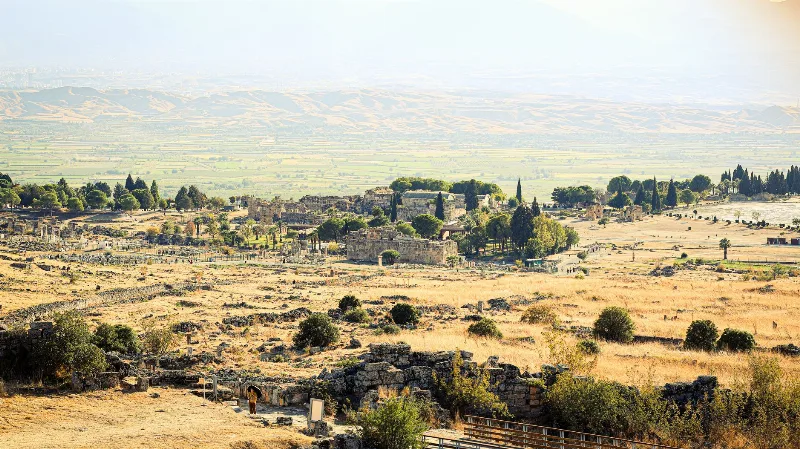
Denizli is the inland capital of Denizli Province in Türkiye's Aegean region, known internationally for the Pamukkale travertine terraces and ancient Hierapolis, and at home as a major textile city with its own long-crowing rooster breed.
Hierapolis
Hierapolis is an ancient city in Denizli Province, Türkiye, built beside the hot springs and travertine terraces of Pamukkale. Its Roman theatre, vast necropolis, baths and the sanctuary of Apollo make it one of the most extensively preserved Greco-Roman cities in Anatolia and a UNESCO World Heritage Site.
Hierapolis
Hierapolis is an ancient Graeco-Roman city built directly on the plateau above the travertine terraces of Pamukkale in southwestern Türkiye. Its thermal springs, the Plutonium, the necropolis and the martyrion of Philip made it one of the most distinctive sanctuaries of the ancient world.
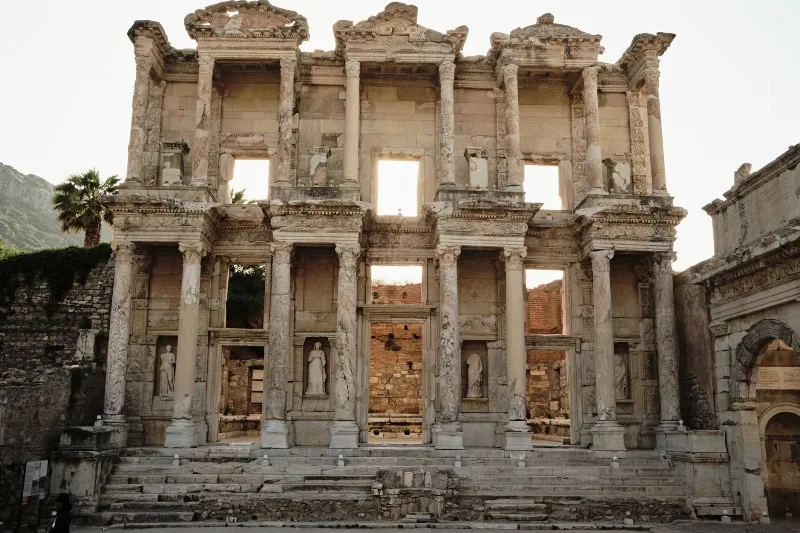
4-Day Ephesus and Pamukkale Route
A four-day west-to-east Aegean route that links the ancient city of Ephesus and the House of Virgin Mary in Selçuk with the white travertine terraces and Hierapolis ruins at Pamukkale, near Denizli.
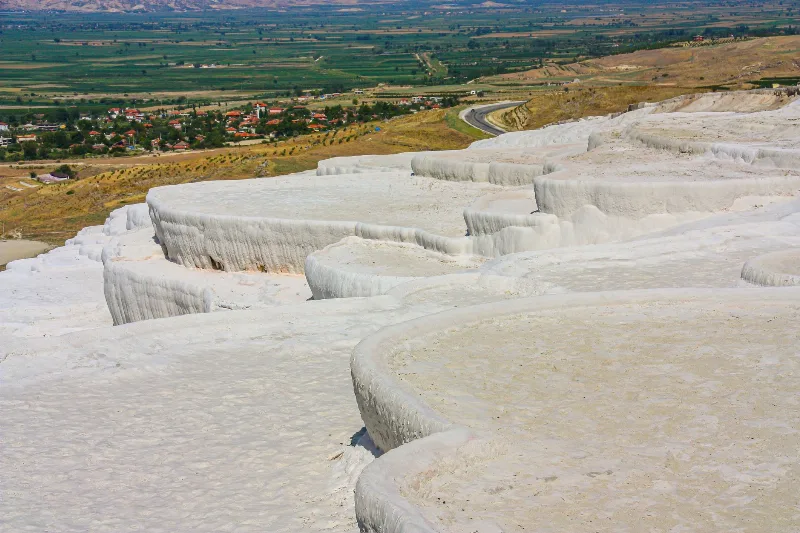
The Natural Wonders of Pamukkale
Pamukkale in Denizli, Türkiye, is a hillside of white travertine terraces and warm mineral springs that has been shaped by geology for millennia.
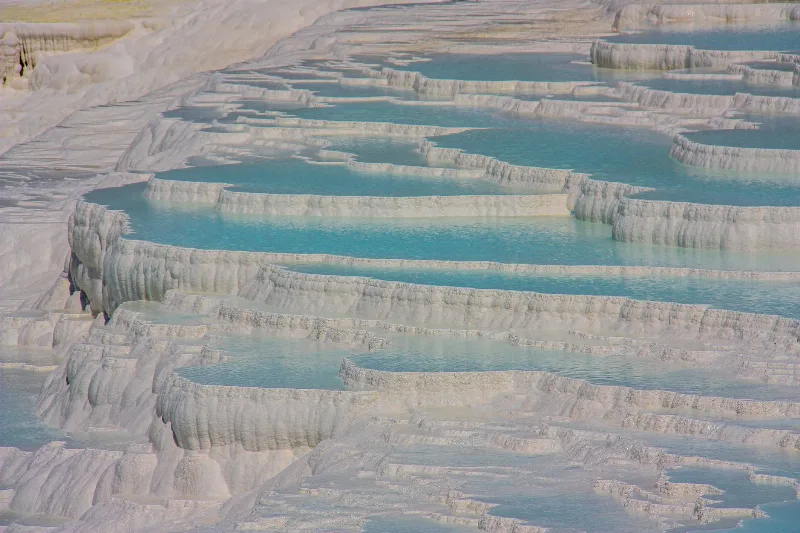
Pamukkale
Pamukkale is a white travertine formation in Denizli Province, built up over millennia by calcium-rich thermal springs that flow down the edge of a plateau beside the ancient city of Hierapolis.