
Lake Salda
Lake Salda is a striking lake in Burdur Province, southwestern Türkiye, known for its turquoise water, bright white hydromagnesite beaches and rare microbial stromatolites that draw both nature visitors and planetary scientists.
Lake Salda is a lake in the Yeşilova district of Burdur Province, in southwestern Türkiye. It stands out for water that shifts between deep blue and pale turquoise, beaches of unusually bright white sand, and the presence of stromatolites — layered structures built by microbial communities. Because of these features, the lake has become a recognised natural site, protected as a special environmental area and studied by geologists and astrobiologists as well as visited by travellers.
What Lake Salda Actually Is
Salda is a closed basin lake, meaning it has no significant surface outlet. It is fed mainly by rainfall, snowmelt and underground springs, and its water is slightly alkaline. The lake is often described as a crater lake, and it sits within a landscape shaped by tectonic movement and the dissolving of limestone, which together formed the basin it occupies today. It is counted among the deeper lakes of Türkiye, and its clarity and colour come partly from the minerals dissolved in the water and partly from the pale sediment along the shore.
Where It Sits in the Landscape
The lake lies in a basin surrounded by hills and modest mountains, with the town of Yeşilova close to its southern shore. The nearest larger city is Burdur, the provincial capital, and the wider region sits between the Burdur basin and the Denizli direction to the west. Two small islands lie close to the shore, adding to the visual character of the lake. The surrounding terrain is dry and lightly wooded in places, which makes the whiteness of the shoreline and the colour of the water stand out sharply against the setting.
The White Sand and Why It Looks Like This
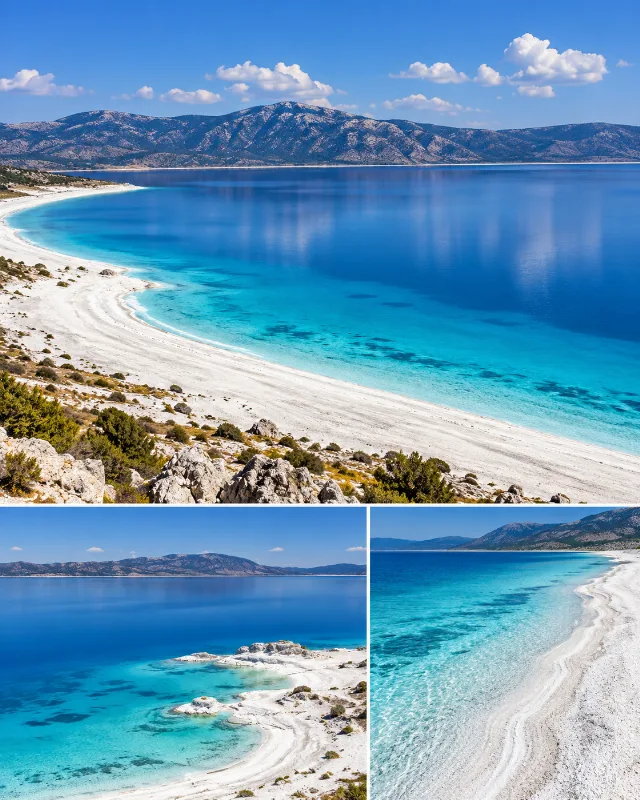
The beaches are not ordinary quartz sand. The pale material is rich in hydromagnesite, a magnesium carbonate mineral that forms through chemical processes linked to the lake's water chemistry. This mineral content gives the shore its brightness and its soft, almost chalky appearance, and it is the main reason the setting is frequently compared to tropical coastlines. The whiteness is not decorative but geological: it is a direct product of the same mineral system that makes the lake scientifically important.
Stromatolites and the Connection to Mars
One of the most distinctive aspects of Lake Salda is the presence of stromatolites — layered, mound-like structures created by microbial mats, mainly cyanobacteria, that trap and bind sediment over long periods. Such structures are among the oldest known traces of life on Earth. The combination of microbial structures and hydromagnesite-rich sediments at Salda has attracted researchers studying how similar features might have formed in ancient environments on other planets, and the lake is used as a terrestrial analogue in planetary research. For a visitor, this means the shoreline and shallow sediments are not simply scenery but an active natural laboratory, which is precisely why access to some parts of the lake is controlled.
What You Can See There
- Wide, bright white stretches of shore where the hydromagnesite sand meets the water.
- Water that changes colour through the day depending on light, depth and the angle of the sun.
- Two small islands visible near the shoreline.
- Shallow areas where the microbial and mineral structures occur.
- Waterbirds and other wildlife around the lake, particularly in quieter seasons.
The lake and its margins also support a range of birdlife, and the area functions as a stop and breeding site for several waterbird species depending on the season.
Access and Practical Visiting Information
Salda is reached by road, with Yeşilova serving as the nearest town and Burdur as the closest city. Visitors generally arrive by private car or organised transport, as the lake is not a large urban centre with dense public transport. Much of the shoreline is managed as a protected area with defined visitor zones, so entry and movement are channelled through designated areas rather than being open everywhere. Purpose-built walking paths, viewing points and a managed beach area exist on the popular side of the lake.
Because the ecosystem is sensitive, a few rules matter. Collecting sand, rocks or water, walking into protected sediment zones, and leaving litter can all be restricted or prohibited. Some zones are fenced or signposted for ecological reasons, and these should be respected.
Seasonal Conditions and Timing a Visit
Spring and early summer are generally the most comfortable periods, with mild temperatures and clearer conditions. Summer brings warm weather and the largest number of visitors, particularly in July and August. Winters in the Burdur region are cold, and snow can fall around the lake basin, giving a very different and much quieter experience. It is worth knowing that the lake's water level varies over time and has come under pressure from drought and water extraction in dry years, so the shoreline can look noticeably different from one visit to the next.
Terrain and Getting Around the Shore
The managed visitor area is relatively easy to walk, with paths and platforms suitable for most people. Away from these zones, the ground can be uneven, and the protected margins should not be crossed. The lake itself is deep and its water is cold for much of the year, so swimming is not a casual activity and may be restricted in protected sections. Sturdy shoes are useful if you plan to explore the accessible paths beyond the main beach area.
Things to Know Before You Go
- The white material is a mineral sediment, not imported sand; removing it is prohibited.
- Protection zones exist to safeguard microbial structures, so stay within marked areas.
- The colour of the water is most striking on clear, sunny days.
- Facilities are concentrated around the main managed area rather than spread along the whole shore.
- Weather in the surrounding highland can change quickly, so layered clothing helps.
Nearby Places of Interest
Lake Salda fits naturally into a wider route through the region. The city of Burdur offers a base with its own museum and historic fabric, while the town of Yeşilova is the immediate local centre. To the west, Pamukkale and the nearby ancient site of Hierapolis in Denizli Province lie within the same broader travel area. Further afield, the archaeological site of Sagalassos and the lakes of the Turkish lakelands region make logical additions for anyone exploring southwestern Anatolia by road.
Related content
Burdur
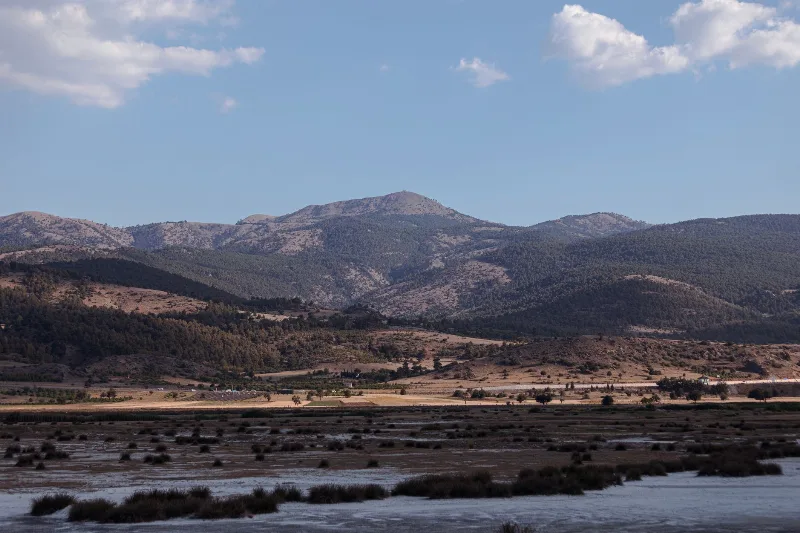
Burdur is a provincial capital in southwestern Türkiye, set in the inland Lakes District beside a large saline lake and known for the Roman ruins of Sagalassos and one of Anatolia's oldest Neolithic settlements.
Denizli
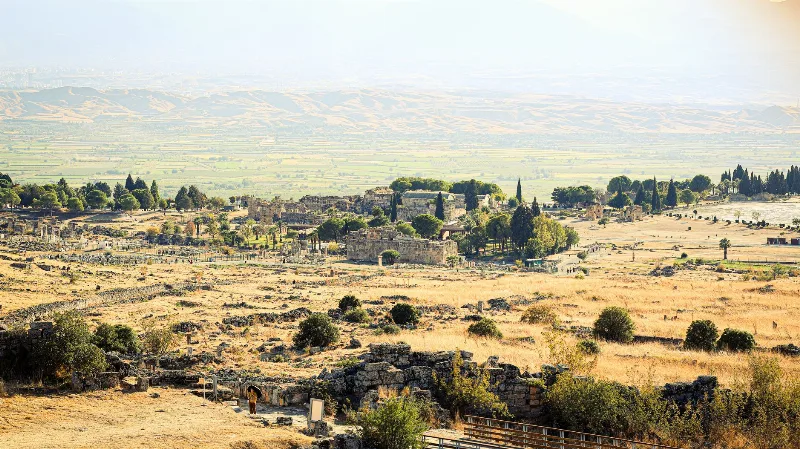
Denizli is the inland capital of Denizli Province in Türkiye's Aegean region, known internationally for the Pamukkale travertine terraces and ancient Hierapolis, and at home as a major textile city with its own long-crowing rooster breed.
Pamukkale
Pamukkale, Türkiye'nin en etkileyici doğal harikalarından biri olarak bilinir, büyüleyici beyaz termal terasları ve antik Hierapolis kentiyle dikkat çeker.
Pamukkale
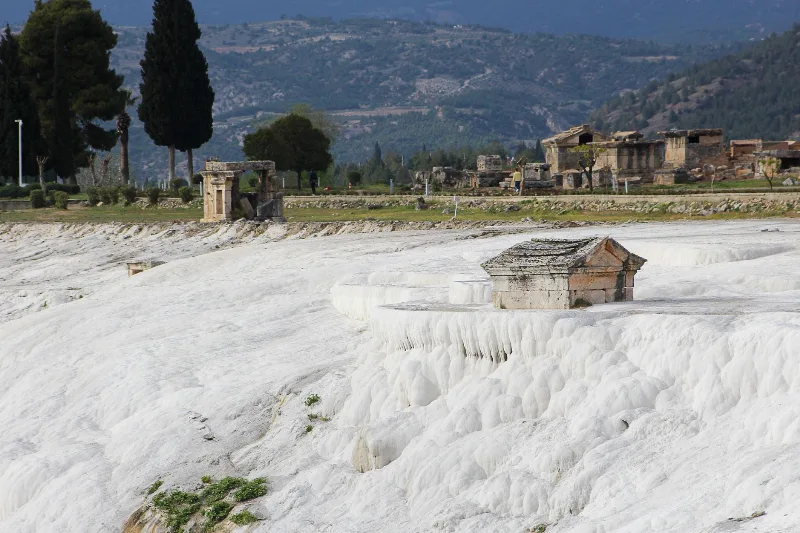
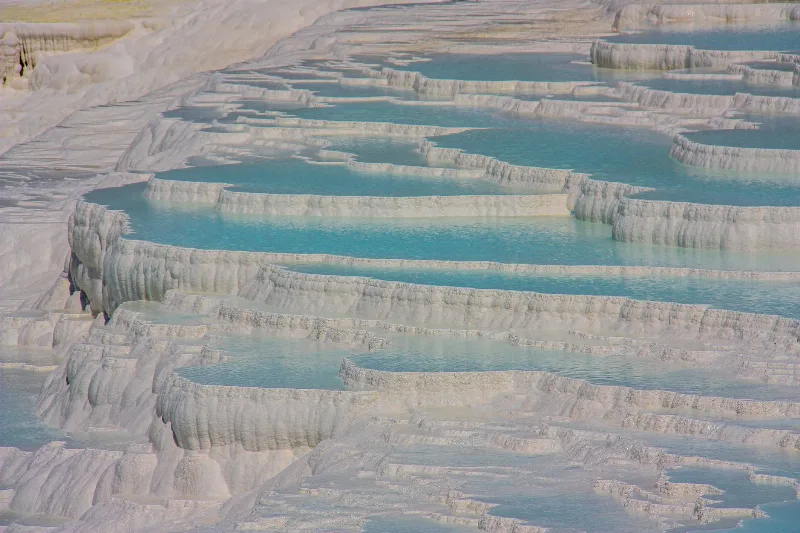
Pamukkale is a white travertine formation in Denizli Province, built up over millennia by calcium-rich thermal springs that flow down the edge of a plateau beside the ancient city of Hierapolis.
Lake Salda
Lake Salda is a deep, closed-basin lake in Burdur Province, Türkiye, known for its white shores and turquoise water. Its pale sediment and unusual water chemistry set it apart from other Turkish lakes.
Lake Burdur
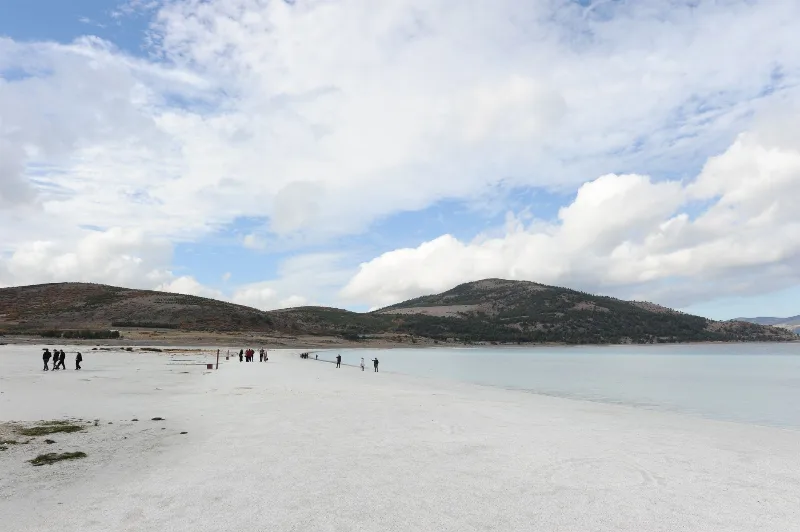
Lake Burdur is a large tectonic soda lake in Burdur Province, south-western Türkiye, with strongly alkaline water, a broad shifting shoreline and international importance for wintering waterbirds. Its closed basin, mineral chemistry and retreating waterline make it one of the most distinctive inland landscapes of the Turkish Lakes Region.