
Kalkan Beach
Kalkan Beach is a small pebble shore on Türkiye's Lycian coast, where clear Mediterranean water meets a stony bay beneath steep coastal hills.
Kalkan Beach occupies a narrow, sheltered corner of the shoreline at Kalkan, a small settlement on Türkiye's Lycian coast where the land falls sharply toward the Mediterranean. The beach is a pebble-covered strip that follows the curve of a bay, and its character comes as much from the surrounding coastal hills and the transparency of the sea as from the stones beneath the surface. It is one of the points along this part of the coast where the shoreline sits directly against the built-up area, yet the sea, the seabed and the surrounding natural forms remain the defining features of the place.
The Water and the Seabed
The sea at Kalkan Beach is typically clear, with a turquoise tone over the shallowest ground that gradually shifts to a deeper blue further from the shore. Because the bay is partly enclosed by rocky headlands on either side, the water surface is often relatively smooth, though this naturally varies with wind, weather and season. The seabed near the beach is made up of pebbles and stones rather than sand, and it shelves away from the waterline at a noticeable angle, so the depth increases fairly quickly within a short distance of the edge. This stony floor contributes to the clarity of the water, since there is little fine sediment to cloud it. On calm days the surface reflects the sky and the surrounding hills; when the wind rises, small waves shift the stones at the water's edge and the colour of the sea becomes more muted.
The Shoreline and Beach Shape
The beach itself is a relatively short strip of rounded stones, varying in size from small pebbles to larger cobbles. Their colours range through pale grey, white and beige, with darker stones mixed in, and they are smooth from continuous movement in the surf. The beach follows the natural curve of the bay, narrowing and widening with the shape of the land behind it, and in places the pebbles give way to bare rock at the waterline. There is little level ground between the sea and the rising slope, so the usable shore is limited in width. At the water's edge, the pebbles form a steep, shifting bank that changes slightly with each tide and swell, an effect typical of stony Mediterranean beaches.
The Surrounding Coastal Landscape
Behind the beach the terrain rises steeply. The immediate backdrop is formed by hills covered with Mediterranean scrub, scattered pines and low, drought-tolerant vegetation that stays green through much of the year and turns drier in high summer. Rocky outcrops and small cliffs interrupt the vegetation, and the coastline around the bay is a mix of stone shores, narrow inlets and protruding headlands. The hills are part of the broader limestone landscape of the region, shaped by weathering into ridges and gullies that drop toward the sea. From the water, the beach reads as a small opening in an otherwise rugged shoreline, framed by slopes that descend almost to the water's edge.
Geographic Setting
Kalkan Beach lies on the Mediterranean coast of Antalya Province, in the Kaş district of southern Türkiye, within the region commonly described as the Lycian coast. This is a stretch where the Taurus Mountains meet the sea, producing a shoreline of bays, coves and steep rocky slopes rather than long, flat sands. The beach faces the open Mediterranean across the bay, and the surrounding geography — the deep water close to shore, the abrupt hills, the absence of a broad coastal plain — is characteristic of this part of the Turkish south coast. The settlement of Kalkan sits on the slopes above and around the bay, so the beach is embedded in a landscape where natural and built elements are close together, though the sea and the coastal landforms remain the dominant visual elements.
Terrain and Physical Character
The physical character of the beach is determined by its pebbly surface and its steep underwater profile. Walking on the stones requires reasonable footwear or care, and entering the water means crossing a bank of shifting pebbles before reaching deeper ground. The slope continues below the waterline, which means the seabed drops away relatively soon after entry. There is no wide, flat expanse of sand here; instead, the shore is compact, stony and shaped by the movement of the sea against the base of the surrounding hills. These conditions give the location a distinct feel compared with sandy beaches elsewhere on the Turkish coast.
Atmosphere and Seasonal Change
The atmosphere at Kalkan Beach is shaped by light, exposure and the pronounced seasonal rhythm of the eastern Mediterranean. In spring and autumn, the light is softer and the hills retain more moisture, with greener tones across the slopes. In summer, the sun is strong, the stones become warm and the sea takes on a brighter, more saturated colour, while the surrounding vegetation dries to shades of olive and brown. Evenings bring longer shadows across the bay as the sun sets behind the hills, and the water often turns darker and smoother. Because the beach is small and faces open sea, its appearance changes noticeably with weather: a calm day reveals the clarity of the seabed, while stronger winds create choppier water and a rougher shoreline. This variability is part of the natural identity of the location, which remains a compact pebble shore set within a rugged, hilly coastal environment.
Remarkable places
All places →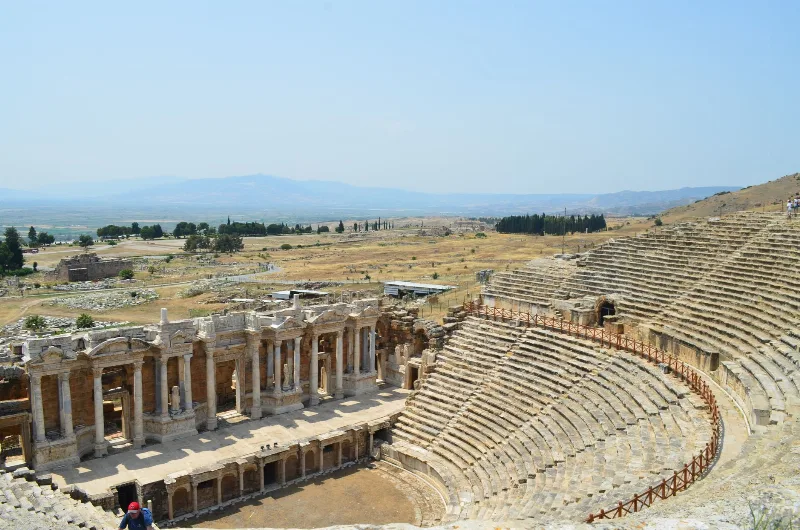
Letoon
Letoon is a Lycian sanctuary near Xanthos in Muğla Province, dedicated to Leto, Artemis and Apollo. Its three temples, theatre and trilingual inscription make it one of southwestern Turkey’s most significant archaeological sites.
Explore →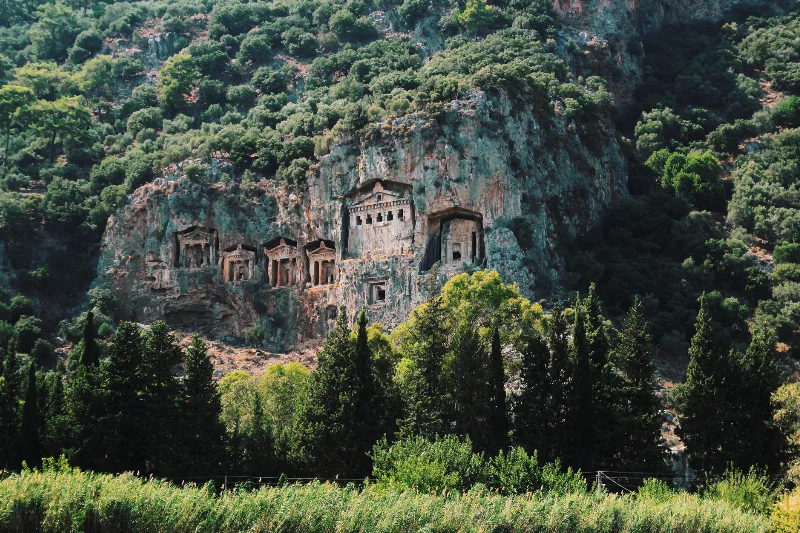
Kaunos
Kaunos is an ancient Carian city on the Dalyan River in Muğla Province, known for its temple-style rock-cut tombs and the extensive ruins of a harbour that silted up centuries ago.
Explore →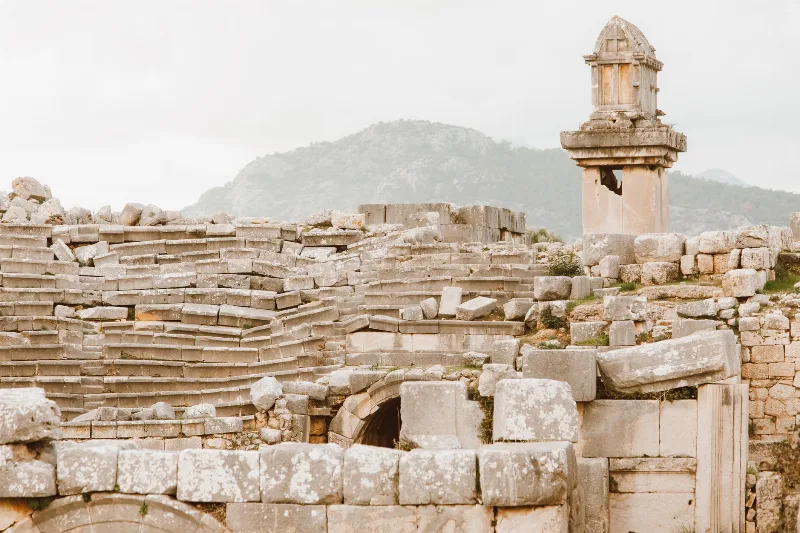
Xanthos
Xanthos is an ancient Lycian city in Antalya Province and a UNESCO World Heritage Site, known for its Lycian tombs, Roman theatre and role as a leading city of Lycia.
Explore →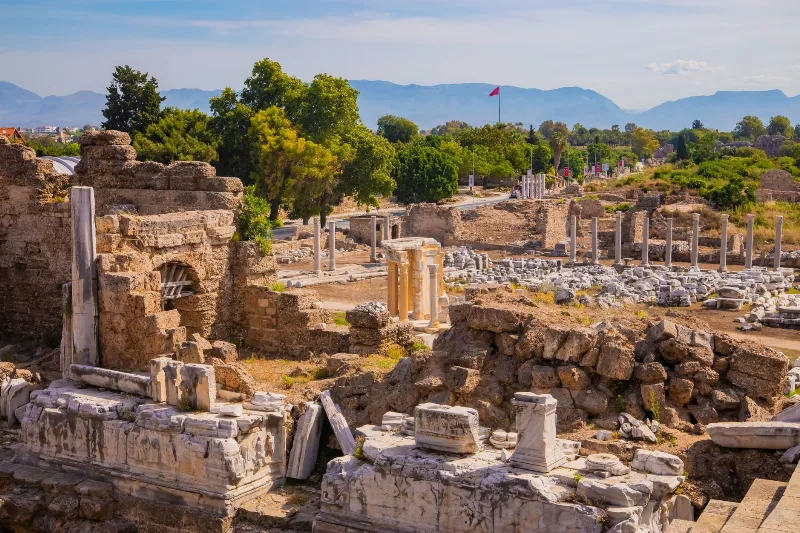
Phaselis
Phaselis is a Rhodian-founded port city on the eastern Lycian coast, where paved streets, agoras, baths and a small theatre stand among pines between three sheltered bays.
Explore →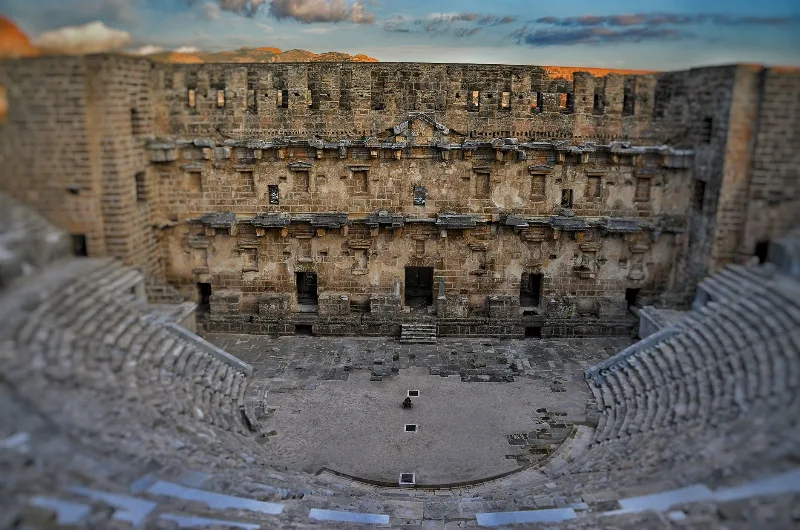
Aspendos
Aspendos is a Pamphylian ancient city near Serik in Antalya Province, dominated by a second-century Roman theatre that survives almost intact. Its aqueduct, acropolis and lower-city ruins sit in the flat farmland of the Köprüçay plain.
Explore →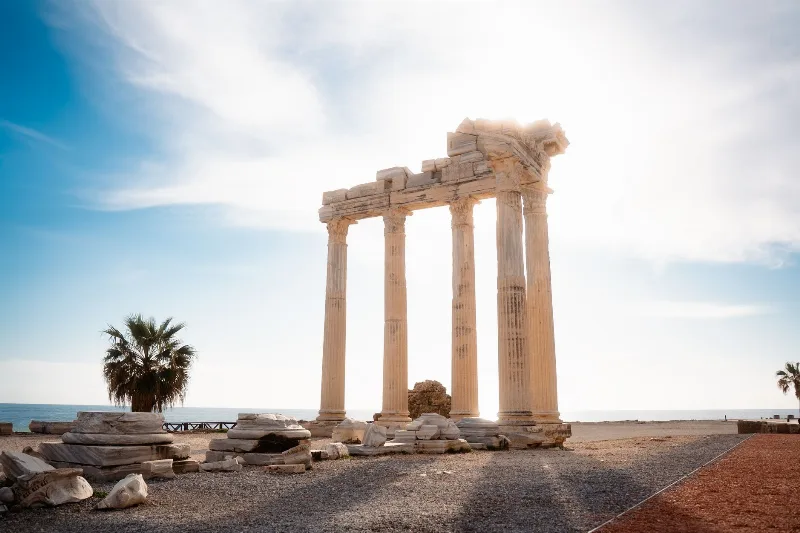
Side
Side is an ancient Greek harbour city on Türkiye's Mediterranean coast, known for the Temple of Apollo, a large Roman theatre and streets of ruins that visitors can still walk through. Its remains sit inside a modern town in the Manavgat district of Antalya Province.
Explore →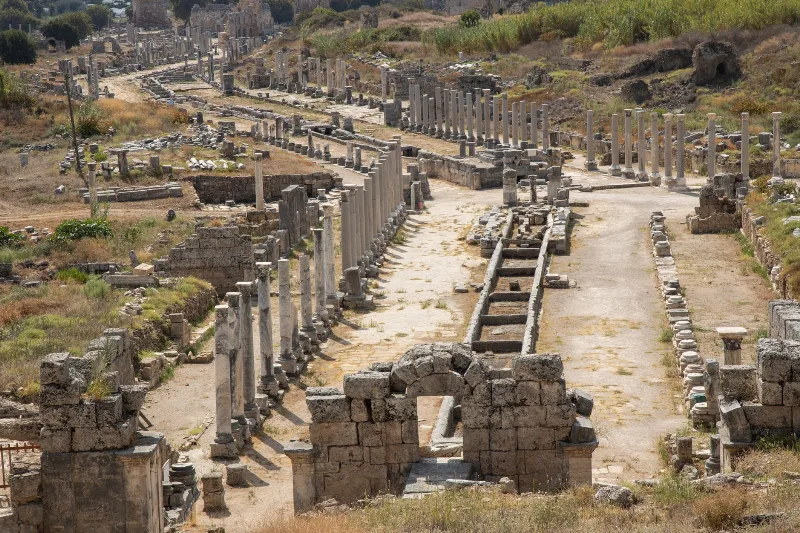
Perge
Perge is an ancient Pamphylian city east of Antalya, whose Hellenistic gates, colonnaded streets, theatre and exceptionally well-preserved stadium make it one of the most legible Roman-era sites in southern Turkey.
Explore →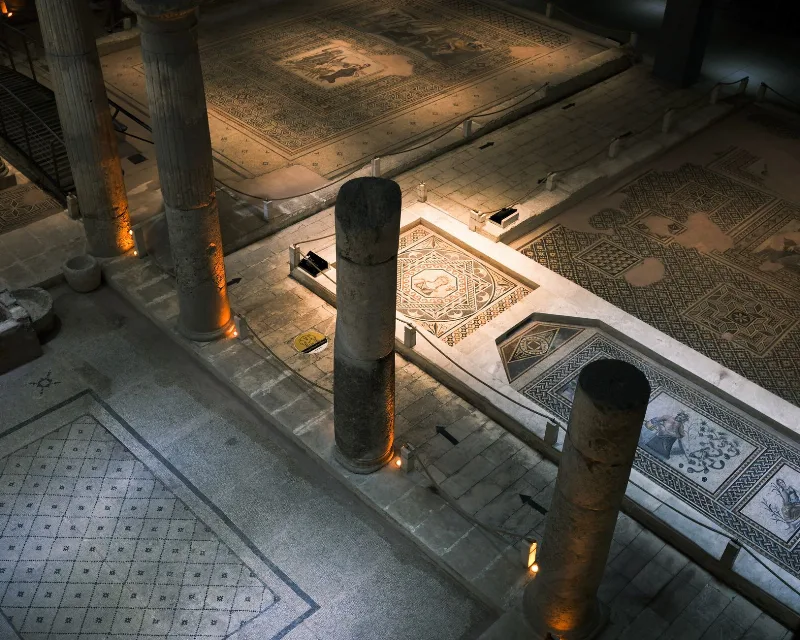
Zeugma
Zeugma was a twin Roman city on the Euphrates in Gaziantep Province, famous for the mosaics recovered from its riverside villas. Here is what the site is, what survives, and what to know before visiting.
Explore →Related content
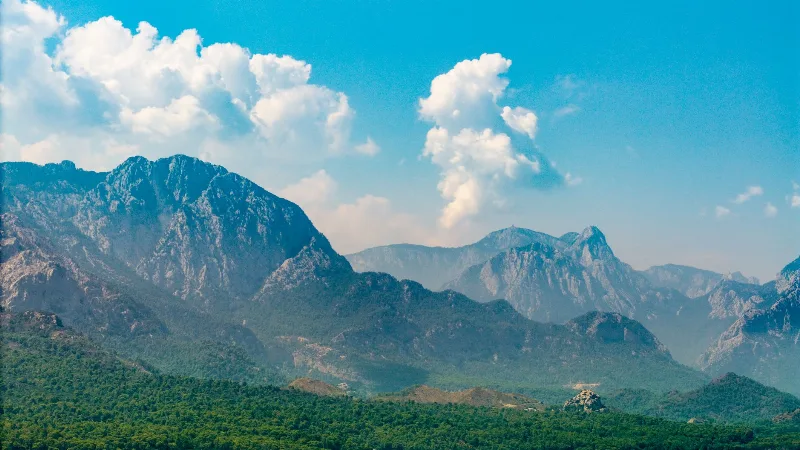
Antalya
Antalya offers a unique blend of vibrant history and stunning natural beauty, making it a must-visit destination in Türkiye.
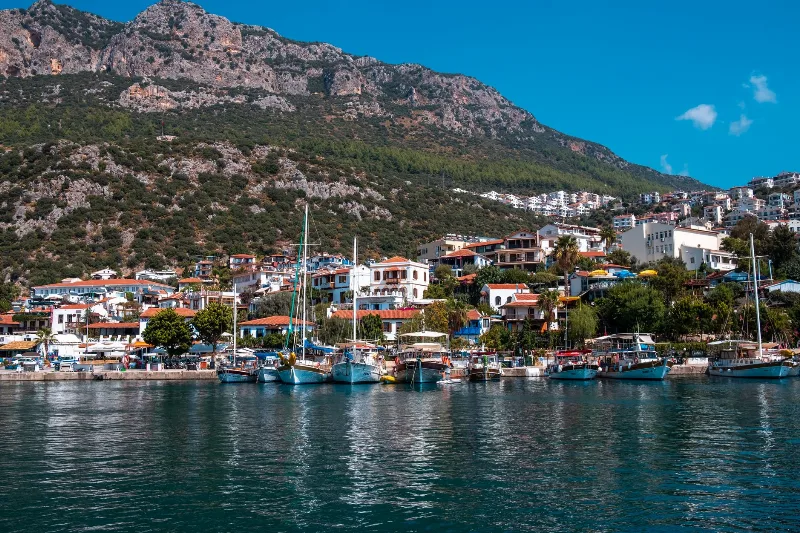
5-Day Antalya to Fethiye Coastal Route
A five-day driving itinerary along Turkey's Mediterranean shore, linking Antalya, Phaselis, Olympos, Demre, Kekova, Kaş, Kalkan, Patara and Fethiye. The route is linear, coastal for most of its length, with short inland detours to Lycian ruins.
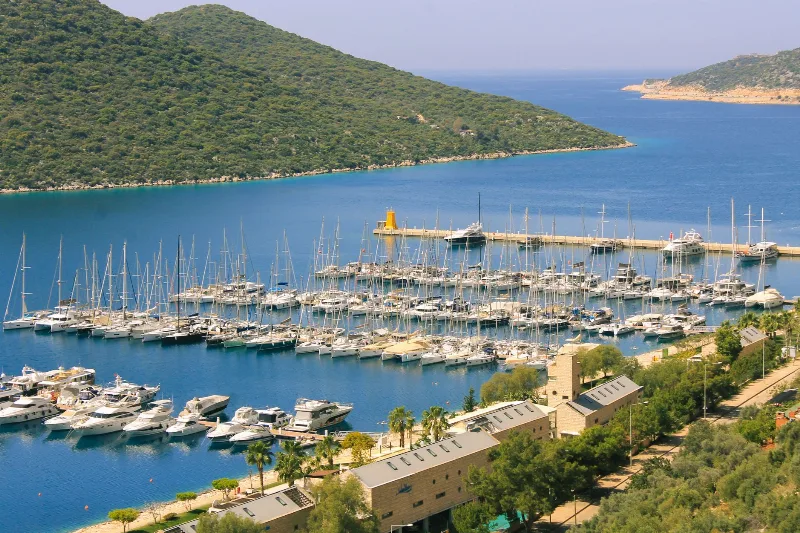
2-Day Kaş and Kalkan Route
Two unhurried days on Türkiye's Turquoise Coast, linking the harbour town of Kaş and its Lycian tombs with a boat trip toward Kekova, the beach at Kaputaş and the old quarter of Kalkan.
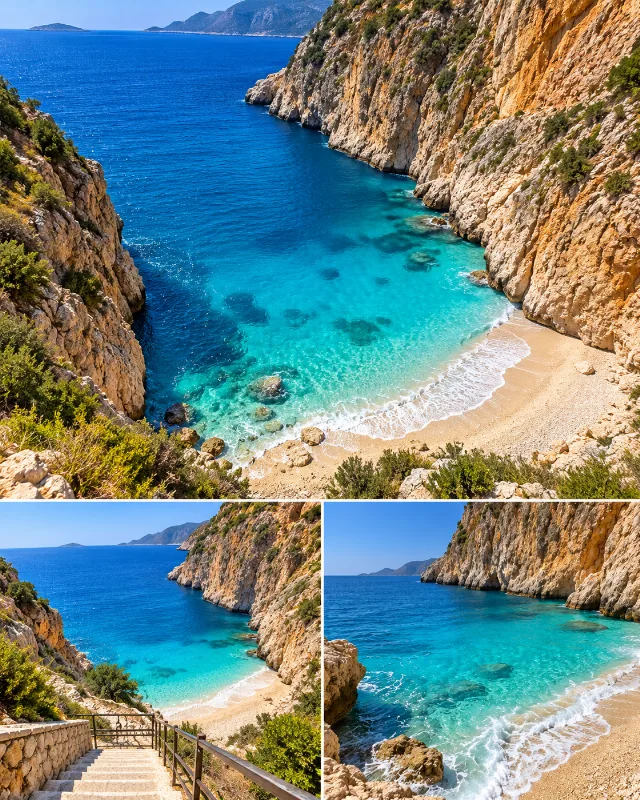
Kaputaş Beach
A small Mediterranean beach between Kaş and Kalkan, known for its turquoise water and steep limestone surroundings.
4-Day Lycian Coast Route
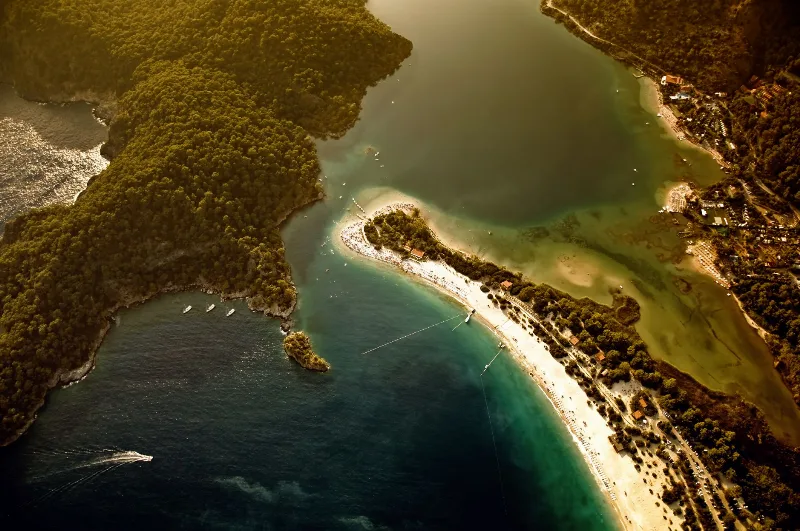
A four-day route along Turkey's Lycian coast, driving from Fethiye and Ölüdeniz through Kalkan, Kaş, Kekova, Demre and Olympos to finish in Antalya.
6-Day Mediterranean Coast Route: Antalya to Marmaris
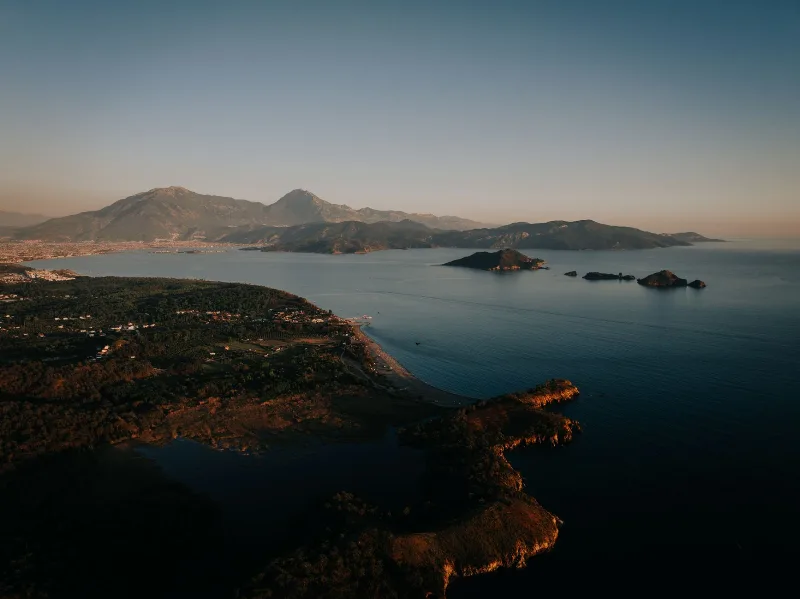
A six-day linear route along Türkiye's Mediterranean coast, linking Antalya, Olympos, Demre, Kekova, Kaş, Kalkan, Patara, Fethiye and Dalyan before finishing in Marmaris. It mixes ancient cities, long beaches and small harbour towns on a continuous westward drive.