
Perge
Perge is an ancient Pamphylian city east of Antalya, whose Hellenistic gates, colonnaded streets, theatre and exceptionally well-preserved stadium make it one of the most legible Roman-era sites in southern Turkey.
Perge is an ancient city on the Pamphylian plain in Antalya Province, southern Turkey, a short distance east of the modern city of Antalya near the Aksu district. It was one of the principal cities of Pamphylia, the coastal region between the Taurus Mountains and the Mediterranean, and it is valued today for the clarity of its surviving urban fabric: two great Hellenistic gate towers, long colonnaded streets with a water channel running down their centre, a theatre built against the western hill, and a stadium that ranks among the best preserved of its kind in Anatolia. Unlike sites where a single monument carries the visit, Perge allows a reader of ruins to reconstruct an entire city plan.
The Geographical Setting
Perge sits on flat, fertile ground at the edge of the Antalya plain, close to the river known in antiquity as the Kestros and today as the Aksu Çayı. In the Roman period this river was navigable for part of its course, which gave the city a connection to the sea without requiring a harbour of its own; over the centuries the river deposited silt, the coastline advanced southward and that advantage disappeared. The city itself was laid out around two low hills, one of which served as the acropolis and provided the slope into which the theatre was built. The surrounding land is agricultural, and the ruins spread over a broad, largely level area, which is why walking the site feels like moving through a town rather than climbing through a fortified stronghold.
Why Perge Mattered in Pamphylia
Perge was counted among the leading cities of Pamphylia alongside Aspendos, Side and Sillyon. Its wealth came from the productivity of the plain, from river trade and from roads that linked the coast to the interior of Pisidia. Its most distinctive asset was religious: the sanctuary of Artemis Pergaia, a local form of the goddess whose image appeared on the city's coins and whose cult drew visitors and dedications. Greek literary tradition attributed the founding of the city to seers who came west after the Trojan War, and the city's Greek character is visible in its institutions, its inscriptions and its planning long before the Roman period. Perge passed into the Roman sphere in the second century BC and grew substantially under imperial rule, when its public buildings were rebuilt and enlarged on a generous scale.
The Hellenistic Gates and the Street Plan
The most photographed structure at Perge is the pair of massive round towers that flank the Hellenistic gate, built in the third century BC as part of the city's defensive circuit. Between the towers lies a courtyard that controlled access to the city, and behind it the main north–south colonnaded street begins. Perge was laid out on a grid, and the two principal colonnaded avenues cross the city roughly at right angles, with the northern one running from the Hellenistic gate toward the acropolis. Behind the porticoes that lined these streets were shops and workshops, several of which preserve mosaic floors. The gate is not merely a ruin to look at; it is the point from which the whole plan of the city becomes readable.
Water, Fountains and the Colonnaded Avenues
A channel runs down the centre of the main avenue, broken at intervals by shallow pools, and it was fed by a monumental fountain house, or nymphaeum, at the foot of the acropolis. This arrangement — a colonnaded street with running water in the middle and covered walkways on either side — is one of the features that makes Perge especially easy to imagine as a living city. The fountains, the channel and the pools were part of a designed civic landscape, not simply utilities, and the sculptural decoration that once adorned them has been recovered in large quantities. In the southern part of the site, the agora, a palaestra and large bath complexes show how the public life of the city was distributed across its districts.
The Theatre and the Stadium
The theatre leans against the western hill, with its seating area built partly into the slope and partly on vaulted substructures. Its capacity is usually estimated at around twelve thousand spectators, and the remains of the stage building still stand high enough to convey the original height of the façade. North of the theatre lies the stadium, a long, narrow U-shaped structure measuring roughly 234 by 34 metres, again with an estimated capacity in the region of twelve thousand. It is one of the most completely surviving ancient stadiums in Turkey, with starting blocks and seating rows still in place. Inscriptions and scratched graffiti on its walls record gladiators and their supporters, which makes the stadium unusually informative about spectacle culture in a provincial Roman city.
What Excavation Has Added
Systematic excavation at Perge began in the middle of the twentieth century and has continued under Turkish universities, revealing not only buildings but an extraordinary quantity of sculpture. Statues of emperors, deities and mythological figures recovered from the streets, baths and fountains are now displayed in the relevant galleries of the Antalya Museum, which functions as the natural extension of a visit to the site. Inscriptions have identified individual benefactors who paid for buildings and dedications, giving the city an unusually detailed social record for a Pamphylian centre. Because so much of the material was found in its original architectural context, the finds help date and explain the structures a visitor sees standing on the plain.
From Roman Prosperity to Abandonment
Perge reached its greatest extent in the second and third centuries AD, when the streets, baths and stadium were built or rebuilt. The city continued to be occupied into late antiquity, when new ecclesiastical and bathing structures were added, and it is mentioned in the account of the travels of the apostle Paul in the Acts of the Apostles, who passed through Perga in Pamphylia. Decline was gradual rather than sudden: the silting of the river, seismic activity and raiding along the southern coast all contributed to the loss of the city's economic basis, and the site was eventually abandoned, leaving the ruins to be quarried and buried until excavation began.
Visiting Perge: Terrain, Heat and Timing
The site is signposted off the main road east of Antalya near Aksu and is normally reached by car or local transport from the city; there is a single entrance with a ticket office. The ground along the colonnaded streets, agora and stadium is flat and easy to walk, but the theatre involves climbing steps and the acropolis slope is uneven and in places overgrown. Shade is very limited across the open plain, and summer heat is severe, so early morning is the most comfortable time in the warmer months. Spring and autumn offer the best combination of temperature and light for photography. Sturdy footwear, water and sun protection are worth planning for, and because the ruins are spread out, a visit that covers the gates, both avenues, the theatre and the stadium takes a substantial part of a morning or afternoon rather than a quick stop.
Places That Pair Naturally with Perge
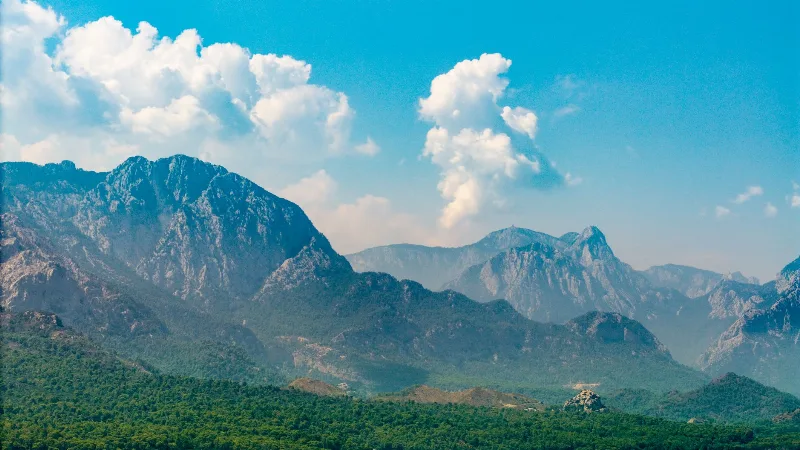
Because Perge lies on the eastern side of Antalya, it combines well with other sites in the same corridor. Aspendos, further east near Serik, has the best-preserved Roman theatre in Anatolia together with a substantial aqueduct, and the hilltop city of Sillyon rises nearby. Termessos, northwest of Antalya in the mountains of Pisidia, offers a completely different experience of an ancient city in a wild landscape. The Antalya Museum in the city itself holds the sculpture from Perge and is the logical complement to the ruins. Closer to Antalya, the Kurşunlu and Düden waterfalls and the old quarter of Kaleiçi provide a change of scenery after a morning among the colonnades.
Related content
Antalya
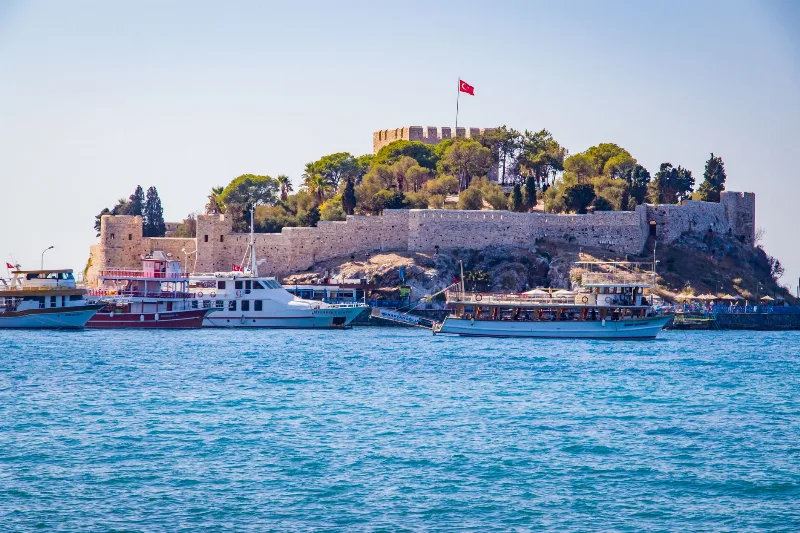
Antalya offers a unique blend of vibrant history and stunning natural beauty, making it a must-visit destination in Türkiye.
Aspendos
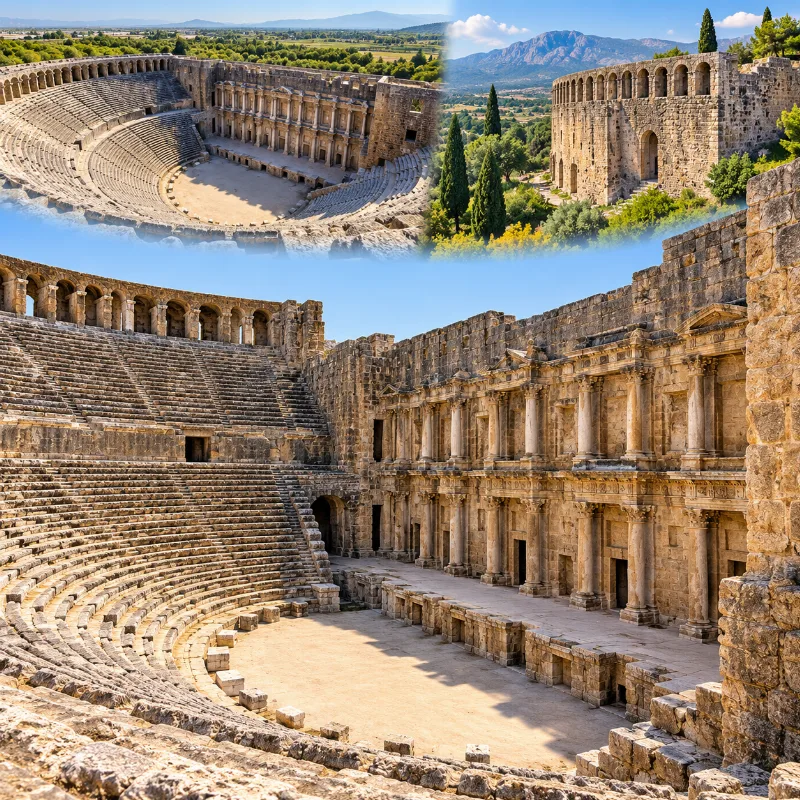
An ancient city near Antalya best known for its large Roman theatre and other surviving structures.
Aspendos
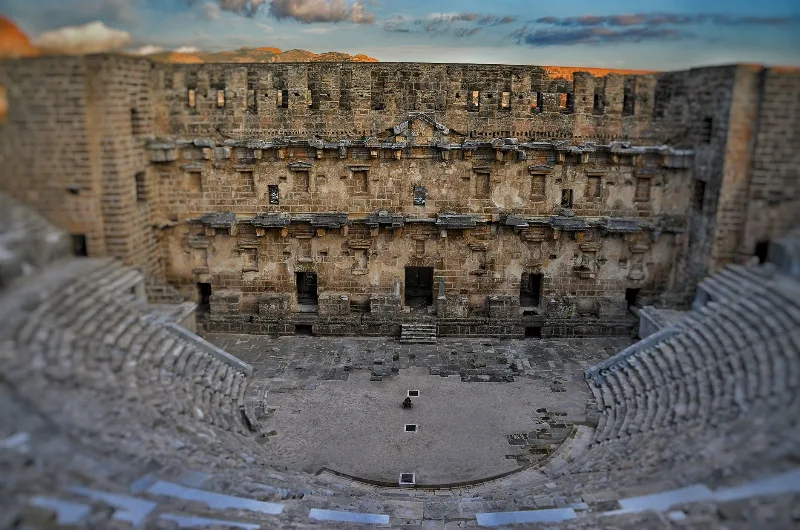
Aspendos is a Pamphylian ancient city near Serik in Antalya Province, dominated by a second-century Roman theatre that survives almost intact. Its aqueduct, acropolis and lower-city ruins sit in the flat farmland of the Köprüçay plain.
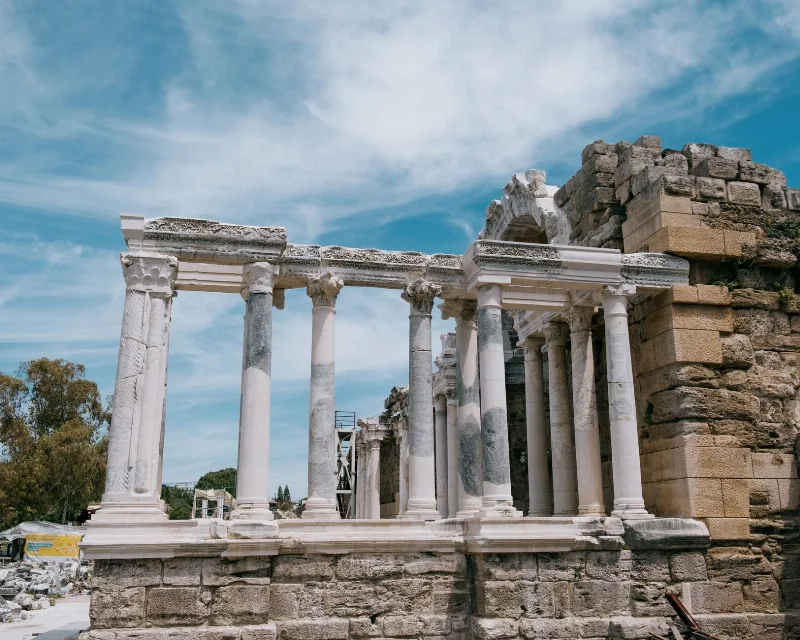
3-Day Antalya to Side Ancient Coast Route
A three-day coastal journey from Antalya to Side that links the archaeological sites of Perge and Aspendos with the Manavgat Waterfall and the ruins of Side, with a clear day-by-day sequence of stops.
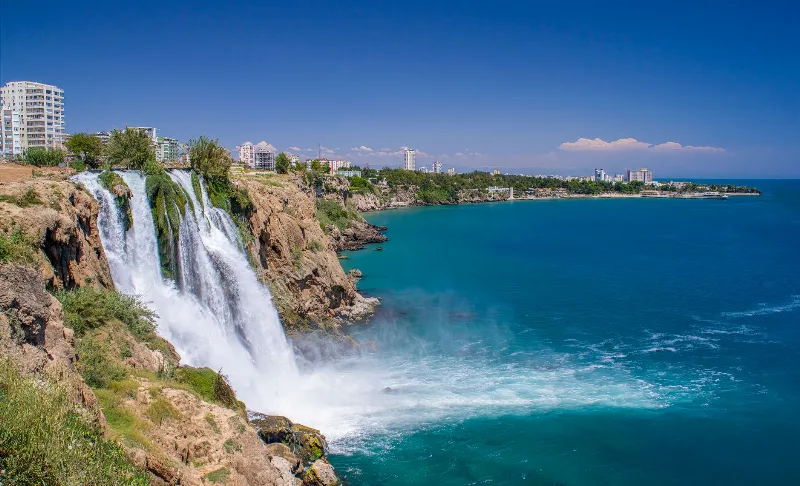
2-Day Antalya Waterfalls and Ancient Cities Route
A circular two-day route based in Antalya that pairs the Düden and Kurşunlu waterfalls with the ancient cities of Perge, Aspendos and Termessos, following the eastern coastal plain on the first day and the Taurus foothills on the second.
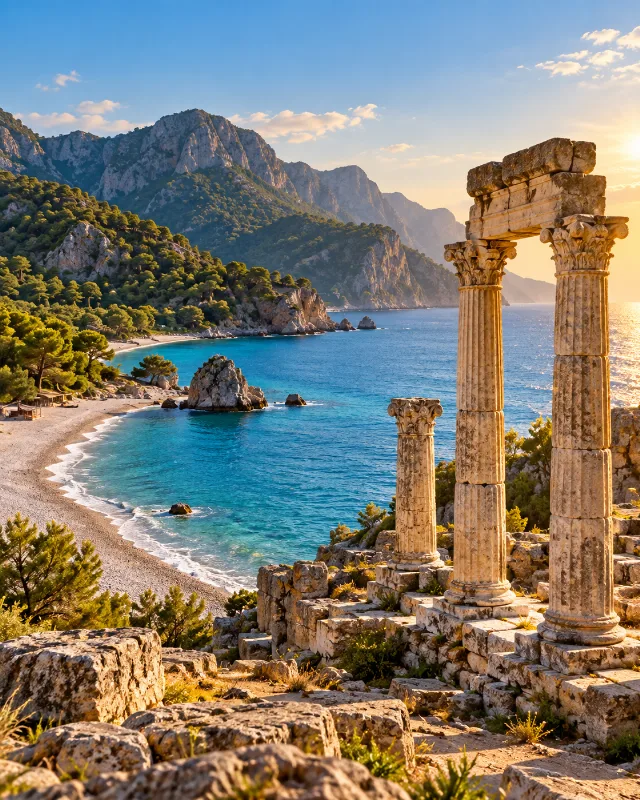
3-Day Antalya Ancient Coast Route
A three-day route combining Antalya’s old city with Perge, Aspendos, Side, Olympos and the Mediterranean landscapes around Çıralı.