
Aspendos
Aspendos is a Pamphylian ancient city near Serik in Antalya Province, dominated by a second-century Roman theatre that survives almost intact. Its aqueduct, acropolis and lower-city ruins sit in the flat farmland of the Köprüçay plain.
Aspendos is an ancient city in the Pamphylian plain of what is now Antalya Province, Turkey. It lies roughly 40 kilometres east of the city of Antalya, about 8 kilometres inland from the Mediterranean and close to the modern town of Serik, at the foot of a low limestone hill beside the Köprüçay river. In antiquity that river was called the Eurymedon. The site is known above all for its Roman theatre, built in the second century AD, whose seating bowl, stage building and tall scenic backdrop survive in unusually complete condition. The theatre and the city's aqueducts were added to Turkey's UNESCO World Heritage Tentative List in 2015.
Where Aspendos Sits and What It Was
Aspendos was one of the principal cities of Pamphylia, the coastal region between the Gulf of Antalya and the Taurus mountains, alongside Perge and Side. It controlled a fertile river plain and, at its height, a harbour reachable from the sea via the Eurymedon. Coins and local inscriptions preserve a name usually read as Estwediiys, the city's own Anatolian name, of which Aspendos is the Greek form.
The city occupies two distinct zones. The lower town spreads across flat ground beside the river, laid out on a grid with an agora, a basilica, a nymphaeum and stretches of street paving. Above it rises the acropolis hill, ringed by Hellenistic and later walls, with the theatre built into its northern flank. Because the theatre leans into the hillside rather than standing free, its upper structure was supported by the slope itself, which is one reason so much of it remains.
Why the Theatre at Aspendos Is Different
Most Roman theatres around the Mediterranean survive as fragments: a few rows of seating, a broken stage wall, scattered columns. Aspendos is different. The semicircular cavea is essentially complete, the two-storey stage building still closes the view, and the tall facade behind the stage stands to something close to its original height. Capacities quoted for the seating range from roughly 7,000 to 15,000 spectators, with the higher figure most often repeated. Whatever the exact number, the structure is regularly described as the best-preserved Roman theatre in Anatolia and among the best preserved anywhere in the Roman world.
The building is attributed to an architect named Zeno, son of Theodoros, a citizen of Aspendos who is recorded as having funded parts of the work and who was honoured with statues at the site. It was constructed during the reign of Marcus Aurelius and dedicated to the imperial house. The facade behind the stage carries a columned gallery with a pedimented central section, and traces of the decorative scheme survive on the stage wall.
Acoustics and the Upper Rows
The seating is cut into the slope in a single sweep above a single diazoma, so the climb from the orchestra to the top row is continuous. Visitors are commonly invited to test the acoustics by dropping a coin or speaking quietly from the orchestra and listening from the highest tiers. The effect is genuine and is one of the reasons the theatre has remained in use rather than becoming a purely archaeological monument.
The Aqueduct and the Water System
Aspendos is supplied by one of the most ambitious aqueduct systems known from Anatolia. The line ran roughly 15 kilometres from springs in the hills north of the city, crossing the valley on a combination of masonry arches and a pressure siphon. The siphon is the notable engineering feature: instead of carrying water across the low ground on a tall bridge, the system dropped it through pipes into the valley and forced it back up the far side, using towers that are among the tallest surviving structures of their kind from the ancient world. Parts of the conduit, the towers and the arch spans can be seen in the fields and slopes around the site.
A Short History of the City
Aspendos enters the historical record through two events. In the 460s BC, the Eurymedon was the scene of a double battle in which an Athenian-led fleet defeated Persian naval and land forces in the same campaign, a victory that shaped the balance of power in the eastern Mediterranean for a generation. In 333 BC Alexander the Great passed through Pamphylia and received the city's submission; when the terms were not honoured he returned, imposed a heavier settlement and took control of the territory.
The city prospered again under Roman rule, when the theatre, the aqueduct and much of the visible public architecture were built. After the Byzantine period and the arrival of the Turks, the theatre was not abandoned. Seljuk-era repairs in brick and tile are visible in the stage building, and the structure is recorded as having been reused during the medieval period, most probably as a palace or a caravanserai. That continued occupation protected the building from being quarried for stone, a fate that reduced many comparable monuments to rubble.
What You Actually See on the Ground
Nearly everyone arrives for the theatre, and it deserves the time. Beyond it, the site rewards a slower walk:
- The cavea and stage building, including the surviving backdrop facade and the passages at orchestra level.
- The acropolis hill, reached by a path from the theatre, with stretches of fortification wall, cisterns and the foundations of public buildings, plus a wide view over the plain.
- The lower city, where the paved agora, the basilica and the nymphaeum are visible among farmland and scrub, with the street grid still legible in places.
- The aqueduct remains, best appreciated from the road approaches and the slopes north of the city rather than from the ticketed core.
- The stone bridge over the Köprüçay a short distance away, standing on older foundations and long used as a river crossing.
Landscape and Setting
The surroundings are flat, intensively farmed and hot in summer: cotton and maize fields, irrigation channels, and the shallow, gravelly Köprüçay winding through. The hill above the theatre is dry limestone covered in scrub and scattered pines. Because there is almost no elevated ground nearby apart from the acropolis itself, the site reads as a monument rising out of a plain, and the theatre's upper rows give the clearest view of the whole layout, including how far the ancient city once extended.
Getting There and Practical Visiting Information
The site is reached from the D400 coastal road at Serik, then by a signed side road to the village of Belkıs. By car the drive from central Antalya takes under an hour. Public transport involves a bus or minibus to Serik and then a taxi for the final few kilometres; there is no rail connection. Parking is available at the entrance.
The site is ticketed and generally open through the day, with opening and closing times shifting between summer and winter, so it is worth confirming locally before setting out. There is little shade anywhere on site and no shelter inside the theatre bowl. The theatre has also hosted an annual opera and ballet festival in recent decades, and rehearsals or stage equipment can occasionally restrict parts of the seating.
When to Visit: Seasons and Conditions
Spring, from April to early June, and autumn, from September to October, are the most comfortable periods. In July and August the limestone radiates heat, the cavea offers no cover, and midday visiting becomes exhausting. Winter is quiet and cool, with a chance of rain and slippery stone underfoot. Early morning and late afternoon light is best for both photography and temperature, and the theatre faces in a direction that puts the stage facade in shade at some hours of the day.
Terrain, Walking and Accessibility
The ground is uneven throughout: loose gravel paths, exposed foundations without barriers, and unshaded slopes. The orchestra and the lower part of the cavea can be reached without climbing far, but the upper rows require steep, worn stone steps with no handrails. The acropolis path is rougher still. Visitors with limited mobility, pushchairs or a fear of heights should plan to stay at the lower level, where the essential view of the stage building is still available. Sturdy shoes are genuinely necessary rather than a formality.
Nearby Places Worth Combining with a Visit
Aspendos fits naturally into a wider circuit of Pamphylian sites. Perge, north-east of Antalya, has a monumental colonnaded street and a theatre of its own, and the Antalya Museum holds sculpture and finds from the region. Side, further east, combines extensive ruins with a coastal setting. Inland, the Köprülü Canyon National Park and the difficult mountain site of Selge lie up the same river system, and the hilltop ruins of Sillyon overlook the plain between Aspendos and Perge. Together these make the flat farmland east of Antalya one of the densest concentrations of Roman and pre-Roman remains in Turkey.
Related content
Antalya
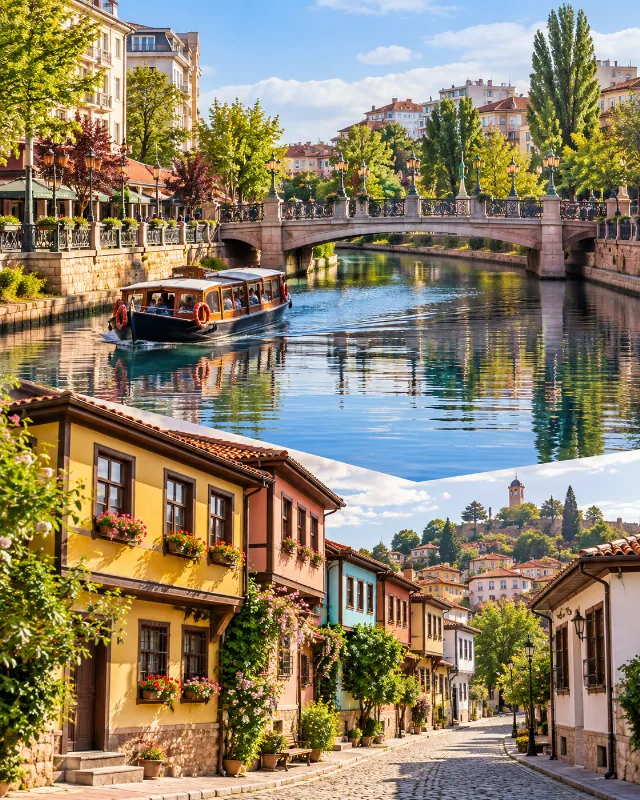
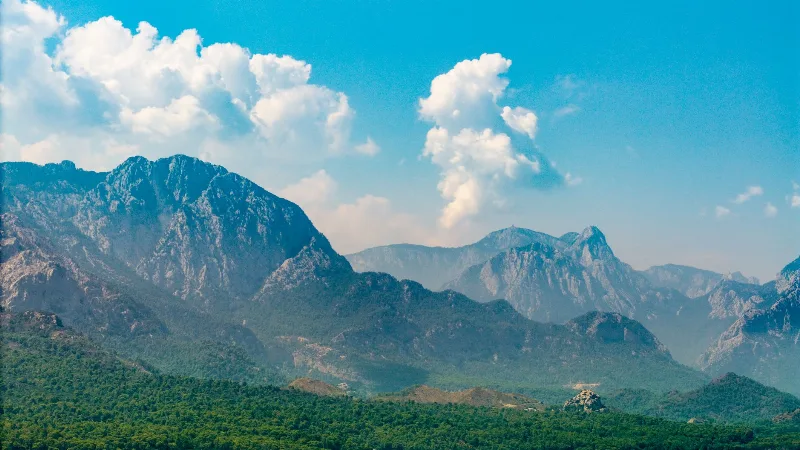
Antalya offers a unique blend of vibrant history and stunning natural beauty, making it a must-visit destination in Türkiye.
Perge
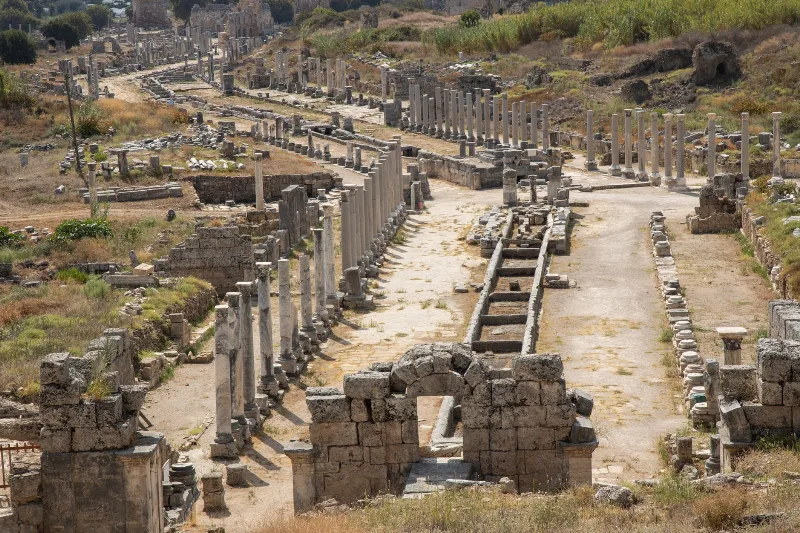
Perge is a Graeco-Roman city in the Pamphylian plain east of Antalya, Türkiye, whose surviving urban plan includes two colonnaded streets with central water channels, a hillside Roman theatre and one of Anatolia's best-preserved stadiums.
Perge
Perge is an ancient Pamphylian city east of Antalya, whose Hellenistic gates, colonnaded streets, theatre and exceptionally well-preserved stadium make it one of the most legible Roman-era sites in southern Turkey.
3-Day Antalya to Side Ancient Coast Route
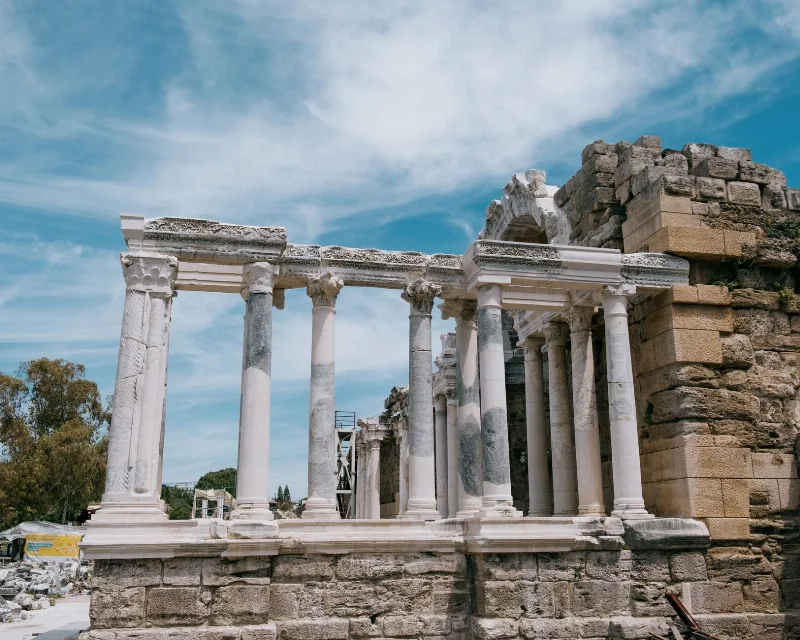
A three-day coastal journey from Antalya to Side that links the archaeological sites of Perge and Aspendos with the Manavgat Waterfall and the ruins of Side, with a clear day-by-day sequence of stops.
2-Day Antalya Waterfalls and Ancient Cities Route
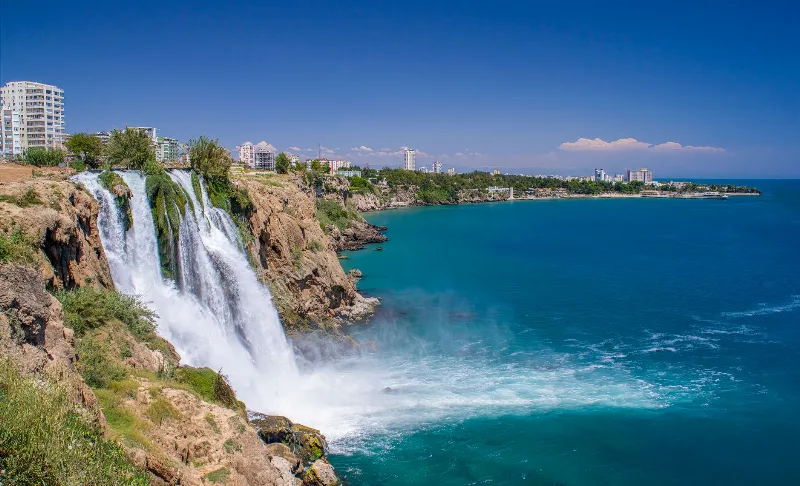
A circular two-day route based in Antalya that pairs the Düden and Kurşunlu waterfalls with the ancient cities of Perge, Aspendos and Termessos, following the eastern coastal plain on the first day and the Taurus foothills on the second.
3-Day Antalya Ancient Coast Route
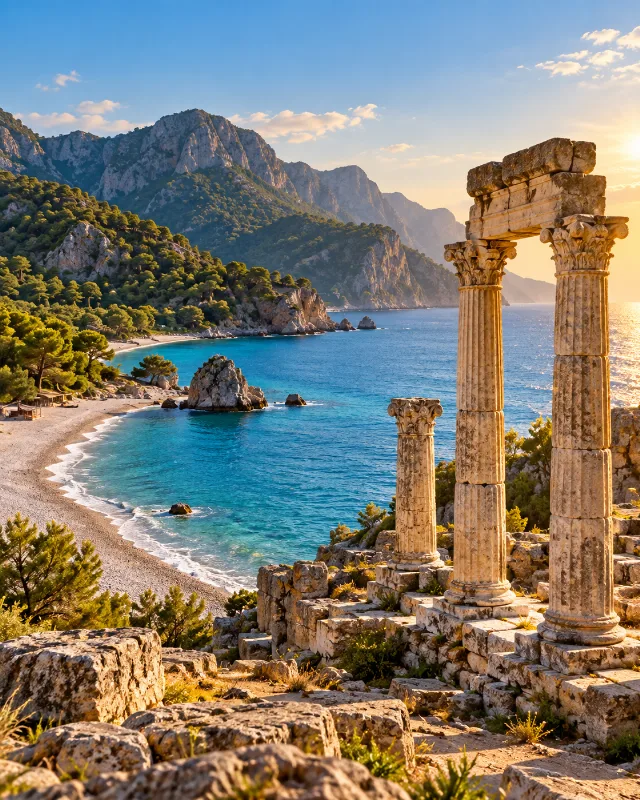
A three-day route combining Antalya’s old city with Perge, Aspendos, Side, Olympos and the Mediterranean landscapes around Çıralı.