Birgi
Birgi’s timber-framed mansions, stone lanes and medieval mosque preserve the layers of an old Aegean administrative centre in the foothills of the Bozdağ Mountains.
Birgi’s timber-framed mansions, stone lanes and medieval mosque preserve the layers of an old Aegean administrative centre in the foothills of the Bozdağ Mountains.
A town shaped by successive centuries
Birgi lies close to Ödemiş, at the foot of the Bozdağ range in İzmir province. The town’s position between fertile agricultural land and rising mountain slopes helps explain its long history as a local centre. Rather than a single monument surrounded by new construction, visitors encounter historical layers throughout the settlement. Narrow streets, residential courtyards and places of worship reveal how town life developed around trade, agriculture and regional administration.
The Aydınoğulları period
Birgi served as a major centre of the Aydınoğulları principality in medieval western Anatolia. Its Ulu Mosque, also called Aydınoğlu Mehmet Bey Mosque, preserves notable woodwork and tile decoration. The building belongs to a period when local principalities developed distinctive architectural traditions alongside wider Anatolian influences. Looking at the mosque and the nearby historic fabric together offers more context than treating the monument as an isolated attraction.
Mansions and domestic architecture
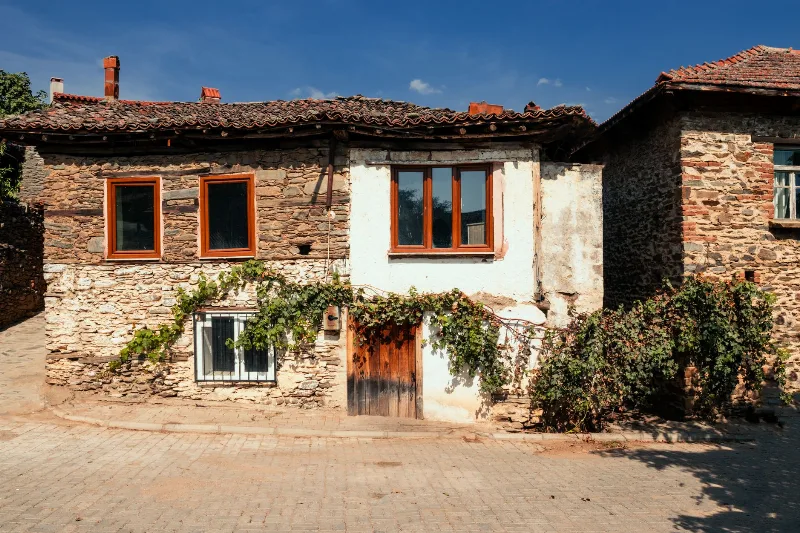
The eighteenth-century Çakırağa Mansion is among Birgi’s best-known houses. Its timber elements, decorated interiors and painted scenes convey the decorative tastes of an affluent household. Elsewhere, houses incorporate stone at lower levels and timber-framed construction above. Rooflines, projecting rooms and sheltered internal spaces make the streets visually varied. These features are particularly evident when walking slowly through the older quarters rather than remaining on the main approach road. An especially useful way to read Birgi is to compare the carefully decorated mansion interiors with the more restrained street-facing surfaces of ordinary houses. Their different levels of ornament reflect different purposes and resources, while both belong to the same townscape. The contrast is central to the place’s architectural character.
Walking through the settlement
The appeal of Birgi is found as much in its smaller details as in its prominent buildings: a doorway set back from the street, a fountain, an old wall or the transition between a public square and a quiet lane. The town has a lived-in character, so historical structures stand beside ordinary homes and daily activities. The surrounding valley also provides a broader perspective on how this compact town relates to its agricultural landscape.
Planning a visit
Birgi is commonly approached through Ödemiş, which connects it with other settlements in the eastern part of İzmir province. Its streets reward exploring on foot, with time reserved for architectural details rather than a rapid circuit. Spring brings greener hillsides, while autumn offers softer temperatures for walking. Heritage sites may have their own visiting arrangements, so travellers interested in interiors can check local information before arriving.
From the land
Find All →
Taşköprü Garlic
Taşköprü garlic is a pungent, long-keeping garlic grown around the Taşköprü district of Kastamonu in northern Türkiye, where the Gökırmak valley's soils and seasons give the bulbs their dense structure and pronounced aroma.
Explore →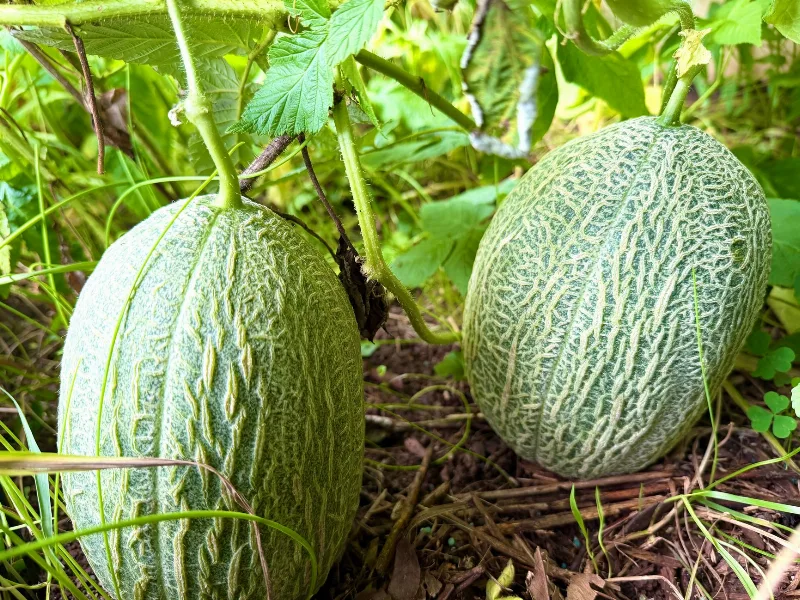
Kırkağaç Melons
Kırkağaç melons are a distinctive melon variety grown around the town of Kırkağaç in Manisa province, western Türkiye, where hot dry summers and fertile valley soils produce large, aromatic fruit that keeps well into winter.
Explore →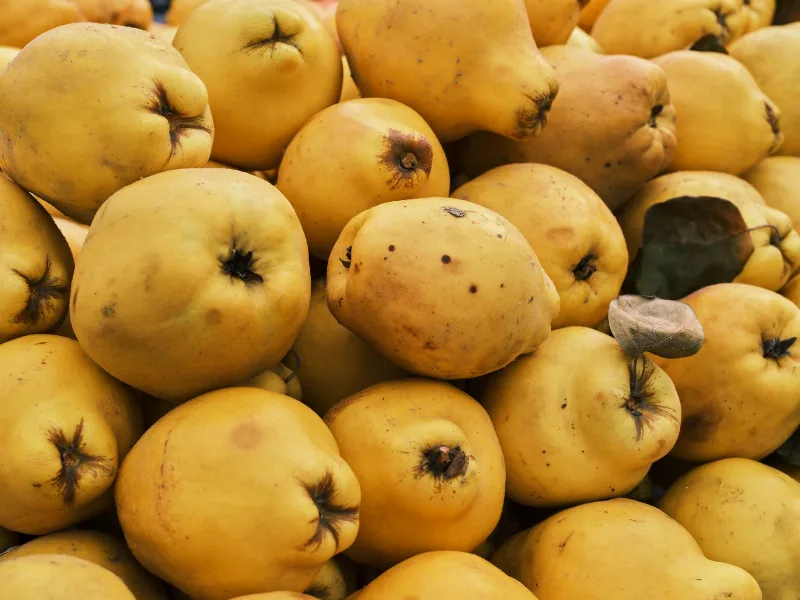
Bursa Quinces
Bursa quinces are the fruit of the quince tree grown around the city of Bursa in northwestern Türkiye, where the province's temperate Marmara climate and fertile soils give the fruit its dense flesh, tart flavour and strong fragrance. The orchards of Bursa are among the places most closely identified with quince growing in the country.
Explore →Related content
The Village of Birgi in the Aegean Region
Birgi is a historic village in İzmir Province where Ottoman houses, stone lanes and a mountain-and-plain landscape shape everyday Aegean life.
Birgi Village Traditional Houses and Cobblestone Streets in İzmir
Birgi, an old village in the Ödemiş district of İzmir, is known for its stone-and-timber houses, narrow cobbled lanes and monuments left by the Aydınoğulları principality.
Eski Datça
In Eski Datça, pale stone houses, bougainvillea-lined lanes and intimate courtyards tell the story of a peninsula settlement distinct from the modern waterfront.
Taraklı
Taraklı’s timber-and-plaster houses cluster around narrow streets and an old market quarter, preserving the proportions of a small Ottoman-era town.
Mudurnu
Mudurnu is a wooded-valley town where traditional houses, a historic bazaar and traces of craft culture give the streets a distinctly Anatolian character.
Göynük
Göynük’s whitewashed traditional houses rise across a green valley beneath a landmark clock tower, creating one of Bolu’s most recognizable townscapes.