
Birgi Village: Traditional Houses and Cobblestone Streets in İzmir
Birgi, an old village in the Ödemiş district of İzmir, is known for its stone-and-timber houses, narrow cobbled lanes and monuments left by the Aydınoğulları principality.
Birgi is a small village in the Ödemiş district of İzmir province, set on the northern edge of the Küçük Menderes plain where the land begins to rise towards the Bozdağ Mountains. Its reputation rests on two things that are becoming rare in western Anatolia: a dense collection of traditional stone-and-timber houses that still form a continuous streetscape, and a network of narrow cobbled lanes that thread between them. Walking through Birgi feels less like visiting a single monument than moving through a settlement that has kept its shape over several centuries.
Where Birgi Sits in the Küçük Menderes Valley
The village occupies a gentle slope at the foot of the Bozdağ range, with a small stream, the Birgi Çayı, running through the lower part of the settlement beneath tall plane trees. The surrounding countryside is a patchwork of olive groves, vineyards, orchards and market gardens, watered by the streams that come down from the mountains and feed the plain below. This position gave Birgi both water and security, and it explains why the site was settled long before the Ottoman period.
Access is straightforward: Birgi lies a short drive from Ödemiş, which is connected by road and rail to İzmir, making the village a practical day trip rather than a remote excursion. Because it sits slightly above the plain, evenings are cooler than in the valley floor, and the light on the hillside houses is one of the reasons photographers return to the village.
The Architecture of Birgi's Traditional Houses
The houses of Birgi follow a pattern found across the Aegean hinterland but rarely preserved in such numbers. Ground floors are built of rough stone masonry, thick-walled and cool in summer, and were traditionally used for storage, stabling and winter living. Above them, upper storeys are timber-framed, with the spaces between the beams filled and whitewashed, and many project outwards as bay windows supported on wooden brackets. These projecting windows catch the breeze and give residents a view along the lane.
Behind the street doors, most houses open onto courtyards with a small garden, a well or a water tap, and often a vine trained over a trellis. Interiors are arranged around a central hall with rooms opening off it, and the best-preserved examples retain painted ceilings, carved wooden cupboards and decorative plasterwork.
Cobblestone Streets and Everyday Village Life
The lanes of Birgi are paved with rounded river stones laid in patterns, a surface that drains well and slows traffic to a walking pace. Many are too narrow for cars, so the centre retains a quiet, foot-borne rhythm. Houses face one another closely, sharing walls and shading the street, and the gaps between buildings frame views of cypresses, rooftops and the ridge above.
Birgi remains a living village rather than an open-air museum. Residents grow vegetables and keep small orchards, and local produce appears in season at the roadside and in the nearby Ödemiş market. The village also has a long scholarly association: the sixteenth-century Ottoman theologian known as İmam Birgivî was born here, and his name remains attached to the place.
Monuments from the Aydınoğulları Period
In the fourteenth century Birgi served as a centre of the Aydınoğulları principality, and the buildings from that era are among the village's most important features. The Aydınoğlu Mehmed Bey Mosque, generally known locally as the Ulu Cami, dates from the early 1300s and is celebrated for its carved wooden mihrab and minber, fine examples of Anatolian woodwork. Nearby stand the tomb of Mehmed Bey and other small religious and civic structures that together record the village's medieval importance.
The Çakırağa Mansion, an eighteenth-century townhouse, is the best-known of the larger residences, with painted decoration on its walls and ceilings and a layout that shows how a prosperous Birgi household was organised. On the ridge above the village, the ruined hilltop fortress of Keçi Kalesi looks down over the valley, a reminder of the older defensive layer beneath the Ottoman settlement.
The Countryside Around Birgi
The Bozdağ slopes above the village offer walking country, high pastures and, further up, cooler air and mountain views across the Küçük Menderes plain. Ödemiş itself is known for its long-established agricultural trade, particularly potatoes and other field crops, and the wider district holds further villages, hot springs and forested valleys. Birgi works well as the centre of a slow circuit through the district, where traditional architecture, mountain scenery and farming life are still closely connected.
Related content
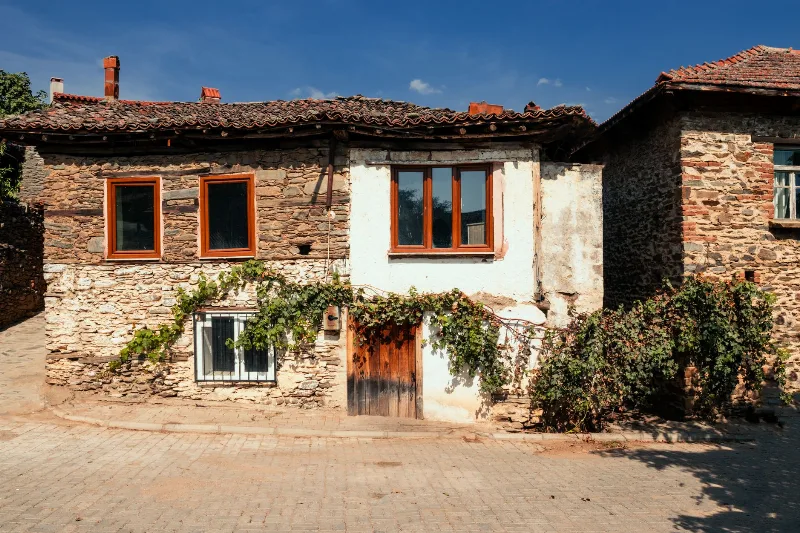
The Village of Birgi in the Aegean Region
Birgi is a historic village in İzmir Province where Ottoman houses, stone lanes and a mountain-and-plain landscape shape everyday Aegean life.
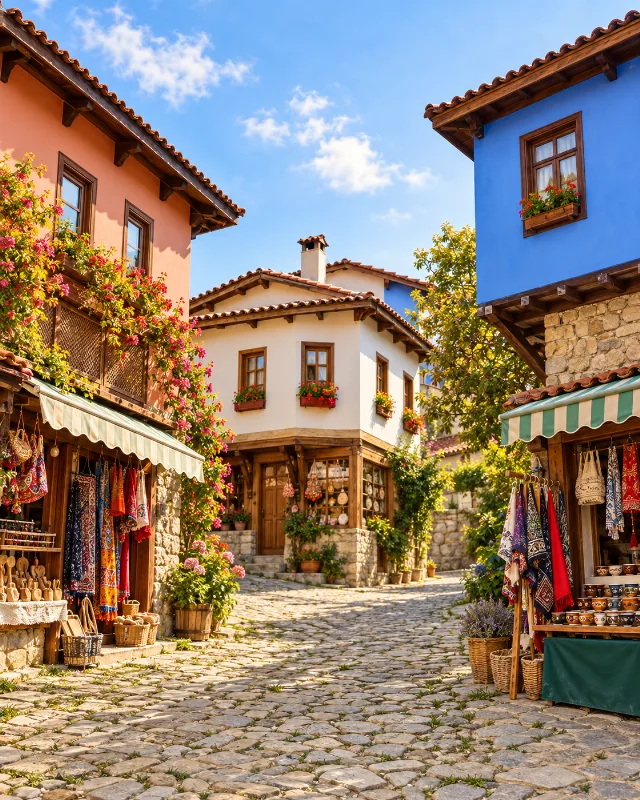
Cumalıkızık
Cumalıkızık is a historic Ottoman village in Bursa, Turkey, known for its well-preserved houses and cobblestone streets. It is part of the UNESCO World Heritage Site 'Bursa and Cumalıkızık: the Birth of the Ottoman Empire'.
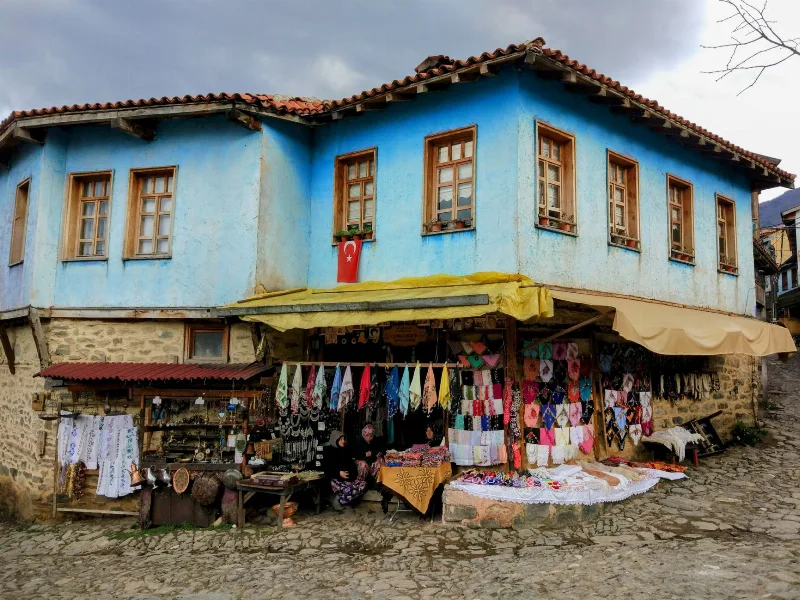
The Ottoman Village of Cumalıkızık Near Bursa
Cumalıkızık, a preserved Ottoman village on the slopes of Uludağ near Bursa, is known for its cobblestone lanes, painted historic houses and long-standing rural traditions that continue today.
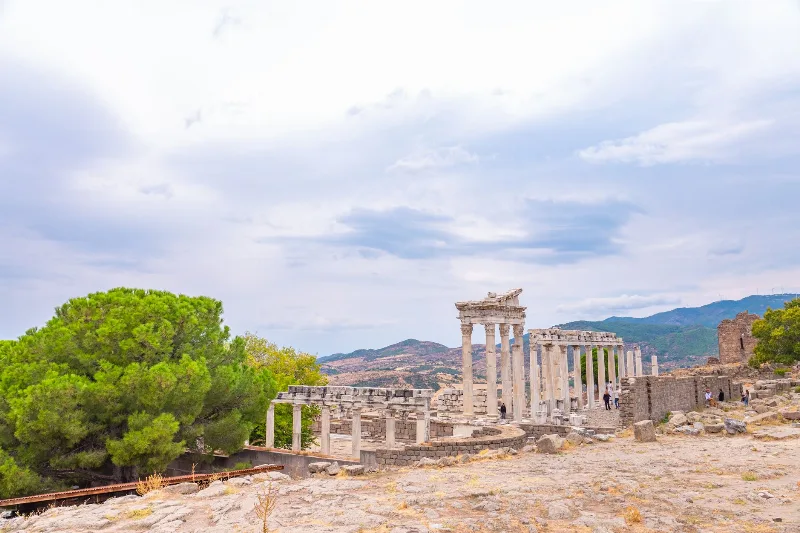
The Ancient City of Pergamon and Its Acropolis
Pergamon, now Bergama in Türkiye, is a UNESCO World Heritage Site with a dramatic acropolis, a Hellenistic theater, and a library that once rivaled Alexandria. Its ruins offer a deep dive into ancient history and culture.

Datça
Datça Peninsula offers serene beaches, lush almond groves, and unspoiled beauty, making it a unique getaway in Türkiye.

Antalya
Antalya offers a unique blend of vibrant history and stunning natural beauty, making it a must-visit destination in Türkiye.
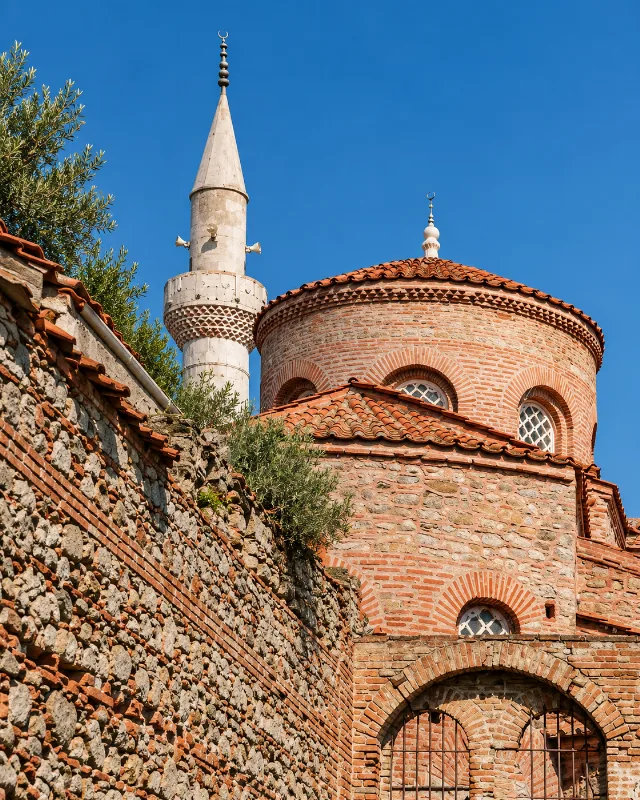
Trilye
Trilye, also known as Tirilye or Zeytinbağı, is a coastal town in Mudanya, Bursa, with a rich Greek heritage, traditional stone houses, and extensive olive groves.
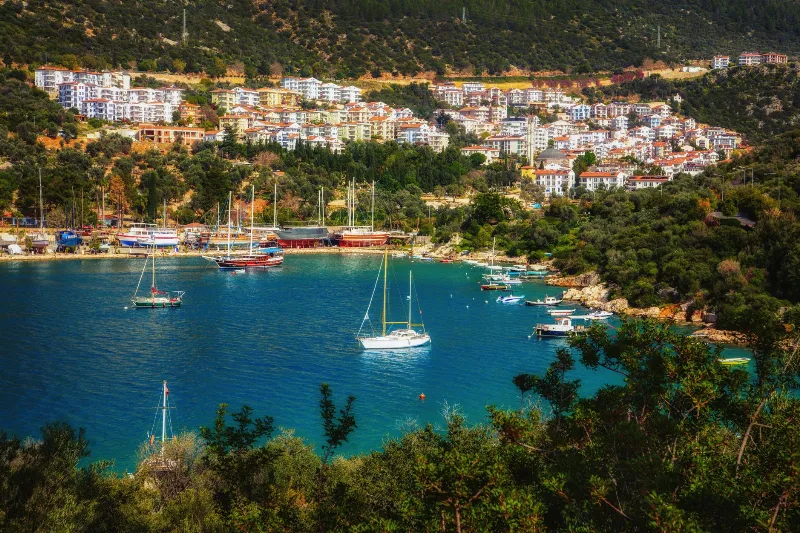
Kaş
Kaş is a picturesque coastal town in Türkiye, renowned for its diving spots, the scenic Lycian Way, and a relaxed Mediterranean atmosphere.