
The Ancient City of Pergamon and Its Acropolis
STORIES FROM TÜRKİYE
Pergamon, known in modern times as Bergama, is an ancient city located in İzmir Province on the Aegean coast of Türkiye. Its acropolis rises dramatically above the surrounding plain, offering a glimpse into the Hellenistic, Roman, and Byzantine periods. Designated a UNESCO World Heritage Site in 2014, Pergamon is celebrated for its steep theater, monumental temples, and a legendary library that once rivaled the great Library of Alexandria. The site's layered history spans from the Hellenistic period through Roman and Byzantine times, leaving a rich archaeological record.
The Acropolis and Its Terraces
The acropolis of Pergamon sits atop a steep hill, with buildings arranged on multiple terraces. The most striking structure is the theater, carved into the slope, which is one of the steepest in the ancient world. It could seat around 10,000 spectators, who enjoyed views of the valley below. The theater's steepness required a complex system of stairs and passages to manage the crowds.
On the highest terrace stands the Temple of Trajan, built during the Roman period, and the Temple of Athena, which dates back to the 4th century BC. The famous Altar of Zeus, a masterpiece of Hellenistic sculpture, was originally located here but is now reconstructed in Berlin. The acropolis also includes a gymnasium, a sacred area, and the foundations of a palace.
The Library of Pergamon and the Origin of Parchment
The Library of Pergamon was founded by King Eumenes II in the 2nd century BC. It grew to hold around 200,000 scrolls, making it the second-largest library in the ancient world after Alexandria. The rivalry between the two libraries was intense, and according to legend, the Ptolemies of Egypt stopped exporting papyrus to Pergamon to hinder its growth.
In response, the scholars of Pergamon developed a new writing material from processed animal skins, known as parchment (from the Latin word "pergamentum"). This innovation changed the course of book production and helped preserve knowledge through the centuries. The library itself was a center of learning, attracting scholars from across the Mediterranean. The library's collection included works of philosophy, medicine, and science, and it attracted scholars such as Galen, the famous physician.
The Lower City and the Sanctuary of Asclepius
Below the acropolis, the ancient city spread out with residential areas, markets, and public buildings. One of the most significant sites is the Asclepieion, a healing center dedicated to Asclepius, the god of medicine. People traveled from far away to seek cures, participating in rituals that included dream incubation and therapeutic baths. The Asclepieion also included a library, a theater, and sleeping chambers for patients.
Another remarkable structure is the Red Basilica, also known as the Kızıl Avlu. This massive temple was originally built for the Egyptian god Serapis during the Roman era and later converted into a Christian church. Its red brick walls and towering columns still impress visitors today.
Exploring Bergama Today
The modern town of Bergama surrounds the ancient site and offers a blend of history and local culture. The old quarter features traditional Ottoman houses, cobblestone streets, and a lively market. The Bergama Museum displays artifacts uncovered from the acropolis and surrounding areas, including sculptures, coins, and pottery. The town is also known for its traditional handicrafts, such as weaving and pottery.
Local cuisine reflects the region's agricultural richness. Dishes such as Bergama köftesi (spiced meatballs) and various olive oil-based mezes are part of the daily fare. The surrounding countryside is known for its olive groves, vineyards, and production of high-quality olive oil.
A Legacy of Hellenistic Culture
Pergamon was the capital of the Kingdom of Pergamon, ruled by the Attalid dynasty, who were great patrons of the arts and sciences. Their city became a major cultural and intellectual hub, influencing Roman architecture and urban planning. The Altar of Zeus, with its dramatic frieze depicting the battle of the gods and giants, is a testament to the artistic achievements of the period. The city's urban plan, with its terraced design, influenced later Roman cities.
Today, the ruins of Pergamon continue to attract travelers interested in ancient history and archaeology. The site's integration into the landscape, with the acropolis commanding the horizon, creates a memorable experience. As a UNESCO World Heritage Site, Pergamon is preserved for future generations to explore and appreciate.
Historic places
Explore history →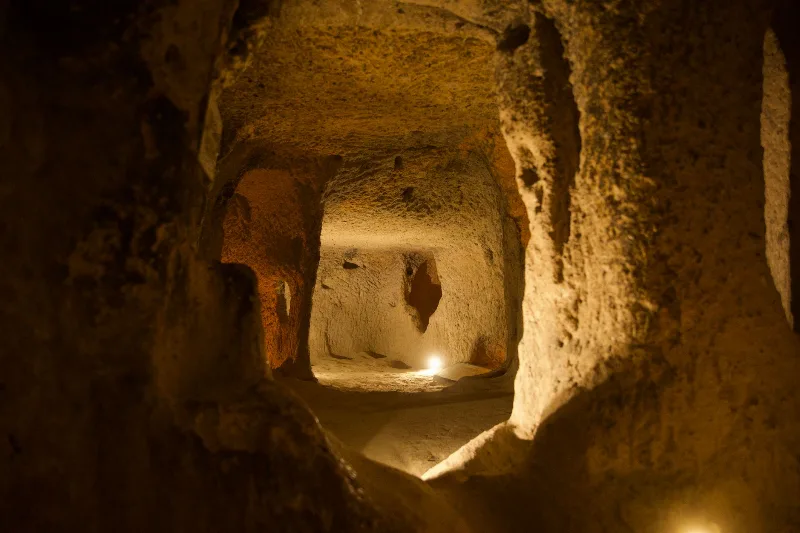
Derinkuyu Underground City
Derinkuyu Underground City is a multi-level rock-cut settlement beneath the town of Derinkuyu in Nevşehir Province, the deepest known underground city in Cappadocia and one of Anatolia's most complete examples of subterranean architecture.
Explore →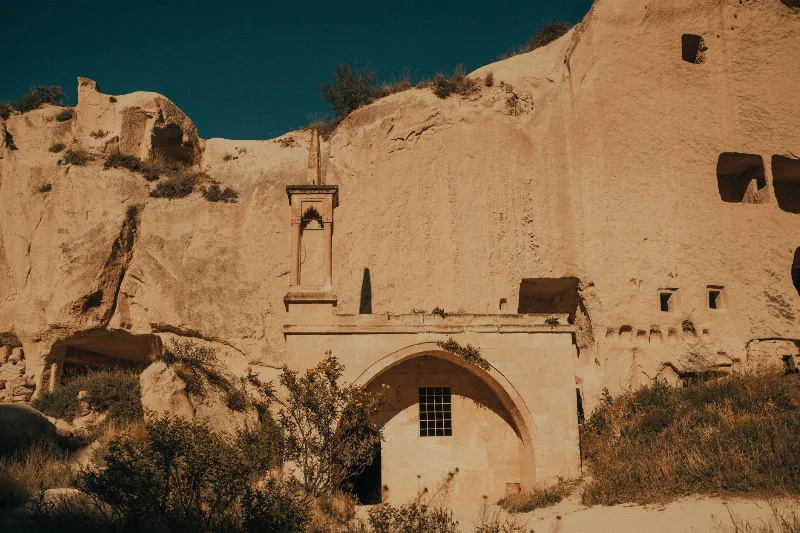
Göreme Open Air Museum
Göreme Open Air Museum is a rock-cut Byzantine monastic complex in the Göreme valley of Cappadocia, Nevşehir Province, whose churches preserve fresco cycles painted between the 10th and 13th centuries. It forms part of the UNESCO World Heritage Site of Göreme National Park and the Rock Sites of Cappadocia.
Explore →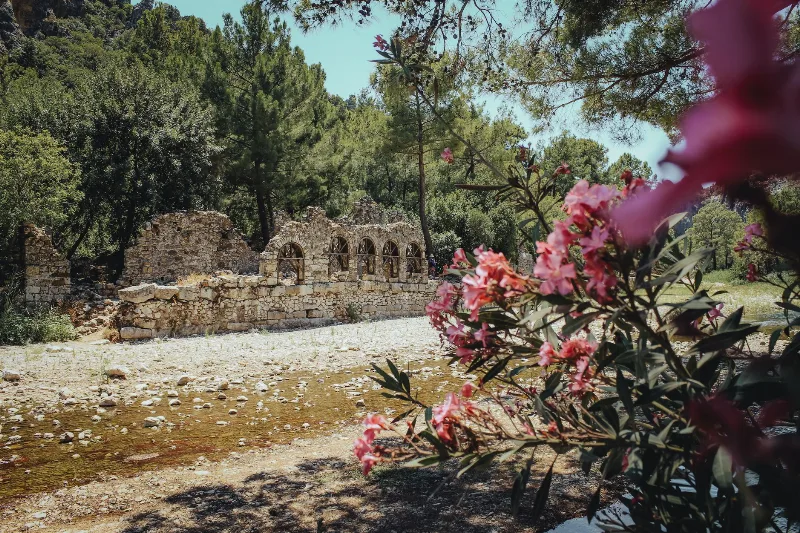
Olympos
Olympos is an ancient Lycian city in Antalya Province, Türkiye, whose ruins stand on both banks of a wooded river valley. Once a member of the Lycian League and later a Roman harbour town, it is best known for its theatre, baths and Lycian sarcophagi, and for the naturally burning Chimaera flames on the mountain above.
Explore →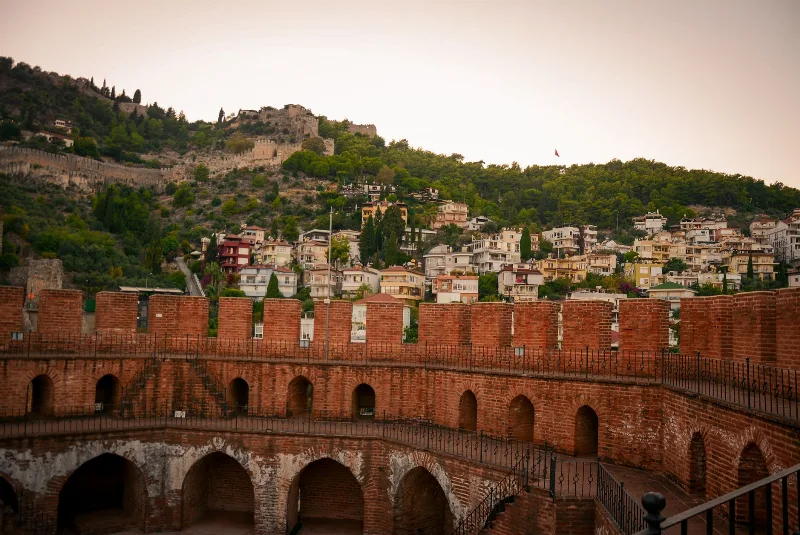
Alanya Castle
Alanya Castle is a medieval fortress on a rocky Mediterranean promontory in Antalya Province, Türkiye, whose surviving defences were largely built under the Seljuk Sultanate of Rum in the 13th century. Its walls, inner citadel, Red Tower and vaulted shipyard form one of the most complete Seljuk military and maritime complexes in Anatolia.
Explore →
Kaymaklı Underground City
Kaymaklı Underground City is a multi-level subterranean complex in Nevşehir Province, Cappadocia, used as a refuge by early Christian communities. It features tunnels, stone doors, storage rooms, and churches carved into volcanic tuff.
Explore →Related content
Pergamon
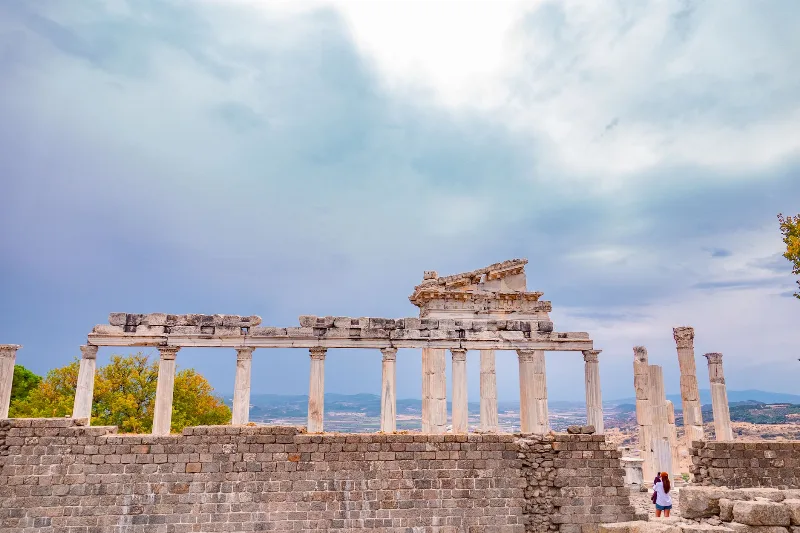
Pergamon was the Hellenistic capital of the Attalid dynasty in western Türkiye, built around a steep acropolis above the modern town of Bergama. Its Great Altar, theatre and Sanctuary of Asclepius make it one of the most important archaeological sites in Anatolia and a UNESCO World Heritage Site.
Pergamon
Pergamon is an ancient Greek city in Aeolis, today the modern town of Bergama in İzmir Province, Türkiye. Its acropolis, library and Great Altar of Zeus, together with the Asclepion healing sanctuary, form one of the most important archaeological settings in the eastern Mediterranean.
Bergama
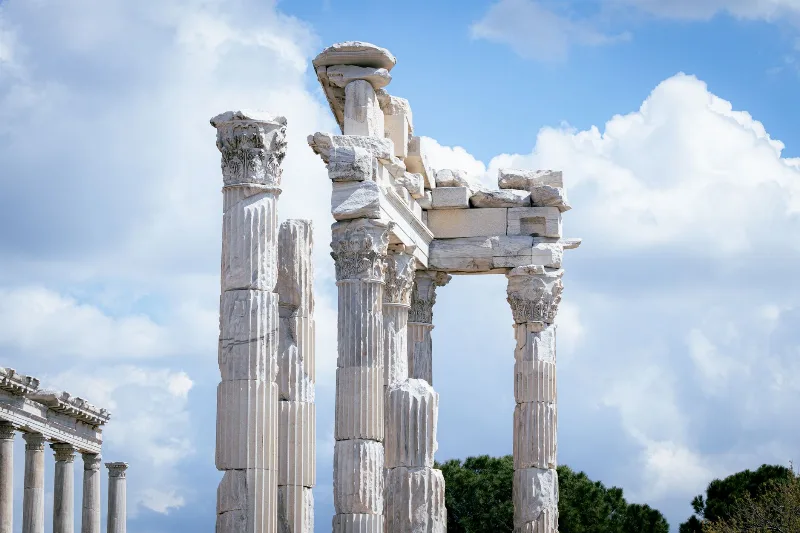
Bergama is an inland district of İzmir Province on the Bakırçay plain, built around the ancient city of Pergamon, a UNESCO World Heritage Site reached by a cable car up to its acropolis.
Bergama and the Acropolis of Pergamon
Bergama in İzmir Province is the modern town beneath ancient Pergamon, where a hilltop acropolis, a healing sanctuary and a Roman basilica reveal centuries of Anatolian history.
2-Day Bergama and Ayvalık Route: Pergamon to Cunda Island
A compact two-day route that pairs the terraced ruins of ancient Pergamon in inland Bergama with the olive-growing Aegean coast at Ayvalık and the causeway-linked island of Cunda.
4-Day North Aegean Coast Route
A four-day linear route along the North Aegean coast from Assos to İzmir, with stops at Ayvalık, Cunda, Dikili, Çandarlı, Bergama and Foça. The itinerary is designed for a realistic coastal and inland road trip by car.