
Olympos
Olympos is an ancient Lycian city in Antalya Province, Türkiye, whose ruins stand on both banks of a wooded river valley. Once a member of the Lycian League and later a Roman harbour town, it is best known for its theatre, baths and Lycian sarcophagi, and for the naturally burning Chimaera flames on the mountain above.
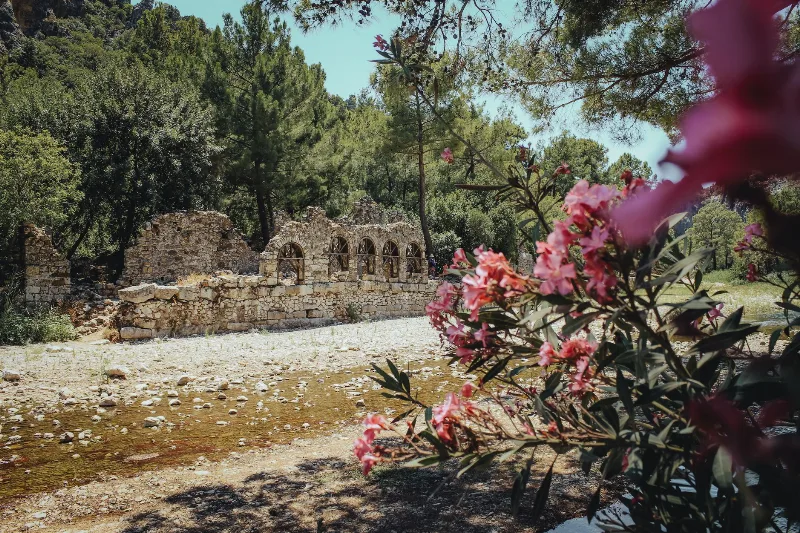
Olympos is an ancient city on the Mediterranean coast of Lycia, in the Kumluca district of Antalya Province, southern Türkiye. It occupies a wooded river valley inside the Olympos Beydağları National Park, where the Olympos River — today usually called the Olympos Çayı — descends from the Beydağları mountains and reaches the sea at Çıralı beach. In antiquity the settlement was a member of the Lycian League and later a Roman harbour town; its ruins are closely associated with the Chimaera flames, the natural gas vents that burn on the mountain slope above and are known in Turkish as Yanartaş. Because the valley is still wooded and the river still runs through the middle of the remains, the site preserves an unusual combination of archaeology and a living Mediterranean landscape.
Location and Landscape of the Olympos Valley
Olympos lies on the Gulf of Antalya, on the coastal stretch between Kemer to the north and Kumluca and Finike to the south-west. The valley opens onto a long pebble beach at Çıralı, a village that has developed at the mouth of the river. Behind the coast rise the Beydağları, whose highest summit, Tahtalı Dağı, is identified with the Mount Olympus of Lycia from which the city took its name. The river is short but has shaped the entire settlement: it divides the ruins into two groups of buildings and supports the dense cover of pine, plane, laurel and myrtle that grows over much of the site.
The ancient harbour, which gave the city its commercial value, lay at and near the river mouth. It has long since silted up, and the shoreline is now a beach rather than a working port. This silting, together with the valley's enclosed position between the sea and the mountains, is one of the reasons the ruins were never built over by a later town and remain legible within the natural landscape.
Olympos in the Lycian League
Olympos enters the historical record as one of the cities of Lycia, the mountainous region of south-western Anatolia whose communities organised themselves into a federal league. Strabo names Olympos among the six largest Lycian cities — the ones that carried three votes each in the league assembly, alongside Xanthos, Patara, Myra, Pinara and Tlos. The city issued its own coinage, with issues known from the 4th century BC onward, and its sheltered bay made it a natural port for the central Lycian coast. Hellenistic Olympos was fortified, and sections of the defensive circuit on the slopes above the river can still be traced.
The economy of the city in this period rested on the sea. Shipping and trade brought prosperity, but the same coastline also attracted maritime raiders, and Olympos's name is inseparable from the piracy that troubled the eastern Mediterranean in the late Hellenistic period.
Piracy, Rome and the Rebuilding of the City
Olympos is best documented for its role in the pirate wars of the 1st century BC. The city came under the control of the pirate leader Zenicetes, who used it together with neighbouring Phaselis as a base. In 78 BC the Roman commander Publius Servilius Vatia campaigned against the pirates of the region; Zenicetes was defeated, and Olympos was stormed and damaged in the fighting. Roman sources record that Zenicetes died at Olympos.
The city nevertheless recovered. Under the Roman Empire it was rebuilt and flourished again as a port, and most of the monumental architecture whose remains are visible today belongs to this Roman imperial phase. Olympos was equipped with the public buildings expected of a prosperous coastal city: baths, a theatre, an agora, formal gateways, streets and extensive cemeteries along the approaches to the settlement.
Byzantine Olympos and Its Gradual Abandonment
In late antiquity and the Byzantine period Olympos remained inhabited and became the seat of a bishop. A church of basilical plan survives on the site, and the reduced population appears to have gathered around a smaller defended core rather than the full extent of the Roman city. Like many coastal settlements of Lycia, Olympos was affected by a combination of earthquake damage, the silting of its harbour and insecurity at sea during the early medieval period, and the town was eventually given up.
A small later fortification among the ruins is often connected in local tradition with Genoese or Rhodian seafarers. This attribution is not securely documented, and it is better treated as tradition rather than established history. What is clear from the physical remains is a long occupation followed by centuries in which the buildings were quarried, collapsed and gradually covered by vegetation.
The Standing Remains
The ruins are spread over both banks of the river and are reached on foot along shaded paths. The most prominent structures belong to the Roman and late Roman city, with earlier Hellenistic elements and a Byzantine religious building among them.
The Theatre and Public Buildings
The Roman theatre is set into the slope in the classic Mediterranean manner, with its cavea resting on the hillside and only part of the structure carried on built vaults. Much of the seating has collapsed or been displaced, but the curve of the auditorium and the position of the stage building can still be read clearly. Nearby are the extensive remains of the Roman baths, recognisable from their brick-faced walls, rows of rooms and the layout of heated and cold sections typical of Roman bathing complexes. Traces of the agora, of streets and of other public structures survive between the major monuments, often reduced to foundations and low wall lines beneath the trees.
The Temple Gate
Among the more distinctive survivals is an arched monumental gateway of the Roman imperial period, commonly called the Temple Gate. It carries a dedicatory inscription of the 2nd century AD, and its form — a formal portal framing a passage through the city — reflects the Roman practice of marking entrances and important routes with inscribed architecture.
Tombs and the Necropolis
The necropolis is one of the most informative parts of the site. Lycian-type sarcophagi with ogival lids stand among later Roman tomb structures, showing how burial customs at Olympos continued across different periods. The tombs are scattered along the valley and near the approaches to the city, and their distribution helps to define the extent of the ancient settlement beyond the built-up core. Sections of the city wall and the remains of a bridge over the river complete the picture of a port town organised around its waterway.
The Chimaera Flames Above the Valley
On the rocky slope above Çıralı, at a place called Yanartaş, natural gas seeps from the ground and burns continuously, producing small flames that survive wind and rain. Ancient authors were aware of the phenomenon and connected it with the myth of the Chimaera, the fire-breathing monster killed by Bellerophon — a story already known to Homer. The myth is a legend and should be understood as such; the flames themselves are a geological phenomenon caused by escaping methane. The site is reached by a steep uphill path from the valley, and the flames are best seen after dark, when they are most visible.
Visiting Olympos: Terrain, Access and Timing
The most common approach to Olympos is on foot from Çıralı, following the beach and then the river valley into the site. Access is also possible from the direction of the Olympos village on the inland side. The terrain is uneven throughout: stone paving, tree roots, collapsed masonry and the shallow river itself all have to be crossed, and the surface becomes slippery after rain. Sturdy footwear is useful, and some sections require care where walls and ancient paving are broken.
The valley is largely shaded by trees, which makes the summer months more bearable than at exposed coastal sites, but spring and autumn are the most comfortable seasons for walking. High summer brings strong heat and the busiest conditions. The ruins lie within a national park, and the beach at Çıralı is a long pebble and sand shoreline where the river meets the sea. Because the site is extensive and partly overgrown, allowing time to walk between the theatre, baths, gate, tombs and basilica is more rewarding than a quick pass through the valley.
Related Historic Sites in the Region
Olympos sits within a stretch of the Lycian coast rich in ancient remains. Phaselis, near Kemer to the north, is another coastal city with harbours, an aqueduct and a theatre, and shares with Olympos a history of involvement in the piracy of the 1st century BC. Further south-west, around Demre, are the ruins of Myra and its harbour at Andriake, while inland from Finike lies Arykanda, a city terraced onto a mountainside. The villages of Çıralı and Adrasan and the town of Kumluca provide the practical base for reaching the valley, and the city of Antalya is the main point of arrival for the wider region. Read together, these sites show how the cities of Lycia depended on the sea, on their harbours and on the mountain hinterland that supplied and defended them.
Routes
All routes →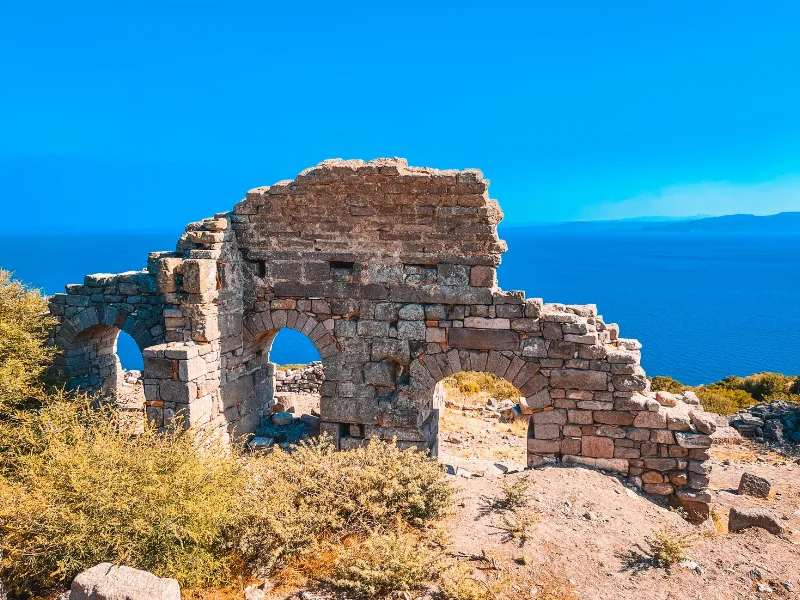
3-Day Assos and Troy Route
A three-day route through Turkey's Troad region, starting in Çanakkale and finishing at the clifftop village and ancient harbour of Assos, with Troy and the lesser-known classical ruins in between.
Explore →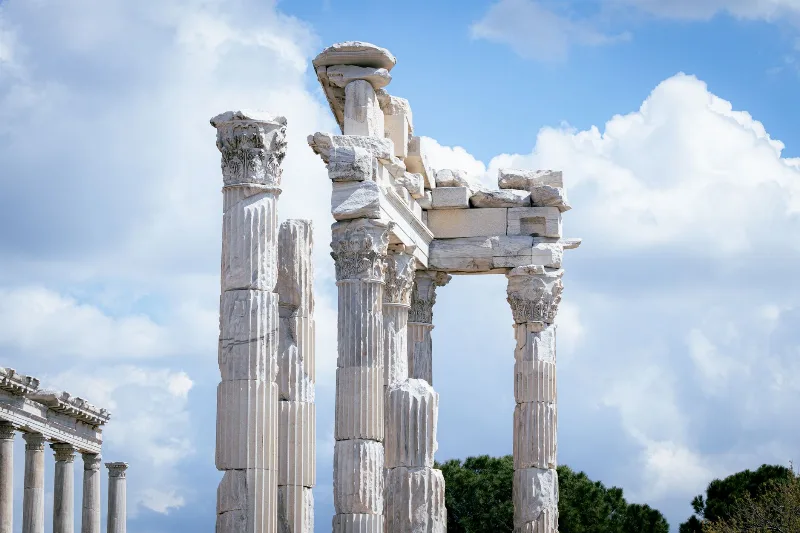
2-Day Bergama and Ayvalık Route: Pergamon to Cunda Island
A compact two-day route that pairs the terraced ruins of ancient Pergamon in inland Bergama with the olive-growing Aegean coast at Ayvalık and the causeway-linked island of Cunda.
Explore →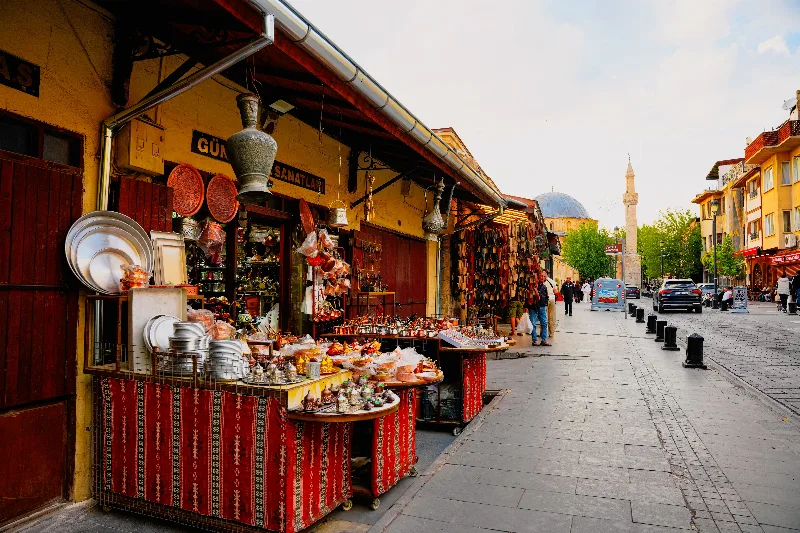
1-Day Gaziantep Route
A compact one-day route through central Gaziantep, moving from the Zeugma Mosaic Museum to the castle hill, the historic hans and bazaars, and a baklava finish in the old centre.
Explore →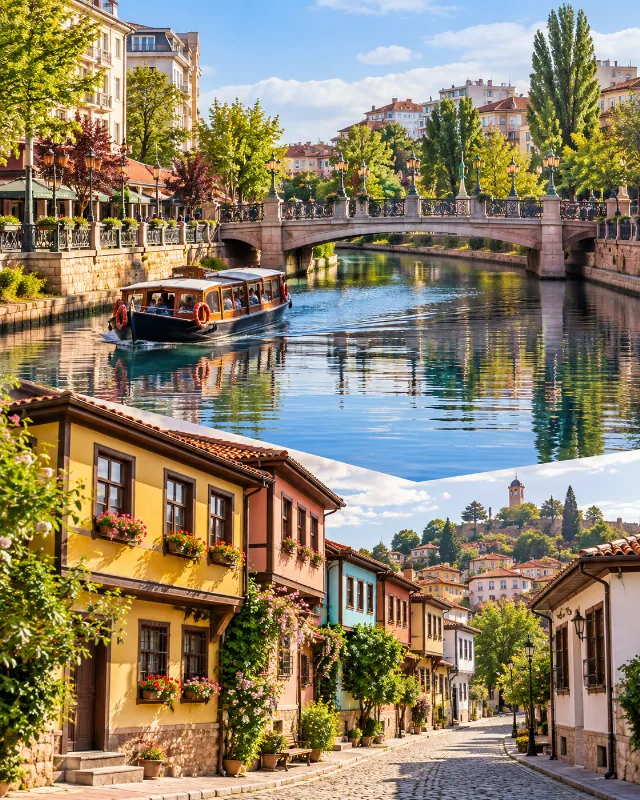
1-Day Eskişehir Route
A one-day route through Eskişehir combining Odunpazarı’s historic streets, local food, the Porsuk River and some of the city’s best-known public spaces.
Explore →Related content
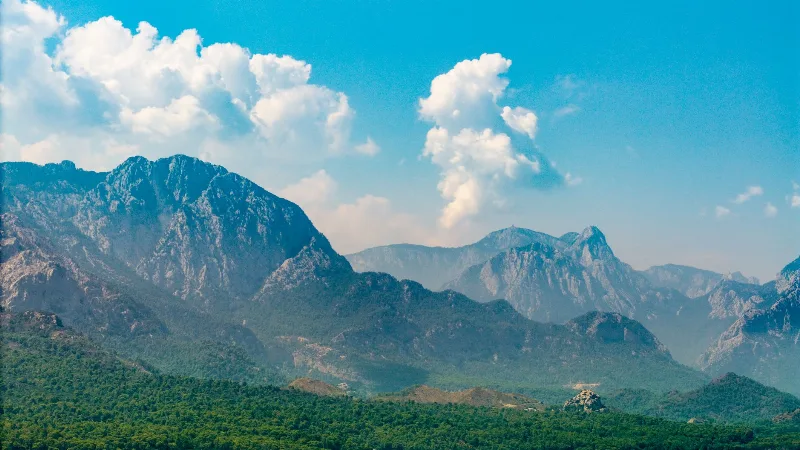
Antalya
Antalya offers a unique blend of vibrant history and stunning natural beauty, making it a must-visit destination in Türkiye.
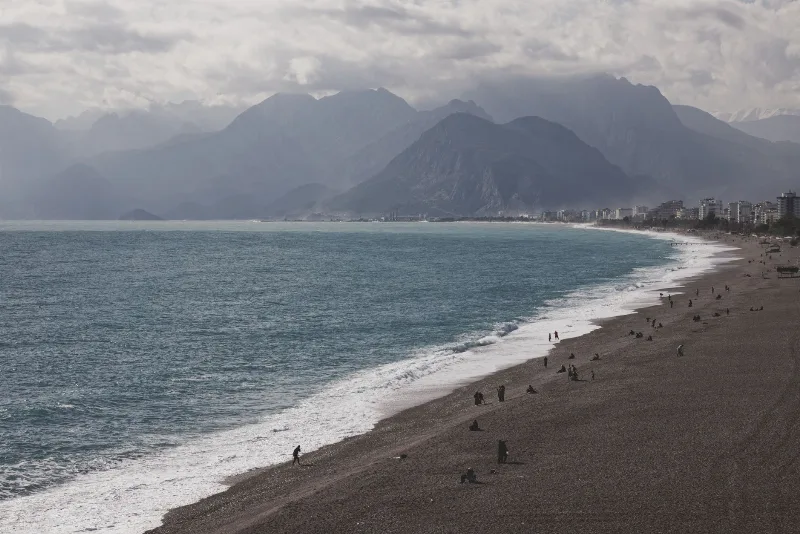
Çıralı
Çıralı is a small protected coastal settlement in Antalya Province, where a loggerhead turtle nesting beach meets the Lycian and Roman ruins of Olympos.
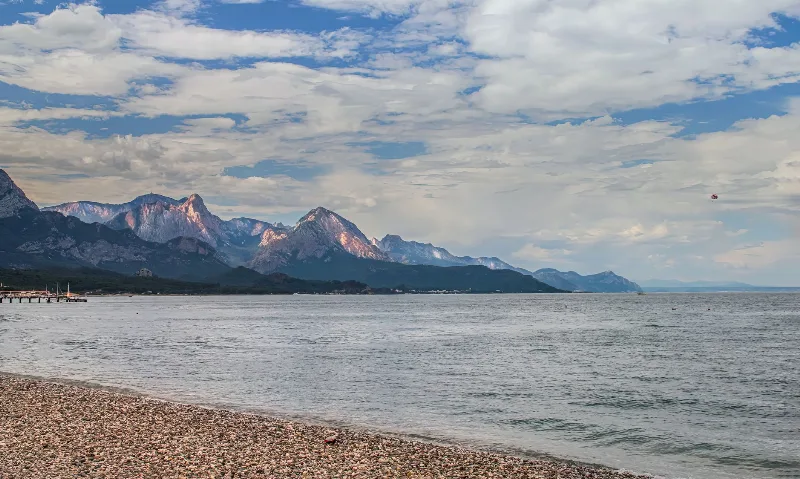
Kemer
Kemer is a coastal district of Antalya Province on Türkiye's Mediterranean shore, known for its yacht marina, pebbly beaches and its position between the Beydağları mountains and ancient Lycian sites such as Phaselis.
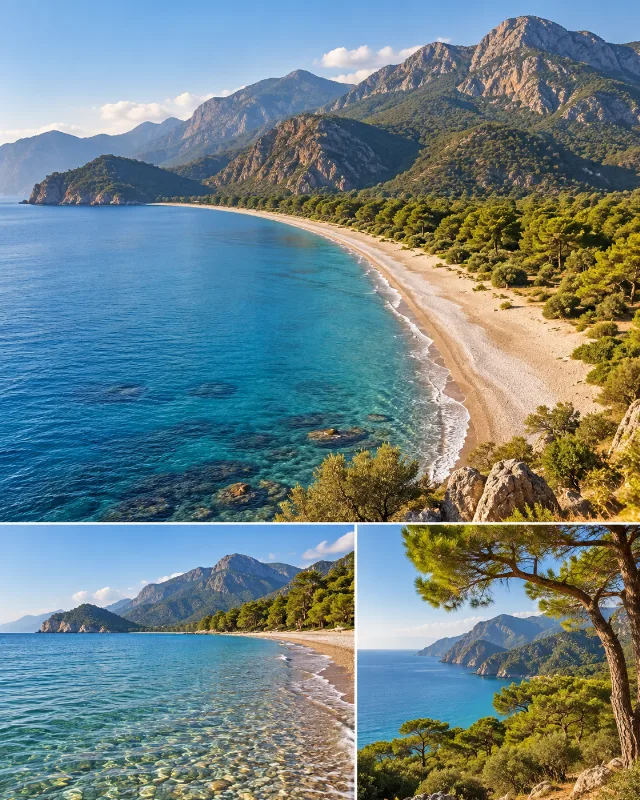
Çıralı Beach
A long beach on Antalya’s Mediterranean coast surrounded by mountains, pine forest and the historic landscape of Olympos.
Olympos
Olympos is a Lycian and Roman-era city on the Antalya coast, where overgrown ruins share a river valley with a Mediterranean beach and the perpetual flames of Yanartaş burn on the slope above.
6-Day Mediterranean Coast Route: Antalya to Marmaris
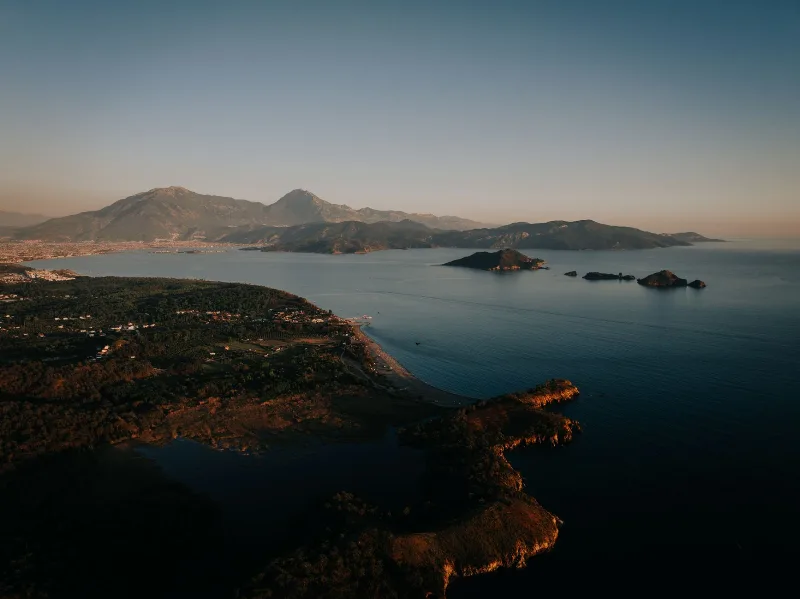
A six-day linear route along Türkiye's Mediterranean coast, linking Antalya, Olympos, Demre, Kekova, Kaş, Kalkan, Patara, Fethiye and Dalyan before finishing in Marmaris. It mixes ancient cities, long beaches and small harbour towns on a continuous westward drive.