
Çıralı
Çıralı is a small protected coastal settlement in Antalya Province, where a loggerhead turtle nesting beach meets the Lycian and Roman ruins of Olympos.
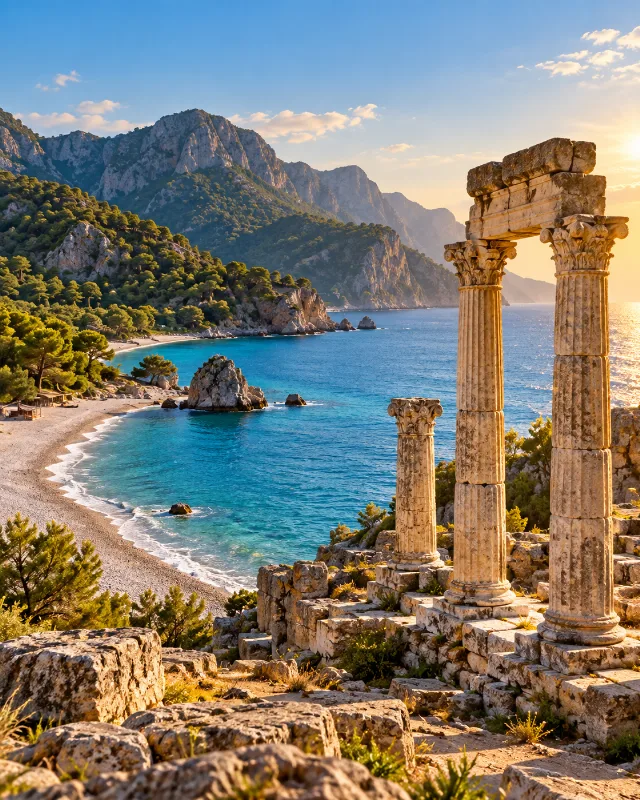
Çıralı is a small coastal settlement on the Mediterranean shore of Antalya Province in southern Türkiye, in the Kumluca district, on the stretch of coast between the towns of Kemer and Kumluca. It occupies a low, flat band of land behind a long beach, with the wooded slopes of the Beydağları mountains rising immediately inland. The settlement is unusual among Turkish coastal villages because much of the surrounding area is protected: the beach is a nesting site for loggerhead sea turtles, and the ruins of the ancient city of Olympos stand at the northern end of the sand.
Geography and Setting
Çıralı lies on a narrow coastal shelf where the mountains of the Beydağları range come close to the sea. The village itself sits on alluvial ground just behind the beach, surrounded by citrus and pomegranate orchards, vegetable plots and garden walls. Behind the settlement the land climbs steeply into forested slopes that form part of the Olympos Beydağları Coastal National Park, a long protected strip of coast and mountain between Kemer and the Gulf of Antalya.
At the northern end of the beach a small stream reaches the sea after running down through the Olympos valley. This stream, the valley behind it and the coastal strip are the reason the area has been protected both as an archaeological site and as a natural site. The protection has kept the settlement low and small, so the landscape still reads as a working agricultural village beside a largely undeveloped shore rather than a built-up resort.
The Beach and the Turtle Nesting Season
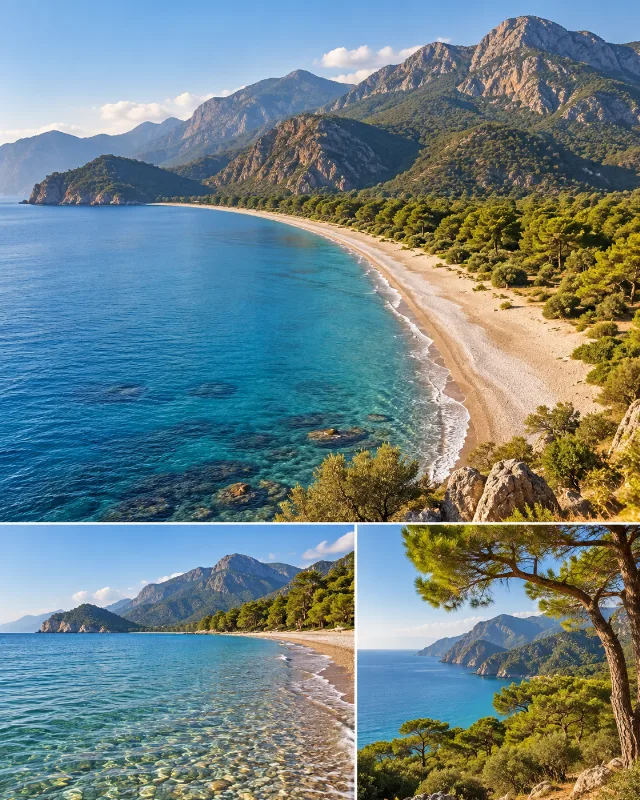
The beach at Çıralı runs for roughly three kilometres, made up of sand and pebbles and shelving gently into clear water. It is one of the important loggerhead sea turtle nesting beaches on the Turkish Mediterranean coast. Female turtles come ashore at night during the warmer months to lay their eggs in the sand, and the hatchlings emerge later in the season and make their way to the sea.
Because of the nesting, the beach is managed differently from an ordinary holiday shore. Nests are marked and protected, artificial lighting near the sand is restricted so that hatchlings are not disoriented, and visitors are expected to keep their distance from turtles and nests, avoid leaving obstacles on the sand and keep noise low at night. The beach is at its quietest in the early morning and after dark, when the nesting activity takes place.
The Ruins of Olympos at the North End
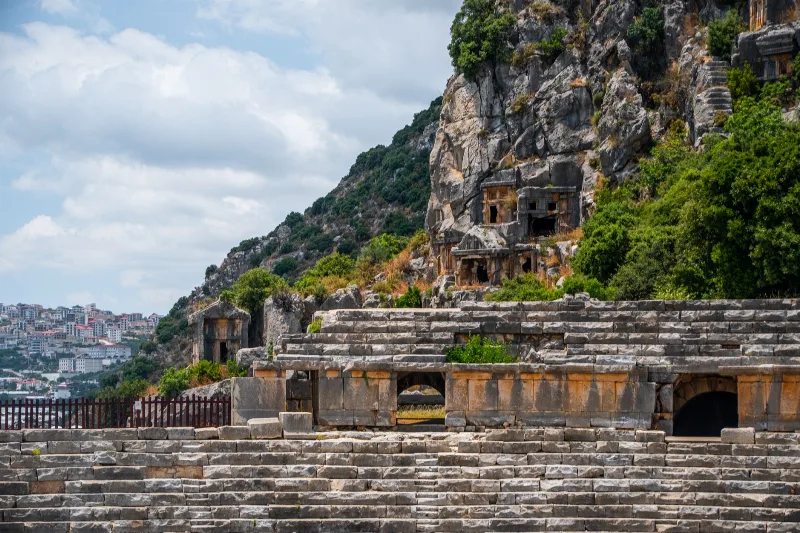
Olympos was a Lycian city that later became part of the Roman and then the Byzantine world. Its ruins lie at the northern end of Çıralı beach, in a shallow valley where the stream meets the sea. The site is partly overgrown with trees and vegetation, which gives it a very different atmosphere from the more excavated classical sites of the region.
Among the remains are rock-cut and free-standing sarcophagi, sections of city walls, a theatre, Roman baths and building foundations spread across both banks of the stream. A path leads up to the acropolis area on the hillside above. Because the ruins sit so close to the beach, it is possible to walk from the sand directly into the ancient city, which is one of the features that makes this stretch of coast distinctive.
Yanartaş and the Chimaera Flames
Inland and above the Çıralı area, on the slopes within the national park, is Yanartaş, a hillside where natural gas seeps from the rock and burns as small, constantly alight flames. The phenomenon was known in antiquity and is associated with the myth of the Chimera. Reaching the flames involves a steady uphill walk from the coastal area, and the site is usually more striking in the evening or after dusk when the flames stand out against the dark.
Village Character and Architecture
Çıralı is a farming village at heart. Its buildings are low, mostly of one or two storeys, with tiled roofs and simple facades, and many of them are set among trees rather than along formal streets. Traditional features such as wooden elements, garden walls and shaded courtyards survive in parts of the settlement, and the boundary between buildings and orchards is often blurred.
Under the protected status of the area, large-scale construction has been limited, so the village has not developed the tall hotel blocks and dense commercial frontage found in some other parts of the Antalya coast. The result is a scattered, green settlement where citrus groves, oleander hedges and narrow lanes define the everyday scene.
Walking Around Çıralı
A walk through Çıralı is mostly flat and easy within the village itself. Lanes run between orchards and gardens, and short paths lead down to the beach. The most natural outing is to follow the sand northwards to the Olympos ruins, a walk of roughly half an hour to an hour depending on where you start and how often you stop; parts of the route can also be followed on a path through the vegetation behind the beach.
The walk up to Yanartaş is a different matter. It climbs steadily and can be hot and tiring in the middle of the day, so sturdy footwear and water are useful. In the village and along the beach, the terrain is gentle, but the surrounding national park rises quickly into steep, forested hills.
How to Reach Çıralı
Çıralı is reached by road. The settlement lies off the D400 coastal highway that runs between Kemer to the north and Kumluca to the south, and a signposted side road turns off the highway and descends towards the village. The final stretch of this road is narrow and winding as it drops through the trees towards the coast. There is no railway in the area, and the nearest international airport is at Antalya.
When to Visit
Spring and early autumn are the most comfortable periods. From April to June the weather is mild, the landscape is green and the sea begins to warm, while September and October bring softer heat and warm water. High summer is hot and the busiest time on the coast, and it also coincides with the peak of turtle nesting and hatching activity, when the beach is subject to the strictest protection. Winter is mild but wetter, and the area is much quieter.
Practical Points Before You Go
Because of its protected status, Çıralı is not a place of large resort development, and services are on a modest scale; this is part of its character rather than a shortcoming. Visitors should expect to respect the environmental rules that apply to the beach, particularly during the nesting season. Sun exposure is strong along the shore, and the uphill walk to Yanartaş is best done outside the hottest hours. The beach is a mixture of sand and pebble, and the shelving is gentle, but the water can still be lively in windy conditions.
Nearby Places
The ancient city of Olympos is the closest historic site, effectively at the northern end of the beach. Further south along the coast lies Adrasan, another coastal settlement set in a bay below wooded hills. To the north, the coastal town of Kemer marks the beginning of the more developed part of the Antalya shoreline, while Kumluca lies inland to the south. The wider area belongs to the Olympos Beydağları Coastal National Park, and the long-distance Lycian Way walking route passes through this part of the coast, linking Çıralı with Olympos and the surrounding valleys.
From the land
Find All →
Beypazarı Carrots
Beypazarı carrots are the sweet, crisp orange carrots grown in the stream-fed valley of Beypazarı, a district of Ankara Province in Central Anatolia. Deep alluvial soils, irrigation water and a long vegetable-growing tradition have tied the district's name to this single root crop.
Explore →
Trakya Baldo Rice
Baldo rice is a large-grain variety grown on the flood plains of Thrace in northwestern Türkiye, where river-fed paddies around Edirne produce grain prized for pilaf. Its long, glassy kernels and the region's water-rich alluvial soils are closely linked.
Explore →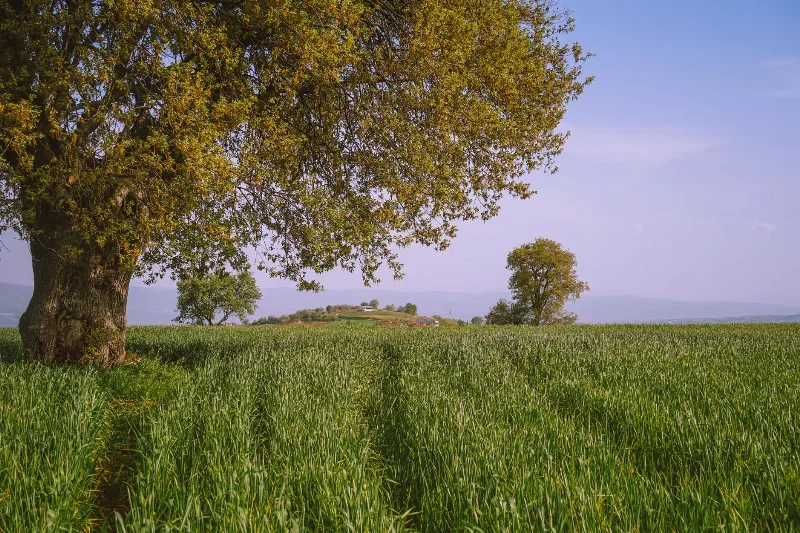
Bursa Chestnuts
Bursa chestnuts are sweet, starchy nuts grown on the sloping terrain of Bursa province in northwestern Türkiye, where a temperate climate supports chestnut trees and an autumn harvest.
Explore →Related content
Antalya
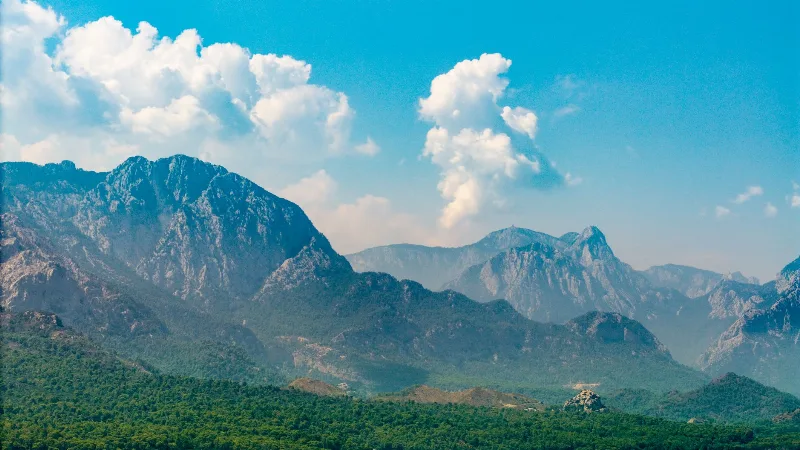
Antalya offers a unique blend of vibrant history and stunning natural beauty, making it a must-visit destination in Türkiye.
Olympos
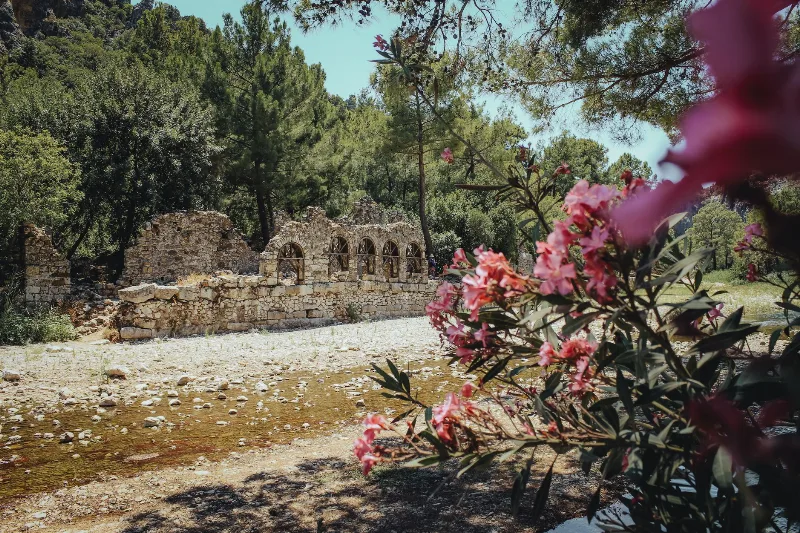
Olympos is an ancient Lycian city in Antalya Province, Türkiye, whose ruins stand on both banks of a wooded river valley. Once a member of the Lycian League and later a Roman harbour town, it is best known for its theatre, baths and Lycian sarcophagi, and for the naturally burning Chimaera flames on the mountain above.
Olympos
Olympos is a Lycian and Roman-era city on the Antalya coast, where overgrown ruins share a river valley with a Mediterranean beach and the perpetual flames of Yanartaş burn on the slope above.
Çıralı Beach
A long beach on Antalya’s Mediterranean coast surrounded by mountains, pine forest and the historic landscape of Olympos.
3-Day Antalya Ancient Coast Route
A three-day route combining Antalya’s old city with Perge, Aspendos, Side, Olympos and the Mediterranean landscapes around Çıralı.
The Ancient City of Olympos and the Yanartaş Flames
On the Mediterranean coast of Antalya, the Lycian ruins of Olympos rest in a wooded river valley, while the Yanartaş flames keep burning on the mountainside above Çıralı.