
Olympos
Olympos is a Lycian and Roman-era city on the Antalya coast, where overgrown ruins share a river valley with a Mediterranean beach and the perpetual flames of Yanartaş burn on the slope above.
Olympos is an ancient city of Lycia on the Mediterranean coast of Antalya Province in southern Türkiye, built along a small river valley that opens onto its own beach. It lies in Kumluca district on the Gulf of Antalya, inside Olympos Beydağları National Park and roughly between the villages of Çıralı and Adrasan. The site is unusual for the way its ruins, its stream and the sea sit within a few minutes of each other: a visitor walks through Lycian and Roman remains and reaches the water at the end of the same path. Olympos is also linked to a second, separate phenomenon above it — Yanartaş, a hillside where natural gas escapes from the rock and burns as small, constantly lit flames, connected in antiquity to the myth of the Chimera.
Geographical setting and how the site is laid out
The city stands on the coastal plain where a short stream, fed by springs in the Beydağları range behind it, cuts down to the sea. The valley is narrow and enclosed, hemmed in by steep, forested slopes, which is one reason the ruins have survived in a dense, half-wild state rather than being cleared for modern building. The stream runs through the middle of the ancient settlement, dividing the remains into two roughly parallel bands, and it reaches the Mediterranean through the pebble beach that also carries the name Olympos.
Because of this arrangement, the archaeological area is not a fenced, museum-style site with neat rows of columns. It is a green, partly flooded and heavily overgrown landscape in which monuments appear among oleander, laurel, carob and pine. Paths follow the streambed and the lower terraces, sometimes on wooden walkways and sometimes on earth and stone, and the beach forms the natural western end of the visit. The whole complex sits within a national park, so the setting is protected rather than developed, and there are no large resort buildings inside the valley itself.
Olympos in the Lycian world
Olympos was one of the significant cities of Lycia, the mountainous region of south-western Anatolia whose city-states formed the Lycian League, a federal union that is often described as one of the earliest examples of representative government in the ancient world. Olympos was a member of this league and struck its own coinage, which points to a community of real economic weight rather than a minor settlement.
Its position explains that wealth. The city had a harbour, access to timber from the surrounding mountains, and farmland along the coastal plain. In the first century BC the area became associated with piracy in the eastern Mediterranean; the pirate leader Zenicetes is reported to have used Olympos and nearby strongholds as a base before Roman forces under Publius Servilius Vatia suppressed him. After that, Olympos was absorbed into the Roman provincial order and continued to function as a city, acquiring the public buildings typical of a Roman-era Anatolian town.
Like many coastal settlements of Lycia, Olympos went into decline in late antiquity. Earthquakes, the silting and shifting of harbours, and raids along the coast during the early medieval period are the usual explanations given for its gradual abandonment. By the Middle Ages the city had ceased to be a living urban centre, and the valley was left to vegetation and to the occasional traveller, which is essentially the condition in which it was rediscovered and later studied.
What can actually be seen among the ruins
The remains are scattered over a fairly large area and are best understood as a series of features rather than a single monument.
- Necropolis and sarcophagi: Lycian-style stone sarcophagi are among the most visible structures, many of them standing in dense scrub and some carrying inscriptions. They are characteristic of Lycian burial practice and give the site much of its atmosphere.
- Theatre: A Roman-era theatre is cut into the slope on one side of the valley. Its seating and some of the supporting structure can be traced, though it is partly collapsed and overgrown.
- Acropolis and city walls: The higher ground above the valley holds the acropolis, with stretches of fortification wall and the foundations of buildings. From here the layout of the city and its relationship to the coast becomes clear.
- Temple remains: Foundations and fragments of a temple, usually described in relation to the Roman period, survive on the site.
- Roman bridge and vaulted structures: A stone bridge and other vaulted constructions span or stand beside the stream, showing how the ancient city managed its watercourse.
- Byzantine basilica: A later Christian basilica indicates that the settlement continued into the Byzantine era before its final abandonment.
Because the stream shifts and vegetation grows quickly, some elements are seasonally more or less visible. Small stone blocks, column fragments, carved pieces and sections of paving appear along the paths without being labelled, which is part of what makes the site feel archaeological rather than curated.
The eternal flames at Yanartaş
Above the coast, on the slope facing Çıralı, is Yanartaş — literally "burning stone" — where methane and other gases seep from the ground and ignite on contact with air, producing small flames that have burned continuously within living and recorded memory. The flames emerge in clusters from cracks in the rock rather than from a single vent, and the surrounding ground is bare and scorched where the heat has suppressed vegetation.
In antiquity this was identified with the Chimera, the fire-breathing monster of Greek myth, and the site was a landmark for sailors and travellers along the Lycian coast. Today it is reached either by a road and a short climb or by a walking trail from Çıralı, and it is usually combined with a visit to Olympos itself. The flames are modest in size but genuinely continuous, and the setting — a rocky slope above the sea, with the lights of the coast below — is the reason the site is treated as a distinct attraction rather than a footnote to the ruins.
Landscape and natural character
The lower valley is unusually lush for the Mediterranean coast, thanks to permanent water in the stream and to the shade of the enclosing hills. Vegetation includes pine and cedar woodland on the slopes, with maquis of oleander, laurel, myrtle and carob closer to the ruins. The stream supports frogs, dragonflies and dense banks of water-loving plants, and the humidity in summer is noticeably higher than on the open coast.
The beach at the mouth of the valley is pebbly rather than sandy, backed by the forested slopes and open to the Gulf of Antalya. This stretch of coast is one of the documented nesting areas for loggerhead sea turtles, which is a further reason the shoreline has been kept largely free of development. The water is clear and generally calm in summer, though the bay can be exposed during winter storms.
Getting there and practical visiting
Olympos is reached by road from Antalya along the coastal route through Kemer towards Kumluca and then by a side road to the valley; access is also possible on foot from Çıralı, roughly along the beach and the valley floor, a walk of a few kilometres. There is a ticketed entrance to the archaeological area, and vehicles are left outside the ruins, after which the visit is made on foot.
Several practical points are worth knowing in advance:
- The paths are uneven, sometimes muddy near the stream and occasionally crossed by water, so footwear with grip is more suitable than sandals.
- Shade is heavy in the valley, but the site is humid in high summer; carrying water is sensible.
- Summer insect activity, particularly mosquitoes near the water, is significant in the evening.
- There are no large commercial facilities inside the ruins, so the visit is best planned as a half-day rather than a quick stop.
- The ruins and the beach are effectively one visit; many people combine them with the climb to Yanartaş on the same day.
When to go and how conditions change
The coast has a Mediterranean climate with hot, dry summers and mild, wet winters. Spring and autumn are the most comfortable periods for walking the site, with moderate temperatures and active vegetation. Midsummer brings high heat and humidity in the enclosed valley, and this is when the stream and the beach are most appealing. Winter rain can raise the water level in the streambed and make some paths slippery or temporarily impassable, and the site is far quieter outside the summer months. Swimming is realistic from late spring through autumn, with the sea at its warmest towards the end of summer.
Related places along the same coast
Olympos sits in a stretch of the Antalya coast with several other places that share its history or its landscape. Çıralı is the closest village and the usual base for Yanartaş. Adrasan lies a short distance south, with its own bay and access to the Gelidonya lighthouse area at the tip of the peninsula. Further north towards Kemer is Phaselis, another ancient coastal city with harbours and ruins of a different character, while Kumluca is the nearest administrative centre. Inland and to the north-west rises Tahtalı Dağı in the Beydağları range, reachable by a cable car and offering views over the whole coastline. Antalya, the provincial capital, lies to the north-east and connects the region to the rest of Türkiye.
Related content
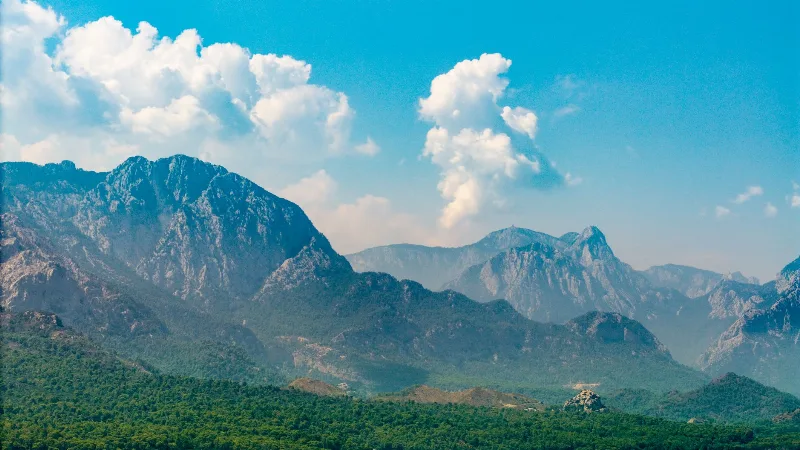
Antalya
Antalya offers a unique blend of vibrant history and stunning natural beauty, making it a must-visit destination in Türkiye.
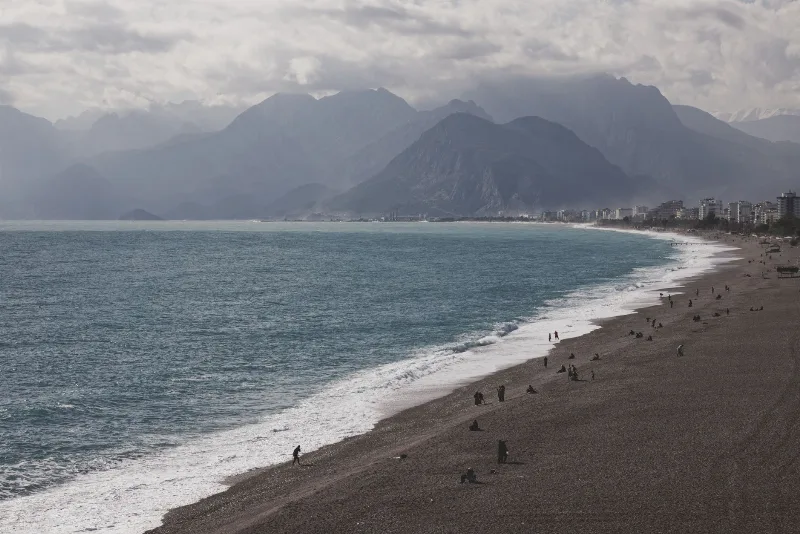
Çıralı
Çıralı is a small protected coastal settlement in Antalya Province, where a loggerhead turtle nesting beach meets the Lycian and Roman ruins of Olympos.
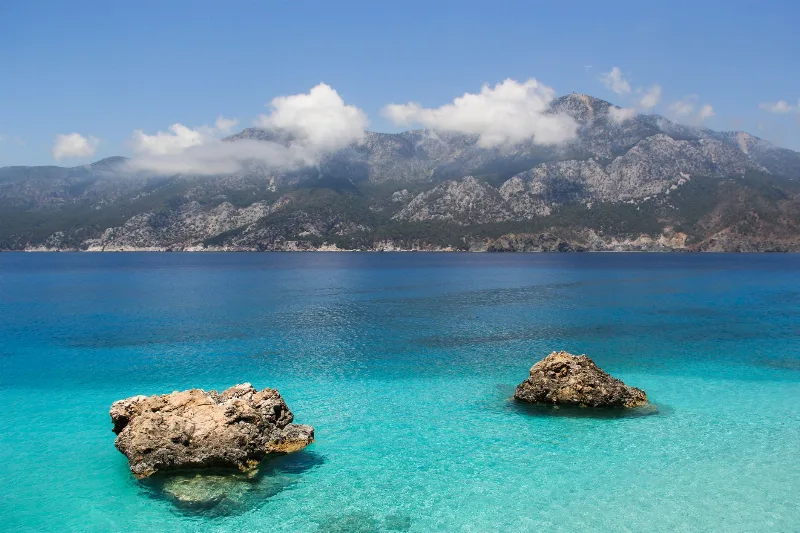
Adrasan
Adrasan is a small coastal village in Antalya's Kumluca district, built around a sheltered bay where pine-covered hills meet a long beach. It is a stop on the Lycian Way and a starting point for boat trips along the surrounding coves.
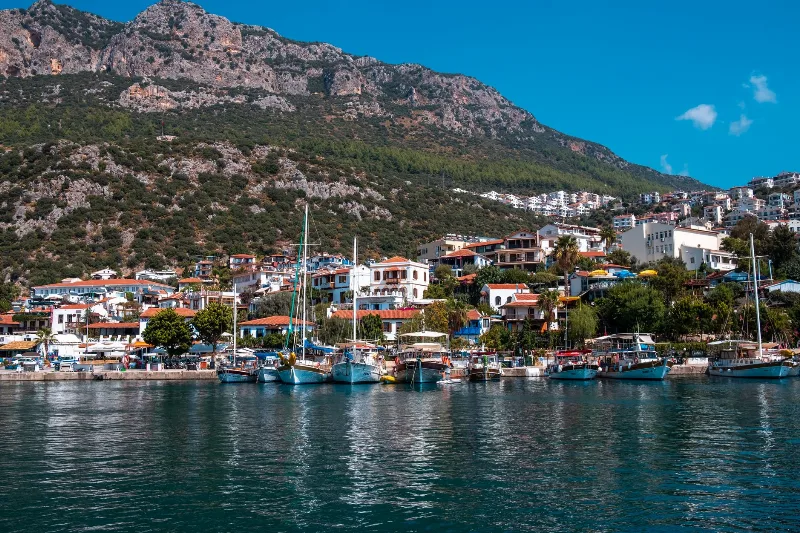
5-Day Antalya to Fethiye Coastal Route
A five-day driving itinerary along Turkey's Mediterranean shore, linking Antalya, Phaselis, Olympos, Demre, Kekova, Kaş, Kalkan, Patara and Fethiye. The route is linear, coastal for most of its length, with short inland detours to Lycian ruins.
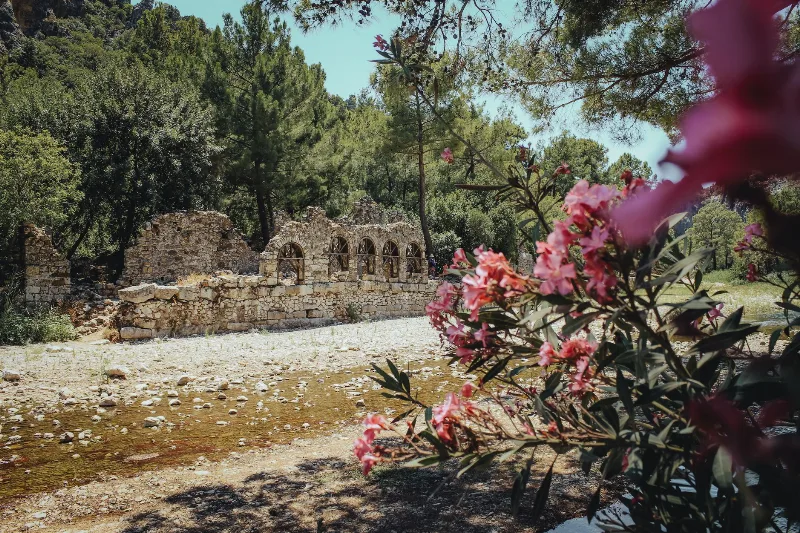
Olympos
Olympos is an ancient Lycian city in Antalya Province, Türkiye, whose ruins stand on both banks of a wooded river valley. Once a member of the Lycian League and later a Roman harbour town, it is best known for its theatre, baths and Lycian sarcophagi, and for the naturally burning Chimaera flames on the mountain above.
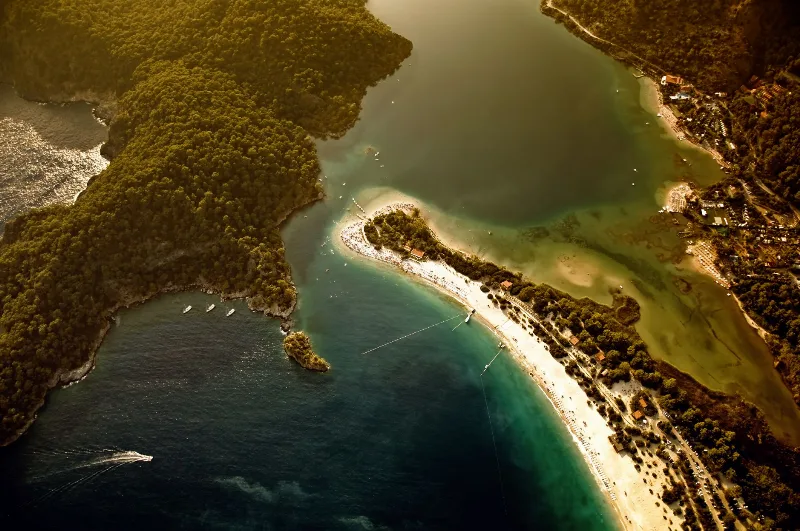
4-Day Lycian Coast Route
A four-day route along Turkey's Lycian coast, driving from Fethiye and Ölüdeniz through Kalkan, Kaş, Kekova, Demre and Olympos to finish in Antalya.