
1-Day Sinop Route: Old Town, Castle and Hamsilos Bay
A single-day route through Sinop, from the old harbour and castle walls to the archaeological museum, the historic prison and the wooded bays along the coast west of the city.
Sinop sits at the northernmost tip of Anatolia, a compact Black Sea port where a Greek-founded colony, a Byzantine-era fortress and an Ottoman town occupy the same small peninsula. This one-day route begins in the old harbour quarter of the city and ends at Hamsilos Bay on the coast to the west. It takes a single day and links the historic centre, the citadel, the archaeological museum and the former fortress prison with the beaches and wooded inlets beyond the town.
The character of the day shifts as it goes: the morning is urban and largely on foot, the late morning is spent indoors with collections and prison courtyards, and the afternoon turns coastal as the route follows the shoreline westward. The journey is linear rather than circular, and travellers who want to return to Sinop in the evening simply retrace the coastal road back east. Sinop itself belongs among the Cities & Districts and Historic Places of the region, while the stops west of town fall naturally into Beaches & Bays and Nature.
Day 1: Sinop Old Town, the Citadel and the Western Coast
Morning: the Old Harbour and the Castle Walls
Start at the old harbour on the sheltered southern side of the peninsula, where the town faces its bay and the waterfront still shows the working character of a Black Sea port. From here the route climbs gently into the old town, which is small enough to cover entirely on foot.
The defining feature of the morning is the fortress that gives Sinop its shape. The citadel walls follow the edge of the peninsula, with sections of towers and ramparts facing both the bay and the open sea. Walking a stretch of the walls explains why the site was chosen: the town is almost enclosed by water, and the defences close off the narrow landward side.
Inside the walled area, several historic buildings sit within a few minutes of one another. The Alaaddin Mosque rises over the old quarter, and the Pervane Medresesi, a Seljuk foundation, occupies a courtyard nearby. The Balatlar complex preserves Byzantine-era remains, and a monument to Diogenes of Sinope, the philosopher born in the city, stands along the waterfront. These stops belong together because they are all part of the same dense historic core, and grouping them in one morning avoids doubling back later.
Late Morning: the Archaeological Museum and the Historic Prison
Stay in the old town for the next two stops. The Sinop Archaeological Museum gathers finds from the ancient city and the surrounding region, including pottery, amphorae, coins and sculpture that trace the long sequence of Greek, Roman, Byzantine and Ottoman life on this coast. It gives context to the walls and streets just walked.
A short distance away, the former fortress prison is one of Sinop's most distinctive places. Built within the citadel, it served as a prison for many decades before closing, and its cells, corridors and courtyards are now open to visitors as a museum. The two stops work well back to back: the museum explains the deep past, while the prison shows how the same defensive site was reused in recent history.
Afternoon: Karakum, Akliman and the Coast Road West
After the historic centre, leave the peninsula and turn west along the coast. The first stop is Karakum, the beach closest to the town, where the shore opens out and the water is calm enough for a break. From there the route continues west to Akliman, a longer sandy beach with shallow water, backed by low ground rather than cliffs.
This stretch is best covered by car or local transport, since the beaches sit outside the walkable old town. The progression is simple and follows the shoreline: town beach first, then the wider bay further west. Each stop is a natural pause rather than a destination in itself, and the coastal road keeps the sea on one side throughout.
Late Afternoon: Hamsilos Bay and İnceburun
Continue west to Hamsilos Bay, the endpoint of the route. The bay is a flooded valley inlet, where wooded slopes drop steeply to still water and the coastline feels far more enclosed than the open beaches behind. It is a place to walk short paths and look out over the inlet rather than to swim.
Beyond it lies İnceburun, the northernmost point of mainland Anatolia, a headland that marks the true tip of the peninsula. Ending the day here gives the route a clear geographical finish: from the harbour at the city's south side, through the walls and museums of the old town, out along the beaches, to the wildest corner of the coast.
Route Notes: Season, Terrain and Transport
The route suits a combination of driving and walking. The old town and citadel are covered on foot, but the coastal section to Akliman and Hamsilos is too far to walk comfortably and is better reached by car or by local minibuses that serve the settlements west of Sinop.
Late spring and early autumn are the most reliable periods. The Black Sea coast is humid and can rain in almost any month, and the northern exposure means wind is common. Summer is warm and busy on the beaches, while winter is mild but wet and often grey, with the sea rougher and less inviting. The coastal road is generally easy and follows the shore rather than climbing; the only real slopes are inside the old town and on the castle walls, where steps and uneven stone are part of the experience.
Because the route is linear, travellers staying in Sinop should expect to drive or ride back east at the end of the day. Anyone wanting a shorter version can stop after the museum and prison and spend the rest of the afternoon in the town itself, treating the beaches and Hamsilos Bay as an optional western extension of the same day.
Remarkable Places
See all places →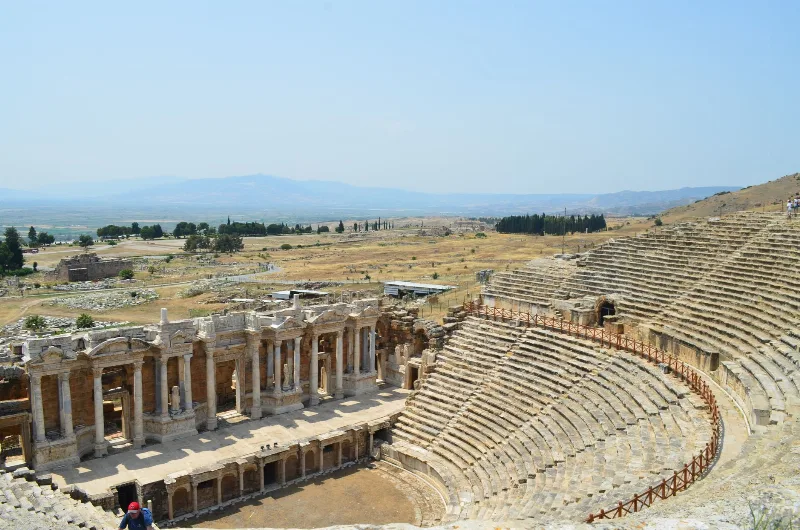
Letoon
Letoon is a Lycian sanctuary near Xanthos in Muğla Province, dedicated to Leto, Artemis and Apollo. Its three temples, theatre and trilingual inscription make it one of southwestern Turkey’s most significant archaeological sites.
Explore →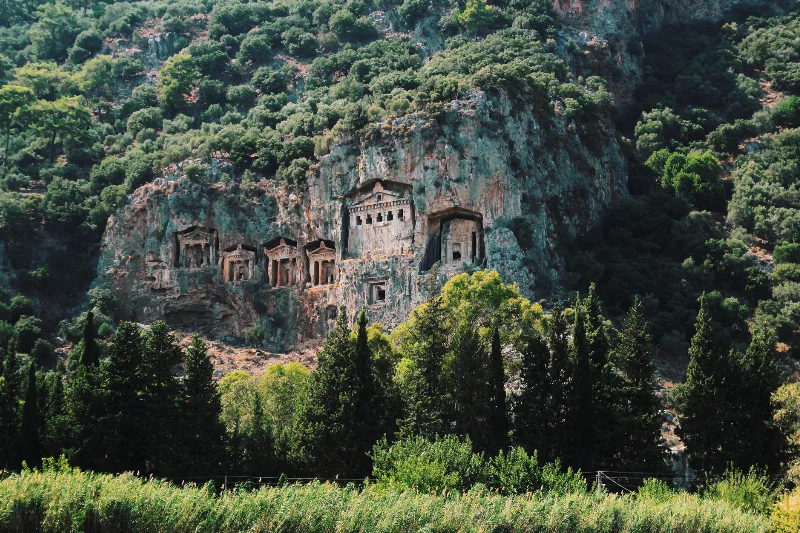
Kaunos
Kaunos is an ancient Carian city on the Dalyan River in Muğla Province, known for its temple-style rock-cut tombs and the extensive ruins of a harbour that silted up centuries ago.
Explore →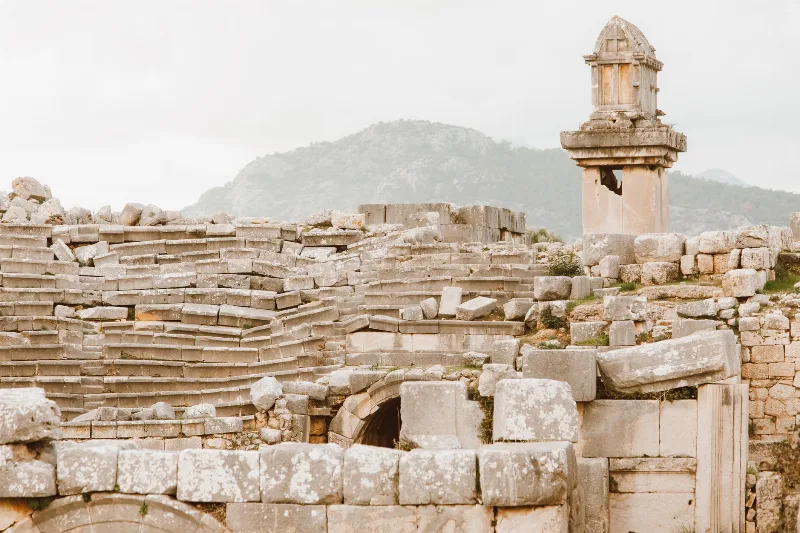
Xanthos
Xanthos is an ancient Lycian city in Antalya Province and a UNESCO World Heritage Site, known for its Lycian tombs, Roman theatre and role as a leading city of Lycia.
Explore →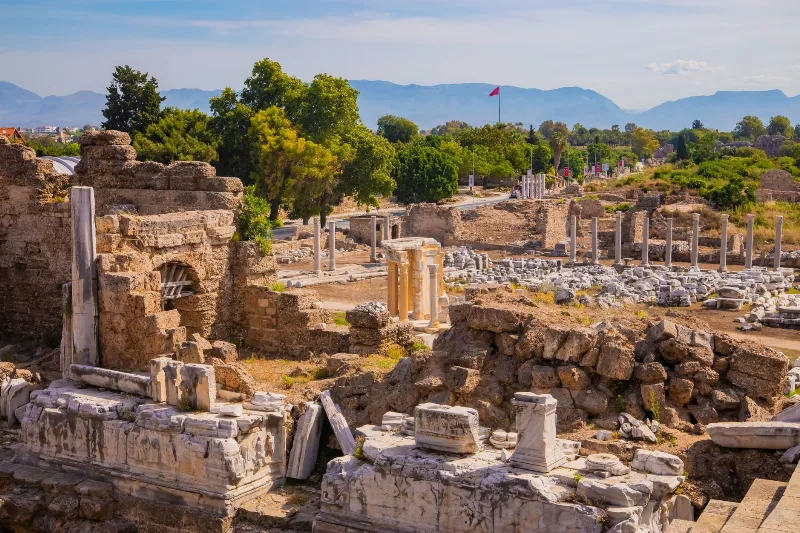
Phaselis
Phaselis is a Rhodian-founded port city on the eastern Lycian coast, where paved streets, agoras, baths and a small theatre stand among pines between three sheltered bays.
Explore →Related content
Sinop
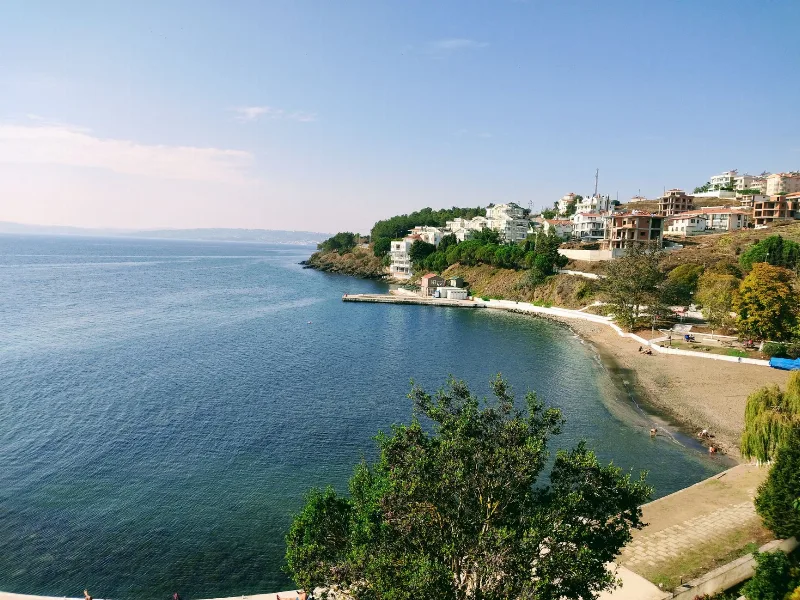
A port city on Türkiye's Black Sea coast, Sinop sits on a northward-pointing peninsula with one of the sea's safest natural harbours and a historic walled core. Its fortress, Seljuk-era monuments and surrounding bays anchor a province that reaches from the shoreline deep into the interior.
Historic Places
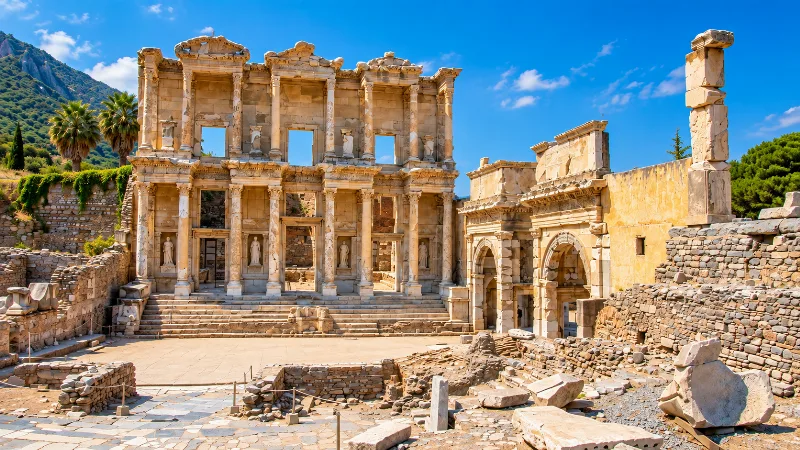
Ancient cities, monuments, castles and archaeological sites across Türkiye.
Beaches & Bays
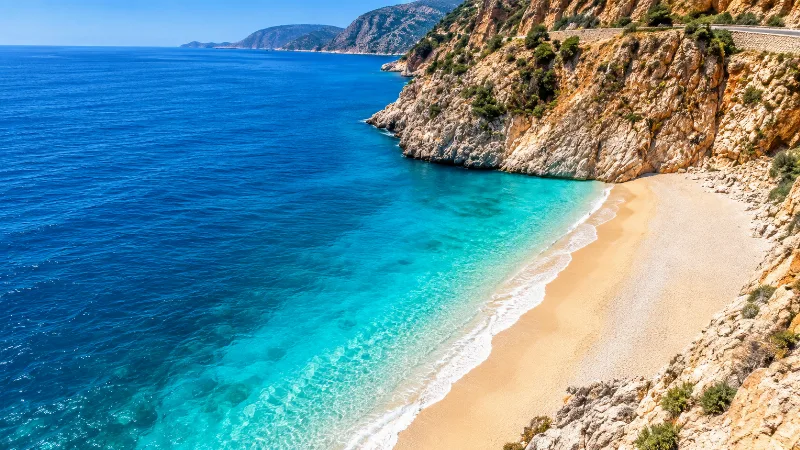
Coasts, coves, islands and seaside places across Türkiye.
Hamsilos Bay and Coastal Forests in Sinop
A sheltered inlet on Türkiye's northern Black Sea coast, Hamsilos Bay combines calm, fjord-like water with dense broadleaf woodland and a string of quiet beaches nearby.
5-Day Black Sea Coast Route
A five-day linear journey along Türkiye's central and eastern Black Sea coast, from Sinop to Trabzon, with an inland detour to Amasya and stops in Ordu and Giresun along the way.
Black Sea Region
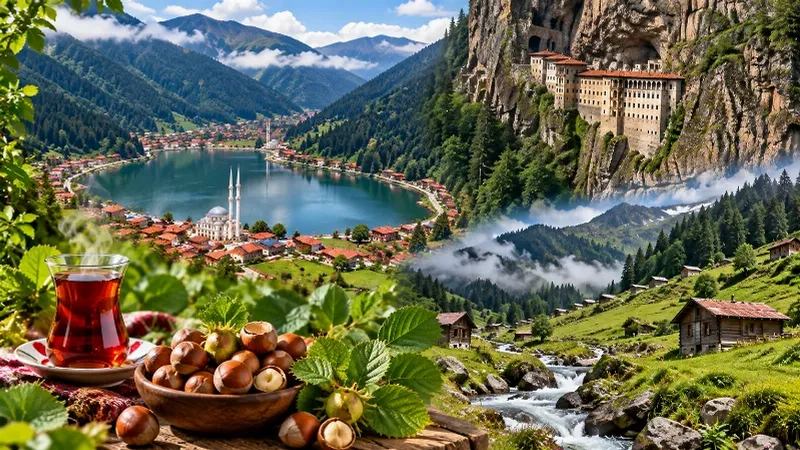
The Black Sea Region of Türkiye is known for its lush green mountains, misty highlands, dense forests and traditional villages. Stretching along the country's northern coast, the region combines spectacular natural scenery with historic towns, tea-growing landscapes and distinctive local traditions.