
Sinop
A port city on Türkiye's Black Sea coast, Sinop sits on a northward-pointing peninsula with one of the sea's safest natural harbours and a historic walled core. Its fortress, Seljuk-era monuments and surrounding bays anchor a province that reaches from the shoreline deep into the interior.
Sinop is a port city on the Black Sea coast of northern Türkiye and the administrative centre of Sinop Province. It occupies a rocky peninsula that projects north into the Black Sea, giving it the northernmost stretch of the Anatolian coastline. What sets the city apart is the combination of a deep, sheltered natural harbour, a walled historic core that has survived unusually intact, and a geography in which the sea stays within sight of nearly every part of the centre.
Geography of the Peninsula
The old town stands on a headland joined to the mainland by a narrow isthmus, so the built-up area is almost completely surrounded by water. The southern side of the peninsula looks onto a protected inner harbour, historically the reason for the city's existence, while the outer shore is more exposed to the open Black Sea, with small coves and beaches where the land meets the water. The peninsula itself is low and rises only gently, so the horizon is dominated by sea rather than hills. Immediately inland, across the isthmus, the terrain is green and undulating, and beyond it the province stretches south into the river valleys and wooded hills of the central Black Sea hinterland.
A Sheltered Harbour on an Exposed Coast
The Black Sea is notoriously difficult for shipping, with few natural anchorages along its southern shore. Sinop's harbour is widely regarded as one of the safest on the sea, which explains why the site was settled so early and why it remained a trading and maritime centre through successive empires. The port still shapes daily life: fishing boats work out of the harbour, ferry and cargo traffic use the quays, and the waterfront is where the city's commercial and social rhythm is most visible. The combination of a protected bay, a defensible headland and access to inland trade routes made the peninsula valuable long before any modern infrastructure existed.
Historical Development
Sinop is one of the oldest continuously settled places on the Turkish Black Sea coast. Greek colonists, by tradition from Miletus, founded the city as Sinope in the seventh century BC, and it grew into a significant port of the ancient Black Sea world. It is best known in antiquity as the birthplace of Diogenes the Cynic. The city later came under the Kingdom of Pontus and served as a royal residence under Mithridates VI before passing to Rome and then to Byzantium.
In 1214 the Seljuk Turks captured Sinop, and the mosques, medreses and fortifications of that era still define much of the historic centre. Genoese merchants subsequently maintained a trading presence in the city, and in 1461 it was absorbed into the Ottoman Empire under Mehmed II. Through the Ottoman centuries Sinop remained a provincial port and naval anchorage, a role it continued to hold into the modern period.
The Fortress and the Historic Core
The walls of Sinop are among the most complete historic fortifications on the Turkish Black Sea coast, wrapping around the headland in sections built and rebuilt across several periods. Inside them, the old town retains a dense, compact street pattern that contrasts sharply with the wider modern districts outside the walls. The Alaaddin Mosque, dating from the Seljuk period, and the nearby Pervane Medresesi are the clearest architectural markers of the city's medieval Turkish phase. The Byzantine-era Balatlar Church, known for its surviving frescoes, adds an older layer to the same small area, and the tomb of Seyit Bilal is another long-standing landmark of the core.
A former prison housed within the fortress walls is now a museum, and the statue of Diogenes recalls the city's most famous son. Rather than a single monument to visit, Sinop's centre works as a whole: a walkable historic quarter in which the walls, religious buildings and waterfront sit within a few minutes of one another.
The Coast Around the City
The shoreline beyond the peninsula is varied. Hamsilos Bay, to the north-west of the city, is a sheltered inlet where wooded slopes come down to the water, and Akliman is a long sandy cove used as a beach in summer. İnceburun, at the tip of the headland beyond the city, marks the northernmost point of the Anatolian coast and is a natural viewpoint over the open sea. The coastline of Sinop Province continues eastward to Gerze, a smaller coastal district, and westward toward Ayancık and Türkeli, where the mountains come closer to the shore and the settlements are strung along narrow valleys.
Inland Sinop Province
Sinop is more than its coastline. The province extends well to the south, and most of its districts are inland. Boyabat, the largest of them, lies in a broad valley on the Gökırmak river and is associated with the dam and reservoir of the same name; Durağan, Saraydüzü and Dikmen are smaller inland centres set among farmland and forest. Erfelek, closer to the coast, is known for the Tatlıca waterfalls, a series of cascades in a wooded gorge. Together these districts give the province a character quite different from the harbour city, with agriculture, forestry and river valleys replacing the maritime economy of the centre.
Climate and When to Visit
Sinop has a Black Sea climate: warm and humid summers, mild but damp winters, and rainfall spread fairly evenly through the year. The moderating effect of the sea keeps temperatures from swinging as sharply as they do inland, but it also means grey, wet days can occur in almost any month. Late spring through early autumn is generally the most comfortable period for the coast, when the sea is calm and the beaches and bays are usable. Spring and early summer are also when the surrounding hills and valleys are at their greenest, while winter tends to be quiet and overcast.
Reaching Sinop and Its Regional Context
Sinop has its own airport, and the coastal highway links it with the larger Black Sea cities to the east and west. The city sits between Samsun to the east and Kastamonu to the west, and travellers often combine it with the historic inland towns of the region. Its position at the very tip of a peninsula, cut off from the main coastal route by the isthmus, has helped preserve the compact historic core and gives the city a sense of separation from the rest of the Black Sea corridor. For anyone tracing the Turkish Black Sea coast, Sinop functions as the northern anchor: a harbour city whose walls, medieval monuments and surrounding bays explain both its past importance and its present character.
Discover Food in Türkiye
All food →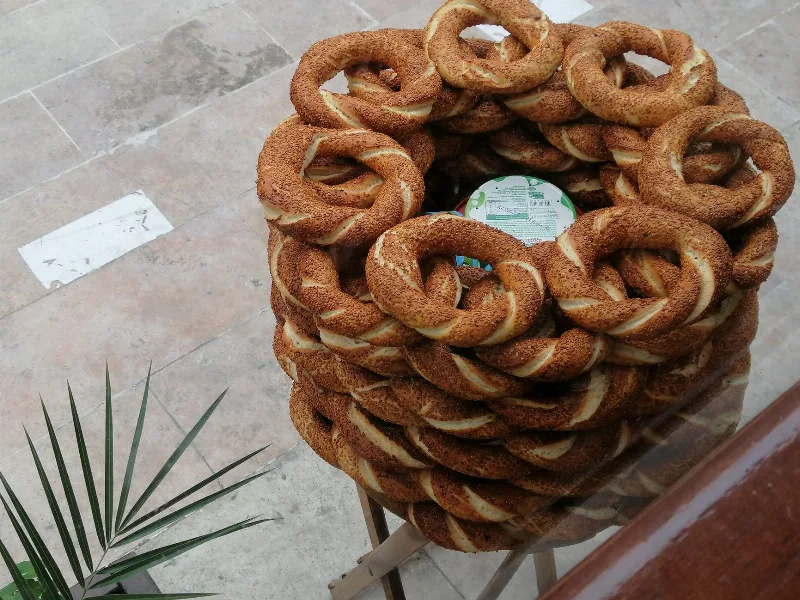
Simit
Simit is a ring-shaped Turkish bread covered in sesame seeds, strongly associated with Istanbul and sold as everyday street food. It is eaten fresh, most often with tea, and has a crisp crust around a chewy crumb.
Explore →
Bazlama
Bazlama is a soft, thick Turkish flatbread made from a leavened dough and cooked on a hot griddle. It is a staple of village baking across Anatolia, eaten warm with butter or used to wrap other foods.
Explore →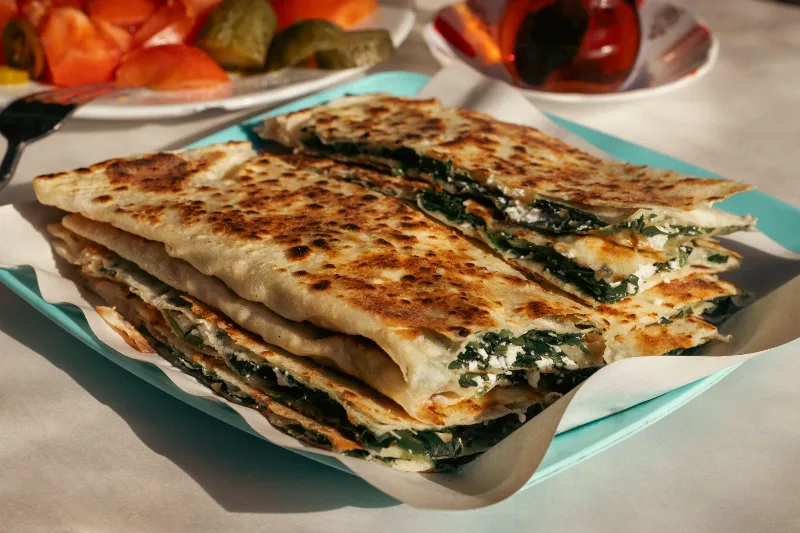
Gözleme
Gözleme is a thin, hand-rolled Anatolian flatbread folded around savory fillings such as cheese, spinach, or minced meat and cooked on a sac griddle. The article covers its regional variations, cooking method, texture, and traditional serving style.
Explore →Related content
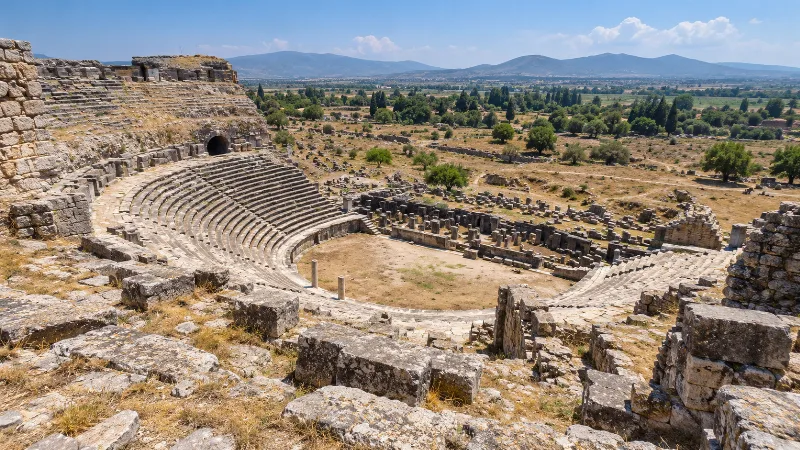
Miletus
Miletus was one of the great Ionian Greek cities of western Anatolia, a major maritime power and the birthplace of the Milesian school of philosophy. Today its extensive ruins near Balat in Aydın Province include one of Anatolia's largest ancient theatres.
Miletus
Miletus is an ancient Greek city in Aydın Province whose Great Theatre, harbour monuments and Miletian school of philosophy made it one of the defining sites of Ionia — now stranded inland by the Meander River.
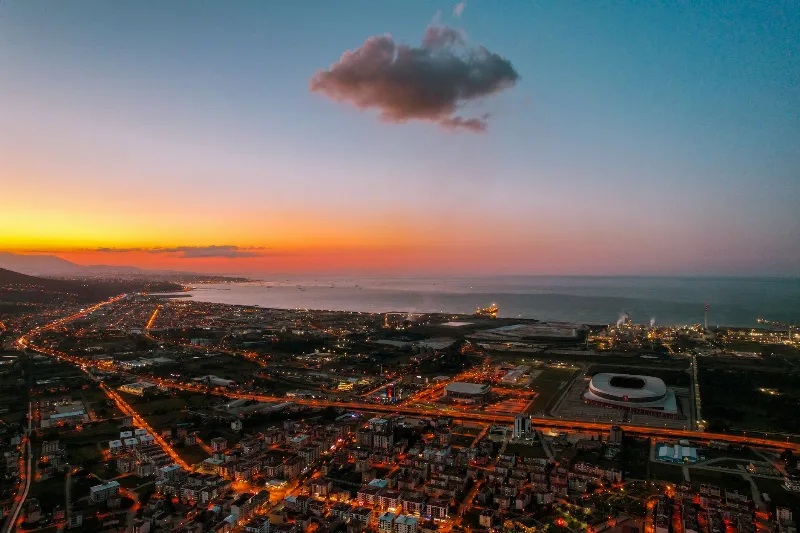
Samsun
Samsun is a large Black Sea port city in northern Türkiye and the historic starting point of the Turkish War of Independence in 1919. It is a major metropolitan centre set between wide river deltas, coastal plains and the mountains of the Black Sea hinterland.
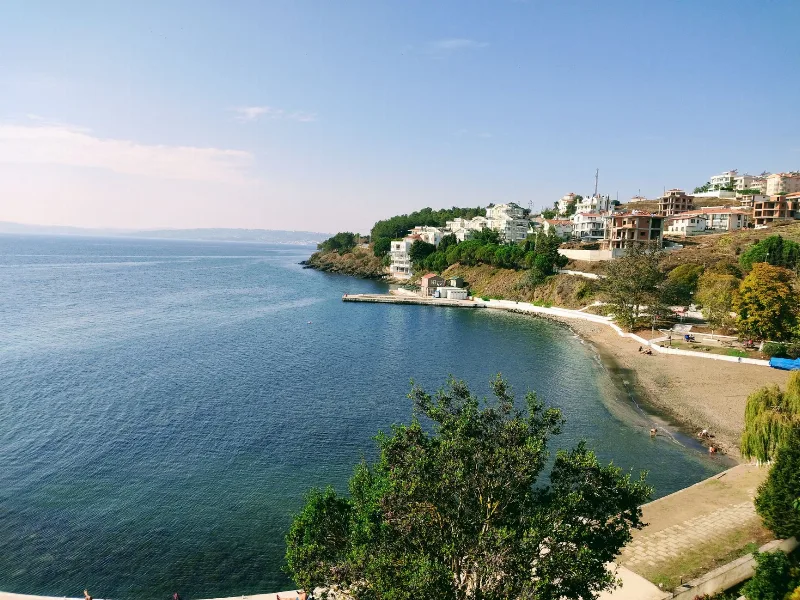
5-Day Black Sea Coast Route
A five-day linear journey along Türkiye's central and eastern Black Sea coast, from Sinop to Trabzon, with an inland detour to Amasya and stops in Ordu and Giresun along the way.
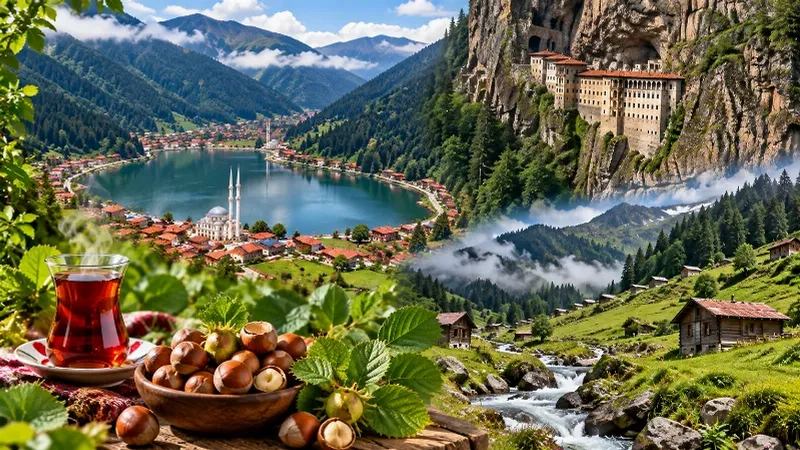
Black Sea Region
The Black Sea Region of Türkiye is known for its lush green mountains, misty highlands, dense forests and traditional villages. Stretching along the country's northern coast, the region combines spectacular natural scenery with historic towns, tea-growing landscapes and distinctive local traditions.
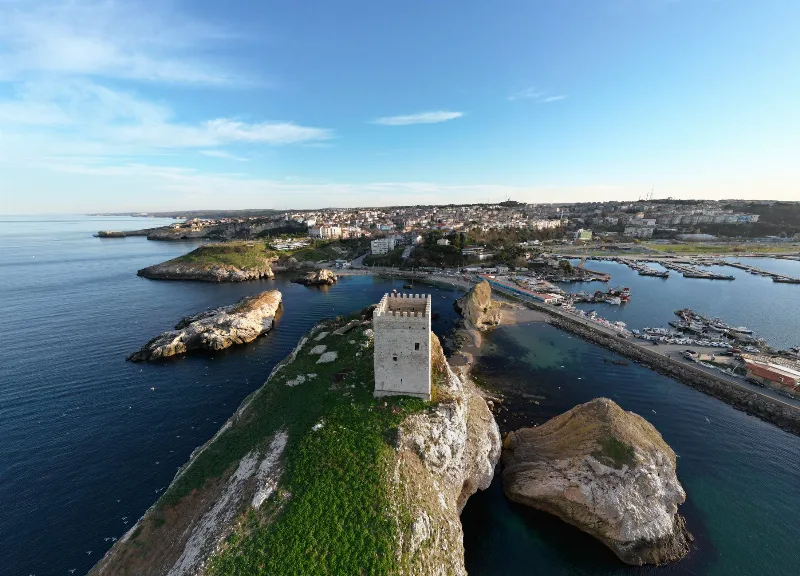
1-Day Sinop Route: Old Town, Castle and Hamsilos Bay
A single-day route through Sinop, from the old harbour and castle walls to the archaeological museum, the historic prison and the wooded bays along the coast west of the city.