
Göreme Open Air Museum
Göreme Open Air Museum is a rock-cut Byzantine monastic complex in the Göreme valley of Cappadocia, Nevşehir Province, whose churches preserve fresco cycles painted between the 10th and 13th centuries. It forms part of the UNESCO World Heritage Site of Göreme National Park and the Rock Sites of Cappadocia.
Göreme Open Air Museum is a rock-cut Byzantine monastic complex carved into the volcanic tuff of the Göreme valley in Nevşehir Province, in the Cappadocia region of central Türkiye. It occupies the eastern edge of Göreme town, about 10 kilometres from Nevşehir, and contains more than a dozen churches and chapels whose wall paintings belong mainly to the 10th to 13th centuries. Because so many of its painted programmes survive in readable condition, the complex is the most important single group of middle and late Byzantine rock-cut churches in Cappadocia. In 1985 the valley and its rock-cut settlements were inscribed on the UNESCO World Heritage List as Göreme National Park and the Rock Sites of Cappadocia.
Location and Setting in the Göreme Valley
The museum sits on a raised cluster of rock cones and walls at the mouth of the Göreme valley, on the road that runs from Göreme towards Ürgüp and Avanos. The soft, pale stone that defines the whole landscape is tuff, a compressed volcanic ash laid down by eruptions from the volcanoes of the region, principally Erciyes Dağı, Hasan Dağı and Göllü Dağ. Wind and water have since cut this tuff into ravines, plateaus and the tapered rock pillars popularly called fairy chimneys.
The monastic buildings were not constructed on the surface but hollowed out of the rock itself, so the complex reads as a series of carved façades, doorways and dark interiors rather than as a settlement of free-standing structures. The slope rises from the entrance area towards the higher churches, and the valley opens westward towards Göreme town, which is within walking distance of the site.
Monastic Origins and the Christian Community of Cappadocia
Cappadocia was one of the earliest regions of Anatolia to be thoroughly Christianised, and it became a centre of monastic life in the 4th century, when Basil the Great, bishop of Caesarea (modern Kayseri), set out rules for communal monastic living that shaped practice across the Byzantine world. Both organised communities and solitary ascetics settled in the valleys of the region, using the easily carved tuff for churches, cells, storerooms and refectories.
The Göreme valley developed as a monastic settlement in this tradition. Its churches were carved and painted over roughly four centuries, from the 9th to the 13th century, with the densest activity between the 10th and the 12th. The community outlasted Byzantine rule in the region, continuing through the Seljuk and Ottoman periods, and the Christian population of the Cappadocian villages remained in place until the population exchange between Greece and Türkiye in 1923, after which the monastic quarter was finally abandoned. The Byzantine name of the settlement itself is not securely established, and proposed identifications remain uncertain.
Architecture of the Rock-Cut Churches
The churches were carved from the inside outwards: a space was excavated within a cone or wall of tuff, and the exterior was then cut back to form a façade with a doorway. Interior plans follow the conventions of Byzantine church architecture despite the unusual material. Several are cross-in-square churches with a central dome supported on columns or pillars, others are single-nave structures with a barrel vault, and most end in one or more apses. Architectural elements such as cornices, arches, capitals and blind arcades were carved directly into the stone and often left unpainted, while the vaults and walls above were plastered and painted.
Because the material is soft, columns and domes are relatively slender, and many interiors are compact. Some churches occupy several levels of a single rock mass, reached by stairways cut into the stone. This dependence on the natural shape of each cone means that no two churches are identical in plan.
The Painted Churches and Their Frescoes
The frescoes follow the standard repertoire of Byzantine church decoration: Christ Pantocrator in the dome, the Virgin and Child in the apse, evangelists, apostles, martyrs and military saints on the walls, and narrative cycles from the life of Christ and the Virgin across the vaults. The Cappadocian painters worked in a regional idiom characterised by strong outlines, earthy pigments and a direct, sometimes provincial treatment of figures that differs from the courtly painting of Constantinople.
Tokalı Kilise (Buckle Church)
Tokalı Kilise is the largest church in the museum and consists of four connected spaces. Its Old Church, a barrel-vaulted nave usually dated to the first half of the 10th century, carries an extensive cycle of the life of Christ arranged in registers. The New Church, added at the end of the 10th or beginning of the 11th century, is a cross-in-square structure with a dome and its own painted programme. The origin of the name Tokalı, meaning "with a buckle", is not firmly documented.
Karanlık Kilise (Dark Church)
Karanlık Kilise, the Dark Church, is a cross-in-square church with a central dome, generally dated to the late 12th or early 13th century, and is the best-preserved painted interior in the complex. Its dome holds a Pantocrator, while the vaults and walls carry scenes including the Annunciation, the Nativity, the Baptism, the Raising of Lazarus, the Entry into Jerusalem, the Crucifixion and the Descent into Limbo. The paintings survived in unusually good condition because the interior receives very little daylight from its small openings; it is often reported that the space was later used as a dovecote, which would also have limited damage. The church is reached by a staircase and is administered separately within the museum.
Elmalı Kilise (Apple Church)
Elmalı Kilise is a cross-in-square church with four columns and a domed centre, usually placed in the 11th century. The dome carries a bust of Christ Pantocrator, and the vaults are painted with scenes of the life of Christ, the Hospitality of Abraham and figures of saints. The church is entered through a low doorway cut into the rock façade.
Azize Barbara Şapeli and Yılanlı Kilise
Azize Barbara Şapeli, the Chapel of St. Barbara, is a compact two-column church carved into a rock face. Much of its decoration is painted directly onto the rock in red ochre rather than on plaster, and it includes crosses, geometric motifs, animals and military saints, among them St. George on horseback. Yılanlı Kilise, the Snake Church, is a long barrel-vaulted church of the 11th century whose paintings include St. George and St. Theodore, the Emperor Constantine and St. Helena holding the True Cross, and a figure of a punished sinner surrounded by snakes, from which the church takes its popular name.
Other Churches in the Complex
Çarıklı Kilise, the Sandal Church, is a domed cross-in-square church of the 12th to 13th century, named after footprints painted beneath the Ascension scene. Aziz Basil Şapeli is a small cross-in-square chapel with frescoes of St. Basil, St. George, St. Theodore and the Virgin and Child. Saklı Kilise, the Hidden Church, lies close to the museum area and is reached by a narrow tunnel; it preserves 11th-century paintings in a confined, single-nave space.
Refectory, Cells and Monastic Rooms
The complex was more than a group of churches. It preserves rock-cut refectories with long tables and benches carved from the rock, kitchens with hearths and storage niches, cells and communal rooms, and a multi-storey rock-cut structure often described as a nunnery or monastery at the lower part of the site. These spaces show that the valley functioned as a working monastic settlement with a daily routine of prayer, meals and manual labour, not simply as a collection of decorated chapels.
Iconoclasm and the Chronology of Cappadocian Painting
The decoration of the churches has to be read against the iconoclastic controversy in the Byzantine Empire, when the use of religious images was restricted during two periods between the 8th and the middle of the 9th century. After the restoration of images in 843, figurative painting resumed on a large scale, and the earliest painted programmes at Göreme, such as the Old Church of Tokalı Kilise, belong to this post-iconoclastic revival. Decoration continued through the 11th century, when the cross-in-square plan with a Pantocrator dome became standard, and on into the 12th and 13th centuries, when the style of the paintings shifts and the cycles become more elaborate.
UNESCO World Heritage Status
Göreme National Park and the Rock Sites of Cappadocia were inscribed on the UNESCO World Heritage List in 1985 as a mixed cultural and natural property. The listing recognises both the eroded volcanic landscape with its rock cones and the long tradition of rock-cut settlement, including the painted churches of the Göreme valley and the wider network of Byzantine monastic sites in Cappadocia.
What Visitors Can See Today
Visitors move through the site on foot along a route that links the main churches in sequence. What survives is a combination of carved architecture and painting: complete cross-in-square interiors with domes and columns, carved façades, apses, refectory tables, storage rooms and stairways, together with fresco programmes ranging from the 10th to the 13th century. Many paintings are damaged where plaster has fallen or where the rock has fractured, and several churches show losses caused by erosion and by later use, but the surviving scenes remain legible. Because the churches are dark and the paintings light-sensitive, photography with flash is prohibited inside the painted interiors.
Practical Visiting Notes
The museum lies on the road from Göreme to Ürgüp, and Göreme town centre is close enough to reach on foot, though the final approach is uphill. The site is set on uneven terrain with gravel paths, steps and narrow doorways, so sturdy footwear is advisable. Summer days in Cappadocia are hot and the rock reflects heat, while spring and autumn are generally more comfortable for walking; early morning and late afternoon light is also better for seeing the interiors. The main painted churches and the refectory are covered by the museum entry, while the Dark Church is administered separately and reached by a staircase. Travellers arriving by air use Nevşehir Kapadokya Airport or Kayseri airport, and the region's villages are connected by local roads and buses.
Nearby Historic and Geographical Places
Other sites in the same landscape help to place Göreme in context. Uçhisar Castle, a rock citadel with panoramic views, lies a short drive to the west. Çavuşin, on the road towards Avanos, has its own rock-cut Church of St. John the Baptist. Zelve Open Air Museum, further north, preserves a larger abandoned rock-cut settlement with churches and dwellings. Ortahisar has a fortified rock outcrop, and the underground cities of Kaymaklı and Derinkuyu to the south show the same practice of carving into the tuff on a monumental scale. Ürgüp, Avanos and Nevşehir are the main towns of the area, and the valleys between them contain further Byzantine churches and monastic remains that share the history of Göreme.
Routes
All routes →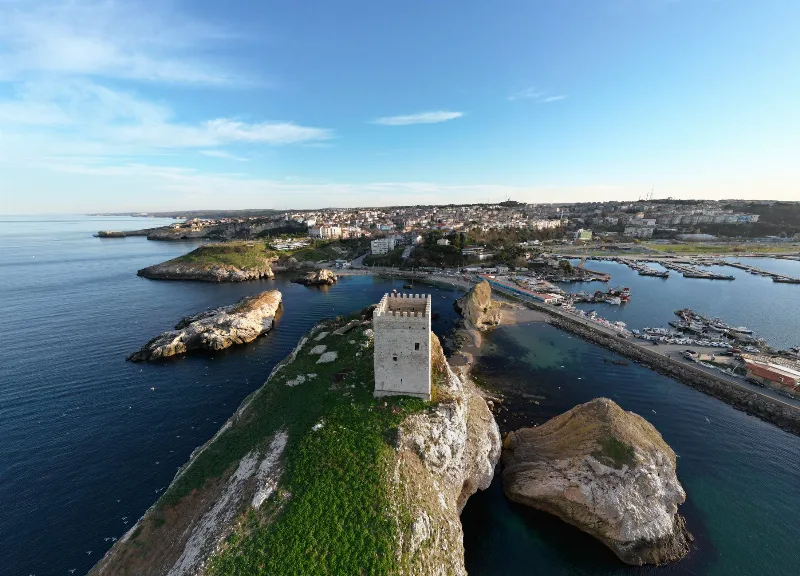
1-Day Sinop Route: Old Town, Castle and Hamsilos Bay
A single-day route through Sinop, from the old harbour and castle walls to the archaeological museum, the historic prison and the wooded bays along the coast west of the city.
Explore →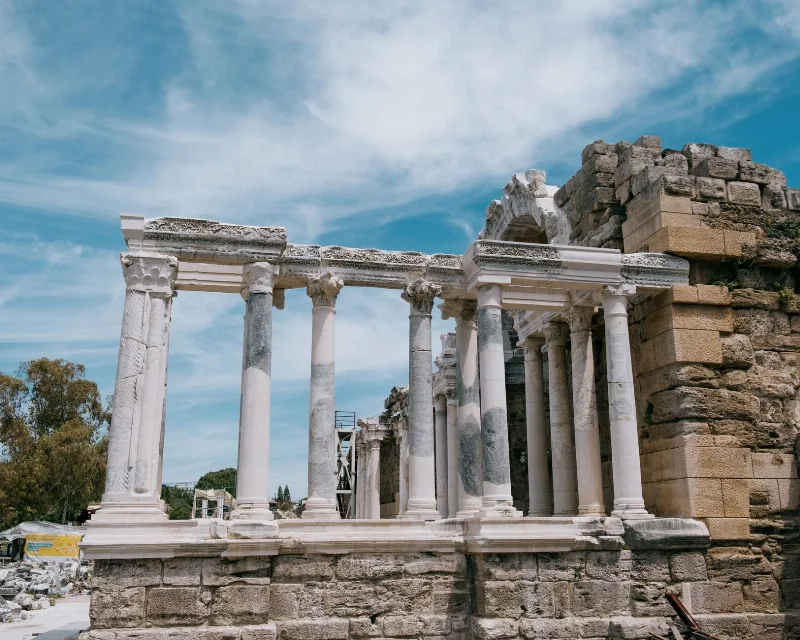
3-Day Antalya to Side Ancient Coast Route
A three-day coastal journey from Antalya to Side that links the archaeological sites of Perge and Aspendos with the Manavgat Waterfall and the ruins of Side, with a clear day-by-day sequence of stops.
Explore →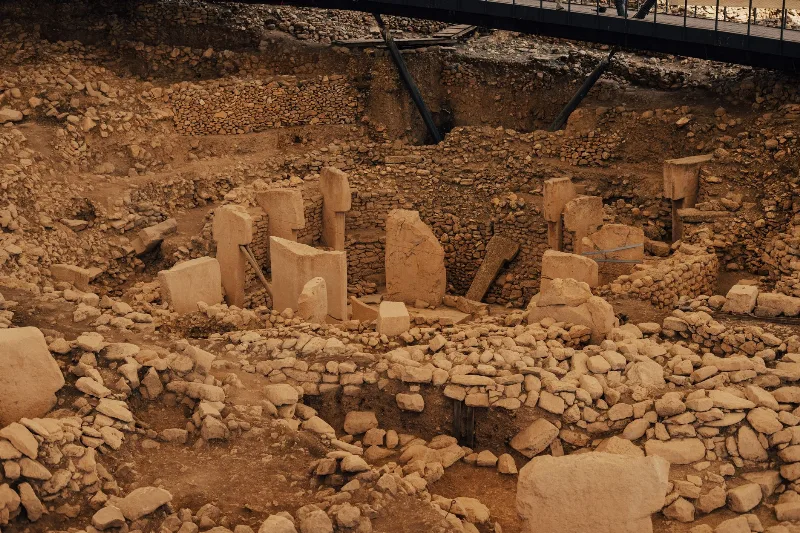
4-Day Southeastern Anatolia Route: Gaziantep to Mardin via Şanlıurfa
A four-day linear route across Southeastern Anatolia, linking the historic cities of Gaziantep, Şanlıurfa and Mardin by road, with the Neolithic site of Göbeklitepe and the ancient settlement of Harran fitted into the middle of the journey.
Explore →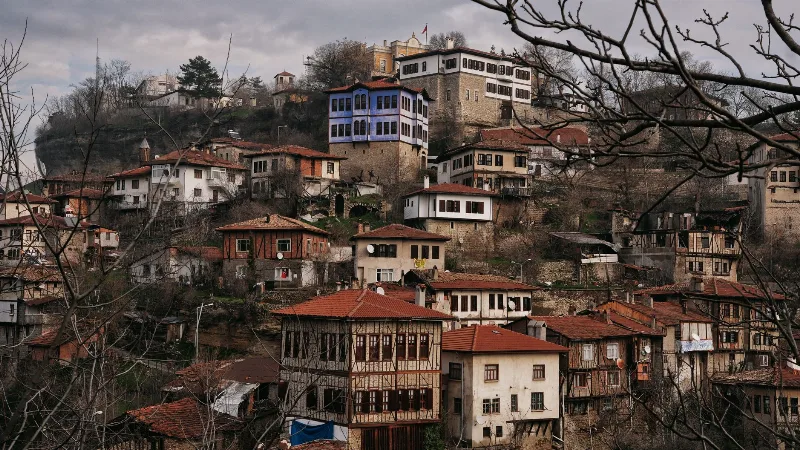
2-Day Safranbolu and Amasra Route
A two-day driving route that starts among the timber-framed houses of Safranbolu, crosses the uplands of Kastamonu and the Küre Mountains, and finishes at the small Black Sea harbour of Amasra.
Explore →Related content
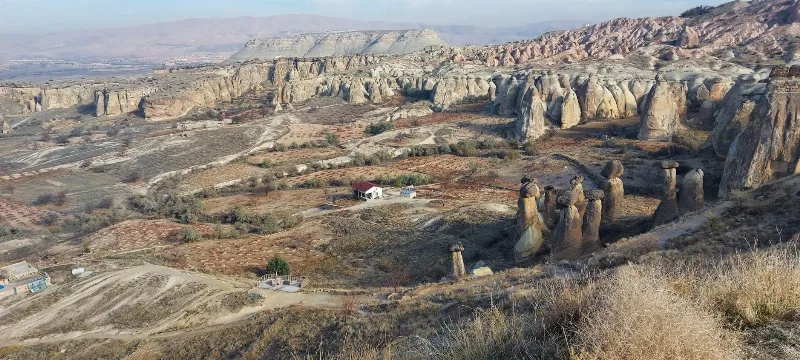
Cappadocia
Cappadocia is a region of Central Anatolia in Turkey defined by eroded volcanic tuff, rock-cut Byzantine churches and multi-level underground cities. This guide explains how the landscape formed, what the main valleys and sites actually contain, and what to know before visiting.
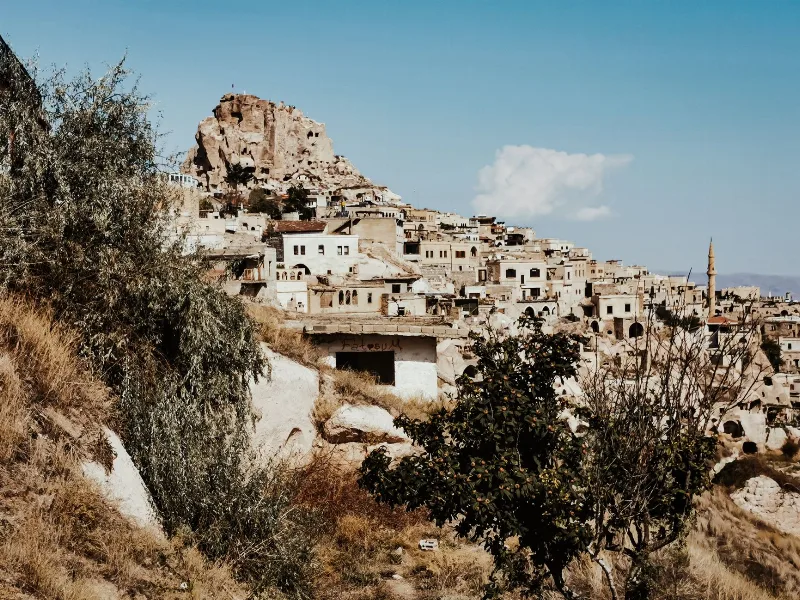
Nevşehir
Nevşehir is a provincial capital in Central Anatolia and the main urban base for the rock landscapes, underground settlements and balloon flights of the Cappadocia region.
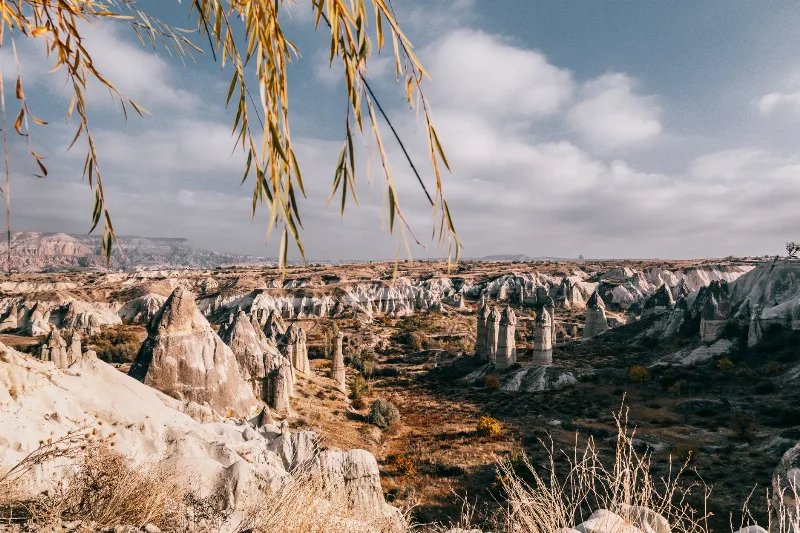
Göreme National Park
Göreme National Park is a protected volcanic landscape on the Cappadocia plateau in Nevşehir Province, Türkiye, defined by eroded tuff cones known as fairy chimneys and by settlements carved into the same soft rock.
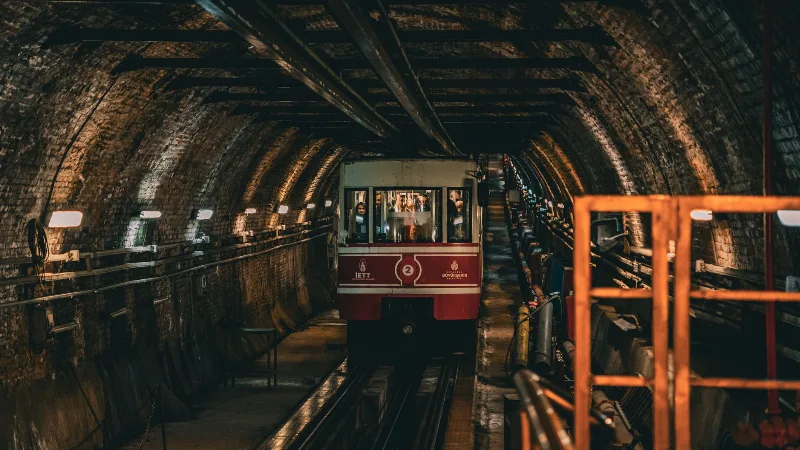
Kaymaklı Underground City
Kaymaklı Underground City is a multi-level subterranean complex in Nevşehir Province, Cappadocia, used as a refuge by early Christian communities. It features tunnels, stone doors, storage rooms, and churches carved into volcanic tuff.
Derinkuyu Underground City
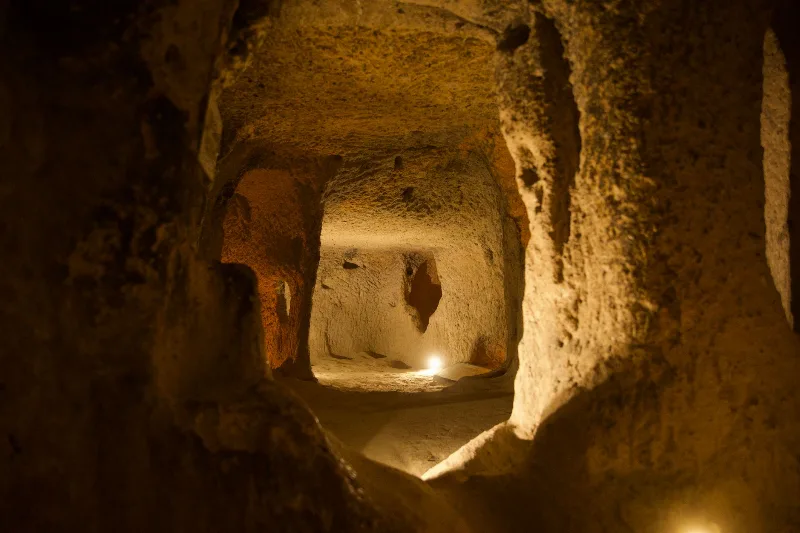
Derinkuyu Underground City is a multi-level rock-cut settlement beneath the town of Derinkuyu in Nevşehir Province, the deepest known underground city in Cappadocia and one of Anatolia's most complete examples of subterranean architecture.
Mustafapaşa
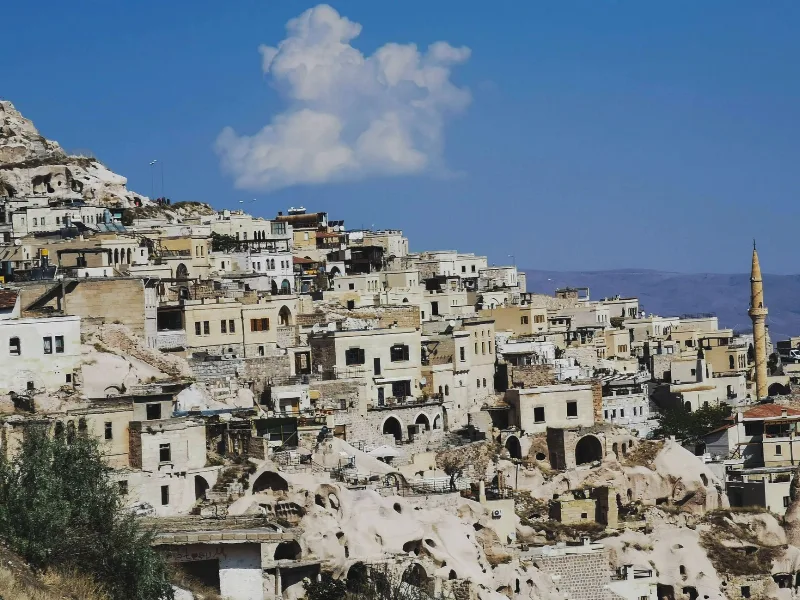
Mustafapaşa is a historic village in the Cappadocia region of Nevşehir, close to Ürgüp, known for its surviving Greek mansions, stone streets and rock-cut churches.