
Lake Abant
Lake Abant is a freshwater lake in Bolu Province, northwestern Türkiye, sitting at around 1,300 metres in a forested mountain basin. Its shoreline of pines, firs and beeches makes it one of the country's best-known inland lakes.
Lake Abant is a natural freshwater lake in Bolu Province in northwestern Türkiye, located in the forested uplands roughly 30 kilometres south-west of the city of Bolu, within the Black Sea region. It lies in a shallow basin at an elevation of about 1,300 metres, enclosed by wooded hills rather than sitting on an open plain. Pines, firs and beeches grow down to the water's edge, and this combination of still water and dense surrounding forest is what gives the lake a recognisable character and separates it from the wide, exposed lakes of central Anatolia.
Where the Lake Sits
Abant occupies a depression in the mountainous country that rises behind the Bolu plain, an area where humid Black Sea air meets higher ground and produces heavy forest growth. The lake is the focal point of a protected nature park, which extends over the basin and the slopes around it. Administratively the lake belongs to Bolu Province, and it is one of the natural features most closely associated with the province. Because it lies at moderate mountain elevation, the surrounding land is never far above the treeline, so the horizon is mostly formed by forested ridges rather than bare peaks.
Landscape and Vegetation
The basin is small and contained, and the vegetation is unusually dense for its altitude. Scots pine and fir dominate the higher slopes, while broadleaved species such as beech appear in mixed stands and add colour to the forest edge. Under the canopy, the ground cover is typical of humid Black Sea woodlands, with ferns, mosses and a rich layer of shrubs. The lake itself has a gently curved shoreline with small inlets and shallow margins where reeds and aquatic plants grow. Because the forest comes right down to the water, the visual impression is of an enclosed, quiet basin rather than a broad panorama.
Water and Wildlife
Abant is fed by springs and small streams that drain the surrounding slopes, and its water is cool and clear throughout the year. The lake is known for its native brown trout, a local form that has been studied as a distinct population and is closely tied to the cold, oxygen-rich water. The surrounding forest supports mammals such as wild boar, deer and, in the more remote parts of the woodland, brown bear, together with a range of woodland birds. Wildlife is not easily observed from the shoreline, since the animals mostly use the denser forest away from the busiest parts of the basin.
How the Seasons Change the Lake
Winter is long and cold here. Snow falls regularly from late autumn, the slopes turn white, and the lake surface can be partly frozen during the coldest spells, when access roads may become difficult. Spring arrives late at this elevation: the snow retreats slowly, the streams run high with meltwater, and the forest floor greens quickly once temperatures rise. Summer is mild and humid rather than hot, with cool evenings, and the forest reaches its fullest and darkest green. Autumn is short but visually strong, as the beech and other broadleaved trees turn yellow and copper against the evergreens before the first snows return.
Reaching and Exploring the Area
The lake is reached from Bolu by road, following a route that climbs from the plain into the wooded hills; the drive takes roughly half an hour in normal conditions. The area is most commonly explored on foot along the lakeshore, where the terrain is gentle and the walking is straightforward, and from the surrounding slopes, which rise more steeply and are covered in forest. Because the basin is compact, the lake can be comprehended in a single visit, but the character of the place changes considerably depending on the light, the season and how much snow lies on the ground.
Practical Natural Conditions
The altitude means that weather is cooler and wetter than in Bolu city, and mist, rain and sudden temperature drops are common even outside winter. Snow and ice can affect the roads and paths for several months of the year, so the condition of the access route matters more than the distance. Footwear suited to damp ground is useful in spring and autumn. Because the lake lies inside a protected nature park, the natural environment is managed, and visitors are expected to stay on established ground rather than disturb the forest and shoreline vegetation.
Nearby Natural Places
Lake Abant sits within a wider belt of forested uplands in Bolu Province that includes other well-known natural areas, so it is often considered together with them when planning a trip through the region. The dense woodlands and mountain terrain around Bolu form a larger natural landscape in which Abant is one element, and the province as a whole is known for its forest cover, springs and high ground rather than for open plains. For anyone tracing the natural geography of northwestern Türkiye, the lake is a clear example of how Black Sea humidity, elevation and forest interact to create a cool, enclosed freshwater basin.
Beaches & bays
See the coast →
Related content
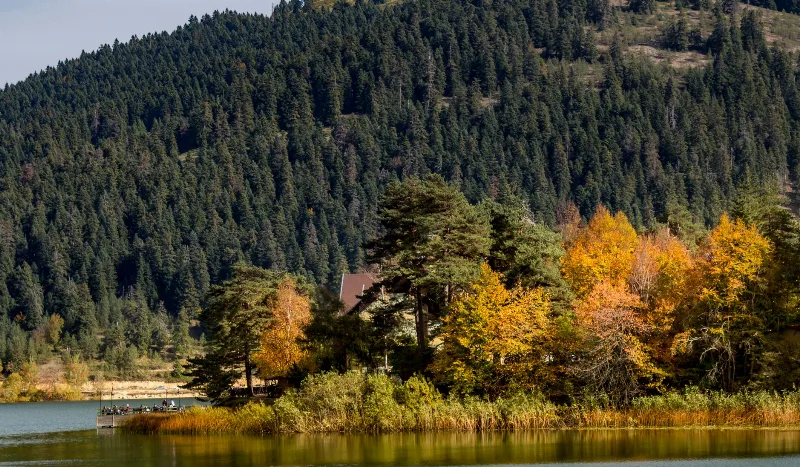
Autumn in Lake Abant, Bolu
From about October into November, the broadleaf woodland around Lake Abant in Bolu turns yellow, orange and red while the fir and pine stands around the shoreline stay dark green. The colour period lasts only a few weeks and shifts each year with temperature, rainfall and wind.
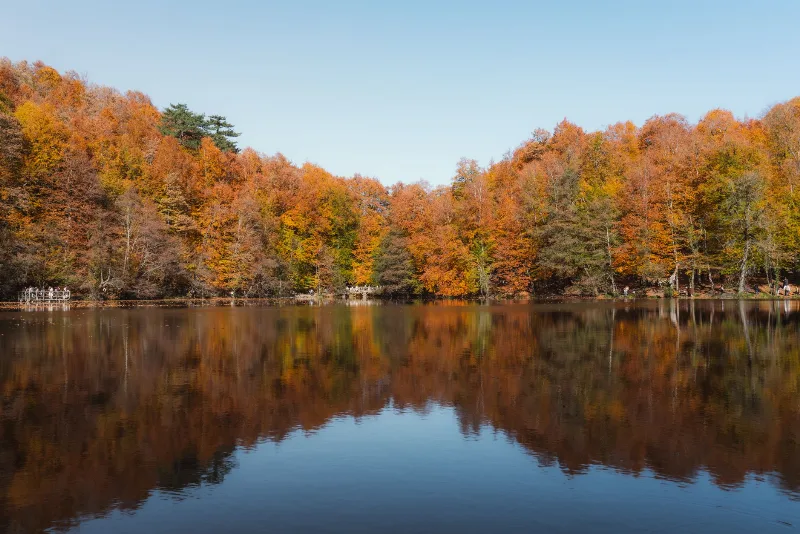
Nature Reserves of the Black Sea Region
Türkiye's Black Sea coast hides a chain of protected landscapes, from glacial lakes in the Kaçkar Mountains to canyons and old-growth forests in Kastamonu and Bartın.
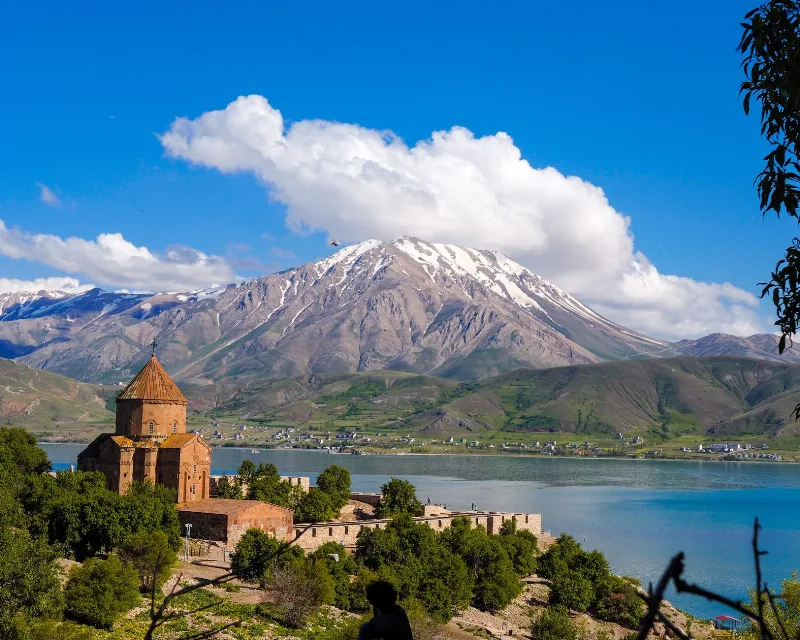
Lakes and Natural Beauty in Türkiye
A journey through the lakes of Türkiye, from the wide soda waters of Lake Van to forest pools in Bolu, salt flats on the Central Anatolian plateau and reed beds full of birds.
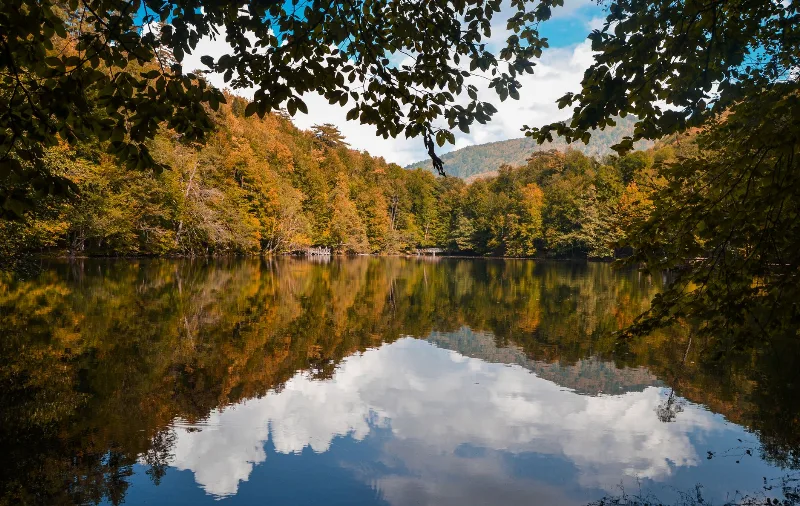
Autumn in Yedigöller, Bolu
Each year, the forests around Yedigöller's seven lakes turn brilliant shades of red, yellow, and orange, with the peak display usually occurring between mid-October and mid-November. This seasonal transformation is one of Turkey's most reliable autumn spectacles.
The Serene Lakes of Türkiye
Türkiye’s lakes range from vast soda lakes to salt flats and freshwater basins, each offering calm landscapes and rich wildlife. This page introduces notable lakes across different regions and their seasonal character.
Lake Eber
Lake Eber is a shallow freshwater lake in Afyonkarahisar province, western Turkey, known for its extensive reed beds and as a habitat for numerous bird species.