
Autumn in Lake Abant, Bolu
From about October into November, the broadleaf woodland around Lake Abant in Bolu turns yellow, orange and red while the fir and pine stands around the shoreline stay dark green. The colour period lasts only a few weeks and shifts each year with temperature, rainfall and wind.
Each autumn, the forest around Lake Abant in Bolu province, in the western Black Sea region of Türkiye, passes through a colour change that is closely tied to altitude and weather. The lake lies at roughly 1,300 metres above sea level inside a protected nature park, and from about the beginning of October the broadleaf trees on its slopes start to turn. By late October and into November the canopy shifts through yellow, amber, orange and deep red, while the fir and pine stands framing the shoreline stay dark green. It is this combination of deciduous colour, evergreen contrast and still water that sets the lake apart from other autumn landscapes in the region.
Where the Seasonal Change Happens
Lake Abant sits in a forested basin in the Bolu mountains, about 30 kilometres southwest of Bolu city. It is a landslide-dammed lake, formed when a slope failure blocked a valley drainage line, and it is fed mainly by springs and small streams rather than by a large river. The water surface covers roughly 1.3 square kilometres, and the surrounding hills rise in a continuous cover of trees that reaches right down to the water's edge in places.
Because the lake basin lies several hundred metres higher than Bolu city, it cools earlier in the year, and the colour change generally arrives here before it does in the lower valleys and on the coast. The slopes above the lake face different directions, so colour develops unevenly: shaded and north-facing stands often turn first, while sun-exposed trees along the southern shore may hold their green a week or two longer.
What Causes the Colour Change
Autumn colour is a chemical process rather than a simple fading of leaves. As day length shortens and night temperatures drop, chlorophyll, the pigment responsible for green, breaks down faster than the tree can replace it. Pigments that were present all along but masked by green then become visible: carotenoids give the yellows and golds, while anthocyanins, produced in some species as sugars accumulate in the leaf, produce the reds and purples.
The tree mix that shapes Abant's autumn palette
The lake's woodland is mixed, which is why the season reads as a layered pattern rather than one flat colour. Beech is dominant and turns golden-yellow to bronze. Oaks add russet and deep red-brown, hornbeam and hazel give clear yellows, and maples contribute the strongest reds. Against these, the evergreen firs and pines around the shore and on the upper slopes remain dark through the whole period, so the colour changes constantly from week to week as individual species reach their own peak.
When the Foliage Season Normally Runs
First hints of colour usually appear in the first half of October. Full autumn colour typically develops in the last week of October and the first days of November, and the strongest stage generally lasts one to two weeks. Leaves then continue to turn and fall through November, with the last trees holding colour into the final third of the month.
Altogether, the visible seasonal period from first yellowing to bare branches runs about four to six weeks. This is an approximate window, not a fixed calendar: in some years the peak falls slightly earlier, and in others it is pushed a week or two later.
How annual weather shifts the timing
Temperature is the main control. A warm, mild September and October tends to delay the peak, while an early cold snap accelerates it. Rain and wind shorten the display, because heavy rainfall and strong gusts strip leaves from trees that are already turning. A still, dry, cool October generally produces the longest and most clearly layered colour, while a stormy November can end the season quickly. Anyone trying to time a visit should treat the peak as a moveable target and check conditions close to the intended date.
What the Landscape Looks Like Through the Season
In early October the forest is still largely green, with isolated trees turning yellow or rust along the waterline and on the lower slopes. By mid-October the change is obvious across the whole basin, and the hillsides begin to show bands of different colours where species mix. At peak, the view across the lake is a continuous ring of gold, orange and red reflected in the water, broken by the dark vertical shapes of firs and pines.
From mid-November the display thins from the outside in. Leaves fall first where wind exposure is greatest, and the slope above the lake starts to show bare crowns. By the end of November the woodland is usually sparse, and the first snow of the season often falls in the same period, marking the end of the colour season and the beginning of winter conditions at this altitude.
Autumn Weather and Ground Conditions at Abant
Autumn at this elevation is cool and frequently damp. October days commonly sit in the low-to-mid teens Celsius, and November is noticeably colder, with daytime temperatures often in single figures and night frosts becoming likely from late October. Fog is common in the early morning, sitting on the water and lifting towards midday, and it can hide the far side of the lake completely for an hour or more.
Rainfall is significant in both months, and wet weather is part of the normal pattern rather than an exception. After rain, ground on the lakeside path becomes soft, with muddy sections where the surface is unsealed. Waterproof footwear and a rain layer are more useful here in autumn than warm-weather clothing.
Walking the Lakeside Path During the Colour Season
The main way to experience the season is on foot. A path circles the lake, roughly seven kilometres long, running close to the shore for most of its length with only gentle changes in level. Walking the full circuit at a relaxed pace takes around two hours; shorter sections can be covered from the main access area near the shore.
The path passes through stands of turning trees, crosses small streams fed by autumn rain, and offers stretches where the water and the opposite slope are visible at once. Sections under beech and oak are usually the most colourful, while those under fir and pine stay green the whole way. The terrain is not difficult, but the wet surface demands care, particularly on sloping ground after heavy rain.
What Visitors Can Realistically See
A visitor in the peak weeks can expect a mixed forest in full colour, a calm lake acting as a mirror for the trees above it, and morning mist that changes the light through the day. Waterfowl gather on the lake in autumn, and the season also coincides with the movement of migrating birds through the region, so the water and the reed edges can be busy with activity. Wild boar and deer live in the surrounding forest, but they are shy and usually seen only at quiet hours or from a distance.
What cannot be guaranteed is a specific colour on a specific date. The difference between a grey, half-turned week and a bright peak week can be seven to ten days, and no schedule can fix that in advance.
Nearby Places With Their Own Seasonal Timing
The same broad seasonal cycle plays out across the Bolu mountains, and the timing is not identical everywhere. Yedigöller National Park, further north, has similar beech-dominated forest around a chain of small landslide lakes; its colour window overlaps with Abant's but can differ by a week or more depending on elevation and exposure. Gölcük Nature Park near Bolu city is a smaller wooded lake basin that generally colours slightly later because it lies lower.
To the southwest, the historic town of Mudurnu sits among wooded valleys that turn in the same period. Further east, the Kartalkaya area shows the next phase of the mountain year: once the leaves are down and temperatures drop, snow begins to accumulate there, usually from late November or December, and the forest that was gold in October becomes a winter landscape.
Planning Around a Season That Moves
Because the peak depends on weather, the practical approach is to aim for the second half of October and the first half of November, and to accept that the exact best days will only become clear as the season develops. Weekdays are generally quieter, and early mornings, though often foggy, are frequently the clearest for reflections once the mist lifts. Visitors who arrive at the very start of October should expect partial colour; those who come in the last week of November should expect bare branches and a real chance of snow rather than leaves.
EXPLORE BY THEME
All themes →
Routes
Road trips, coastal drives, cultural routes and scenic journeys across Türkiye.
Explore →
Food
Regional dishes, desserts, local ingredients and culinary traditions across Türkiye.
Explore →
Seasonal Experiences
Harvests, festivals, natural seasons and local events throughout the year.
Explore →Related content
Lake Abant
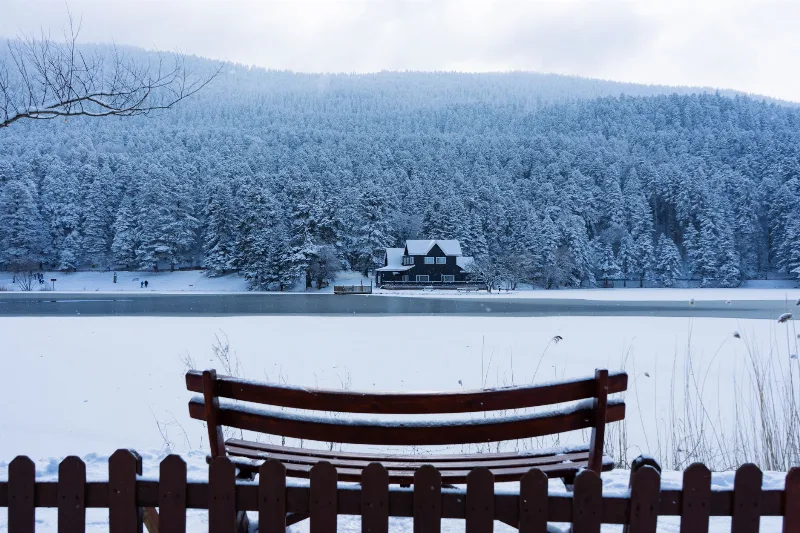
Lake Abant is a freshwater lake in Bolu Province, northwestern Türkiye, sitting at around 1,300 metres in a forested mountain basin. Its shoreline of pines, firs and beeches makes it one of the country's best-known inland lakes.
Yedigöller National Park
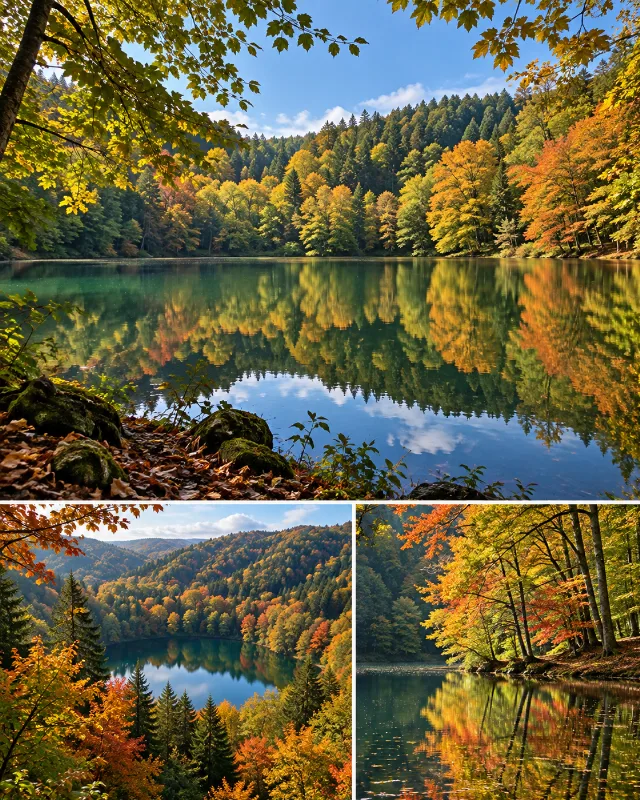
Yedigöller National Park in Bolu, Turkey, is a protected area centered on seven small lakes formed by landslides. The park is known for its dense forests, seasonal color changes, and tranquil walking paths.
Nature
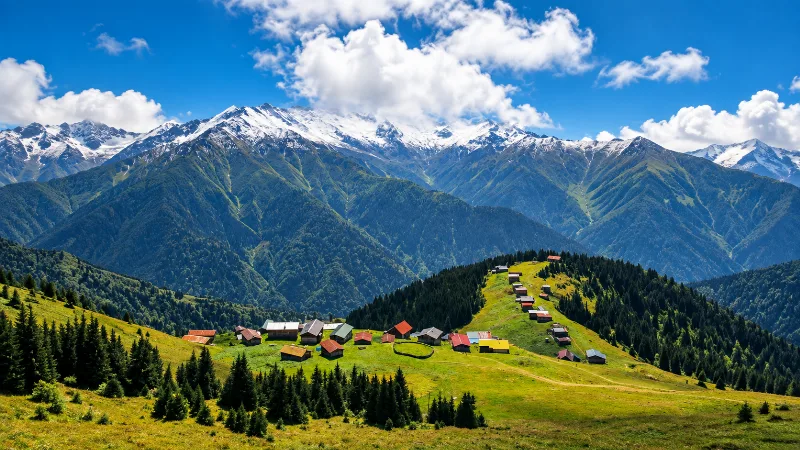
Lakes, forests, rivers, canyons, mountains, wetlands and national parks across Türkiye.
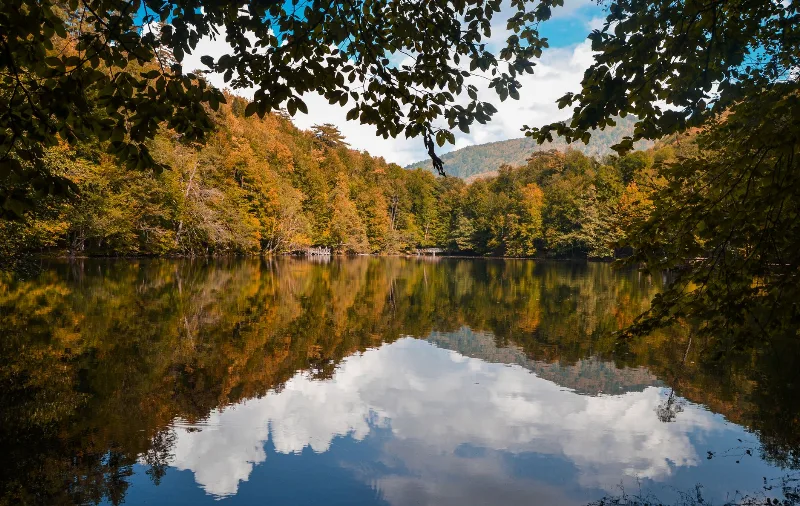
Autumn in Yedigöller, Bolu
Each year, the forests around Yedigöller's seven lakes turn brilliant shades of red, yellow, and orange, with the peak display usually occurring between mid-October and mid-November. This seasonal transformation is one of Turkey's most reliable autumn spectacles.
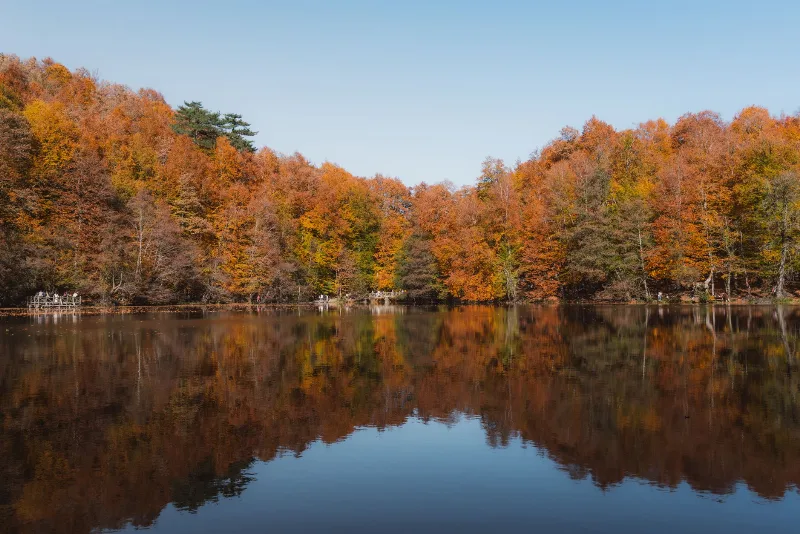
Yedigöller National Park and the Seven Lakes of Bolu
Yedigöller National Park in Bolu Province gathers seven small lakes inside dense woodland, offering quiet walking country, rich plant life and a striking autumn palette in the Western Black Sea region of Türkiye.
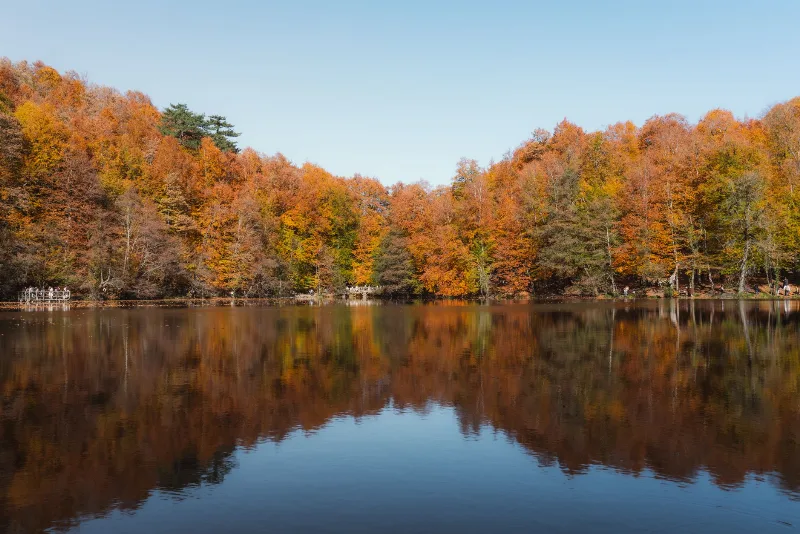
Nature Reserves of the Black Sea Region
Türkiye's Black Sea coast hides a chain of protected landscapes, from glacial lakes in the Kaçkar Mountains to canyons and old-growth forests in Kastamonu and Bartın.