
Diyarbakır's Historic Walls
The black basalt ramparts of Diyarbakır in southeastern Türkiye enclose a historic old town and overlook the Tigris River and the Hevsel Gardens. Their gates, towers and inscriptions record centuries of Anatolian and Mesopotamian history.
Stretching for roughly five kilometres around the old centre of Diyarbakır in southeastern Türkiye, the historic walls of the city form one of the longest surviving fortification systems of the ancient world. Built from dark volcanic basalt that gives the ramparts their charcoal colour, they follow the rim of the Tigris River valley and enclose the district known as Sur. These walls are the feature most closely identified with Diyarbakır, and walking beside them offers a clear sense of how the city has long guarded the meeting point of Anatolia, Mesopotamia and the Levant.
A Fortress of Dark Volcanic Stone
The defences grew around the ancient settlement of Amida, whose name survives in the history of the region. Roman engineers laid out the original circuit in the fourth century, and later Byzantine, Artuqid, Aq Qoyunlu and Ottoman rulers repaired and extended it. Because the building stone was quarried locally, the walls share the same near-black tone as many of the city's mosques, hans and bridges. Their mass is considerable: broad curtain walls, more than seventy surviving towers and a wide inner citadel known as İçkale.
Gates That Point in Every Direction
Historic entrances punctuate the circuit. Dağ Kapı opens toward the mountains to the north, Mardin Kapı toward the south, Urfa Kapı toward the west and Yeni Kapı toward the east. Each was once protected by courtyards and heavy doors, and many still carry carved inscriptions, reliefs of animals and calligraphic panels added by different dynasties. Among the towers, Keçi Burcu stands out for its size and its outlook over the river plain, and the name, which refers to a goat, is still used by residents in everyday conversation.
A Landscape of River and Gardens
Below the western walls the land drops toward the Tigris and the Hevsel Gardens, a broad belt of orchards, vegetable plots and poplar groves cultivated for centuries. Together, the walls and the gardens were inscribed on the UNESCO World Heritage List in 2015 as a cultural landscape. River, fertile ground and fortifications form a single system: the gardens fed the city, while the walls protected it. Mulberry, pomegranate and other fruit trees still grow in the same plots, and the green plain contrasts sharply with the dark stone above it.
Monuments Inside the Old Town
Within Sur, narrow streets lead to monuments that reflect the many communities who lived here. The Great Mosque, Ulu Cami, is among the oldest in Anatolia, and the Syriac and Armenian churches of the district, including Surp Giragos, recall a diverse past. Traditional houses built around courtyards use the same black basalt, often alternating it with lighter stone in striped patterns. Elsewhere in the city, the Malabadi Bridge over the Batman River and the many hans of the old commercial quarter show how the same masonry tradition was applied across the region.
Walking the Circuit
The walls can be followed on foot for much of their length, with views over rooftops, gardens and the river plain. Spring and autumn bring mild weather and green surroundings, while summer afternoons are hot and bright. Late in the day, low sunlight draws out the texture of the basalt and the carved details of the gates. A walk along the ramparts pairs naturally with a slower stroll through the gardens below, where the sound of the river accompanies the orchards. For anyone interested in fortifications, urban history or the layered cultures of southeastern Türkiye, the walls of Diyarbakır offer a setting that is both monumental and still very much part of daily life.
Related content
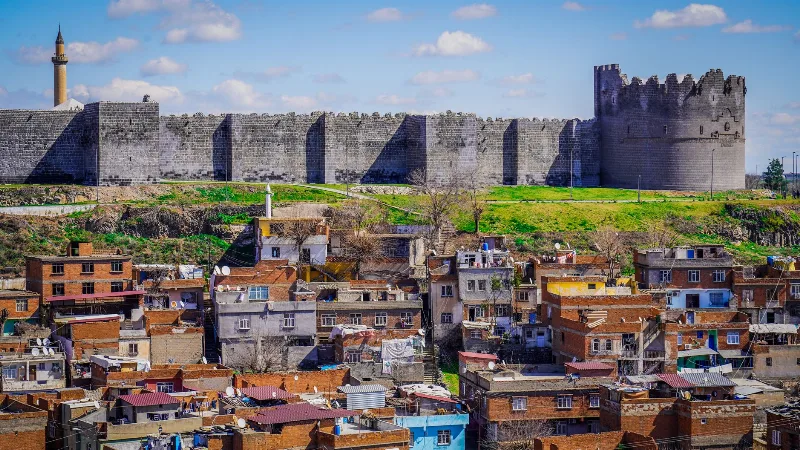
Diyarbakır
Diyarbakır is a major city in southeastern Türkiye, set on the upper Tigris River and encircled by one of the world's longest surviving circuits of ancient walls. Its black basalt architecture and Kurdish cultural identity distinguish it within the region.
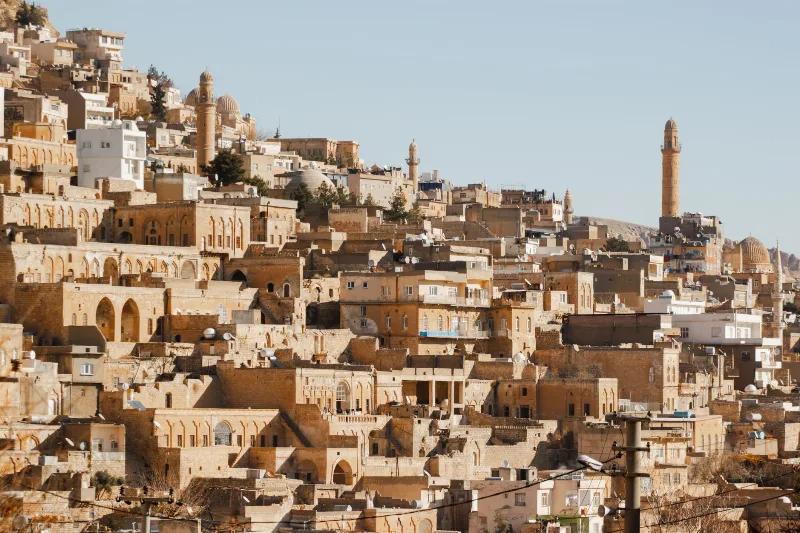
Mardin
Mardin is a historic city in southeastern Türkiye, built on a rocky hillside above the Mesopotamian plain and known for its honey-coloured stone architecture and Syriac Christian heritage.
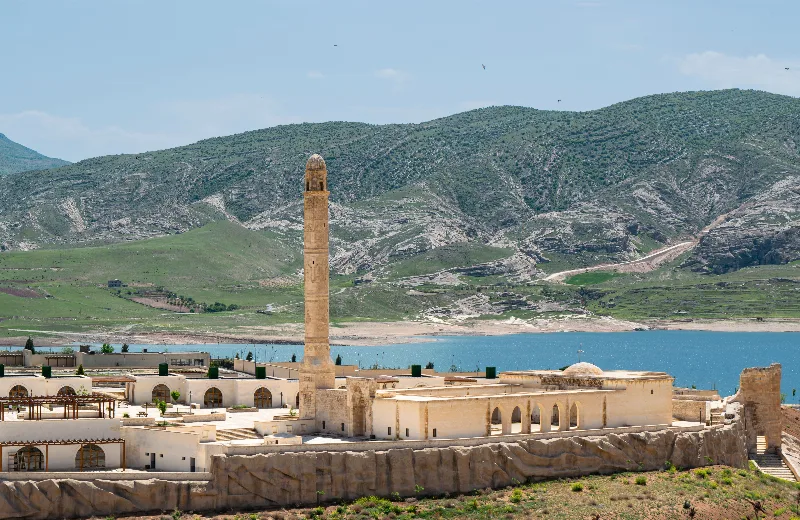
Batman
Explore Batman, southeastern Türkiye: history, standout sights, landscapes, local food and practical travel advice for an unforgettable journey in Türkiye.
Southeastern Anatolia Region
Southeastern Anatolia is known for its ancient cities, extraordinary archaeological heritage, traditional stone architecture and rich culinary culture. From the historic streets of Mardin to the monumental landscapes of Şanlıurfa and the Euphrates River, the region reflects thousands of years of civilization.
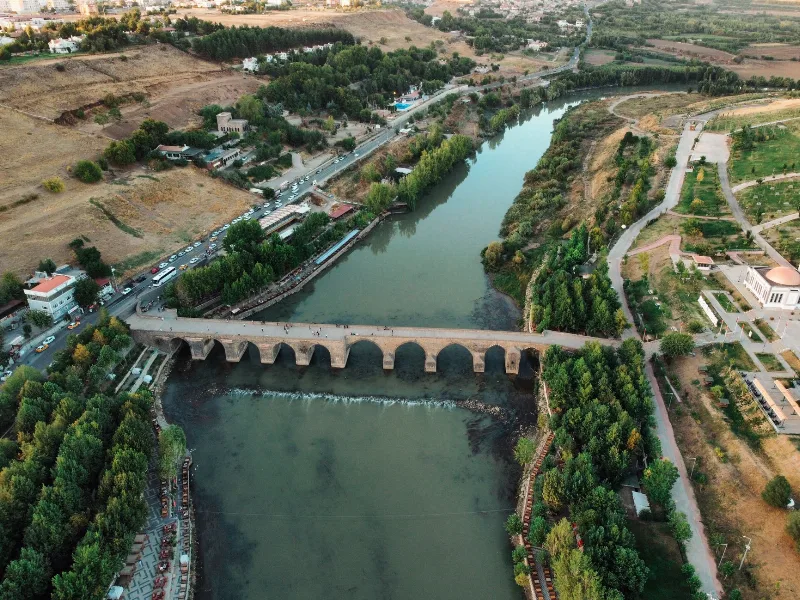
5-Day Tigris and Euphrates Route
A five-day, east-to-west journey across Southeastern Anatolia from Diyarbakır to Gaziantep, following the Tigris and Euphrates through Mardin, Şanlıurfa, Göbeklitepe and Harran.
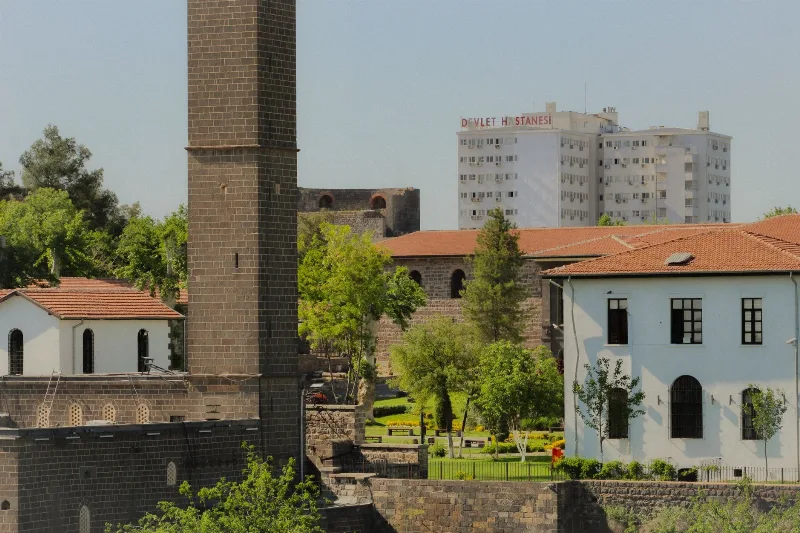
The Historic City Walls of Diyarbakır
Explore the ancient city walls of Diyarbakır, a UNESCO World Heritage Site, renowned for their historical significance and architectural grandeur.
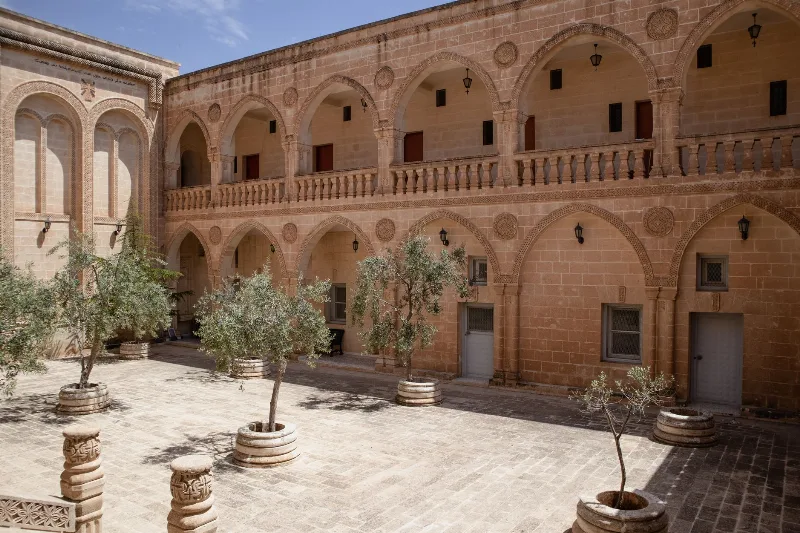
Mor Gabriel Monastery
Mor Gabriel Monastery is a working Syriac Orthodox monastery on the Tur Abdin plateau in Mardin Province, southeastern Turkey, founded in 397 AD and still home to monks and nuns. It is one of the oldest monastic communities in the world that remains in continuous use.
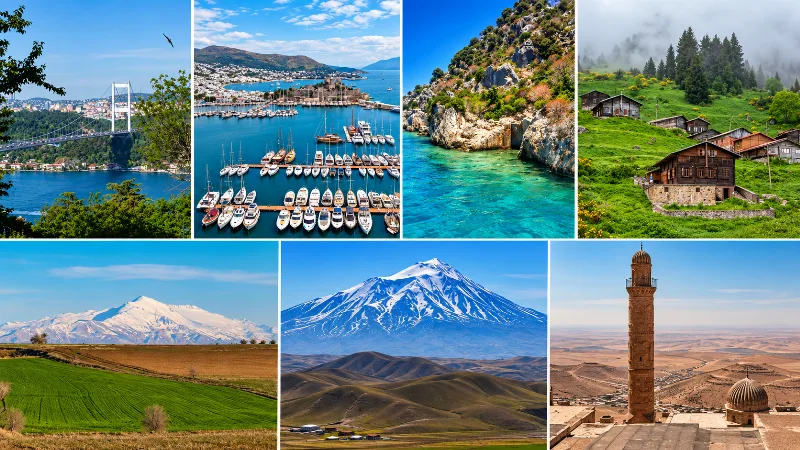
The Seven Geographical Regions of Turkey
An introduction to Turkey’s seven geographical regions and the landscapes, climates and cultural characteristics that distinguish them.