
Mor Gabriel Monastery
Mor Gabriel Monastery is a working Syriac Orthodox monastery on the Tur Abdin plateau in Mardin Province, southeastern Turkey, founded in 397 AD and still home to monks and nuns. It is one of the oldest monastic communities in the world that remains in continuous use.
Mor Gabriel Monastery, called Dayro d-Mor Gabriel in Syriac and Deyrulumur in older Turkish usage, is a functioning Syriac Orthodox monastery in Mardin Province, southeastern Turkey. It stands on the Tur Abdin plateau beside the village of Güngören, roughly twenty kilometres from the town of Midyat. The community was founded in 397 AD by the monk Mor Shmuel and his disciple Mor Shem'un, which makes it one of the oldest monastic institutions in the world that is still in use. It was later renamed for Mor Gabriel, a bishop of Tur Abdin who died in the seventh century and was buried within its walls. Monks and nuns continue to live there, and the monastery remains an active centre of Syriac Orthodox worship and learning rather than a museum.
A Monastery on the Tur Abdin Plateau
Tur Abdin is a Syriac name meaning Mountain of the Servants of God, and this upland has been the heartland of Syriac Christian monasticism for well over a thousand years. Geographically it is a limestone plateau rather than a true mountain range, shaped by erosion into rocky ridges, shallow valleys and thin, stony soils. Villages across the plateau are built from the same pale limestone, so they sit lightly in the landscape and share a consistent appearance.
The monastery occupies a broad, comparatively level site with open views over fields and low hills. Because the plateau rises to roughly a thousand metres above sea level, its climate is more continental than the hot plains farther south, and frost, rain and occasional snow are part of the yearly cycle. Midyat, the nearest substantial town and the centre of its district, lies to the west, and the provincial capital Mardin is farther west again. That position kept Mor Gabriel connected to Syriac villages scattered across Tur Abdin while keeping it somewhat apart from the larger cities.
Why the Monastery Is Important
Mor Gabriel is significant above all for continuity. Very few religious communities anywhere have maintained an unbroken monastic life since late antiquity, and this monastery has done so through the Roman, Byzantine, various Islamic and modern Turkish periods. It served as a metropolitan seat of the Syriac Orthodox Church, meaning it was the residence and administrative centre of a bishop responsible for a wide area of Tur Abdin.
It was also a place of scholarship. Syriac, a form of Aramaic closely related to the language spoken in the region in antiquity, remained the language of liturgy and learning here. Scribes at the monastery copied and preserved manuscripts, and the community trained clergy for churches across the plateau. For the Syriac Christians of southeastern Turkey, a community that has shrunk substantially through emigration, Mor Gabriel is both a working institution and a symbol of a long local presence that predates most other institutions in the region.
Buildings, Mosaics and Manuscripts
The monastery is built of local limestone and is enclosed by walls that give it the appearance of a small fortified settlement, an arrangement common to monastic sites in this region. Inside, the complex contains courtyards, monastic living quarters and service buildings grouped around the main places of worship.
The central church is dedicated to the Virgin Mary and is crowned by a dome, which is one of the most recognisable features of the site. Floor mosaics are among its most noted interior elements, and the burial place of Mor Gabriel remains a focal point for visitors and for the community. A collection of ancient Syriac manuscripts is kept at the monastery, part of the reason it is regarded as a storehouse of the region's Christian literary heritage.
Because this is a living monastery, not every part of the complex is open to the public at all times, and access to particular rooms, including areas holding manuscripts, can depend on the community's daily routine and on the discretion of the monks.
A Long Dispute Over Land
From the late 2000s, the monastery became involved in a prolonged legal dispute over land around it, contested between the community, the Turkish Treasury and neighbouring villages. The case ran through Turkish courts for years and drew international attention, turning Mor Gabriel into a widely cited example of the difficulties facing Syriac Christian institutions in the region. The dispute also underlined how closely the monastery's survival is tied to questions of land, legal status and the wider demographic changes in Tur Abdin.
Getting There and Visiting Practicalities
Mor Gabriel is reached by road, and most visitors arrive from Midyat, which has the closest concentration of accommodation and services. Midyat itself is connected by road to Mardin, the provincial capital, and to Diyarbakır farther north. The nearest airport serving the area is Mardin airport, after which the journey continues by road. Public transport to the monastery gate is limited, so travelling by private car or taxi from Midyat is the most straightforward approach.
Because the monastery is an active religious community, a few points of courtesy matter. Visitors should dress modestly, women are generally expected to cover their heads inside churches, and conversation should be kept low. Photography may be restricted in certain areas or during services, so it is best to ask before taking pictures. Opening arrangements and any conditions of entry can change, so confirming current visiting times locally before setting out is advisable.
Weather and the Best Time to Visit
The plateau has hot, dry summers and cold winters, with a pronounced contrast between the seasons. Summer temperatures can rise well above thirty degrees Celsius and the landscape becomes dry and dusty. Winters bring rain and, at this elevation, occasional snow, and cold conditions can affect travel on the roads.
Spring, from roughly April to May, and autumn, from September to October, are the most comfortable periods. Temperatures are moderate, the surrounding fields are green in spring, and daylight hours are long enough to combine a visit to the monastery with other sites in the area. Mornings tend to be the coolest and quietest parts of the day for a visit.
Related Places Across Tur Abdin and Mardin
Several other sites in the same region share Mor Gabriel's historical and religious context and can be visited on the same trip. Midyat's old town is known for its pale stone architecture and historic churches. East of Mardin stands the monastery of Mor Hananyo, better known as Deyrulzafaran, another major Syriac Orthodox foundation on the edge of the Mesopotamian plain.
In the Tur Abdin villages, historic Syriac churches survive in places such as Anıtlı, formerly Hah, and other settlements on the plateau. Farther south, the ancient city of Dara offers archaeological remains from the late Roman and Byzantine frontier. The old city of Mardin, with its stone houses, madrasas and churches layered on a hillside above the plain, makes a natural counterpart to a visit focused on the monasteries of Tur Abdin.

Related content
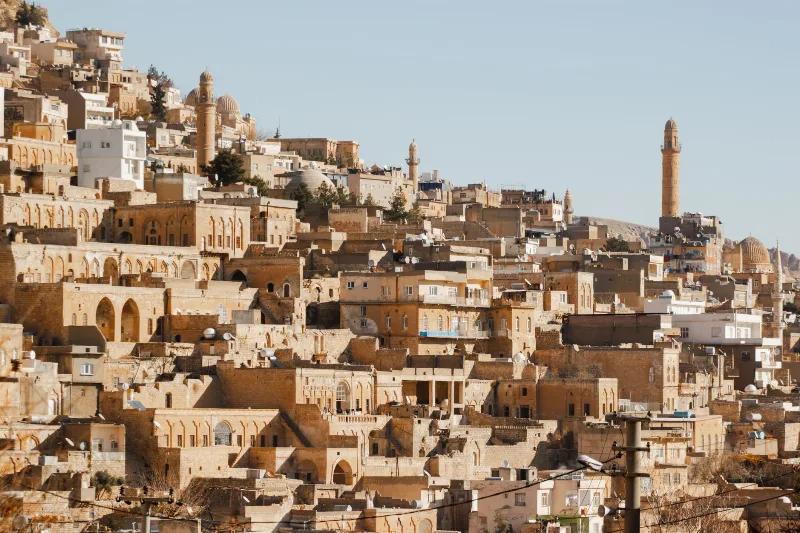
Mardin
Mardin is a historic city in southeastern Türkiye, built on a rocky hillside above the Mesopotamian plain and known for its honey-coloured stone architecture and Syriac Christian heritage.
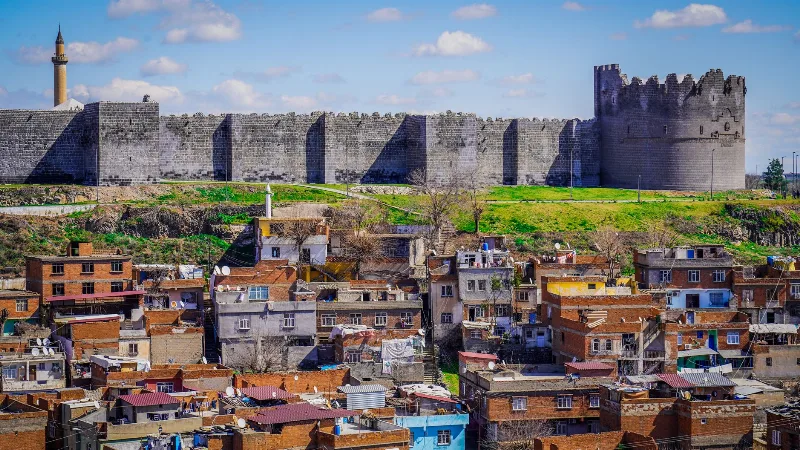
Diyarbakır
Diyarbakır is a major city in southeastern Türkiye, set on the upper Tigris River and encircled by one of the world's longest surviving circuits of ancient walls. Its black basalt architecture and Kurdish cultural identity distinguish it within the region.
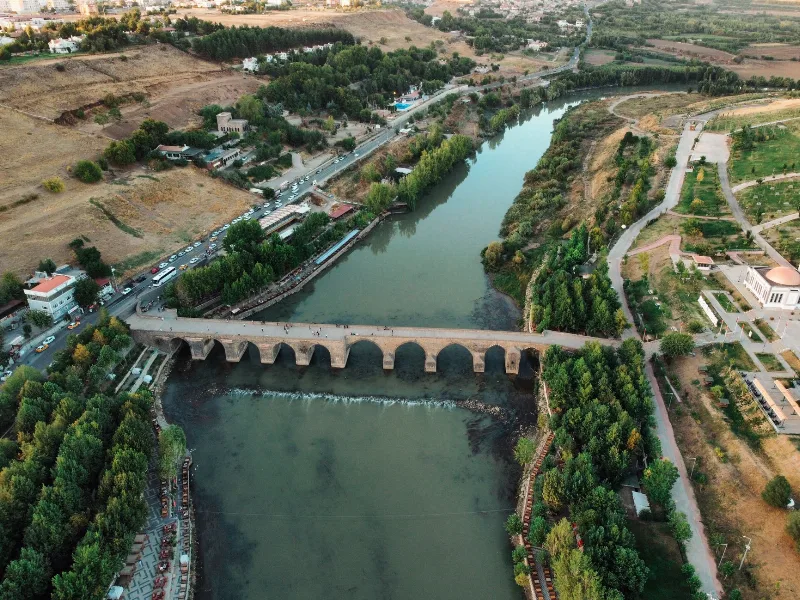
5-Day Tigris and Euphrates Route
A five-day, east-to-west journey across Southeastern Anatolia from Diyarbakır to Gaziantep, following the Tigris and Euphrates through Mardin, Şanlıurfa, Göbeklitepe and Harran.
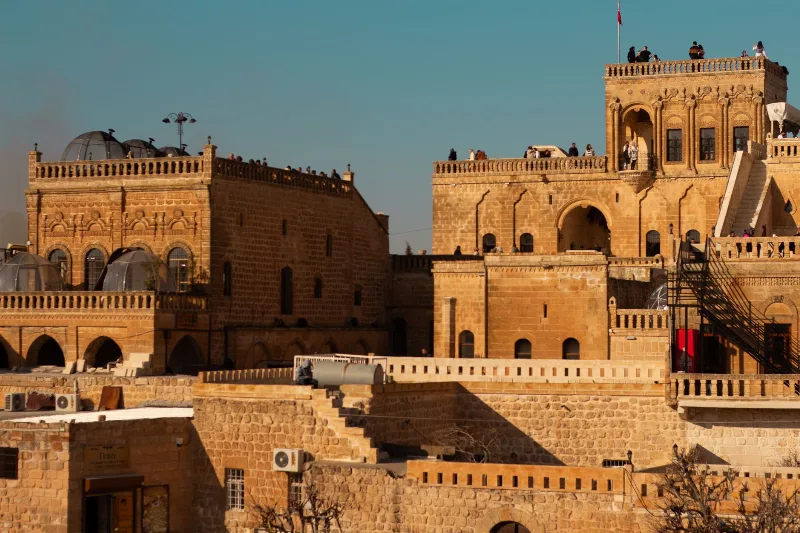
3-Day Mardin and Midyat Route
Explore the stone architecture of Mardin's old city and the historic monasteries of Midyat on this 3-day route through southeast Türkiye. The itinerary starts in Mardin, travels east to Midyat, and visits Deyrulzafaran and Mor Gabriel monasteries.
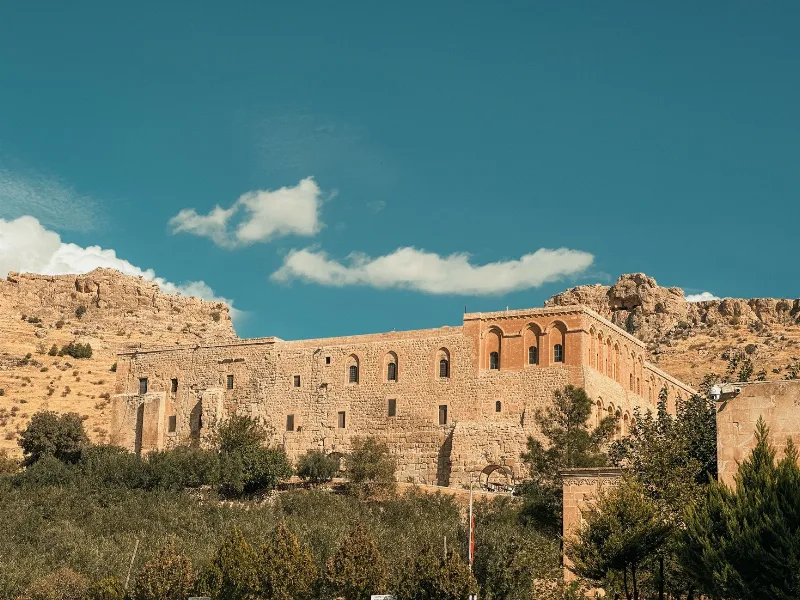
Deyrulzafaran Monastery
Deyrulzafaran, also called Mor Hananyo, is a working Syriac Orthodox monastery near Mardin that was built over a much older pagan sun temple and long served as the seat of the Syriac Orthodox Patriarchate.
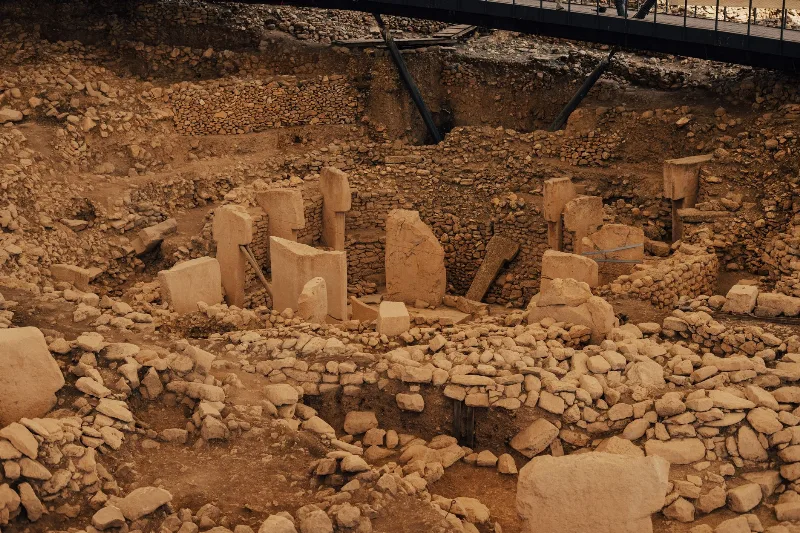
4-Day Southeastern Anatolia Route: Gaziantep to Mardin via Şanlıurfa
A four-day linear route across Southeastern Anatolia, linking the historic cities of Gaziantep, Şanlıurfa and Mardin by road, with the Neolithic site of Göbeklitepe and the ancient settlement of Harran fitted into the middle of the journey.