
Batman
Explore Batman, southeastern Türkiye: history, standout sights, landscapes, local food and practical travel advice for an unforgettable journey in Türkiye.
Batman is a destination in southeastern Türkiye, a modern regional city with access to the remarkable medieval riverside settlement of Hasankeyf. Its wider province offers places to explore beyond the provincial centre, and a visit works best when planned around the geography rather than just the best-known photograph. This guide focuses on what makes the destination distinctive, where to go beyond the main landmark and how to plan a visit that fits the terrain. It is intended for travellers seeking a useful introduction rather than a checklist of superlatives.
Understanding Batman
Batman is a comparatively modern provincial centre that expanded rapidly alongside the region’s energy and transport economy. For visitors, its greatest interest lies in the relationship between contemporary urban life and the much older cultural landscapes around it. The province has archaeological sites, river valleys and communities whose histories extend far beyond the growth of the modern city. It is a useful base for exploring southeastern Anatolia away from the largest metropolitan centres.
History and cultural heritage
The Batman region has been inhabited and travelled through for millennia. Hasankeyf, on the Tigris River, became an important settlement with medieval fortifications, bridges, caves and religious monuments. The construction of Ilısu Dam brought major changes to the site and surrounding valley; portions of the historic area were submerged, and selected monuments were relocated to a new archaeological park. Any visit should acknowledge this transformation rather than present the landscape as unchanged.
Places to see
Hasankeyf is the main excursion, offering a chance to understand the remaining and relocated heritage of a settlement long associated with the Tigris. The new museum and archaeological park help interpret monuments and regional history. Batman Museum in the provincial capital provides another introduction to archaeological finds. The city itself is better approached through its neighbourhoods and everyday commercial life than through an expectation of a large preserved old town.
Landscape and outdoor experiences
The Tigris basin defines much of the province’s physical geography. River corridors, agricultural lands and drier uplands create different settings over relatively short distances. Reservoir development has changed views and access routes around Hasankeyf. Summers can be extremely hot, and shade may be limited at exposed sites. Travellers interested in photography or walking should plan around morning and late-afternoon light rather than the middle of the day.
Local food and everyday culture
Batman’s food is connected to broader southeastern Anatolian cooking, with grilled meats, bulgur-based dishes, soups and regional breads commonly found. Local traditions vary between districts and communities. Markets, bakeries and modest restaurants offer an approachable way to experience everyday food rather than an artificially fixed tourist menu. For a richer experience, pair a meal with a walk through shopping streets and ask about seasonal local dishes.
Districts and nearby destinations
Hasankeyf is the essential historical destination, while Kozluk, Sason and Gercüş show different aspects of the province’s hills, agriculture and settlements. Beşiri lies in a landscape of villages and cultivated land. Not every district is set up for independent sightseeing, so transport and local knowledge matter. It is usually better to spend sufficient time at Hasankeyf and one other destination than to move rapidly between distant towns.
Planning your visit
Batman has air and road connections, subject to current timetables. A car or locally arranged transport can simplify trips to Hasankeyf and outlying districts. Spring and autumn are generally more comfortable for archaeology-focused travel than the peak of summer. When visiting heritage sites affected by dam construction, check updated access arrangements and distinguish between original structures, relocated monuments and museum displays.
Suggested route and deeper experiences
To understand Hasankeyf, allow time for the interpretation of the site rather than relying exclusively on the scenic view over the river. Some monuments were transferred before reservoir waters rose, and the experience today reflects both conservation efforts and major losses to the original setting. Museum displays, information boards and knowledgeable local guides can clarify which buildings remain in place and which were moved. This distinction is central to the story of the town. Back in Batman, contemporary shopping areas and neighbourhood restaurants provide a contrasting perspective on a province whose daily life cannot be reduced to its archaeological heritage. Plan outdoor visits around the heat.
How to make the most of your time
Begin with the parts of Batman that interest you most, then build a realistic route around them. Check up-to-date opening hours, transport options and weather before leaving, especially for remote cultural sites and mountain roads. If you have only one day, prioritise one substantial excursion and leave enough time for meals and unplanned stops. With more time, explore another district for a fuller understanding of the province. Respect protected landscapes, religious sites and the everyday life of local communities.
Travel style and useful considerations
A visit to Batman can be organised as a short cultural stop, a longer regional journey or part of a route through neighbouring provinces. The most appropriate choice depends on the season, access to a vehicle and how much walking you enjoy. In smaller settlements, services may be less frequent than in major tourism centres. Keep a flexible schedule, confirm return transport where relevant and ask permission before photographing people or private property. These small preparations help keep the experience rewarding for visitors and considerate toward local residents.
Discover Food in Türkiye
All food →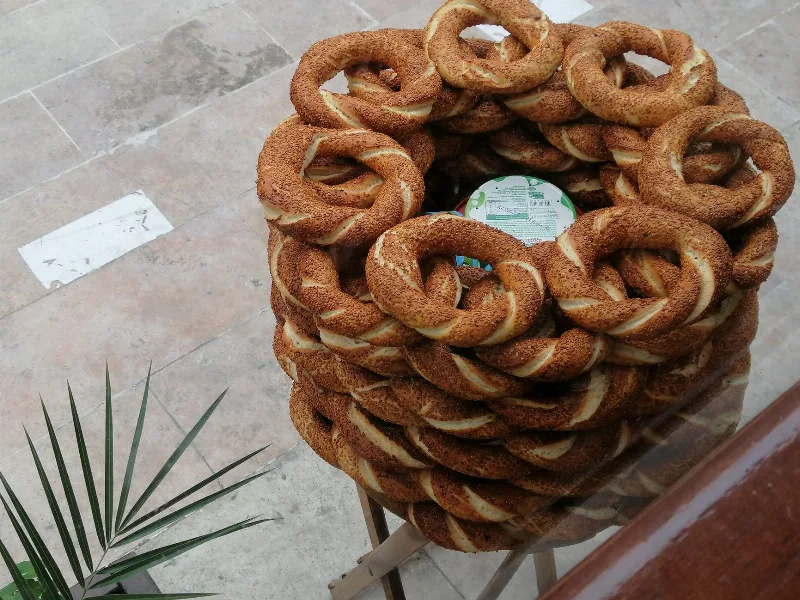
Simit
Simit is a ring-shaped Turkish bread covered in sesame seeds, strongly associated with Istanbul and sold as everyday street food. It is eaten fresh, most often with tea, and has a crisp crust around a chewy crumb.
Explore →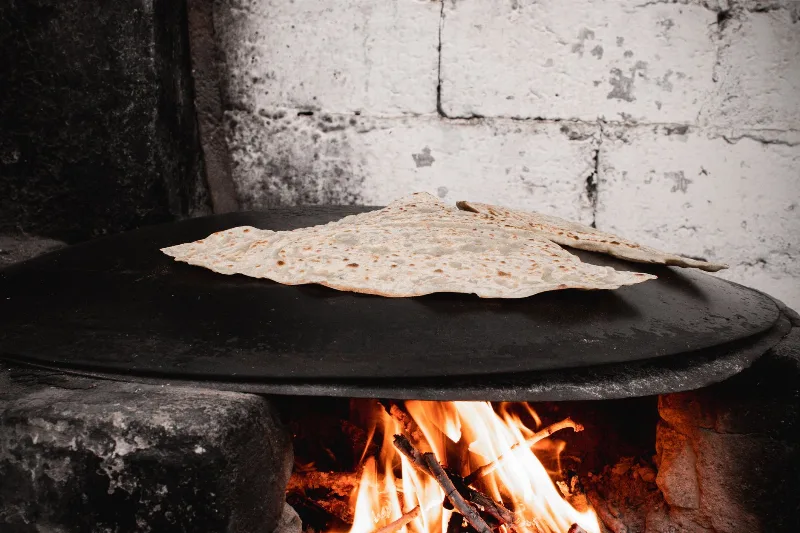
Bazlama
Bazlama is a soft, thick Turkish flatbread made from a leavened dough and cooked on a hot griddle. It is a staple of village baking across Anatolia, eaten warm with butter or used to wrap other foods.
Explore →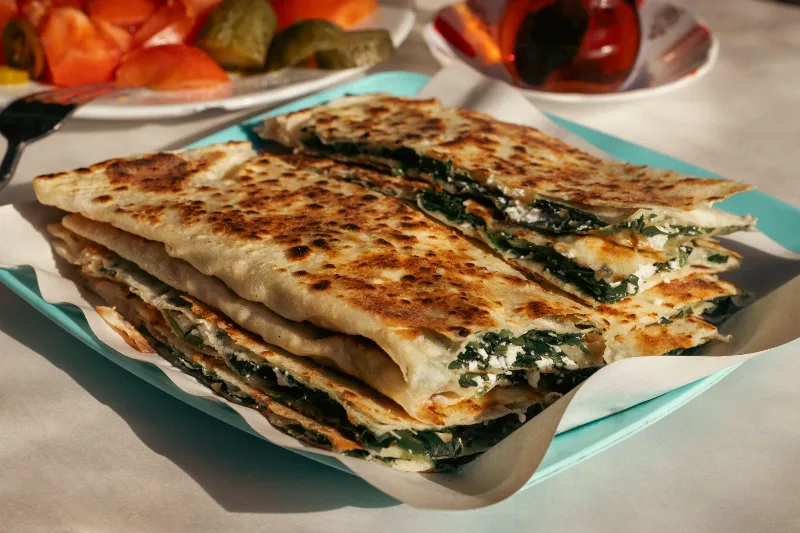
Gözleme
Gözleme is a thin, hand-rolled Anatolian flatbread folded around savory fillings such as cheese, spinach, or minced meat and cooked on a sac griddle. The article covers its regional variations, cooking method, texture, and traditional serving style.
Explore →Related content
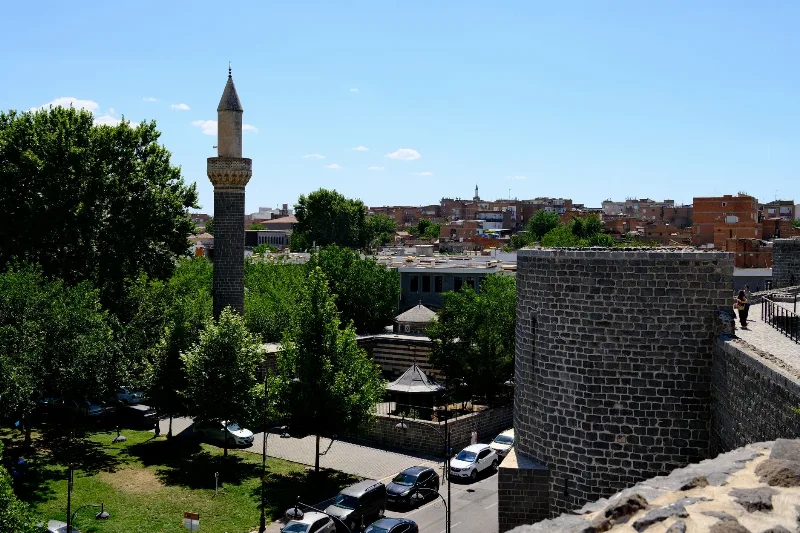
Diyarbakır's Historic Walls
The black basalt ramparts of Diyarbakır in southeastern Türkiye enclose a historic old town and overlook the Tigris River and the Hevsel Gardens. Their gates, towers and inscriptions record centuries of Anatolian and Mesopotamian history.
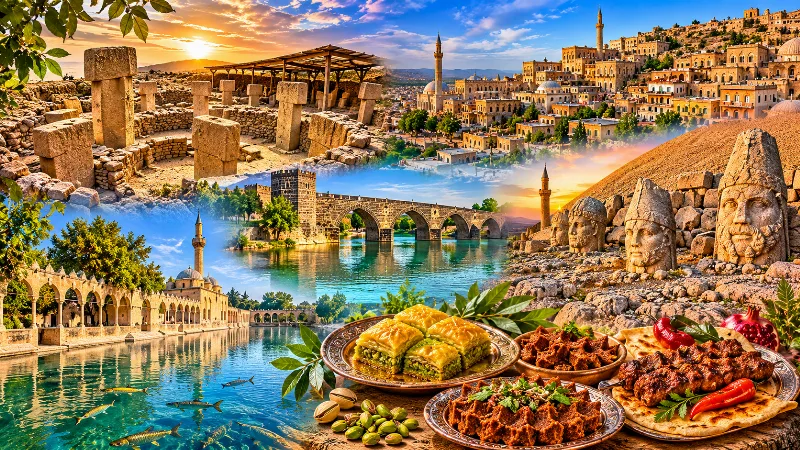
Southeastern Anatolia Region
Southeastern Anatolia is known for its ancient cities, extraordinary archaeological heritage, traditional stone architecture and rich culinary culture. From the historic streets of Mardin to the monumental landscapes of Şanlıurfa and the Euphrates River, the region reflects thousands of years of civilization.
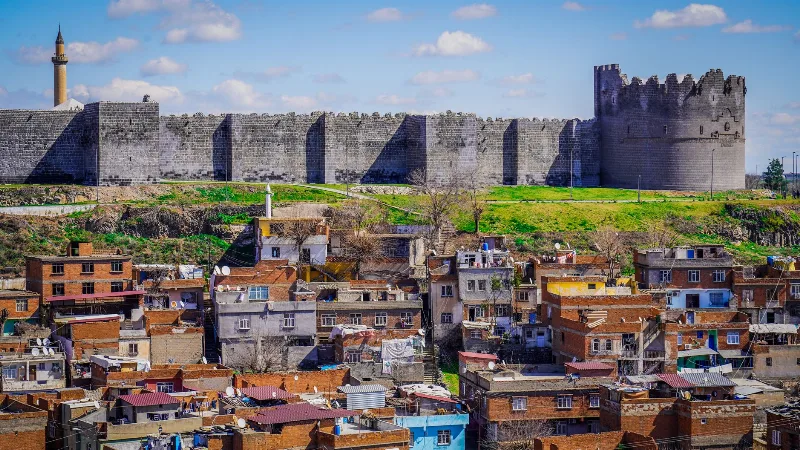
Diyarbakır
Diyarbakır is a major city in southeastern Türkiye, set on the upper Tigris River and encircled by one of the world's longest surviving circuits of ancient walls. Its black basalt architecture and Kurdish cultural identity distinguish it within the region.
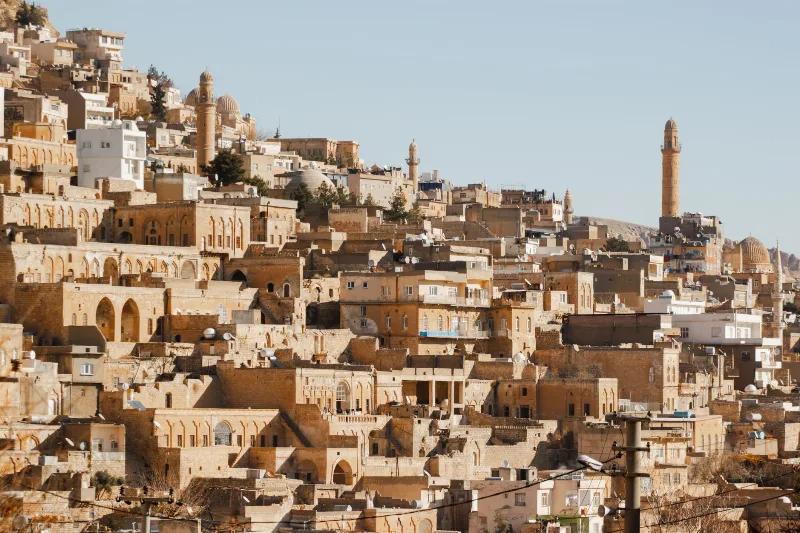
Mardin
Mardin is a historic city in southeastern Türkiye, built on a rocky hillside above the Mesopotamian plain and known for its honey-coloured stone architecture and Syriac Christian heritage.
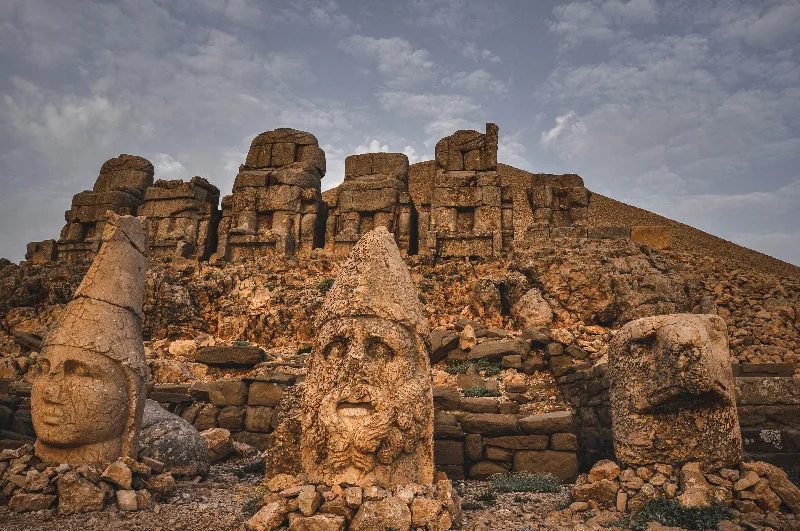
Adıyaman
Explore Adıyaman, southeastern Türkiye: history, standout sights, landscapes, local food and practical travel advice for an unforgettable journey in Türkiye.
Afyonkarahisar
Explore Afyonkarahisar, western Central Anatolia: history, standout sights, landscapes, local food and practical travel advice for an unforgettable journey in Türkiye.