
Patara
Patara is a long, wide sandy beach on Türkiye's Lycian coast, backed by dunes and a shallow wetland, where the open Mediterranean meets a protected coastal landscape.
Patara is a long, wide sandy beach on the southwestern Mediterranean coast of Türkiye, in the Kaş district of Antalya Province. It forms one of the most extensive continuous stretches of sand anywhere on the country's Mediterranean shoreline, running for roughly twelve kilometres between the inland plain and the open sea. The beach and the natural environment around it are protected, and that protection shapes much of what the visitor sees: a broad, mostly undeveloped shoreline with dunes, marshland and open water behind it.
The Shape of the Shoreline
The coastline here runs in a long, gentle arc rather than a straight line, curving gradually across the landscape so that it is difficult to see the whole beach at once from ground level. There are no cliffs along the water's edge. Instead, the sand meets the sea along almost the entire length of the strand, without the rocky platforms or boulder outcrops that characterise many other parts of the Lycian coast.
The beach is also unusually broad. In places the strip of dry sand behind the water's edge is wide enough to walk well away from the sea, and the transition from sea to dry beach is gradual rather than abrupt. The gradient under water is shallow, so the shoreline shifts noticeably between calm and stormy conditions, with the sand continually rearranged by the movement of the Mediterranean.
Sand, Dunes and the Wider Coastal Plain
The sand is fine and pale, with a light golden tone that brightens considerably in strong sunlight. It is soft underfoot in the drier upper zones and firmer near the water, where the sand stays compacted by moisture. The surface is essentially sandy throughout; pebbles and shingle do not define the beach here.
Immediately behind the sand lies a belt of low dunes. These are not high, dramatic dunes, but a rolling band of sandy mounds that rises a few metres above the beach and then flattens out inland. The dunes are partly held in place by low coastal vegetation — clumps of scrub, creeping plants and grasses that give the sand surface a mottled, textured look rather than a bare, desert-like appearance.
Beyond the dunes the land opens into a flat coastal plain. The transition from sand to soil is gradual, and the vegetation becomes denser as the ground stabilises, with shrubs, low trees and patches of scrub typical of the eastern Mediterranean. Further inland, the plain gives way to gently rising ground and, in the distance, to the wooded slopes that frame the wider valley.
The Sea and Its Appearance
The water is clear and typically ranges from pale turquoise in the shallows to a deeper blue further out, the change in colour marking the point where the sandy bottom drops away. Because the seabed slopes gently, a wide band of light, translucent water lies close to the shore, and the colour of the sea shifts noticeably through the day as the light changes.
Conditions are generally calm, with modest waves rather than heavy surf, though the beach is fully exposed to the open sea and can be affected by stronger swell during unsettled weather. In winter, storm waves reach further up the beach and reshape the upper sand. The horizon is unobstructed: looking out from the beach, there is nothing but open water and sky.
Behind the Dunes: Lagoon and Wetland
One of the features that distinguishes this stretch of coast is the shallow water that lies behind the dune belt. A lagoon and an area of marshland sit between the beach and the inland plain, separated from the sea by the sand and dunes. The wetland is fed by freshwater drainage from the surrounding land and by the sea in places, and its extent varies through the year, expanding in wetter months and shrinking in the drier season.
The result is a layered coastal landscape: open sea, sandy beach, dune belt, then still, shallow water fringed with reeds and low vegetation. The different surfaces catch the light in contrasting ways — bright, reflective sand in front, darker, calmer water behind — and the whole area reads as a single continuous natural system rather than a beach in isolation.
The Natural Character of the Beach
The upper beach and dune zone are an important nesting area for marine turtles, and parts of the sand are managed accordingly during the nesting season, with some areas restricted at certain times. The dune vegetation plays a role in holding the sand in place, and the beach as a whole is treated as a protected environment rather than a purely recreational strip.
The combination of a long sandy shoreline, a dune belt and a wetland behind it makes the site significant for wildlife as well as for its scenery. The beach is not backed by dense development; the open sand, the low dunes and the flat plain behind them give the area an exposed, spacious quality.
The Ancient Setting on the Shore
At the eastern end of the beach, the remains of the ancient city of Patara lie just inland from the sand. Ruins, scattered stonework and the traces of an old harbour area sit close to the modern shoreline, and the siting of the ancient settlement reflects the way the coastline has changed over time, with silt carried down by the river system gradually filling the former harbour. The presence of these remains beside the sand is part of what defines the character of the location, though the beach itself remains the dominant feature of the landscape.
Landscape and Atmosphere
The beach faces the open Mediterranean to the south and west, so the sea is visible across a very wide field of view and the horizon stays unbroken for long distances. In the evening, the sun drops towards the water, and the light falls across the sand and dunes in a way that changes the colour of the whole shoreline. This combination of a flat, wide beach and an open western outlook is one of the most recognisable aspects of the location.
Behind the beach, the land rises gradually towards wooded hills, so that the setting includes both a flat coastal plain and higher, darker slopes in the background. The contrast between the bright sand, the pale shallows, the deeper blue of the open sea and the green-brown tones of the vegetation behind creates a landscape that is visually simple but on a large scale — long horizontals of sand and water, with the dunes and wetland forming a softer band between the beach and the inland hills.
Remarkable places
All places →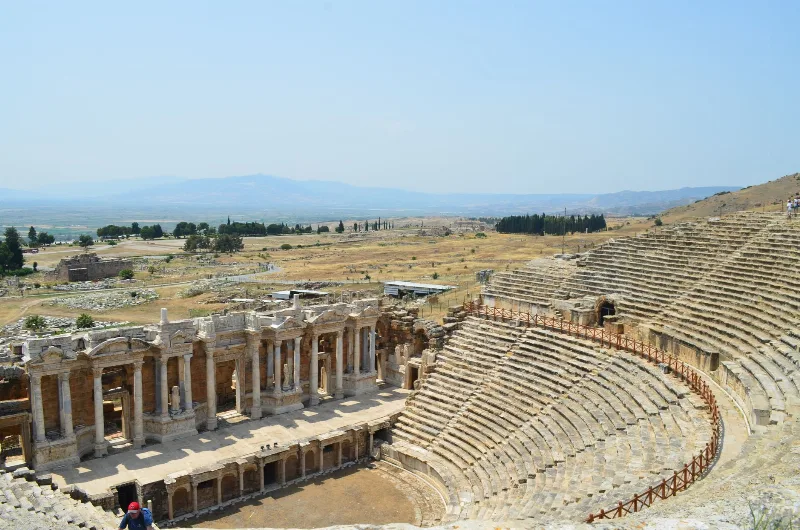
Letoon
Letoon is a Lycian sanctuary near Xanthos in Muğla Province, dedicated to Leto, Artemis and Apollo. Its three temples, theatre and trilingual inscription make it one of southwestern Turkey’s most significant archaeological sites.
Explore →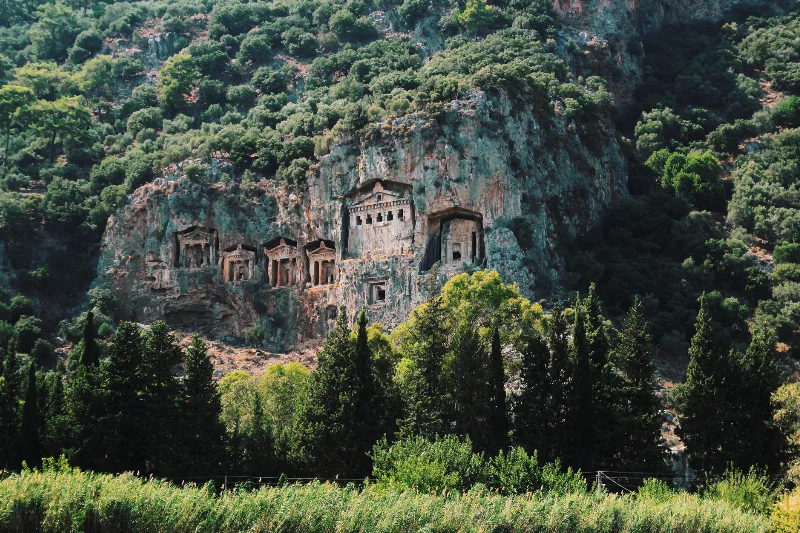
Kaunos
Kaunos is an ancient Carian city on the Dalyan River in Muğla Province, known for its temple-style rock-cut tombs and the extensive ruins of a harbour that silted up centuries ago.
Explore →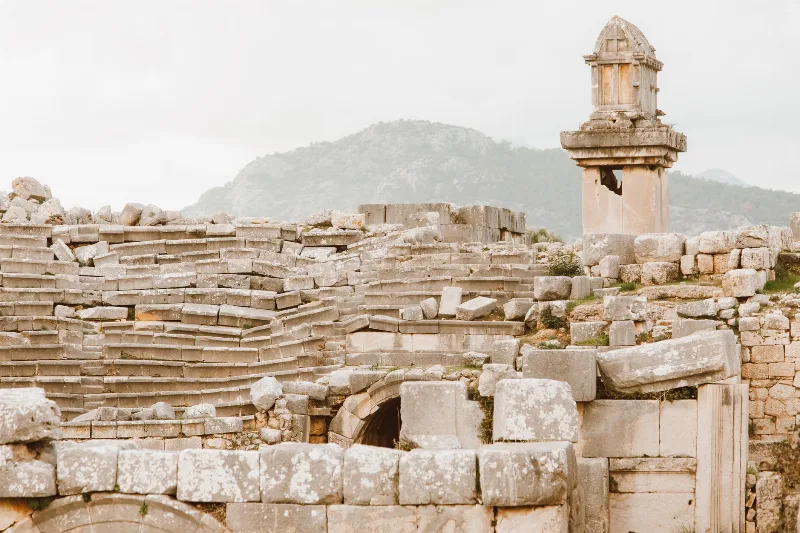
Xanthos
Xanthos is an ancient Lycian city in Antalya Province and a UNESCO World Heritage Site, known for its Lycian tombs, Roman theatre and role as a leading city of Lycia.
Explore →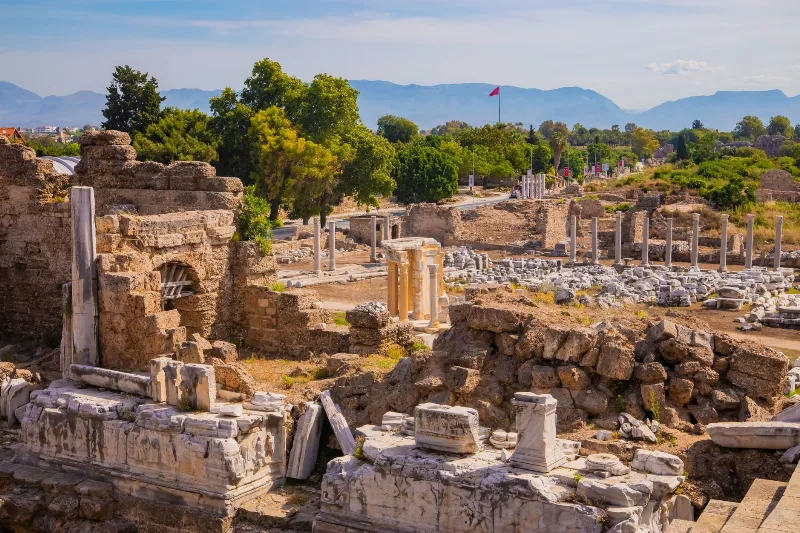
Phaselis
Phaselis is a Rhodian-founded port city on the eastern Lycian coast, where paved streets, agoras, baths and a small theatre stand among pines between three sheltered bays.
Explore →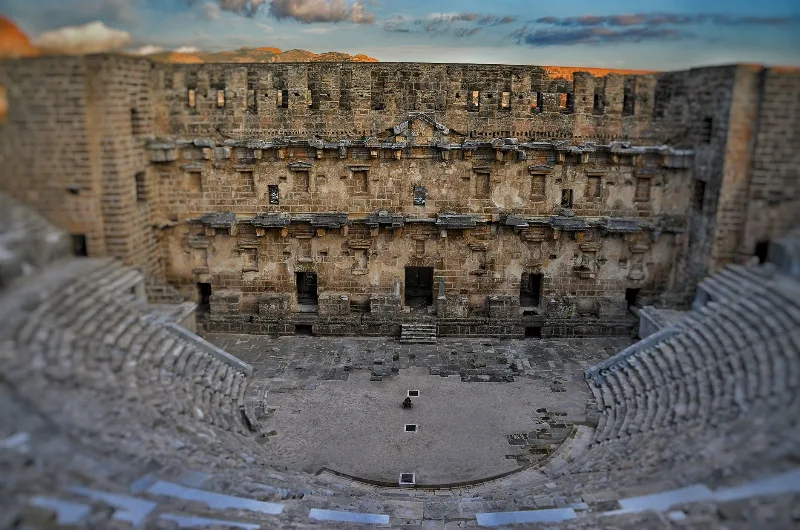
Aspendos
Aspendos is a Pamphylian ancient city near Serik in Antalya Province, dominated by a second-century Roman theatre that survives almost intact. Its aqueduct, acropolis and lower-city ruins sit in the flat farmland of the Köprüçay plain.
Explore →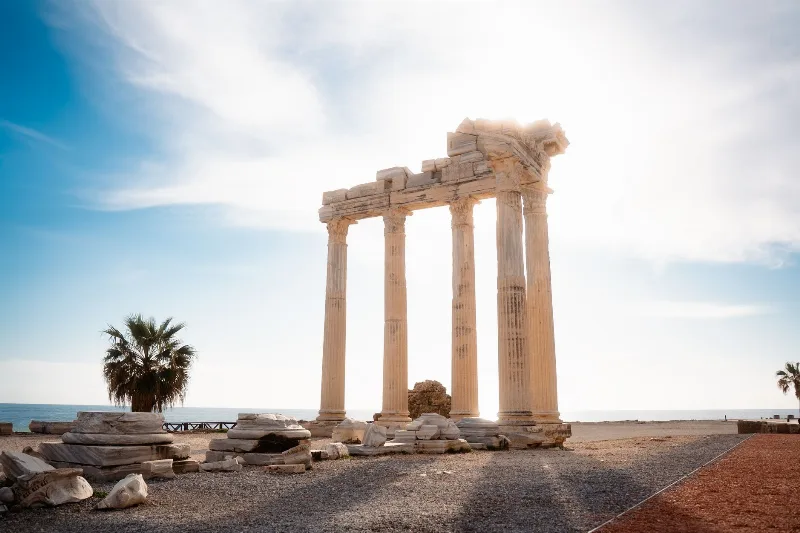
Side
Side is an ancient Greek harbour city on Türkiye's Mediterranean coast, known for the Temple of Apollo, a large Roman theatre and streets of ruins that visitors can still walk through. Its remains sit inside a modern town in the Manavgat district of Antalya Province.
Explore →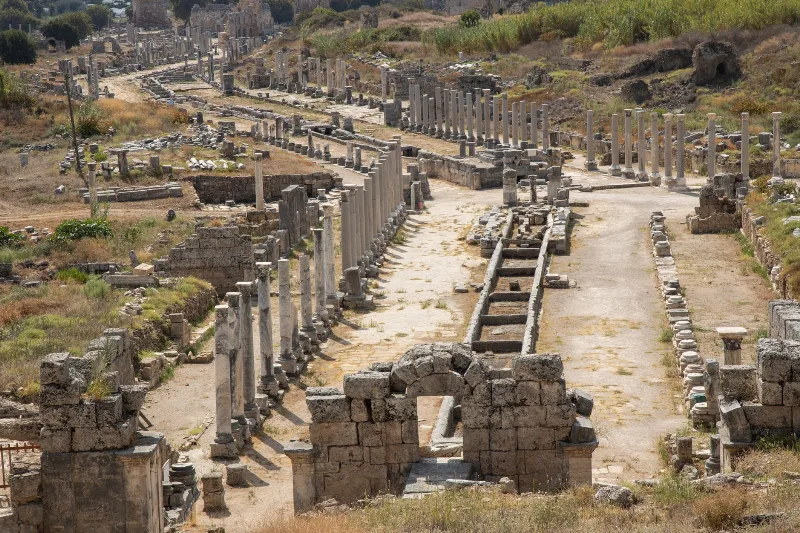
Perge
Perge is an ancient Pamphylian city east of Antalya, whose Hellenistic gates, colonnaded streets, theatre and exceptionally well-preserved stadium make it one of the most legible Roman-era sites in southern Turkey.
Explore →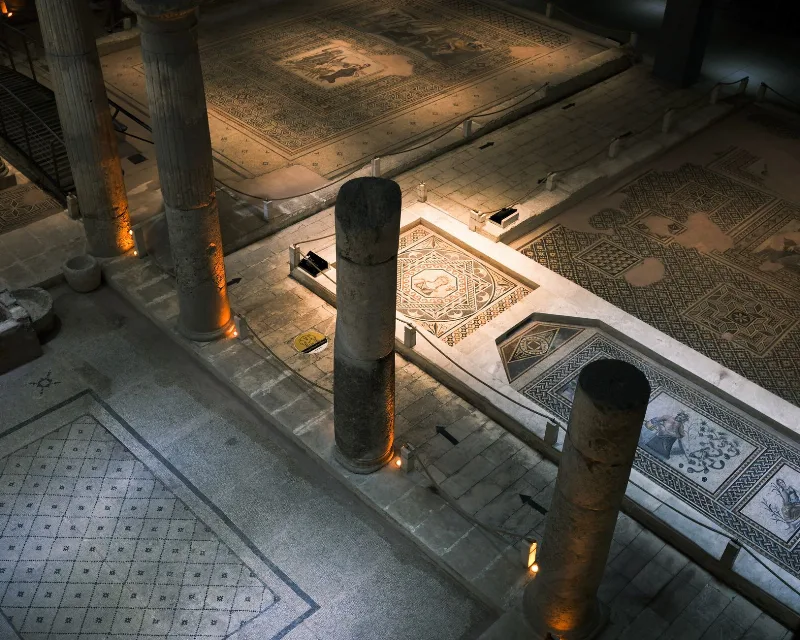
Zeugma
Zeugma was a twin Roman city on the Euphrates in Gaziantep Province, famous for the mosaics recovered from its riverside villas. Here is what the site is, what survives, and what to know before visiting.
Explore →Related content
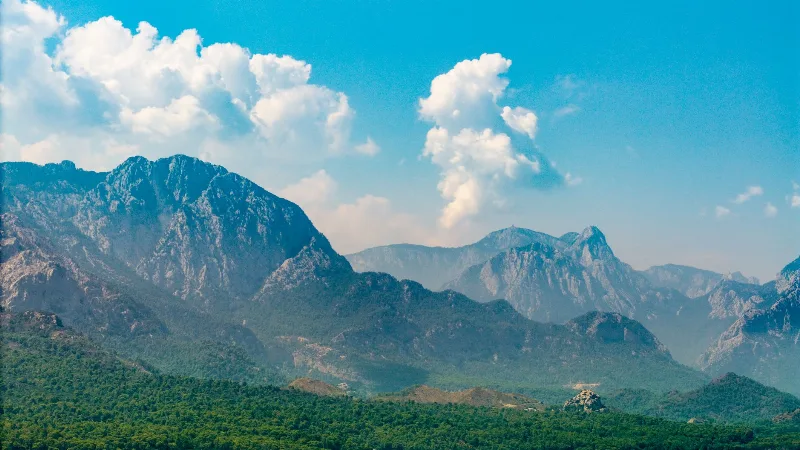
Antalya
Antalya offers a unique blend of vibrant history and stunning natural beauty, making it a must-visit destination in Türkiye.
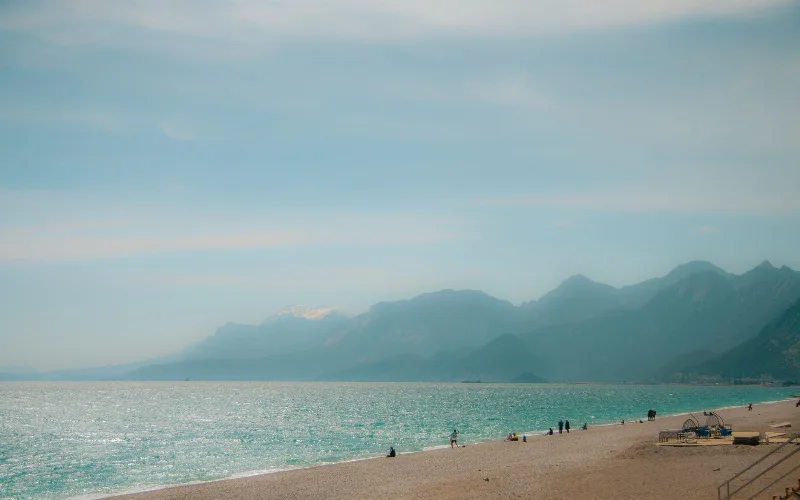
Exploring the Pristine Beaches of Antalya
Antalya's beaches offer a serene Mediterranean escape with their clear waters and golden sands. Discover the unique charm of these coastal treasures.
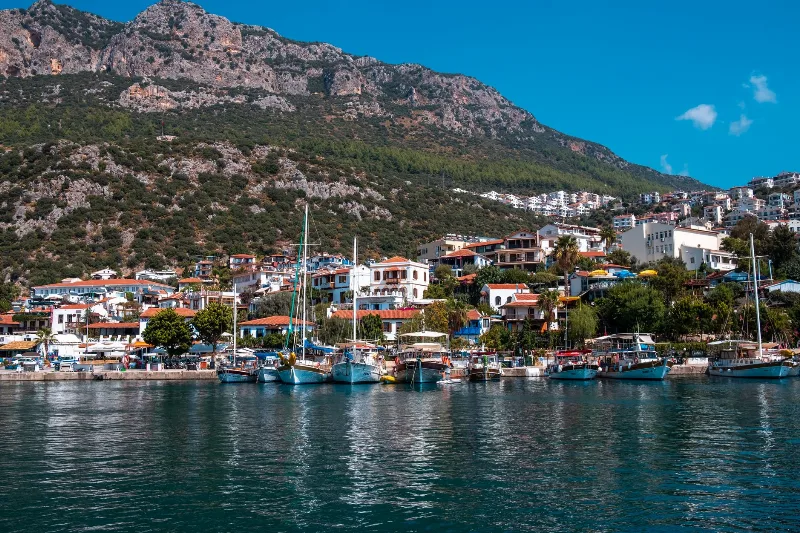
5-Day Antalya to Fethiye Coastal Route
A five-day driving itinerary along Turkey's Mediterranean shore, linking Antalya, Phaselis, Olympos, Demre, Kekova, Kaş, Kalkan, Patara and Fethiye. The route is linear, coastal for most of its length, with short inland detours to Lycian ruins.
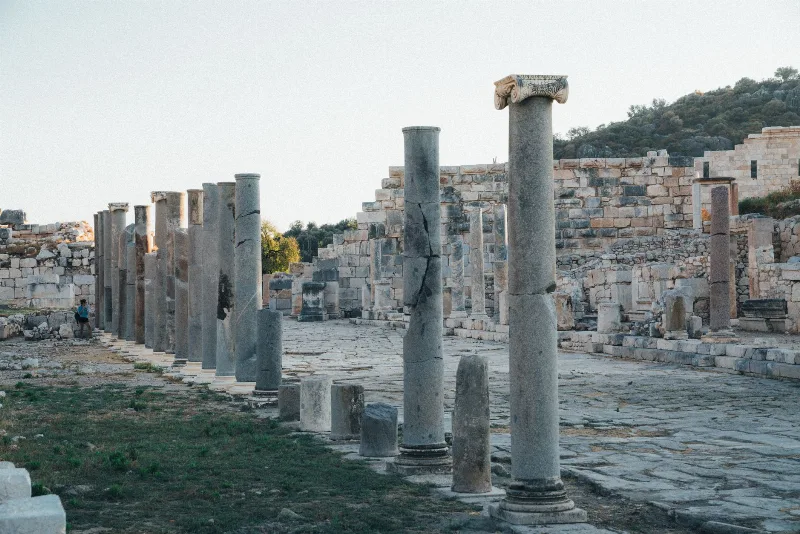
Patara
Patara is an ancient Lycian city in Antalya Province, Türkiye, that served as the meeting place of the Lycian League and preserves a Roman theatre, triumphal arch, bath complexes and an assembly hall beside a long sandy beach.
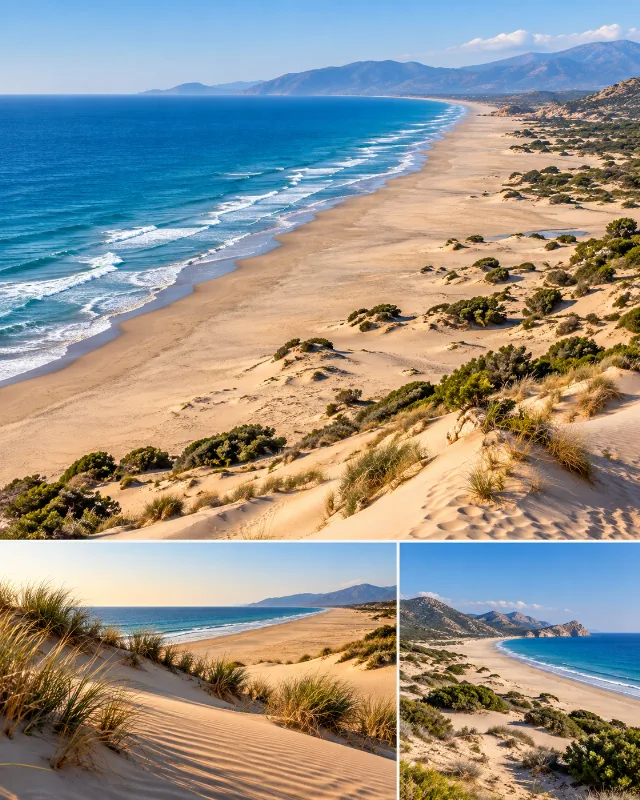
Patara Beach
A long sandy Mediterranean beach near the ancient city of Patara, backed by dunes and open coastal landscapes.
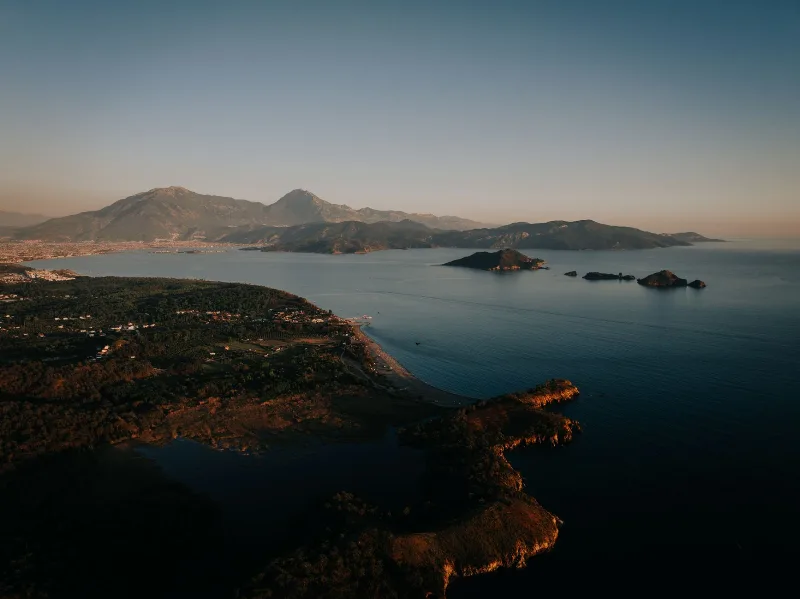
6-Day Mediterranean Coast Route: Antalya to Marmaris
A six-day linear route along Türkiye's Mediterranean coast, linking Antalya, Olympos, Demre, Kekova, Kaş, Kalkan, Patara, Fethiye and Dalyan before finishing in Marmaris. It mixes ancient cities, long beaches and small harbour towns on a continuous westward drive.