
Karina
Karina is a small village in Aydın province, Türkiye, sitting on land that belonged to ancient Ionia. It is a quiet, working rural settlement where scattered ancient remains survive among fields and houses rather than being set apart as a monument.
Karina is a small village in Aydın province, in the Aegean part of Türkiye, and it stands on ground that once formed part of ancient Ionia. It is not a restored historic quarter, a resort or a site presented with visitor infrastructure. It is an ordinary working settlement in the countryside, where a few scattered ancient remains survive among fields, gardens and village houses. That overlap between everyday rural life and an archaeological past is the main reason Karina is worth understanding before deciding to visit it.
Where Karina Sits in Aydın
Aydın province occupies the southwestern corner of Anatolia, facing the Aegean Sea and backed by inland mountain ranges. Much of its inland geography is shaped by the Büyük Menderes river and its broad valley, which has supported dense agriculture for thousands of years. The province includes coastal districts, river plains, foothills and high mountain areas, and the distances between these zones are short by Turkish standards.
Karina belongs to the part of the province associated with the ancient coastline of Ionia. Ionia was the name given in antiquity to the chain of Greek settlements along the central western coast of Anatolia and the nearby islands, an area whose cities were concentrated in what is now the Aegean section of Türkiye. Because the coastline has shifted over millennia, with rivers silting up gulfs and estuaries, several places that were once harbour towns now sit well inland. Karina's position reflects this same broad geography: an inland Aegean village standing on ground that read differently in antiquity than it does today.
Ancient Ionia Beneath an Ordinary Village
The significance of Karina lies less in standing architecture than in what its location represents. Aydın province contains some of the most extensively studied Ionian and Carian sites in western Anatolia, and the wider region is understood through its sanctuaries, city walls, theatres, harbours and road networks. In Karina, that history does not arrive as a fenced monument with an explanatory panel. It arrives as fragments and remains distributed across a lived-in landscape.
For a visitor, this shapes expectations. Anyone searching for a fully reconstructed ancient city will find that elsewhere in Aydın. Anyone interested in how archaeological ground is absorbed into contemporary village life, on the other hand, will find Karina's situation more interesting than its modest scale might suggest.
What the Village Feels Like Today
Karina is a small rural settlement with a low-key, agricultural character. It is the kind of Aegean village where daily rhythms are set by the seasons, the fields and the weather rather than by visitors. Buildings are modest and functional, typical of the region's villages: low-rise houses, walled gardens, courtyards, storage spaces for produce and equipment, and lanes that narrow between properties.
The surrounding landscape is open and cultivated rather than dramatic. Olive trees are a standard feature of Aydın's countryside, alongside other Mediterranean crops suited to the province's soil and climate. Depending on the season, the ground around the village reads as green and worked, dusty and harvested, or bare and quiet.
Scattered Remains in the Landscape
The ancient material at Karina is described as scattered rather than consolidated. This is a common situation in western Türkiye, where worked stone from older structures has been reused in later building, where blocks lie at the edges of fields, and where the exact extent of an ancient settlement may be understood only through survey and study rather than through visible walls.
Practically, this means a walk through and around the village is a matter of looking attentively at ground level, boundaries and older masonry rather than following a marked route. Nothing here is arranged for display, and there are no formal viewpoints or interpretive facilities that can be relied upon. The interest is in reading the place itself.
Climate, Agriculture and the Shape of the Year
Aydın has a Mediterranean climate: hot, dry summers and mild, wetter winters, with the heaviest rainfall generally falling outside the summer months. This pattern governs everything about rural life in the province, from the timing of agricultural work to the hours people spend outdoors.
In summer, inland Aegean villages can become genuinely uncomfortable in the middle of the day, and shade, water and early starts matter. Winter is cooler and damper, and the countryside turns green after rain. Spring and autumn are the transitional periods when the landscape is at its most workable and the temperatures are easiest to manage on foot.
Walking Through the Village
Walking is the only realistic way to see Karina. The village is small enough to cover on foot in a short time, with lanes that connect houses, gardens and the edges of the settlement. The terrain in this part of Aydın is generally gentle, though local variation between flat field ground and low slopes is normal, and unpaved surfaces can be uneven, dusty in dry weather and muddy after rain.
Because the settlement is a lived-in place rather than a visitor site, walking should be done respectfully: staying on lanes and paths, avoiding private courtyards and working fields, and accepting that some areas will simply not be open to casual exploration.
Getting to Karina
Karina is reached by road, within the road network of Aydın province. As with most small Aegean villages, access is practical by private vehicle, which also allows flexibility for continuing to other places in the same part of the province. Public transport in rural Aydın generally runs along main routes between larger settlements, so a village of this size may not be directly served in a way that suits a short visit. Anyone planning a trip should confirm current local conditions rather than assume a fixed service.
Arriving is straightforward in the sense that the village is part of the province's ordinary road system; it is not a remote or expedition-style destination. The main planning consideration is that there are no large-scale visitor facilities to structure a day around.
When to Visit
Spring and autumn are the most comfortable periods for walking in inland Aydın. Spring brings green fields and moderate temperatures; autumn brings relief after the summer heat and a quieter agricultural atmosphere. Summer visits are possible but require an early start and an acceptance of high daytime temperatures, and winter visits suit travellers who do not mind rain and mud and who value an emptier, more subdued landscape.
What to Know Before Going
Karina should be treated as a small rural settlement, not as a managed archaeological park. Expect limited or no visitor-oriented services, and plan supplies, food and water around the nearest larger town rather than the village itself. Sturdy shoes are sensible because surfaces are unpaved in places. Photography of private property should be handled with care, and it is reasonable to ask before entering land that is clearly cultivated or enclosed. Anyone with a serious interest in the ancient remains should approach them as part of the wider Ionian landscape of Aydın rather than as a self-contained attraction.
Other Places in the Same Part of Aydın
Karina is best understood in relation to the rest of the province. Aydın contains several well-documented ancient sites from the Ionian and Carian world, along with the coastal town of Kuşadası, the inland heritage site of Aphrodisias, the wetlands and shoreline of the Büyük Menderes delta, and Lake Bafa with its surrounding hills and historic remains. The provincial capital, also named Aydın, and the market towns of the interior provide the practical services that a village of Karina's size does not. Combining Karina with one or two of these places gives context to what is otherwise a very modest and quiet stop.
From the land
Find All →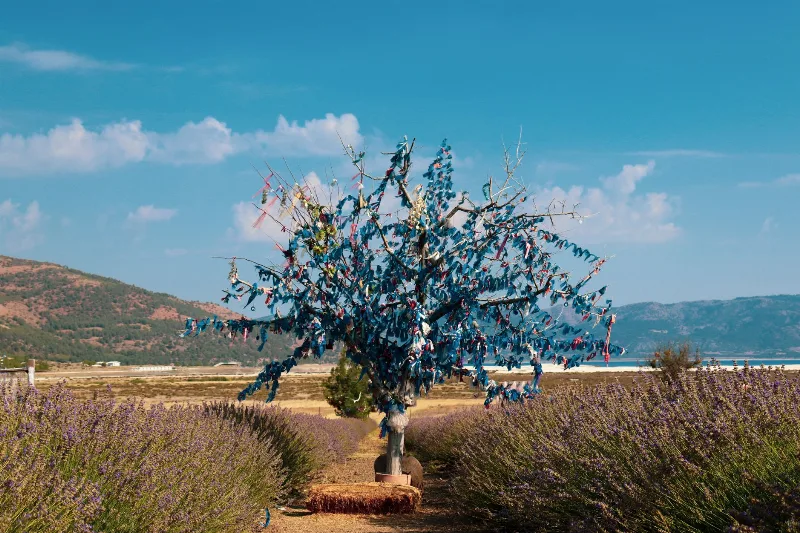
Kuyucak Lavender
Kuyucak lavender is grown around a village in the Keçiborlu district of Isparta province, southwestern Türkiye, where dry slopes and stony soil shape a crop grown mainly for essential oil.
Explore →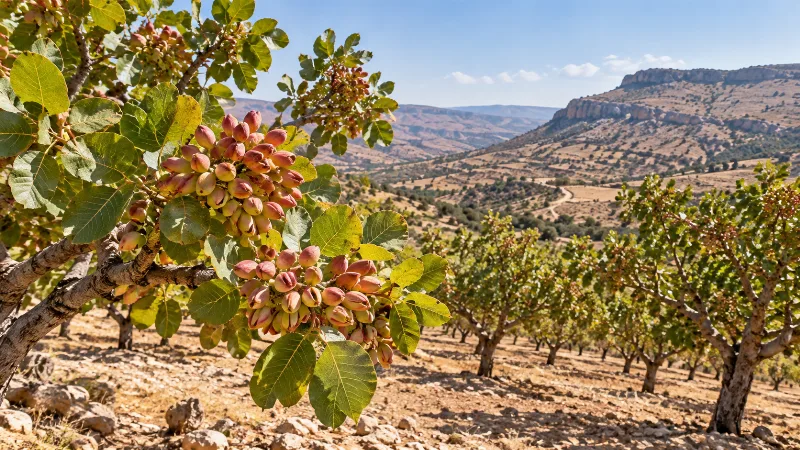
Siirt Pistachios
Siirt pistachios are a distinctive variety of pistachio grown in Siirt province, southeastern Türkiye. The region's hot, dry climate and rocky soils give these nuts their character and tie them closely to the local agricultural landscape.
Explore →
Kahramanmaraş Peppers
Kahramanmaraş peppers are the red peppers grown on the inland plains of southern Türkiye, where hot, dry summers and fertile soils give the crop its deep colour, moderate heat and smoky aroma.
Explore →Related content

Aydın
Aydın is the inland capital of Aydın Province in Türkiye's Aegean region, recognised for its fig production and its position between the fertile Büyük Menderes valley, the coastal district of Kuşadası and several major ancient sites.
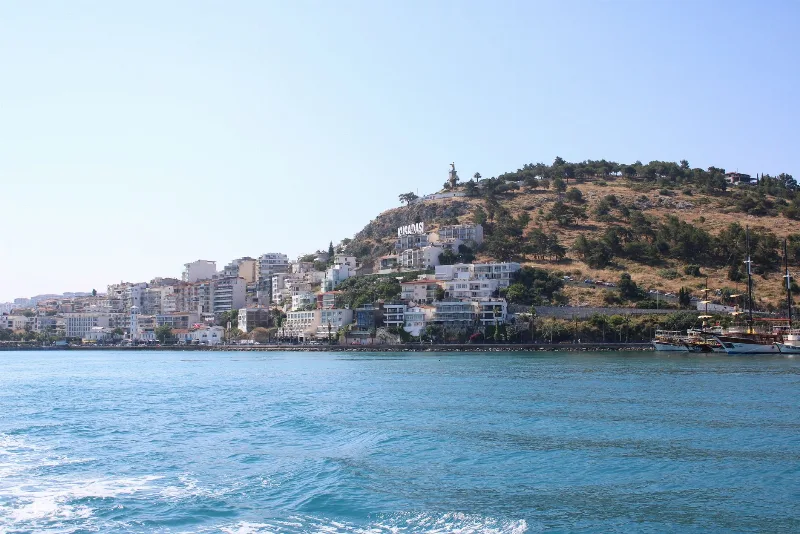
Kuşadası
Kuşadası is a lively Aegean resort town and cruise port in Aydın Province, best known for its proximity to the ruins of Ephesus and for a coastline of sandy bays backed by pine-covered hills.
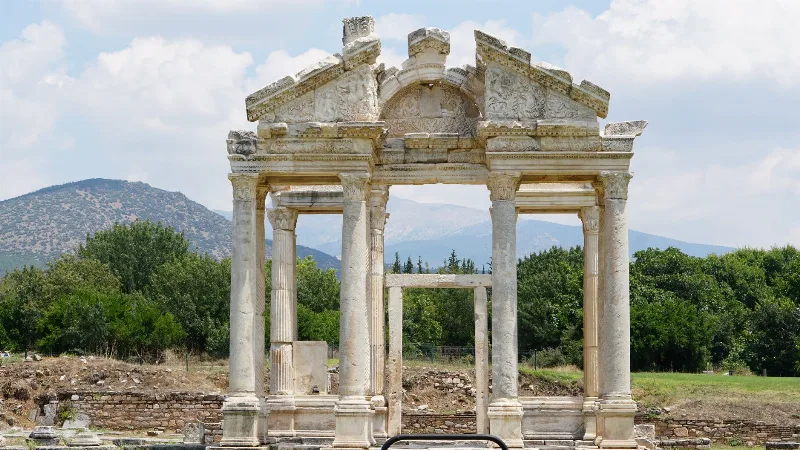
Aphrodisias
Aphrodisias is an ancient city in Aydın Province, Türkiye, built around a sanctuary of Aphrodite and celebrated for its marble sculpture and remarkably intact public buildings. It has been a UNESCO World Heritage Site since 2017.
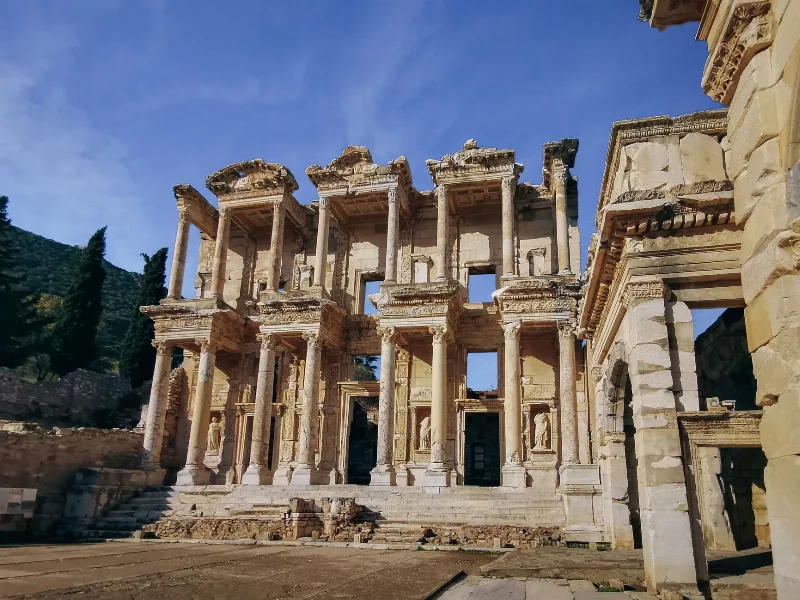
6-Day Aegean Ancient Cities Route
A six-day linear journey from Izmir to Denizli through the great ancient cities of the Aegean, linking Ephesus, Priene, Miletus, Didyma, Lake Bafa, Pamukkale, Laodicea and Aphrodisias in one coherent corridor.
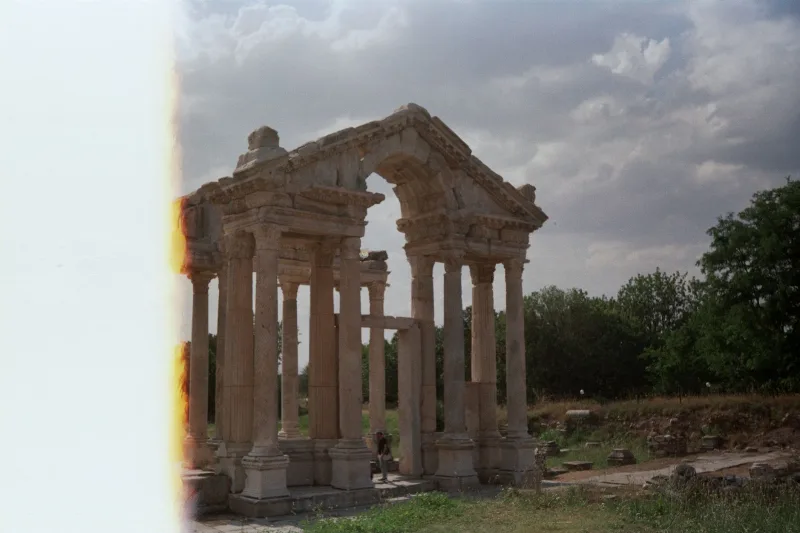
The Ancient City of Aphrodisias in Aydın
Aphrodisias in Aydın province is an ancient city dedicated to the goddess Aphrodite, celebrated for its stadium, temple and marble sculpture workshops.
Aphrodisias
Aphrodisias is an ancient Greek city in Aydın Province dedicated to the goddess Aphrodite, a UNESCO World Heritage Site known for its stadium, temple and rich marble sculpture tradition.